Kirjojen hintavertailu. Mukana 12 390 323 kirjaa ja 12 kauppaa.

Kirjahaku

Etsi kirjoja tekijän nimen, kirjan nimen tai ISBN:n perusteella.

1000 tulosta hakusanalla Gregory

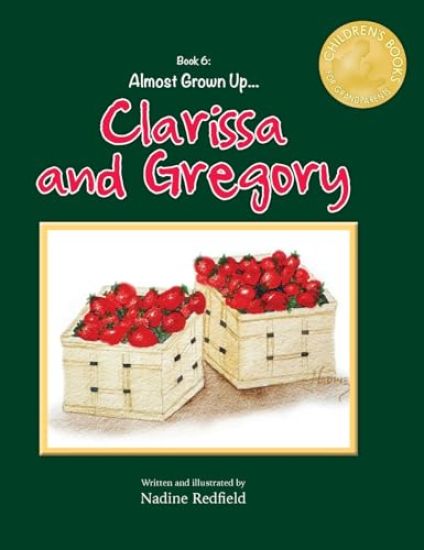
Almost Grown Up...Clarissa and Gregory

Almost Grown Up...Clarissa and Gregory

Nadine Redfield

Elm Grove Publishing
2026
sidottu
The last book in this charming series of real life time-capsule stories, based on the childhood memories of Clarissa Nadine Townsend and her brother, Paul Gregory Townsend. They grew up in rural America during the post-depression era, just before the Second World War. War clouds are looming over America, and Clarissa is getting ready for junior high school. Join her as she learns about raising chickens and growing crops for profit, and what it was like to have everyday items like sugar and shoes rationed, as the United States hunkered down for war. Children will marvel at these stories that capture the essence of growing up in bygone days, long before cell phones and television Clarissa & Gregory books are part of the publisher's "Children's Books for Grandparents" series featuring brand new stories, traditionally told in classically styled books that will capture the imagination and the heart. They are specially designed and printed for grandparents, parents, aunts and uncles, even big brothers and sisters, to read to small children.
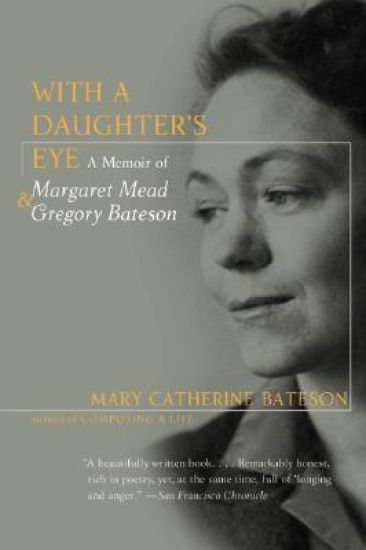
With a Daughter's Eye: Memoir of Margaret Mead and Gregory Bateson, a
In With a Daughter's Eye, writer and cultural anthropologist Mary Catherine Bateson looks back on her extraordinary childhood with two of the world's legendary anthropologists, Margaret Mead and Gregory Bateson. This deeply human and illuminating portrait sheds new light on her parents' prodigious achievements and stands alone as an important contribution for scholars of Mead and Bateson. But for readers everywhere, this engaging, poignant, and powerful book is first and foremost a singularly candid memoir of a unique family by the only person who could have written it.
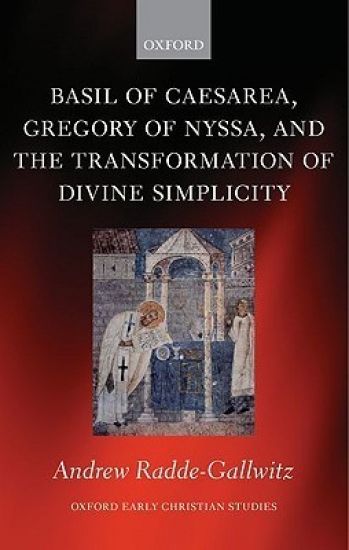
Basil of Caesarea, Gregory of Nyssa, and the Transformation of Divine Simplicity
Divine simplicity is the idea that, as the ultimate principle of the universe, God must be a non-composite unity not made up of parts or diverse attributes. The idea was appropriated by early Christian theologians from non-Christian philosophy and played a pivotal role in the development of Christian thought. Andrew Radde-Gallwitz charts the progress of the idea of divine simplicity from the second through the fourth centuries, with particular attention to Basil of Caesarea and Gregory of Nyssa, two of the most subtle writers on this topic, both instrumental in the construction of the Trinitarian doctrine proclaimed as orthodox at the Council of Constantinople in 381. He demonstrates that divine simplicity was not a philosophical appendage awkwardly attached to the early Christian doctrine of God, but a notion that enabled Christians to articulate the consistency of God as portrayed in their scriptures. Basil and Gregory offered a unique construal of simplicity in responding to their principal doctrinal opponent, Eunomius of Cyzicus. Challenging accepted interpretations of the Cappadocian brothers and the standard account of divine simplicity in recent philosophical literature, Radde-Gallwitz argues that Basil and Gregory's achievement in transforming ideas inherited from the non-Christian philosophy of their time has an ongoing relevance for Christian theological epistemology today.
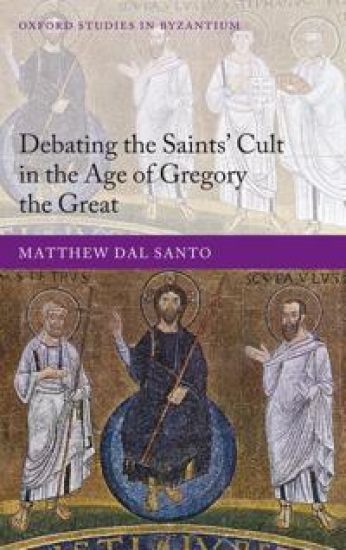
Debating the Saints' Cults in the Age of Gregory the Great
In Debating the Saints' Cults in the Age of Gregory the Great, Dal Santo argues that the Dialogues, Pope Gregory the Great's most controversial work, should be considered from the perspective of a wide-ranging debate about the saints which took place in early Byzantine society. Like other contemporary works in Greek and Syriac, Gregory's text debated the nature and plausibility of the saints' miracles and the propriety of the saints' cult. Rather than viewing the early Byzantine world as overwhelmingly pious or credulous, the book argues that many contemporaries retained the ability to question and challenge the claims of hagiographers and other promoters of the saints' miracles. From Italy to the heart of the Persian Empire at Ctesiphon, a healthy, sceptical, rationalism remained alive and well. The book's conclusion argues that doubt towards the saints reflected a current of political dissent in the late East Roman or Byzantine Empire, where patronage of Christian saints' shrines was used to sanction imperial autocracy. These far-reaching debates also re-contextualize the emergence of Islam in the Near East.
Margaret Mead, Gregory Bateson, and Highland Bali

Margaret Mead, Gregory Bateson, and Highland Bali

Gerald Sullivan

University of Chicago Press
1999
sidottu
In 1936 anthropologist Margaret Mead and her husband, Gregory Bateson, retreated from lowland Bali, which was the focal point of much scholarly and tourist activity, to the remote village of Bayung Gede in the island's central highlands. Although they wrote relatively little about their work in this place, which Mead called "our village, way up in the mountains, a lovely self-contained village", they did leave behind a photographic record of their time there. This text includes 200 photographs that the couple took between 1936 and 1939. They capture the everyday lives of the men, women and children of Bayung Gede, their homes and their temples, and many other details of village life. In an introductory essay, Gerald Sullivan, who selected the photographs, uses excerpts from fieldnotes and correspondence to illuminate Mead and Bateson's ethnographic work. Tracing the project from its inception in their proposals to the publication of their work, Sullivan shows how they used the photographs both as fieldnotes and as elements in their theoretical argument. Finally, he explores what the photographs reveal - independently of Mead and Bateson's project - about the Balinese character to the contemporary viewer. The result is a contribution to visual anthropology and a supplement to the published works of Margaret Mead and Gregory Bateson.
The Election of Bishops in the Letters of Pope Gregory the Great

The Election of Bishops in the Letters of Pope Gregory the Great

Eidenschink

The Catholic University of America Press
2014
sidottu
CUA Press is proud to announce the CUA Studies in Canon Law. In conjunction with the School of Canon Law of the Catholic University of America, we are making available, both digitally and in print, more than 400 canon law dissertations from the 1920s to 1960s, many of which have long been unavailable.These volumes are rich in historical content, yet remain relevant to canon lawyers today. Topics covered include such issues as abortion, excommunication, and infertility. Several studies are devoted to marriage and the annulment process; the acquiring and disposal of church property, including the union of parishes; the role and function of priests, vicars general, bishops, and cardinals; and juridical procedures within the church.For those who seek to understand current ecclesial practices in light of established canon law, these books will be an invaluable resource.
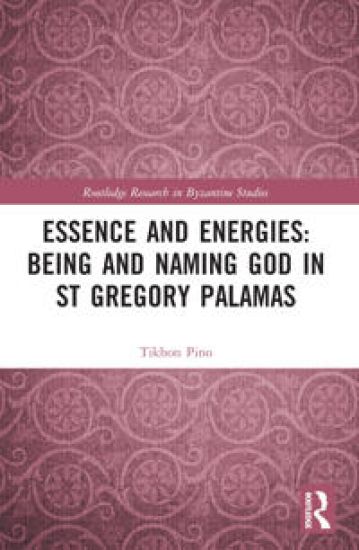
Essence and Energies: Being and Naming God in St Gregory Palamas
St. Gregory Palamas (ca. 1296–1357) is among the most well-known and celebrated theologians of late Byzantium. This book provides a comprehensive account of the essence-energies distinction across his twenty-five treatises and letters written over a twenty-year period.An Athonite monk, abbot, and later Metropolitan of Thessalonica, Gregory is remembered especially for his distinction between God’s essence and energies, and his celebrated doctrine still generates a great deal of debate. What does Palamas actually mean by the term energies? Are they ‘activities’ that God performs, and if so, how can they be eternal and uncreated? Indeed, how could God be simple if he possesses energies distinct from his essence? Going beyond the Triads and the One Hundred and Fifty Chapters, this book explores Palamas’s answers to these long-standing questions by analyzing all of the treatises produced by Palamas between the years 1338 and 1357. It seeks to understand what Palamas means when he speaks of God’s energies, how he seeks to prove that they are distinct from the divine essence, and how he explains that this distinction in no way violates the unity and simplicity of the one God in Trinity.Essence and Energies is a useful resource for upper-level undergraduates, postgraduates, and scholars interested in Byzantine theology in the fourteenth century.
Essence and Energies: Being and Naming God in St Gregory Palamas
St. Gregory Palamas (ca. 1296–1357) is among the most well-known and celebrated theologians of late Byzantium. This book provides a comprehensive account of the essence-energies distinction across his twenty-five treatises and letters written over a twenty-year period.An Athonite monk, abbot, and later Metropolitan of Thessalonica, Gregory is remembered especially for his distinction between God’s essence and energies, and his celebrated doctrine still generates a great deal of debate. What does Palamas actually mean by the term energies? Are they ‘activities’ that God performs, and if so, how can they be eternal and uncreated? Indeed, how could God be simple if he possesses energies distinct from his essence? Going beyond the Triads and the One Hundred and Fifty Chapters, this book explores Palamas’s answers to these long-standing questions by analyzing all of the treatises produced by Palamas between the years 1338 and 1357. It seeks to understand what Palamas means when he speaks of God’s energies, how he seeks to prove that they are distinct from the divine essence, and how he explains that this distinction in no way violates the unity and simplicity of the one God in Trinity.Essence and Energies is a useful resource for upper-level undergraduates, postgraduates, and scholars interested in Byzantine theology in the fourteenth century.
The Life of St. Gregory
Pope Gregory I, also known as Saint Gregory the Great, was known for instituting the first recorded large-scale mission from Rome, the Gregorian mission, to convert the then largely pagan Anglo-Saxons to Christianity. Gregory is also well known for his writings, which were more prolific than those of any of his predecessors as pope. As a Roman senator's son, and serving as the prefect of Rome at 30, Gregory lived in a monastery he established on his family estate before becoming a papal ambassador and then assuming the office of pope. Although he was the first pope from a monastic background, his prior political experiences may have helped him to be a talented administrator. During his papacy, his administration greatly surpassed that of the emperors in improving the welfare of the people of Rome, and he challenged the theological views of Eutychius of Constantinople before the emperor Tiberius II. Gregory regained papal authority in Spain and France and sent missionaries to England, including Augustine of Canterbury and Paulinus of York. His life if retold here by the French Monk, Otto the Abbot, some five centuries after his death.
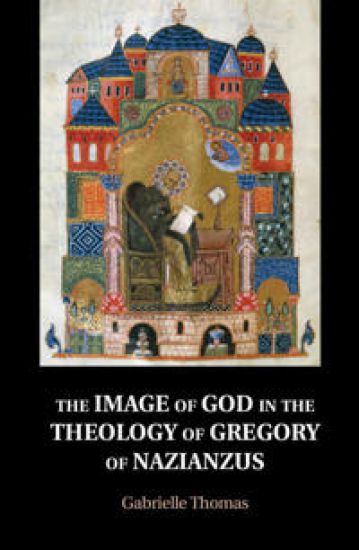
The Image of God in the Theology of Gregory of Nazianzus

The Image of God in the Theology of Gregory of Nazianzus

Gabrielle Thomas

Cambridge University Press
2019
sidottu
Gregory of Nazianzus, known best for his Christology and Trinitarian doctrine, presents an incomparable vision of the image of God. In this book, Gabrielle Thomas offers a close analysis of his writings and demonstrates how Nazianzen depicts both the nature and experience of the image of God throughout his corpus. She argues that Nazianzen's vision of the human person as an image of God is best understood in light of biblical and extra-biblical themes. To establish the breadth of his approach, Thomas analyzes the image of God against the backdrop of Nazianzen's beliefs about Christology, Pneumatology, creation, sin, spiritual warfare, ethics, and theosis. Interpreted accordingly, Nazianzen offers a dynamic and multifaceted account of the image of God, which has serious implications both for Cappadocian studies and contemporary theological anthropology.
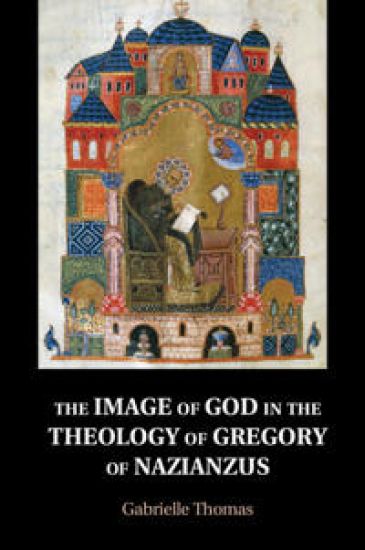
The Image of God in the Theology of Gregory of Nazianzus

The Image of God in the Theology of Gregory of Nazianzus

Gabrielle Thomas

Cambridge University Press
2023
pokkari
Gregory of Nazianzus, known best for his Christology and Trinitarian doctrine, presents an incomparable vision of the image of God. In this book, Gabrielle Thomas offers a close analysis of his writings and demonstrates how Nazianzen depicts both the nature and experience of the image of God throughout his corpus. She argues that Nazianzen's vision of the human person as an image of God is best understood in light of biblical and extra-biblical themes. To establish the breadth of his approach, Thomas analyzes the image of God against the backdrop of Nazianzen's beliefs about Christology, Pneumatology, creation, sin, spiritual warfare, ethics, and theosis. Interpreted accordingly, Nazianzen offers a dynamic and multifaceted account of the image of God, which has serious implications both for Cappadocian studies and contemporary theological anthropology.
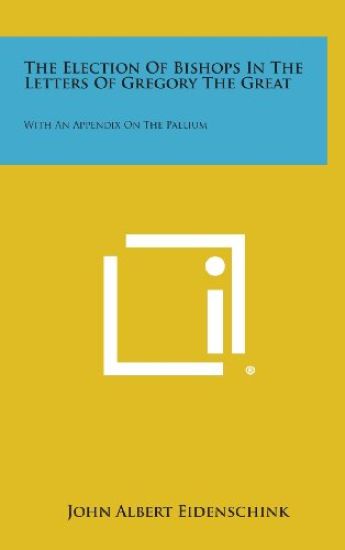
The Election of Bishops in the Letters of Gregory the Great: With an Appendix on the Pallium
The book titled ""The Election of Bishops in the Letters of Gregory the Great: With an Appendix on the Pallium"" by John Albert Eidenschink is a comprehensive study of the letters written by Pope Gregory the Great during his papacy between 590-604 CE. The book focuses on the process of electing bishops during this time period and the role played by the Pope in this process. The author examines the letters written by Pope Gregory to various bishops, clergy, and laypeople, which provide valuable insights into the election process and the criteria used to select bishops. The book also includes an appendix on the Pallium, a garment worn by bishops that symbolizes their authority and jurisdiction. The author provides a detailed analysis of the significance of the Pallium and its role in the election process. Overall, the book offers a fascinating insight into the early Christian Church and the process of selecting its leaders. The author's meticulous research and analysis of the letters written by Pope Gregory provide a valuable resource for scholars, historians, and anyone interested in the history of the Church.Catholic University Of America, Canon Law Studies, No. 215.This scarce antiquarian book is a facsimile reprint of the old original and may contain some imperfections such as library marks and notations. Because we believe this work is culturally important, we have made it available as part of our commitment for protecting, preserving, and promoting the world's literature in affordable, high quality, modern editions, that are true to their original work.