Kirjojen hintavertailu. Mukana 12 390 323 kirjaa ja 12 kauppaa.

Kirjahaku

Etsi kirjoja tekijän nimen, kirjan nimen tai ISBN:n perusteella.

1000 tulosta hakusanalla Heidi Wikström

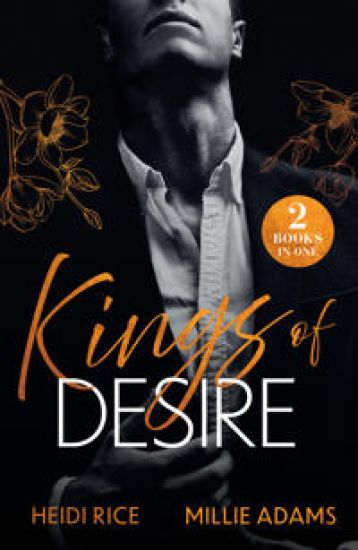
What The Greek Wants

What The Greek Wants

Heidi Rice; Julia James

HARPERCOLLINS PUBLISHERS
2025
nidottu
Greek's Kidnapped Princess First a runaway royal…then his stolen bride-to-be? Seeing Princess Freya fleeing a palace-arranged marriage, Theo is catapulted back to their electrifying encounter months before. Driven by instinct, the Greek steals her away to protect her—and entice her into a mutually beneficial union… But though Freya is as tormented by their searing attraction as Theo, can a marriage arrangement between them ever be purely political? Dimistrios's Bought Mistress The price of becoming his: total surrender! Lycos played his way from desperate poverty to enormous wealth at poker tables across Europe. It’s, therefore, by ruthless judgement, not luck, he wins an opponent’s Provence estate, and everything in it—including breathtaking natural beauty Arielle Degrange. He immediately resolves to take possession of her too. Only that relies on headstrong Arielle yielding to the Greek’s particular brand of seduction… Perfect for fans of: ?? Billionaire ?? Royal ?? Forced proximity
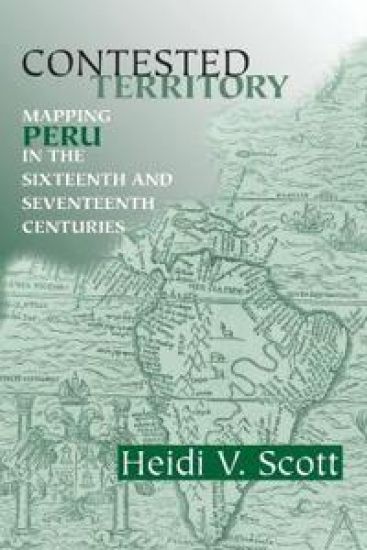
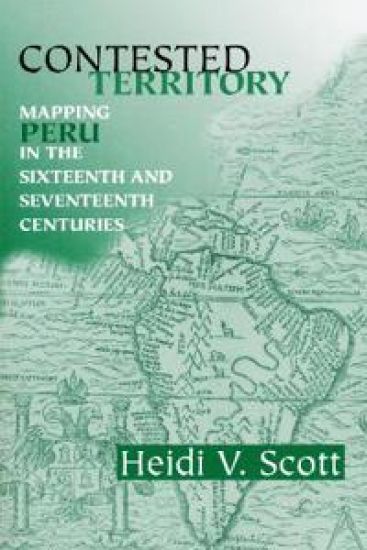
Contested Territory

Contested Territory

Heidi V. Scott

University of Notre Dame Press
2009
nidottu
Landscape is never static, but changes continuously when seen in relation to human occupation, movement, labor, and discourse. Contested Territory explores the ways in which Peru's early colonial landscapes were experienced and portrayed, especially by the Spanish conquerors but also by their conquered subjects. It focuses on the role played by indigenous groups in shaping the Spanish experiences of landscapes, the diverse geographical images of Peru and ways in which these were constructed and contested, and what this can tell us about the nature of colonial relations in post-conquest Peru. This exceptional study, which draws from archival records and sources such as cartographies, offers a richly nuanced view of the complexity of colonial relations. It will be read with appreciation by those interested in Spanish history, geography, and colonialism.
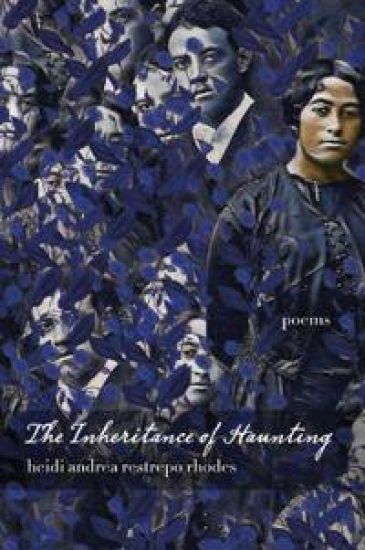
The Inheritance of Haunting

The Inheritance of Haunting

Heidi Andrea Restrepo Rhodes

University of Notre Dame Press
2019
sidottu
Winner of the 2018 Andrés Montoya Poetry Prize, The Inheritance of Haunting, by Heidi Andrea Restrepo Rhodes, is a collection of poems contending with historical memory and its losses and gains carried within the body, wrought through colonization and its generations of violence, war, and survival. The driving forces behind Rhodes's work include a decolonizing ethos; a queer sensibility that extends beyond sexual and gender identities to include a politics of deviance; errantry; ramshackled bodies; and forms of loving and living that persist in their wild difference. Invoking individual and collective ghosts inherited across diverse geographies, this collection queers the space between past, present, and future. In these poems, haunting is a kind of memory weaving that can bestow a freedom from the attenuations of the so-called American dream, which, according to Rhodes, is a nightmare of assimilation, conquest, and genocide. How love unfolds is also a Big Bang emergence into life—a way to, again and again, cut the future open, open up the opening, undertake it, begin. These poems are written for immigrants, queer and transgender people of color, women, Latin Americans, diasporic communities, and the many impacted by war.
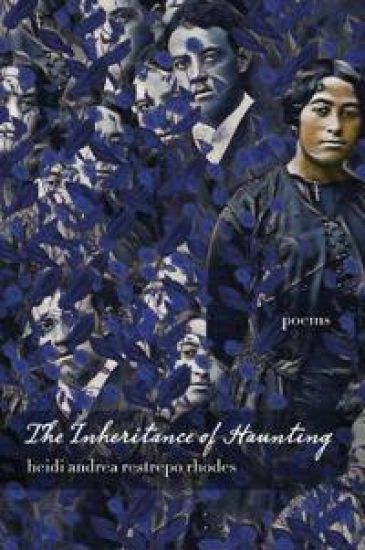
The Inheritance of Haunting

The Inheritance of Haunting

Heidi Andrea Restrepo Rhodes

University of Notre Dame Press
2019
nidottu
Winner of the 2018 Andrés Montoya Poetry Prize, The Inheritance of Haunting, by Heidi Andrea Restrepo Rhodes, is a collection of poems contending with historical memory and its losses and gains carried within the body, wrought through colonization and its generations of violence, war, and survival. The driving forces behind Rhodes's work include a decolonizing ethos; a queer sensibility that extends beyond sexual and gender identities to include a politics of deviance; errantry; ramshackled bodies; and forms of loving and living that persist in their wild difference. Invoking individual and collective ghosts inherited across diverse geographies, this collection queers the space between past, present, and future. In these poems, haunting is a kind of memory weaving that can bestow a freedom from the attenuations of the so-called American dream, which, according to Rhodes, is a nightmare of assimilation, conquest, and genocide. How love unfolds is also a Big Bang emergence into life—a way to, again and again, cut the future open, open up the opening, undertake it, begin. These poems are written for immigrants, queer and transgender people of color, women, Latin Americans, diasporic communities, and the many impacted by war.
Contested Territory

Contested Territory

Heidi V. Scott

UNIVERSITY OF NOTRE DAME PRESS
2022
sidottu
Landscape is never static, but changes continuously when seen in relation to human occupation, movement, labor, and discourse. Contested Territory explores the ways in which Peru's early colonial landscapes were experienced and portrayed, especially by the Spanish conquerors but also by their conquered subjects. It focuses on the role played by indigenous groups in shaping the Spanish experiences of landscapes, the diverse geographical images of Peru and ways in which these were constructed and contested, and what this can tell us about the nature of colonial relations in post-conquest Peru. This exceptional study, which draws from archival records and sources such as cartographies, offers a richly nuanced view of the complexity of colonial relations. It will be read with appreciation by those interested in Spanish history, geography, and colonialism.
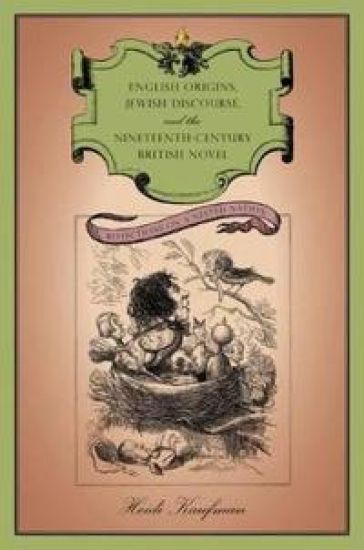
English Origins, Jewish Discourse, and the Nineteenth-Century British Novel
“For we rather forget that the Christian God was a Jew,” Patrick Braybrooke facetiously claimed, “though no doubt this was a Divine mistake and the ‘nationality’ of Christ should have been English.” Taking Braybrooke’s lead, Heidi Kaufman argues that the proliferation of Jewish discourse in nineteenth-century British novels was linked to the construction of English character and English origins. The period of the eighteenth century marks a turning point in definitions of English national identity, not only because of a rise in modern racial thinking, but also because of the contradictory dimensions of Englishness that called out for resolution in novels. This study looks at some of the ways in which novels of the nineteenth century began to rewrite Jewish and Christian theological affiliations in an effort to allay the racial panic such associations posed for the nation’s newly emergent racial-religious identity. Novels were uniquely well suited to this task because of their emphasis on sequential history and character development, their increasing popularity, and their imaginative possibilities. Kaufman shows that nineteenth-century novels did not simply engender ideas about England and the English but also attempted to correct a problem that arose when the racial and theological components of national identity came into conflict with one another.
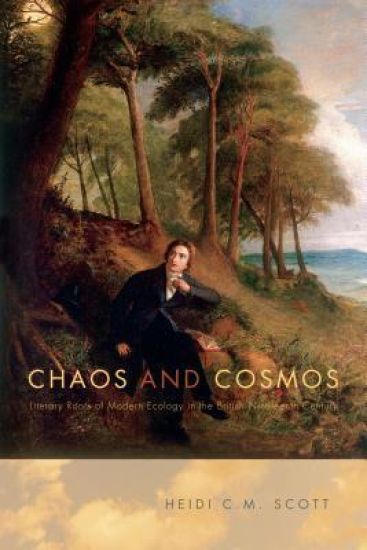
Chaos and Cosmos

Chaos and Cosmos

Heidi C. M. Scott

Pennsylvania State University Press
2014
sidottu
In Chaos and Cosmos, Heidi Scott integrates literary readings with contemporary ecological methods to investigate two essential and contrasting paradigms of nature that scientific ecology continues to debate: chaos and balance. Ecological literature of the Romantic and Victorian eras uses environmental chaos and the figure of the balanced microcosm as tropes essential to understanding natural patterns, and these eras were the first to reflect upon the ecological degradations of the Industrial Revolution. Chaos and Cosmos contends that the seed of imagination that would enable a scientist to study a lake as a microcosmic world at the formal, empirical level was sown by Romantic and Victorian poets who consciously drew a sphere around their perceptions in order to make sense of spots of time and place amid the globalizing modern world. This study’s interest goes beyond likening literary tropes to scientific aesthetics; it aims to theorize the interdisciplinary history of the concepts that underlie our scientific understanding of modern nature. Paradigmatic ecological ideas such as ecosystems, succession dynamics, punctuated equilibrium, and climate change are shown to have a literary foundation that preceded their status as theories in science. This book represents an elevation of the prospects of ecocriticism toward fully developed interdisciplinary potentials of literary ecology.
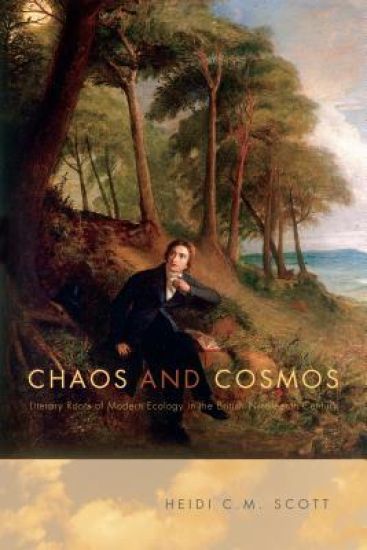
Chaos and Cosmos

Chaos and Cosmos

Heidi C. M. Scott

Pennsylvania State University Press
2015
pokkari
In Chaos and Cosmos, Heidi Scott integrates literary readings with contemporary ecological methods to investigate two essential and contrasting paradigms of nature that scientific ecology continues to debate: chaos and balance. Ecological literature of the Romantic and Victorian eras uses environmental chaos and the figure of the balanced microcosm as tropes essential to understanding natural patterns, and these eras were the first to reflect upon the ecological degradations of the Industrial Revolution. Chaos and Cosmos contends that the seed of imagination that would enable a scientist to study a lake as a microcosmic world at the formal, empirical level was sown by Romantic and Victorian poets who consciously drew a sphere around their perceptions in order to make sense of spots of time and place amid the globalizing modern world. This study’s interest goes beyond likening literary tropes to scientific aesthetics; it aims to theorize the interdisciplinary history of the concepts that underlie our scientific understanding of modern nature. Paradigmatic ecological ideas such as ecosystems, succession dynamics, punctuated equilibrium, and climate change are shown to have a literary foundation that preceded their status as theories in science. This book represents an elevation of the prospects of ecocriticism toward fully developed interdisciplinary potentials of literary ecology.
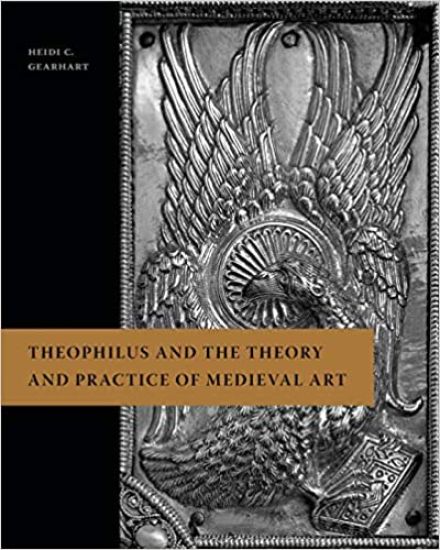
Theophilus and the Theory and Practice of Medieval Art

Theophilus and the Theory and Practice of Medieval Art

Heidi C. Gearhart

Pennsylvania State University Press
2017
sidottu
In this study of the rare twelfth-century treatise On Diverse Arts, Heidi C. Gearhart explores the unique system of values that guided artists of the High Middle Ages as they created their works.Written in northern Germany by a monk known only by the pseudonym Theophilus, On Diverse Arts is the only known complete tract on art to survive from the period. It contains three books, each with a richly religious prologue, describing the arts of painting, glass, and metalwork. Gearhart places this one-of-a-kind treatise in context alongside works by other monastic and literary thinkers of the time and presents a new reading of the text itself. Examining the earliest manuscripts, she reveals a carefully ordered, sophisticated work that aligns the making of art with the virtues of a spiritual life. On Diverse Arts, Gearhart shows, articulated a distinctly medieval theory of art that accounted for the entire process of production—from thought and preparation to the acquisition of material, the execution of work, the creation of form, and the practice of seeing.An important new perspective on one of the most significant texts in art history and the first study of its kind available in English, Theophilus and the Theory and Practice of Medieval Art provides fresh insight into the principles and values of medieval art making. Scholars of art history, medieval studies, and Christianity will find Gearhart’s book especially edifying and valuable.
Soap Operas for Social Change

Soap Operas for Social Change

Heidi Nariman

Praeger Publishers Inc
1993
sidottu
In 1975, the Mexican network Televisa broadcast the first entertainment-education soap opera, which was written and produced by Miguel Sabido according to his own theory-based research formula. The soap opera, called Ven Conmigo (Come with Me), promoted a government-sponsored adult literacy program, and its commercial and social success prompted Televisa to produce, broadcast, and research the audience effects of five other Sabido-designed soaps. Development themes treated in these shows included family planning, women's rights, responsible parenthood, and adolescent sexual education. Each of the six entertainment-education soap operas was exported for broadcast in other Latin American nations and achieved high ratings consistent with the ratings of conventional soaps. Subsequent evaluation research indicated that these educational soaps did successfully increase viewers' awareness and acceptance of their respective messages. Nariman examines Sabido's model with particular attention given to communication and behavioral theories that constitute parts of the formula: the hierarchy of effects model by William McGuire, the social learning theory developed by Albert Bandura, the dramatic theory proposed by Eric Bentley, the two-step-flow theory of Paul F. Lazarsfeld, and opinion leadership as articulated by Lazarsfeld, Berelson, and Gaudet. Nariman details the historical, social, and political context within which Sabido's formula emerged in Mexico, and discusses the research and application of the research data in actual soap opera design and production. Nariman discusses results of these evaluations conducted in Latin America, then provides an overview of the diffusion of the Sabido formula to other countries and media in India, Kenya, Zaire, Pakistan, and other developing countries. Each chapter includes lively examples from Sabido's soap operas that are highlighted by sample dialogue, plots, and character profiles. The volume takes an important step towards breaking down the traditional concept of informational or educational campaigns as mutually exclusive from commercial mass media entertainment.
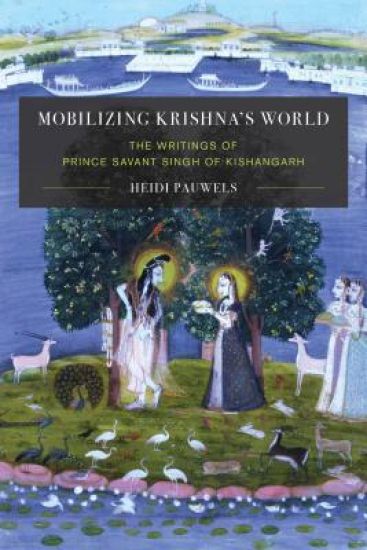
Mobilizing Krishna's World

Mobilizing Krishna's World

Heidi Pauwels

University of Washington Press
2017
sidottu
Savant Singh (1694–1764), the Rajput prince of Kishangarh-Rupnagar, is famous for commissioning beautiful works of miniature painting and composing devotional (bhakti) poetry to Krishna under the nom de plume Nagaridas. After his throne was usurped by his younger brother, while Savant Singh was on the road seeking military alliances to regain his kingdom, he composed an autobiographical pilgrimage account, "The Pilgrim's Bliss" (Tirthananda); a hagiographic anthology, "Garland of Anecdotes about Songs" (Pad-Prasang-mala); and a reworking of the story of Rama, "Garland of Rama's Story" (Ram-Carit-Mala).Through an examination of Savant Singh's life and works, Heidi Pauwels explores the circulation of ideas and culture in the sixteenth through eighteenth centuries in north India, revealing how Singh mobilized soldiers but also used myths, songs, and stories about saints in order to cope with his personal and political crisis. Mobilizing Krishna's World allows us a peek behind the dreamlike paintings and refined poetry to glimpse a world of intrigue involving political and religious reform movements.
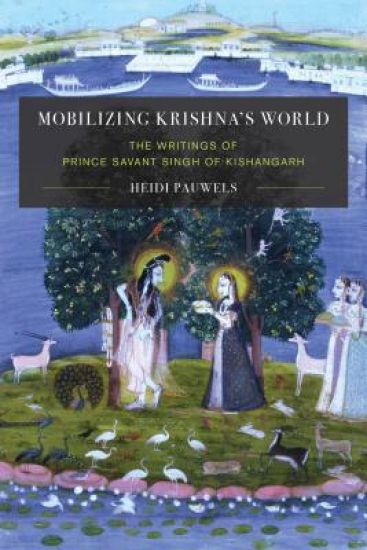
Mobilizing Krishna's World

Mobilizing Krishna's World

Heidi Pauwels

University of Washington Press
2017
pokkari
Savant Singh (1694–1764), the Rajput prince of Kishangarh-Rupnagar, is famous for commissioning beautiful works of miniature painting and composing devotional (bhakti) poetry to Krishna under the nom de plume Nagaridas. After his throne was usurped by his younger brother, while Savant Singh was on the road seeking military alliances to regain his kingdom, he composed an autobiographical pilgrimage account, "The Pilgrim's Bliss" (Tirthananda); a hagiographic anthology, "Garland of Anecdotes about Songs" (Pad-Prasang-mala); and a reworking of the story of Rama, "Garland of Rama's Story" (Ram-Carit-Mala).Through an examination of Savant Singh's life and works, Heidi Pauwels explores the circulation of ideas and culture in the sixteenth through eighteenth centuries in north India, revealing how Singh mobilized soldiers but also used myths, songs, and stories about saints in order to cope with his personal and political crisis. Mobilizing Krishna's World allows us a peek behind the dreamlike paintings and refined poetry to glimpse a world of intrigue involving political and religious reform movements.
Dissecting Stephen King

Dissecting Stephen King

Heidi Strengell

University of Wisconsin Press
2006
nidottu
In a thoughtful, well-informed study exploring fiction from throughout Stephen King's immense oeuvre, Heidi Strengell shows how this popular writer enriches his unique brand of horror by building on the traditions of his literary heritage. Tapping into the wellsprings of the gothic to reveal contemporary phobias, King invokes the abnormal and repressed sexuality of the vampire, the hubris of Frankenstein, the split identity of the werewolf, the domestic melodrama of the ghost tale. Drawing on myths and fairy tales, he creates characters who, like the heroic Roland the Gunslinger and the villainous Randall Flagg, may either reinforce or subvert the reader's childlike faith in society. And, in the manner of the naturalist tradition, he reinforces a tension between the free will of the individual and the daunting hand of fate.
The Vanishers

The Vanishers

Heidi Julavits

Random House USA Inc
2013
pokkari
From acclaimed novelist and editor of The Believer Heidi Julavits, comes a wildly imaginative novel about grief, female rivalry, and the furious power of a daughter's love. Julia Severn is a talented student at an elite institute for psychics. When Julia's mentor, the legendary Madame Ackerman, grows jealous of her protegee's talents, she subjects Julia to the painful humiliation of reliving her mother's suicide . . . and then launches a desperate psychic attack. But Julia's gifts, though a threat to her teacher, prove an asset to others. Soon she's recruited to track down a missing person who might have a connection to her mother. As Julia sifts through ghosts and astral clues, everything she thought she knew about her mother is called into question, and she discovers that her ability to know the minds of others--including her own--goes far deeper than she ever imagined.
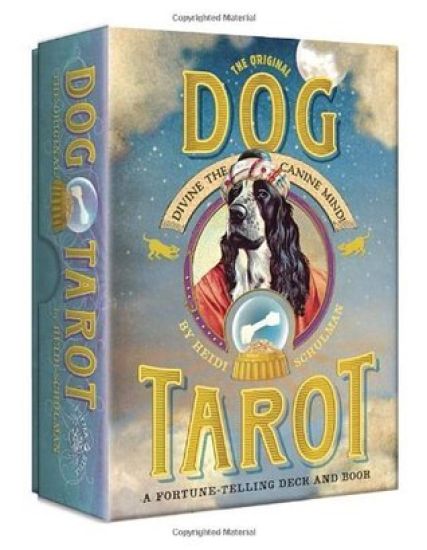
The Original Dog Tarot

The Original Dog Tarot

Heidi Schulman

Potter Style
2012
muu
Want to know why your dog shreds your slippers but ignores his designer toys? Does your pooch really want a puppy for companionship, or are you delusional? The Original Dog Tarot is an entertaining, tongue-in-jowl deck of tarot cards and accompanying book affectionately written for dog lovers who want to divine their canine's mind. The 30 cards are a takeoff on the traditional tarot; they're divided into the Major Barkana and Minor Barkana. Each card offers advice for both canines and the humans in their lives. You don't have to be familiar with traditional tarot to use this deck. It is a witty and wise stand-alone oracle for anyone who has given up mastering the techniques of The Dog Whisperer.