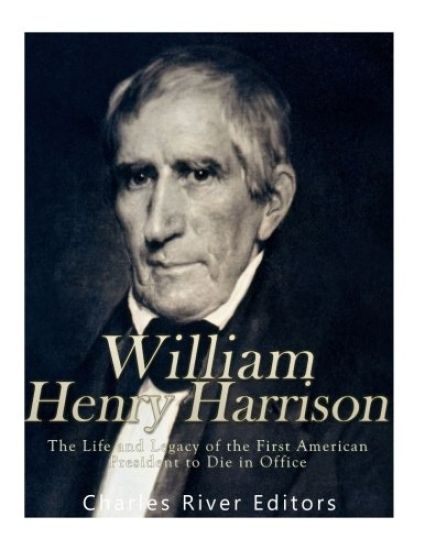
*Includes pictures *Includes accounts of Harrison's battles and Harrison's quotes about his career *Includes online resources and a bibliography "Old Tip he wore a homespun coat, he had no ruffled shirt: wirt-wirt, But Matt he has the golden plate, and he's a little squirt: wirt-wirt " - A Whig campaign slogan during the 1840 election When one is looking quickly over the lives of the Presidents of the United States, it is easy to overlook William Henry Harrison. After all, he only served as the Chief Executive for 30 days, and he spent the majority of those in bed, fighting for his life and eventually losing. However, to ignore Harrison because he served such a short time in the White House is just as foolish as ignoring Patrick Henry or Alexander Hamilton because they were never elected to the nation's highest office. In fact, like Henry, Hamilton, and many others from the early days of the Republic, Harrison served his country in many ways and was one of the most consequential figures both in politics and the military, which makes it all the more unfortunate that much the same way Hamilton is remembered for the duel with Aaron Burr, Harrison is remembered for being the first president to die in office. The manner of Harrison's death, and the length of his inaugural address, have overshadowed the various facets of his life and career. For instance, few people know of his famous family, how he dropped out of medical school to become a soldier, and how he eloped with a young woman and went on to have 10 children with her. Harrison's early political career also remains relatively unknown; few realize that he spent much of his early adulthood in what was then still wilderness, first as a soldier, then as the Territorial Governor of the Indiana Territory. Older Americans may have heard the phrase used during his election - "Tippecanoe and Tyler, Too" - but even that battle was overshadowed by the War of 1812. Many people look at his austere portrait and do not realize that he served in both the United States House and Senate, and that he also lived in South America as an American diplomat. Even during his short presidency, he accomplished lasting work, laying the foundation for what later became the rules of the American Civil Service system. Thus, even while it is true that he had the shortest presidency in American history, Harrison managed to accomplish more for the long term good of the nation than other men have in a much longer time. William Henry Harrison: The Life and Legacy of the First American President to Die in Office looks at one of America's foremost military heroes of the early 19th century. Along with pictures of important people, places, and events, you will learn about William Henry Harrison like never before.
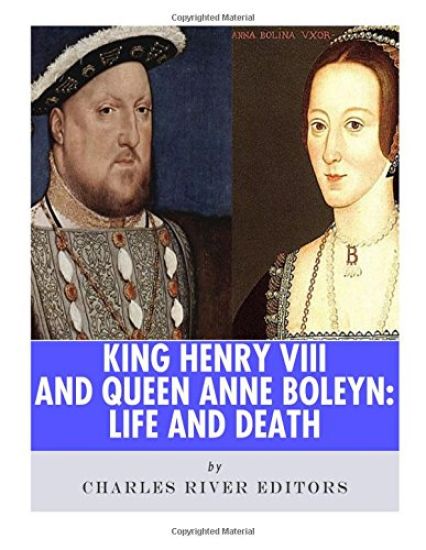
*Includes pictures of Henry, Anne and important people, places, and events in their lives. *Includes a Bibliography for further reading. "We are, by the sufferance of God, King of England; and the Kings of England in times past never had any superior but God." - King Henry VIII "To us Anne Boleyn ] appears inconsistent-religious yet aggressive, calculating yet emotional, with the light touch of the courtier yet the strong grip of the politician-but is this what she was, or merely what we strain to see through the opacity of the evidence? As for her inner life, short of a miraculous cache of new material, we shall never really know. Yet what does come to us across the centuries is the impression of a person who is strangely appealing to the early twenty-first century: A woman in her own right-taken on her own terms in a man's world; a woman who mobilised her education, her style and her presence to outweigh the disadvantages of her sex; of only moderate good looks, but taking a court and a king by storm. Perhaps, in the end, it is Thomas Cromwell's assessment that comes nearest: intelligence, spirit and courage." - Eric Ives Over 450 years after his reign, Henry VIII is still the most famous and recognizable King of England, but it's for all the wrong reasons. Though well regarded by contemporaries as a learned king and "one of the most charismatic rulers to sit on the English throne", he is best remembered today for his gluttony and multiple marriages, particularly the gruesome way in which he was widowed on more than one occasion. Naturally, that was the focus of the popular Showtime drama series centered around his life, The Tudors. Henry VIII will probably continue to be best known for beheading some of his wives, most notably Anne Boleyn, so it is somewhat fitting that his most decisive act came as a result of a marital mishap. Sharply at odds with the Catholic Church over his attempt to dissolve his marriage with Catherine of Aragon, Henry VIII ultimately broke with the Church and established the Church of England, which forever both the religious history of England and the social hierarchy of the nation and its empire. Of Henry VIII's wives, none is more famous than his second, Anne Boleyn, who even today remains both famous and infamous for her personal and political life nearly 400 years after her death. Anne was a vixen and ultimately a victim, but she was also an astute politician, foolish lover and wise woman who could never decide whether to listen to her heart or her head. She was also both an adulteress and religious reformer, and these two qualities would come together to change the face of English Christianity forever. Anne came into the court with a better idea of what she was getting herself into than any other of Henry's queens, but even she could not see foresee how fickle fate would cost her both her love and her life. Like Catherine of Aragon before her, she would be unable to hold on to her wandering husband. However, she would, ironically, be the last of his queens that he'd ever cheat on. Early female mortality and his own failing health would keep him faithful to the women who would follow her as queen, in a way that the teachings of the Church and common decency never would. King Henry VIII and Queen Anne Boleyn looks at the lives of the famous king and queen, but it also analyzes their enduring legacies and popular legends about them. Along with pictures of important people, places, and events, you will learn about Henry VIII and Anne Boleyn like you never have before, in no time at all.
*Includes pictures *Includes Henry's quotes about his life and career *Includes a bibliography for further reading "If this is treason, make the most of it." - Patrick Henry The American Revolution is replete with seminal moments that every American learns in school, from the "shot heard 'round the world" to the Declaration of Independence, but the events that led up to the fighting at Lexington & Concord were borne out of 10 years of division between the British and their American colonies over everything from colonial representation in governments to taxation, the nature of searches, and the quartering of British regulars in private houses. From 1764-1775, a chain of events that included lightning rods like the Townshend Acts led to bloodshed in the form of the Boston Massacre, while the Boston Tea Party became a symbol of nonviolent protest. Of course, the Revolutionary era also produced some of the most famous Americans in history, and Patrick Henry has the ironic distinction of frequently being overlooked in comparison to his contemporaries while also being remembered for speaking one of the most famous lines in American history despite the fact he may never have actually said it. When Henry famously cried out, "Give me liberty or give me death," he knew a surprising amount about both. He had known the liberty of running across open fields on warm Virginia mornings and of riding at breakneck speed across fields he owned. He had fought for, and won, the liberty of numerous clients he defended in Virginia's colonial courts. He had also taken the liberty of others, though for different reasons. He owned slaves and saw what it cost them to serve him each day, and he had even kept his own young wife in chains to prevent her from harming herself or one of their children. In the midst of the Revolutionary War, he was spared the horror of ordering men to their deaths by instead serving in an executive role during the war. He buried one wife and married another, and he lived to see 17 children born to the freedom he so cherished. Over time, he also helped shape this hard won freedom, speaking out against a strong federal government that he felt might take away the new nation's liberty. At the same time, he also lived to see the effects of unbridled liberty in France, and he was shaped by what he learned, to the extent that he spoke toward the end of his life for a more centralized government. Henry played crucial roles both during the Revolution and before it, locally and nationally. He was Virginia's first governor, and he was instrumental in convincing Virginian politicians to go to war. And yet, his life and career have mostly been reduced to the famous phrase "Give me liberty, or give me death," even though it's actually unclear whether those most famous of words were actually in the speech. This is because the first transcript of the speech came over a generation after Henry delivered it, in a biography of Henry written by William Wirt. Thus, ironically, historians are divided over whether the phrase Henry's best known for was actually his words or those of his biographer. Moreover, similar variations of that phrase already existed, and it's possible Henry was familiar with them, much the same way Franklin Roosevelt's line about fear had predecessors as far back as Duke Wellington over a century earlier. Either way, the words and the debate over it have overshadowed what was a monumental career in service of his new country, and the fact that Henry was at the forefront of the battles that ultimately shaped its direction. Patrick Henry: The Life and Legacy of the Founding Father and Virginia's First Governor looks at one of colonial Virginia's most important political leaders. Along with pictures of important people, places, and events, you will learn about Patrick Henry like never before.
Victorian Worthies: Sixteen Biographies, is a classical book and has been considered important throughout the human history. So that this book is never forgotten we at Alpha Editions have made efforts in its preservation by republishing this again in a modern format book for present and future generations. This whole book has been reformatted, retyped and designed. These books are not made of scanned copies of their original work and hence the text is clear and readable.
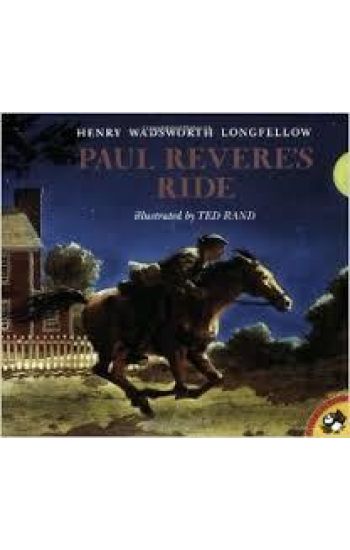
Longfellow's tribute to the famous revolutionary hero begins with the stirring cadence that American schoolchildren have committed to memory for over a century. Now illustrator Ted Rand brings these vivid and beautiful lines to life as dramatically as the poet's immortal message inspires.The clatter of hooves seems to echo in Rand's evocative paintings of that famed midnight ride.... --Kirkus reviews
The Naturalist on the River Amazons is a record of adventures, habits of animals, sketches of Brazilian and Indian life and aspect of nature under the Equator, during the author's eleven years of travel, in two volumes, this is the first.
The Naturalist on the River Amazons is a record of adventures, habits of animals, sketches of Brazilian and Indian life and aspect of nature under the Equator, during the author's eleven years of travel, in two volumes this is the second.
I embarked at Liverpool, with Mr. Wallace, in a small trading vessel, on the 26th of April, 1848; and, after a swift passage from the Irish Channel to the equator, arrived, on the 26th of May, off Salinas. This is the pilot-station for vessels bound to Pará, the only port of entry to the vast region watered by the Amazons. It is a small village, formerly a missionary settlement of the Jesuits, situated a few miles to the eastward of the Pará River. Here the ship anchored in the open sea at a distance of six miles from the shore, the shallowness of the water far out around the mouth of the great river not permitting, in safety, a nearer approach; and, the signal was hoisted for a pilot. It was with deep interest that my companion and myself, both now about to see and examine the beauties of a tropical country for the first time, gazed on the land where I, at least, eventually spent eleven of the best years of my life. To the eastward the country was not remarkable in appearance, being slightly undulating, with bare sand-hills and scattered trees; but to the westward, stretching towards the mouth of the river, we could see through the captain’s glass a long line of forest, rising apparently out of the water; a densely-packed mass of tall trees, broken into groups, and finally into single trees, as it dwindled away in the distance. This was the frontier, in this direction, of the great primaeval forest characteristic of this region, which contains so many wonders in its recesses, and clothes the whole surface of the country for two thousand miles from this point to the foot of the Andes.This title is part of UC Press's Voices Revived program, which commemorates University of California Press's mission to seek out and cultivate the brightest minds and give them voice, reach, and impact. Drawing on a backlist dating to 1893, Voices Revived makes high-quality, peer-reviewed scholarship accessible once again using print-on-demand technology. This title was originally published in 1962.I embarked at Liverpool, with Mr. Wallace, in a small trading vessel, on the 26th of April, 1848; and, after a swift passage from the Irish Channel to the equator, arrived, on the 26th of May, off Salinas. This is the pilot-station for vessels bound to Pa
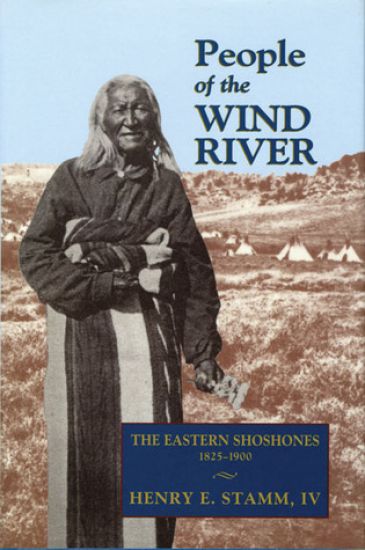
The first book-length history of the Eastern ShoshonesPeople of the Wind River tells the story of the Eastern Shoshones through eight tumultuous decades - from 1825, when they reached mutual accommodations with the first permanent Anglo-American settlers in Wind River country, to 1900, when the death of Chief Washakie marked a final break with their traditional lives as nineteenth-century Plains Indians.Drawing on extensive research in primary documents and interviews with descendants of early Shoshone leaders, Henry E. Stamm IV traces critical developments in the tribe's history, including its migration from the Great Basin to the High Plains of present-day Wyoming and the arrival of Arapahoes in the region. After 1885, with the buffalo gone and cattle herds growing, the Eastern Shoshones entered the twentieth century with only a shadow of their earlier economic power but still secure in their spiritual traditions.
This work has been selected by scholars as being culturally important and is part of the knowledge base of civilization as we know it.This work is in the public domain in the United States of America, and possibly other nations. Within the United States, you may freely copy and distribute this work, as no entity (individual or corporate) has a copyright on the body of the work.Scholars believe, and we concur, that this work is important enough to be preserved, reproduced, and made generally available to the public. To ensure a quality reading experience, this work has been proofread and republished using a format that seamlessly blends the original graphical elements with text in an easy-to-read typeface.We appreciate your support of the preservation process, and thank you for being an important part of keeping this knowledge alive and relevant.
Join renowned naturalist Henry Walter Bates on his journey through the Amazon river basin. With vivid descriptions of the flora and fauna, Bates shares his observations and insights about the natural world. This book is a must-read for anyone interested in the Amazon region or the history of naturalism.This work has been selected by scholars as being culturally important, and is part of the knowledge base of civilization as we know it.This work is in the "public domain in the United States of America, and possibly other nations. Within the United States, you may freely copy and distribute this work, as no entity (individual or corporate) has a copyright on the body of the work.Scholars believe, and we concur, that this work is important enough to be preserved, reproduced, and made generally available to the public. We appreciate your support of the preservation process, and thank you for being an important part of keeping this knowledge alive and relevant.
Venture into the heart of the Amazon with Henry Bates's enthralling "The Naturalist on the River Amazons," a classic account of exploration and natural history in South America. Bates, a keen observer and dedicated scientist, meticulously documents his years spent traversing the Amazon River Valley, revealing a world teeming with unique and fascinating life. Immerse yourself in the sights and sounds of the Brazilian rainforest as Bates vividly describes the region's geography, climate, and, most notably, its incredible diversity of insects. This enduring work, a cornerstone of zoology and entomology, offers a captivating glimpse into the 19th-century scientific exploration of one of Earth's most remarkable ecosystems. "The Naturalist on the River Amazons" remains a vital resource for anyone interested in the Amazon and the history of scientific discovery.This work has been selected by scholars as being culturally important, and is part of the knowledge base of civilization as we know it.This work is in the public domain in the United States of America, and possibly other nations. Within the United States, you may freely copy and distribute this work, as no entity (individual or corporate) has a copyright on the body of the work.Scholars believe, and we concur, that this work is important enough to be preserved, reproduced, and made generally available to the public. We appreciate your support of the preservation process, and thank you for being an important part of keeping this knowledge alive and relevant.