Kirjojen hintavertailu. Mukana 11 627 220 kirjaa ja 12 kauppaa.

Kirjahaku

Etsi kirjoja tekijän nimen, kirjan nimen tai ISBN:n perusteella.

1000 tulosta hakusanalla Hubert Mathieu

Measurement in the Social Sciences

Measurement in the Social Sciences

Hubert M. Blalock

AldineTransaction
1974
nidottu
Among the frustrations constantly confronting the social scientist are those associated with the general process of measurement. The importance of good measurement has long been recognized in principle, but it has often been neglected in practice in many of the social sciences. Now that the methodological tools of multivariate analysis, simultaneous-equation estimation, and causal modeling are diffused more widely into the social sciences, and now that the very serious implications of random and non-random measurement errors are being systematically investigated, it is all the more important that social scientists give top priority to the quality of their data and the clarity of their theoretical conceptualizations. The book is organized so that, one proceeds from problems of data collection to those of data analysis. It is not intended to be a complete work covering all types of measurement problems that have arisen in the social sciences. Instead, it represents a series of studies that are deemed to be crucial for the advancement of social science research but which have not received sufficient attention in most of the social sciences. The basic purpose is to stimulate further methodological research on measurement and to study the ways in which knowledge that has been accumulated in some fields may be generalized. Part I is concerned with applying scaling approaches developed in psychometrics to problems that arise in other social sciences. The focus is on finding better ways to ask questions of respondents so as to raise the level of measurement above that of simple ordinal scales. Part II focuses on multiple-indicator theory and strategies as applied to relatively complex models and to change data. In this section the emphasis shifts to how one analyzes fallible data through the construction of explicit measurement-error models. Part III deals with the statistical analysis of ordinal data, including the interpretation and empirical behaviors of various ordinal measures of association.
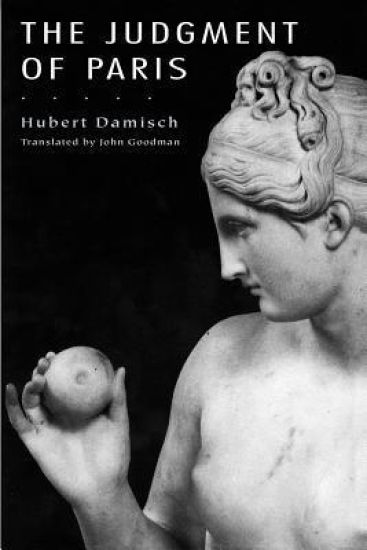
The Judgment of Paris

The Judgment of Paris

Hubert Damisch

University of Chicago Press
1996
sidottu
Drawing on Freudian theories of sexuality and Kant's conception of the beautiful, French art historian Hubert Damisch considers artists as diverse as Raphael, Picasso, Watteau, and Manet to demonstrate that beauty has always been connected to ideas of sexual difference and pleasure. Damisch's tale begins with the judgment of Paris, in which Paris awards Venus the golden apple and thus forever links beauty with desire. The casting of this decision as a mistake--in which desire is rewarded over wisdom and strength--is then linked to theories of the unconscious and psychological drives. In his quest for an exposition of the beautiful in its relation to visual pleasure, Damisch employs what he terms "analytic iconology," following the revisions and repetitions of the motif of the judgment through art history, philosophy, aesthetics, and psychoanalysis. This translation brings an important figure of the French art historical tradition to Anglo-American audiences.
The Judgment of Paris

The Judgment of Paris

Hubert Damisch

University of Chicago Press
1996
nidottu
Drawing on Freudian theories of sexuality and Kant's conception of the beautiful, French art historian Hubert Damisch considers artists as diverse as Raphael, Picasso, Watteau, and Manet to demonstrate that beauty has always been connected to ideas of sexual difference and pleasure. Damisch's tale begins with the judgment of Paris, in which Paris awards Venus the golden apple and thus forever links beauty with desire. The casting of this decision as a mistake—in which desire is rewarded over wisdom and strength—is then linked to theories of the unconscious and psychological drives. In his quest for an exposition of the beautiful in its relation to visual pleasure, Damisch employs what he terms “analytic iconology,” following the revisions and repetitions of the motif of the judgment through art history, philosophy, aesthetics, and psychoanalysis. This translation brings an important figure of the French art historical tradition to Anglo-American audiences.
Michel Foucault

Michel Foucault

Hubert L. Dreyfus; Paul Rabinow; Michel Foucault

University of Chicago Press
1983
pokkari
Summarizes the themes and arguments of the French philosopher on madness, medicine, sex, truth, and power, and explains Foucault's moral and historical outlook
Teaching Anticommunism

Teaching Anticommunism

Hubert Villeneuve

McGill-Queen's University Press
2020
sidottu
Fred C. Schwarz (1913–2009) was an Australian-born medical doctor and evangelical preacher who settled in the United States in the early 1950s, where he founded the Christian Anti-Communism Crusade. His work as an anticommunist educator spanned five decades; his campaigns attracted large crowds, strengthened grassroots conservatism, and influenced political leaders. By the late 1950s, the Crusade had become one of the most important conservative organizations in America, turning numerous citizens into lifelong right-wing militants.In Teaching Anticommunism Hubert Villeneuve sheds light on Schwarz's fascinating career and organization, which left a distinct mark on the United States and was also active internationally. Cold War anticommunism in the US consisted of more than the House Un-American Activities Committee and the campaign led by Senator Joseph McCarthy. Villeneuve shows that, by the early 1960s, Schwarz's Crusade was an integral part of a burgeoning American anticommunist subculture that united grassroots conservatives of all stripes. Its influence continued, paving the way for the development of the "New Right" that began in the 1970s. In addition to exploring the life and work of Schwarz, the book highlights the transnational dimension of US conservatism by outlining the Crusade's role in worldwide anticommunist networks that operated throughout the Cold War.Packed with unnerving evidence but leavened with humorous anecdotes and insights into a mercurial figure, Teaching Anticommunism provides a unique perspective on the evolution of the contemporary American right wing and its global connections.
Song of the Silent Snow

Song of the Silent Snow

Hubert Selby Jr.

Penguin Books Ltd
2012
pokkari
Fat Phil can't lose at dice, even when his friends turn nasty and he's trying his hardest; a salesman finds success comes from fortune cookie mottoes, but panics when these mottoes turn against him; a date goes so perfectly a man talks himself out of ever seeing the woman again; a commuter finds himself obsessed with a plain young woman on his train, at the expense of his marriage. In this collection of short stories, Hubert Selby Jr. plunges the reader into the violent, passionate worlds of his protagonists and captures perfectly the delicate balance between joy and despair.
De opgang van Mens en Wetenschap
Het wetenschappelijk establishment heeft een zeer diepe buiging gemaakt voor de 'godin der rede', een buiging die alle proporties te buiten gaat. De wetenschap, zoals die gevormd is, vertegenwoordigt de 'gruwel-der-verwoesting' waar de profeet Dani l van spreekt, staande in de heilige plaats. Bevindt dat heiligdom zich (ook) niet in de tempel van ons lichaam? Want de moderne beoefening van de wetenschap is een dwaze zelfverheffing van de mens in zijn autonome trots. In de bestudering van de opgang van de mens en wetenschap gaan we deze kwestie uitdiepen.
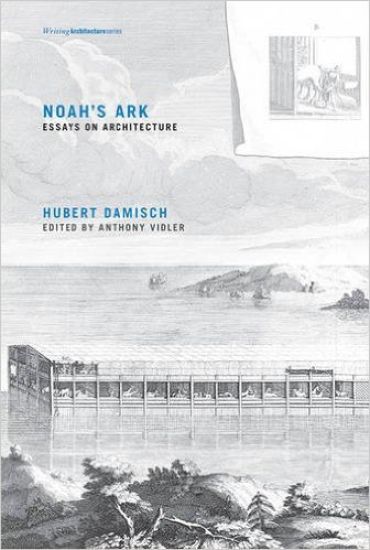
Noah's Ark

Noah's Ark

Hubert Damisch

MIT Press
2016
pokkari
From Noah's Ark to Diller + Scofidio's "Blur" Building, a distinguished art historian maps new ways to think about architecture's origin and development.Trained as an art historian but viewing architecture from the perspective of a "displaced philosopher," Hubert Damisch in these essays offers a meticulous parsing of language and structure to "think architecture in a different key," as Anthony Vidler puts it in his introduction. Drawn to architecture because it provides "an open series of structural models," Damisch examines the origin of architecture and then its structural development from the nineteenth through the twenty-first centuries. He leads the reader from Jean-Francois Blondel to Eugene Viollet-le-Duc to Mies van der Rohe to Diller + Scofidio, with stops along the way at the Temple of Jerusalem, Vitruvius's De Architectura, and the Louvre. In the title essay, Damisch moves easily from Diderot's Encylopedie to Noah's Ark (discussing the provisioning, access, floor plan) to the Pan American Building to Le Corbusier to Ground Zero. Noah's Ark marks the origin of construction, and thus of architecture itself. Diderot's Encylopedie entry on architecture followed his entry on Noah's Ark; architecture could only find its way after the Flood.In these thirteen essays, written over a span of forty years, Damisch takes on other histories and theories of architecture to trace a unique trajectory of architectural structure and thought. The essays are, as Vidler says, "a set of exercises" in thinking about architecture.
Being-in-the-World

Being-in-the-World

Hubert L. Dreyfus

MIT Press
1990
pokkari
Being-in-the-World is a guide to one of the most influential philosophical works of this century: Division I of Part One of Being and Time, where Martin Heidegger works out an original and powerful account of being-in-the-world which he then uses to ground a profound critique of traditional ontology and epistemology. Hubert Dreyfus's commentary opens the way for a new appreciation of this difficult philosopher, revealing a rigorous and illuminating vocabulary that is indispensable for talking about the phenomenon of world.The publication of Being and Time in 1927 turned the academic world on its head. Since then it has become a touchstone for philosophers as diverse as Marcuse, Sartre, Foucault, and Derrida who seek an alternative to the rationalist Cartesian tradition of western philosophy. But Heidegger's text is notoriously dense, and his language seems to consist of unnecessarily barbaric neologisms; to the neophyte and even to those schooled in Heidegger thought, the result is often incomprehensible.Dreyfus's approach to this daunting book is straightforward and pragmatic. He explains the text by frequent examples drawn from everyday life, and he skillfully relates Heidegger's ideas to the questions about being and mind that have preoccupied a generation of cognitive scientists and philosophers of mind.
What Computers Still Can't Do

What Computers Still Can't Do

Hubert L. Dreyfus

MIT Press
1992
pokkari
When it was first published in 1972, Hubert Dreyfus's manifesto on the inherent inability of disembodied machines to mimic higher mental functions caused an uproar in the artificial intelligence community. The world has changed since then. Today it is clear that "good old-fashioned AI," based on the idea of using symbolic representations to produce general intelligence, is in decline (although several believers still pursue its pot of gold), and the focus of the Al community has shifted to more complex models of the mind. It has also become more common for AI researchers to seek out and study philosophy. For this edition of his now classic book, Dreyfus has added a lengthy new introduction outlining these changes and assessing the paradigms of connectionism and neural networks that have transformed the field.At a time when researchers were proposing grand plans for general problem solvers and automatic translation machines, Dreyfus predicted that they would fail because their conception of mental functioning was naive, and he suggested that they would do well to acquaint themselves with modern philosophical approaches to human beings. What Computers Can't Do was widely attacked but quietly studied. Dreyfus's arguments are still provocative and focus our attention once again on what it is that makes human beings unique.
Desirable Body

Desirable Body

Hubert Haddad

Yale University Press
2018
pokkari
A medical mystery/fantasy/love story that delves into the nature of consciousness while raising the ethical and existential issues facing scientists today A contemporary Frankenstein that defies expectations, this is a thrilling novel about a journalist, Cédric Allyn-Weberson, who suffers a horrific accident, paralyzing him from the neck down. An ideal candidate for a body transplant, Cédric survives the surgery but has both physical and existential trouble with his recovery and adaptation: encountering his lover with a new body, discovering the life history of his donor, and attempting to understand the mind-body relationship as he lives it. Haddad explores the confusion and insignificance of a single consciousness before experience and identity: What is a head without a body? What or who is a lover with another’s body? The gruesome transplant (detailed in a manner that highlights the author’s diligent research and comprehension) parallels other ways humanity mutates nature globally. The novel is a provocative and timely allegory—a work of dystopian fantasy.
Feeding the Bear

Feeding the Bear

Hubert P. Van Tuyll

Praeger Publishers Inc
1989
sidottu
When the German army invaded Russia in June 1941, the United States' Lend-Lease system was already in place to aid friendly powers at war and thereby promote the defense of the U.S. Enacted so that the U.S. could lend war material to Britain, the system allowed the transfer of weapons, machinery, agricultural products, and other defense items. Although politically and practically difficult, Lend-Lease was also extended to the Soviets, and in Feeding the Bear, van Tuyll studies the rarely scrutinized subject of the military impact of Lend-Lease on Russian efforts to repel the Nazi invaders. In the post-war period, many histories, memoirs, scholarly studies, and polemics on the Eastern Front by German, American, and Soviet authors have appeared but no comprehensive American official history of the Lend-Lease program was ever published. Van Tuyll uses a wealth of data from many sources including some from the substantial Military Mission files, declassified as recently as 1983, to assess the long-neglected issue of the actual impact of Lend-Lease aid on Soviet victory on the Eastern Front. By synthesizing the many types of technical information, economic data, and statistics, van Tuyll is able to formulate challenging conclusions regarding the program's impact. The difficulty in making this assessment was compounded not only by an almost fifty-year perspective, but also because Soviet information on its military situation, army, or internal economic conditions was scarce and often dismissive of foreign aid. The Germans viewed their failure as due to weather, numbers, Hitler's errors, inadequate intelligence, or lack of gasoline and not to Soviet expertise in the immense offensives of 1943-1945. Among the ten chapters there are considerations of the complicated Soviet view of Lend-Lease, analyses of the technical aspects, and explorations not only of the overall impact but also of the effect on decisive battles such as Stalingrad and Berlin. The introduction provides a thorough grounding in the background of the Lend-Lease program and surveys other treatments of the subject. The appendix contains over 45 valuable tables that provide data on every aspect of Lend-Lease, including exports by region, value of U.S. shipments to the Soviet Union, deliveries of food, clothing, and medicine, and estimated Soviet production capacity, among others. This is truly a landmark volume that will be consulted and read avidly by students and scholars of European and American History, and World War II in particular, as well as those involved with Military History, Soviet Studies, Soviet Economic History, and U.S.-Soviet Relations.
America's Strategic Future

America's Strategic Future

Hubert P. Van Tuyll

Praeger Publishers Inc
1998
sidottu
This work is a critical examination of the dangers which confront the United States in the current era of global instability with historical examples of past crises and prescriptive suggestions for the future. America enters the post-Cold War world as a superpower, but one whose future security, and perhaps even survival, cannot be taken for granted. Only three times in modern history has the world seen such potential instability; in two of those instances, the result was total war. In the coming millennium, major crises and wars are inevitable. Whether or not the United States successfully negotiates such conflicts will depend upon decisions made today.Only careful analysis and planning can help to assure that the United States will preserve its independence and prosperity. This study includes historical examples which illustrate why the current global situation is exceptionally dangerous and how America should prepare to avoid and survive crises, maintain freedom of action, and improve strategic decision-making. The author reviews the most dangerous strategic shortcomings and makes twenty-six recommendations for the future on such topics as military force structure, foreign policy goals, and domestic policy.
Learning from History

Learning from History

Hubert Locke

Praeger Publishers Inc
2000
sidottu
Because the Holocaust, at its core, was an extreme expression of a devastating racism, the author contends it has special significance for African Americans. Locke, a university professor, clergyman, and African American, reflects on the common experiences of African American and Jewish people as minorities and on the great tragedy that each community has experienced in its history—slavery and the Holocaust. Without attempting to equate the experiences of African Americans to the experiences of European Jews during the Holocaust, the author does show how aspects of the Holocaust, its impact on the Jewish community worldwide, and the long-lasting consequences relate to slavery, the civil rights movement, and the current status of African Americans.Written from a Christian perspective, this book argues that the implications of the Holocaust touch all people, and that it is a major mistake to view the Holocaust as an exclusively Jewish event. Instead, the author asks whether it is possible for both African Americans and Jewish Americans to learn from the experience of the other regarding the common threat that minority people confront in Western societies. Locke focuses on the themes of parochialism and patriotism and reexamines the role of the Christian churches during the Holocaust in an effort to challenge some of the prevailing views in Holocaust studies.