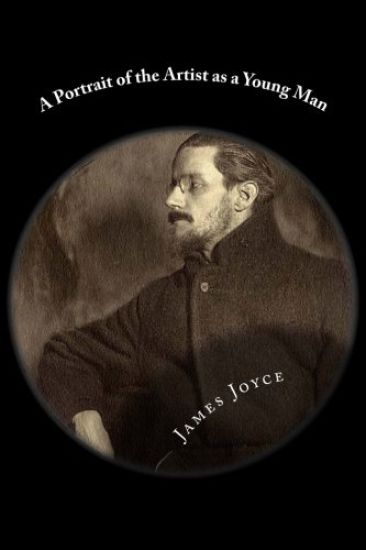
A novel written in Joyce's characteristic free indirect speech style, A Portrait is a major example of the K nstlerroman (an artist's Bildungsroman) in English literature. Joyce's novel traces the intellectual and religio-philosophical awakening of young Stephen Dedalus as he begins to question and rebel against the Catholic and Irish conventions with which he has been raised. He finally leaves for abroad to pursue his ambitions as an artist.
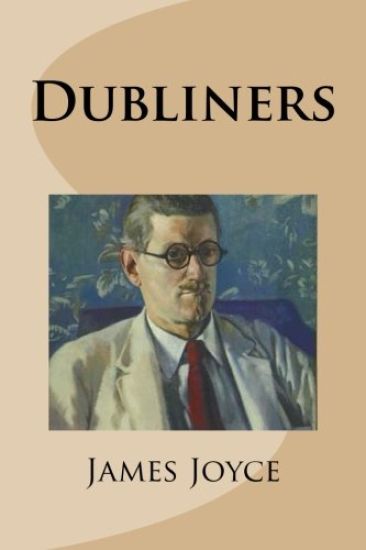
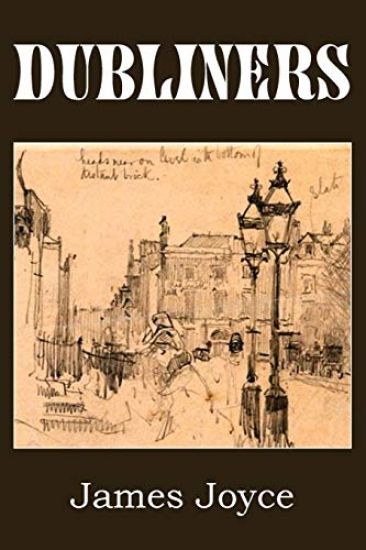
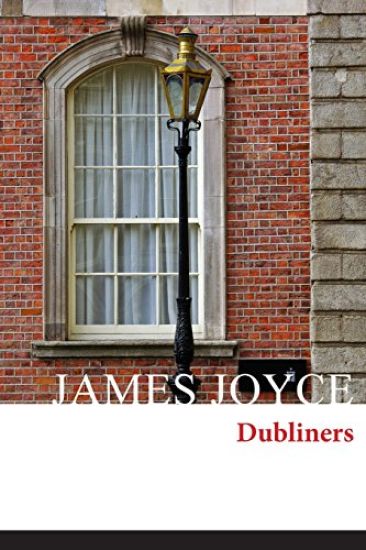
For the centennial of its original publication, an irresistible Graphic Deluxe Edition of one of the most beloved books of the 20th century Perhaps the greatest short story collection in the English language, James Joyce's "Dubliners" is a vivid and unflinching portrait of "dear dirty Dublin" at the turn of the twentieth century. These fifteen stories, including such unforgettable ones as "Araby," "Grace," and "The Dead," delve into the heart of the city of Joyce's birth, capturing the cadences of Dubliners' speech and portraying with an almost brute realism their outer and inner lives. "Dubliners" is Joyce at his most accessible and most profound, and this edition is the definitive text, authorized by the Joyce estate and collated from all known proofs, manuscripts, and impressions to reflect the author's original wishes.
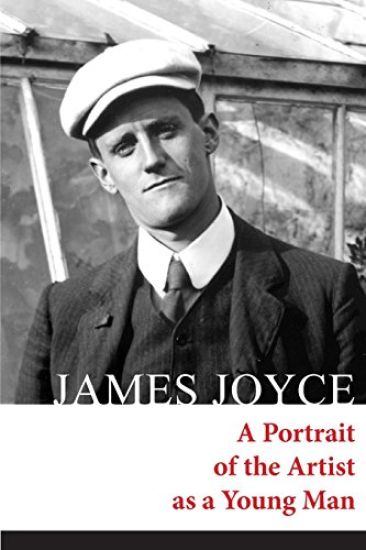
"His heart danced upon her movements like a cork upon a tide. He heard what her eyes said to him from beneath their cowl and knew that in some dim past, whether in life or revery, he had heard their tale before." --- James Joyce, A Portrait of the Artist as a Young Man A Portrait of the Artist as a Young Man is the first novel of Irish writer James Joyce. A K nstlerroman in a modernist style, it traces the intellectual and religio-philosophical awakening of young Stephen Dedalus, a fictional alter ego of Joyce and an allusion to Daedalus, the consummate craftsman of Greek mythology. Stephen questions and rebels against the Catholic and Irish conventions under which he has grown, and culminates with his self-exile from Ireland in Europe. The work uses techniques that Joyce developed more fully in Ulysses (1922) and Finnegans Wake (1939). A Portrait began life in 1903 as Stephen Hero-a projected 63-chapter autobiograhical novel in a realistic style. After 25 chapters, Joyce abandoned Stephen Hero in 1907 and set to reworking its themes and protagonist into a condensed five-chapter novel, dispensing with strict realism and making extensive use of free indirect speech that allowed the reader to peer into Stephen's developing consciousness. American modernist poet Ezra Pound had the novel serialized in the English literary magazine The Egoist in 1914 and 1915, and published as a book in 1916 by B. W. Huebsch of New York. The publication of A Portrait and the short story collection Dubliners (1914) earned Joyce a place at the forefront of literary modernism. Adaptations A film version, adapted for cinema by Judith Rascoe and directed by Joseph Strick, was released in 1977. It featured Bosco Hogan as Stephen Dedalus and T. P. McKenna as Simon Dedalus. John Gielgud played Father Arnall, the priest whose lengthy sermon on Hell terrifies the teenage Stephen. Hugh Leonard's stage work Stephen D is an adaptation of Portrait of the Artist as a Young Man and Stephen Hero. It was first produced at the Gate Theatre, during the Dublin Theatre Festival of 1962.
Dubliners is a collection of 15 short stories by James Joyce, first published in 1914. They form a naturalistic depiction of Irish middle class life in and around Dublin in the early years of the 20th century. The stories were written when Irish nationalism was at its peak, and a search for a national identity and purpose was raging; at a crossroads of history and culture, Ireland was jolted by various converging ideas and influences. They centre on Joyce's idea of an epiphany: a moment where a character experiences self-understanding or illumination. Many of the characters in Dubliners later appear in minor roles in Joyce's novel Ulysses. The initial stories in the collection are narrated by child protagonists, and as the stories continue, they deal with the lives and concerns of progressively older people. This is in line with Joyce's tripartite division of the collection into childhood, adolescence and maturity. Style In Dubliners Joyce rarely uses hyperbole, relying on simplicity and close detail to create a realistic setting. This ties the reader's understanding of people to their environments. He does not tell readers what to think, rather they are left to come to their own conclusions. This is even more evident when contrasted with the moral judgements displayed by earlier writers such as Charles Dickens. This frequently leads to a lack of traditional dramatic resolution within the stories. It has been argued that Joyce often allows his narrative voice to gravitate towards the voice of a textual character. For example, the opening line of 'The Dead' reads "Lily, the caretaker's daughter, was literally run off her feet." She is not, in this instance, "literally" run off her feet, and neither would Joyce have thought so; rather, the narrative lends itself to a misuse of language typical of the character being described. Joyce often uses descriptions from the characters' point of view, although he very rarely writes in the first person. This can be seen in Eveline, when Joyce writes, "Her head was leaned against the window curtains and in her nostrils was the odour of dusty cretonne". Here, Joyce employs an empirical perspective in his description of characters and events; an understanding of characters' personalities is often gained through an analysis of their possessions. The first paragraph of A Painful Case is an example of this style, as well as Joyce's use of global to local description of the character's possessions. Joyce also employs parodies of other writing styles; part of A Painful Case is written as a newspaper story, and part of Grace is written as a sermon. This stylistic motif may also be seen in Ulysses (for example, in the Aeolus episode, which is written in a newspaper style), and is indicative of a sort of blending of narrative with textual circumstances. The collection as a whole displays an overall plan, beginning with stories of youth and progressing in age to culminate in The Dead. Great emphasis is laid upon the specific geographic details of Dublin, details to which a reader with a knowledge of the area would be able to directly relate. The multiple perspectives presented throughout the collection serve to contrast the characters in Dublin at this time.
A Portrait of the Artist as a Young Man is the first novel of Irish writer James Joyce. A K nstlerroman in a modernist style, it traces the intellectual and religio-philosophical awakening of young Stephen Dedalus, a fictional alter ego of Joyce and an allusion to Daedalus, the consummate craftsman of Greek mythology. Stephen questions and rebels against the Catholic and Irish conventions under which he has grown, and culminates with his self-exile from Ireland in Europe. The work uses techniques that Joyce developed more fully in Ulysses (1922) and Finnegans Wake (1939). A Portrait began life in 1903 as Stephen Hero-a projected 63-chapter autobiograhical novel in a realistic style. After 25 chapters, Joyce abandoned Stephen Hero in 1907 and set to reworking its themes and protagonist into a condensed five-chapter novel, dispensing with strict realism and making extensive use of free indirect speech that allowed the reader to peer into Stephen's developing consciousness. American modernist poet Ezra Pound had the novel serialized in the English literary magazine The Egoist in 1914 and 1915, and published as a book in 1916 by B. W. Huebsch of New York. The publication of A Portrait and the short story collection Dubliners (1914) earned Joyce a place at the forefront of literary modernism.