Kirjojen hintavertailu. Mukana 12 019 614 kirjaa ja 12 kauppaa.

Kirjahaku

Etsi kirjoja tekijän nimen, kirjan nimen tai ISBN:n perusteella.

1000 tulosta hakusanalla James R Cook

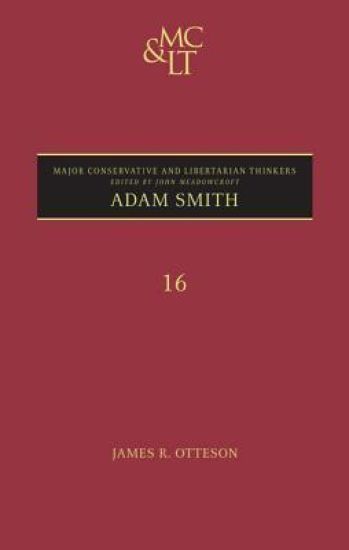
Adam Smith

Adam Smith

James R. Otteson

Continuum Publishing Corporation
2011
sidottu
This is volume 16 in the "Major Conservative and Libertarian Thinkers" series. The Scottish philosopher Adam Smith (1723-1790) was as a pioneer of political economy. In fact, his economic thought became the foundation of classical economics and his key work, "An Inquiry into the Nature and Causes of the Wealth of Nations", is considered to be the first modern work in economics. For Smith, a free competition environment was the best way to foster economic development that would work in accordance with natural laws. The framework he set up to explain the free market remains true to this day. "Major Conservative and Libertarian Thinkers" provides comprehensive accounts of the works of seminal conservative thinkers from a variety of periods, disciplines, and traditions - the first series of its kind. Even the selection of thinkers adds another aspect to conservative thinking, including not only theorists but also writers and practitioners. The series comprises twenty volumes, each including an intellectual biography, historical context, critical exposition of the thinker's work, reception and influence, contemporary relevance, bibliography including references to electronic resources, and an index.
Jesus & Personality Theory

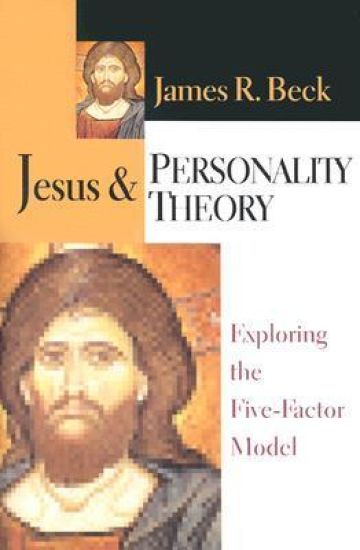
Jesus & Personality Theory

James R. Beck

Inter-Varsity Press,US
1999
pokkari
In recent years researchers in human personality have come to a rarely achieved near unanimous conclusion: human personality is structured around a very few major traits, probably five in number. These factors, sometimes called the Big Five and represented by the acronym OCEAN, are Openness to experienceConscientiousnessExtroversionAgreeablenessNeuroticism How does this Five-Factor Model fit with a Christian understanding of human nature? How does it compare or contrast with the way Jesus lived, taught and counseled? James Beck looks at prominent themes in the teaching and ministry of Jesus and how they relate to the five personality factors. Here is a study of the Christian implications of the new model--a study that will offer fresh insights for students, pastors and therapists alike.
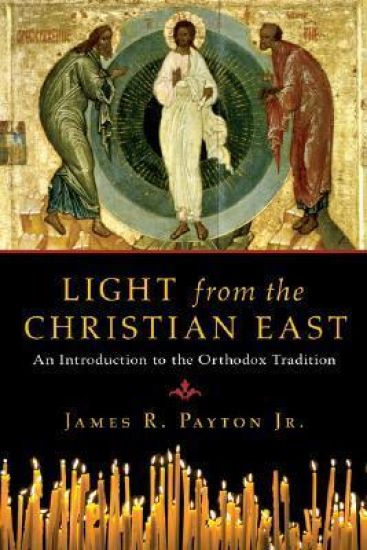
Light from the Christian East

Light from the Christian East

James R. Payton

Inter-Varsity Press,US
2007
pokkari
The Word Guild 2008 Canadian Christian Writing Awards winner "Do they really pray to icons?" "Why do they use incense?" "What do they believe?" To many people, the Orthodox Christian tradition (or Eastern Orthodoxy) seems unfamiliar and mysterious. Yet this tradition is arguably the most faithful representative of early Christianity in existence today and numbers roughly 250 million adherents worldwide. What's more, a steady stream of evangelical Christians has been entering the Orthodox Church in recent decades. Isn't it time we gained a deeper understanding of Orthodoxy? In Light from the Christian East, James Payton gives us just that. With a sympathetic eye and even hand, he ushers readers into the world of Orthodox Christianity--its history, theology and religious practices. In doing so, he clears away the confusion and misunderstandings that often prevent non-Orthodox Christians from fully appreciating the riches of this ancient tradition. This book is essential reading for anyone interested in Orthodox Christianity.
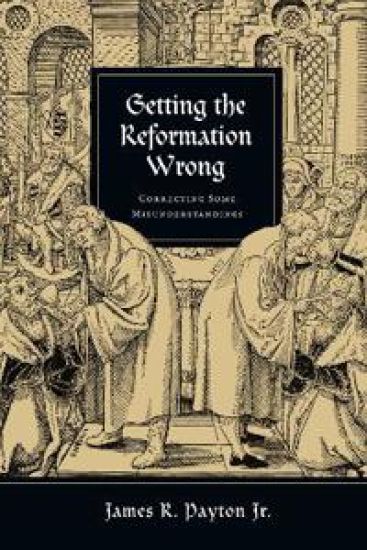
Getting the Reformation Wrong – Correcting Some Misunderstandings
Getting the Reformation wrong is a common problem. Most students of history know that Martin Luther nailed his ninety-five theses to the Wittenberg Church door and that John Calvin penned the Institutes of the Christian Religion. However, the Reformation did not unfold in the straightforward, monolithic fashion some may think. It was, in fact, quite a messy affair. Using the most current Reformation scholarship, James R. Payton exposes, challenges and corrects some common misrepresentations of the Reformation. Getting the Reformation Wrong: places the Reformation in the context of medieval and Renaissance reform effortsanalyzes conflicts among the Reformerscorrects common misunderstandings of what the Reformers meant by sola fide and sola Scriptura examines how the Anabaptist movement fits in with the magisterial Reformationcritiques the post-Reformational move to Protestant Scholasticismexplores how the fresh perspective on the Reformation could make a difference in today's churches
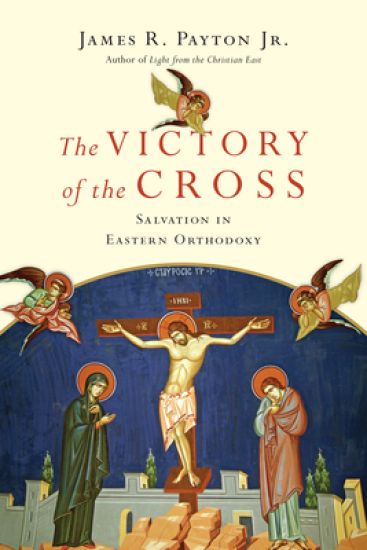
The Victory of the Cross – Salvation in Eastern Orthodoxy
Word Guild Awards — Academic How can Christians claim that the death of Jesus Christ on the cross is a victory? Yet the doctrine of salvation affirms precisely that: in his death and his resurrection, Christ is victorious over the power of sin and death. The articulation of this tenet of faith has taken different shapes throughout the church's life and history. Eastern Orthodoxy has made its own contributions to the belief in salvation through Christ, but its expressions sometimes sound unfamiliar to Western branches of the church. Here James Payton, a Western Christian with a sympathetic ear for Eastern Orthodoxy, explores the Orthodox doctrine of salvation. Payton helps Christians of all traditions listen to Orthodox brothers and sisters so that together we might rejoice, "Where, O death, is your victory?"
The Great Savings and Loan Debacle

The Great Savings and Loan Debacle

James R. Barth

AEI Press
1991
nidottu
During the 1980s, 525 insolvent savings and loans were liquidated or sold at an enormous cost. Resolving the remaining troubled S&Ls could cost American taxpayers hundreds of billions. What went wrong with the industry? Are fraud and deregulation solely responsible for this financial disaster? In this volume the author argues that federal deposit insurance itself is largely to blame: by permitting institutions to operate with inadequate capital, the system subsidizes weak institutions while increasing the risk to taxpayers. In addition, regulation and supervision prevent S&Ls from adapting to changing market forces. Congress, the Administration and the regulatory agencies, the author says, have created a flawed deposit insurance system and a rigid, outdated supervisory and regulatory structure. He recommends a re-examination and restructuring that would protect both depositors and taxpayers and would allow the industry to respond to changes in the marketplace.
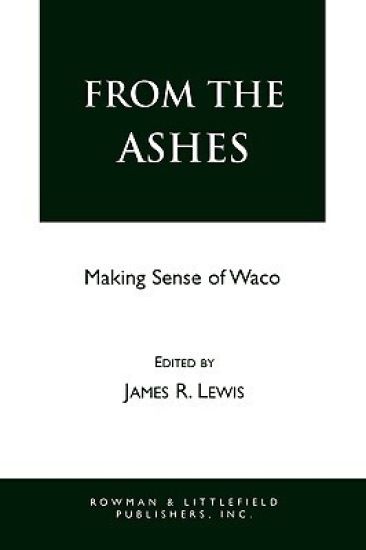
From the Ashes

From the Ashes

James R. Lewis

Rowman Littlefield
1994
nidottu
In 45 short essays aimed at a broad audience, the contributors to From the Ashes place the Branch Davidians in historical and comparative perspective with nontraditional religions, analyze the government's handling of the Waco confrontation, assess the media's coverage and public response, and provide an overview of responses from the academic and religious community. Although the contributors represent a wide variety of viewpoints, they are united in the belief that the 89 deaths could have been avoided and that the popular demonization of nontraditional religious movements in the aftermath of Waco represents a continuing threat to freedom of religion. Contributors include: Dick Anthony, Michael Barkun, James Beckford, Col. Charlie Beckwith, Eldridge Cleaver, Dean M. Kelly, Franklin H. Littell, and Thomas Robbins.
Transnational Criminal Organizations, Cybercrime, and Money Laundering
WRITTEN BY A LAW ENFORCEMENT PROFESSIONAL FOR OTHER LAW ENFORCEMENT PERSONNEL IN THE TRENCHESThis book examines the workings of organized criminals and criminal groups that transcend national boundaries. Discussions include methods used by criminal groups to internationally launder money; law enforcement efforts to counteract such schemes; and new methods and tactics to counteract transnational money laundering.A PRACTICAL GUIDE TO FACETS OF INTERNATIONAL CRIME AND MEASURES TO COMBAT THEMIntended for law enforcement personnel, bank compliance officers, financial investigators, criminal defense attorneys, and anyone interested in learning about the basic concepts of international crime and money laundering, this timely text explains:money laundering terms and phrases an overview of relevant federal agencies, transnational criminal organizations, and basic investigatory techniques the intricacies of wire transfers and cyberbanking the phenomenon of the "World Wide Web"
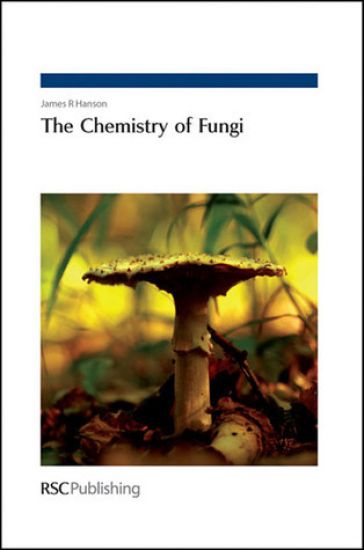
Chemistry of Fungi

Chemistry of Fungi

James R Hanson

Royal Society of Chemistry
2008
sidottu
Fungi occupy an important place in the natural world, as non-photosynthetic organisms, they obtain their nutrients from the degradation of organic material. They use many of their secondary metabolites to secure a place in a competitive natural environment and to protect themselves from predation. The diverse structures, biosyntheses and biological activities of fungal metabolites have attracted chemists for many years. Fungi are ubiquitous and their activities affect many aspects of our daily lives whether it be as sources of pharmaceuticals and food or as spoilage organisms and the causes of diseases in plants and man. The chemistry of the fungi involved in these activities has been the subject of considerable study particularly over the last fifty years. Although their ramifications can be large as in the spread of plant diseases, the quantities of the metabolites which could be isolated precluded much chemical work until the advent of spectroscopic methods. Whereas many natural products derived from plants were isolated prior to the 1960s on a scale which permitted extensive chemical degradation, this was rarely the case for fungal metabolites. This book is an introduction to the chemistry of fungal metabolites. The aim is to illustrate within the context of fungal metabolites, the historical progression from chemical to spectroscopic methods of structure elucidation, the development in biosynthetic studies from establishing sequences and mechanisms to chemical enzymology and genetics and the increasing understanding of the biological roles of natural products. The book begins with a historical introduction followed by a description of the general chemical features which contribute to the growth of fungi. There are many thousands of fungal metabolites whose structures are known and the book does not aim to list them all as there are databases to fulfill this role. The book's aim is to describe some of the more important metabolites classified according to their biosynthetic origin. Biosynthesis provides a unifying feature underlying the diverse structures of fungal metabolites and the chapters covering this area begin with a general outline of the relevant biosynthetic pathway before presenting a detailed description of particular metabolites. Investigations into these biosyntheses have utilized many subtle isotopic labelling experiments and compounds that are fungal pigments and those which are distinctive metabolites of the more conspicuous Basidiomycetes are treated separately. Many fungal metabolites are involved in the interactions of fungi with plants and others are toxic to man and some of these are described in further chapters. Fungi have the ability to transform chemicals in ways which can complement conventional reactions and the use of fungi as reagents forms the subject of the final chapter. This book will be particularly useful to anybody about to embark on a career in chemical microbiology by providing an overall perspective of fungal metabolites as well as an essential reference tool for more general chemists.
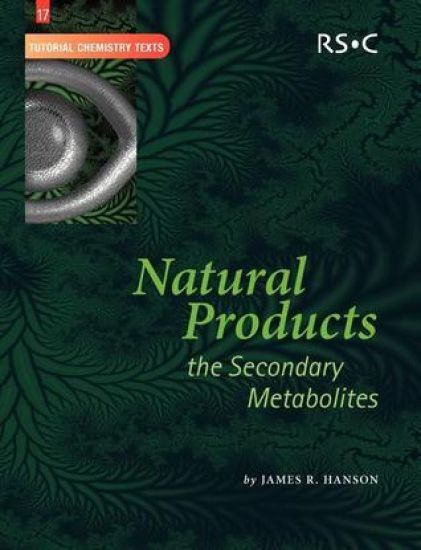
Natural Products

Natural Products

James R Hanson

Royal Society of Chemistry
2003
nidottu
Natural products are compounds that are produced by living systems and the secondary metabolites are those which give particular species their characteristic features. These natural products include polyketides, terpenoids, phenylpropanoids, alkaloids and antibiotics. The study of these natural products has played a major part in the development of organic and medicinal chemistry and we are now starting to understand the important ecological role that these compounds have. The aim of this book is to describe the major features of these compounds and the way in which chemical and physical methods have been used to establish their structures and then to show how these structures can be rationalised in biosynthetic terms. The first chapter describes the classes of natural product, their biological activity and isolation. Subsequent chapters attempt to link chemical and spectroscopic strategies in structure elucidation, contrasting the classical chemical strategies that were used in the past with modern spectroscopic methods. The final chapter describes the biosynthesis of natural products. The elucidation of the structures of natural products brings together many elements taught in courses on functional group chemistry, stereochemistry and elementary spectroscopy. This book will therefore be welcomed by lecturers and students of second-year chemistry courses. Ideal for the needs of undergraduate chemistry students, Tutorial Chemistry Texts is a major series consisting of short, single topic or modular texts concentrating on the fundamental areas of chemistry taught in undergraduate science courses. Each book provides a concise account of the basic principles underlying a given subject, embodying an independent-learning philosophy and including worked examples.
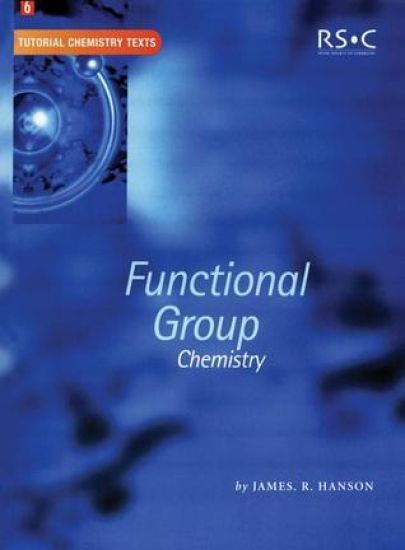
Functional Group Chemistry

Functional Group Chemistry

James R Hanson

Royal Society of Chemistry
2001
pokkari
Functional Group Chemistry presents the chemistry of functional groups with an emphasis on patterns of reactivity, the consequences of the relative electronegativity of the atoms that constitute functional groups, the role of lone pairs and the stereochemistry of reactions at a particular group. The material is presented in four chapters. The first chapter describes some of the general principles that affect the reactivity of functional groups. The second chapter examines the chemistry of functional groups involving s- C-X bonds as in alkyl halides, alcohols, ethers, amines and organometallic reagents. The third chapter covers the chemistry of both symmetrical and unsymmetrical p-bonded functional groups, typified by alkenes and carbonyl groups. The final chapter concentrates on aromatic compounds. It is concerned with the interactions between an aromatic ring and functional groups that are attached to it, such as their effect on the orientation of aromatic substitution. Each chapter concludes with a series of problems. The chemistry of the functional groups is considered here with a mechanistic rationale. Students are encouraged to consider the reactivity of functional groups in terms of their regions of electron deficiency and excess, and hence to identify the sites at which nucleophiles and electrophiles might react. Additional material is available on the website at www.rsc.org/tct Ideal for the needs of undergraduate chemistry students, Tutorial Chemistry Texts is a major series consisting of short, single topic or modular texts concentrating on the fundamental areas of chemistry taught in undergraduate science courses. Each book provides a concise account of the basic principles underlying a given subject, embodying an independent-learning philosophy and including worked examples.
Chemistry and Medicines

Chemistry and Medicines

James R Hanson

Royal Society of Chemistry
2006
sidottu
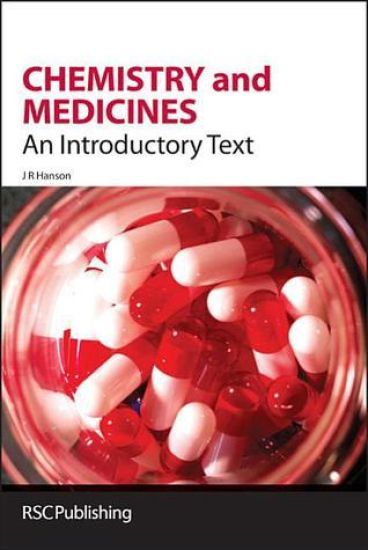
Medicinal chemistry incorporates bio-organic chemistry, organic synthetic methods, physical organic chemistry and organic reaction mechanisms. These areas of chemistry are crucial to the design and synthesis of new drugs, both in academia and the pharmaceutical industry. Chemistry and Medicines: An Introductory Text provides a general introduction to this fascinating subject. The first chapters contain a brief historical introduction followed by a description of the chemical features involved in the adsorption, distribution, metabolism and excretion of a drug. The remaining chapters describe the chemistry underlying the design and synthesis of some of the key drugs used to combat some major diseases of the peripheral and central nervous system, infectious diseases and cancers. A glossary and suggestions for further reading complete this textbook. The book is aimed at those studying advanced undergraduate and postgraduate courses in medicinal chemistry.
Chemistry in the Garden

Chemistry in the Garden

James R Hanson; Chris Brickell

Royal Society of Chemistry
2007
sidottu
The aim of this book is to describe some aspects of the chemistry and chemical ecology which are found in the garden. In the garden there are numerous interactions between plants, the soil and with other organisms in which chemistry plays a central mediating role. The discussion concerns several of the chemically and ecologically interesting compounds that are produced by common ornamental garden plants and vegetables and by the predators that attack them. Many chemists are amateur gardeners and this book is directed at them as well as those with a general interest in the scientific processes involved in the garden.
Rhetoric, Religion, and the Roots of Identity in British Colonial America

Rhetoric, Religion, and the Roots of Identity in British Colonial America

James R. (EDT) Anderews

Michigan State University Press
2007
sidottu
Volume 1 of the "Rhetorical History of the United States" series probes formal and ideational aspects of colonial rhetoric to illuminate textual/contextual interactions and their enduring implications for American rhetoric. Topics such as millennialism, religious freedom and toleration, covenant theology, revivalism, and the British heritage of American colonial rhetoric are explored. By examining sermons, forensic speaking, theological treatise, literary traditions, prayers, poems, and other rhetorical artifacts, these essays help to illuminate the sources of American identity as that identity was formed through the theory and practice of rhetoric.
Confronting the Horror

Confronting the Horror

James R. Giles

Kent State University Press
1989
sidottu
Because naturalism seems antithetical to modernism and literary existentialism, slight attention has been given to the existence of a contemporary, or post-World War II, naturalism. Indeed, the very term serves as a synonym for "old fashioned." While understandable, this view has contributed to the misunderstanding, if not neglect, of several American writers who came to prominence in the late 1940s and 1950s. James Jones coined the term "the unfound generation" to describe these writers. The career of Nelson Algren exemplifies this phenomenon.Nelson Algren has always been an enigmatic figure, even at the peak of his career. Algren himself was the source of some of the confusion but he was also the victim of a long continuing critical misperception, that as a disciple of Theodore Dreiser he stressed external reality and social protest. In fact, while he never wavered in his commitment to the "lumpenproletariat", society's outcasts, his vision evolved significantly, especially through his acquaintance with Sartre, Beauvoir, and Celine. Algren's best work reflects his despair over the "absurd" at least as much as his outrage over social and economic injustice.In Confronting the Horror, James R. Giles examines the evolution of Algren's major themes--external oppression and internal anxiety. He discusses Algren's fiction in relation to Maxim Gorky's explanation of the "lower depths" and the works of two contemporary writers, Hubert Selby, Jr., and John Rechy, who combine naturalistic technique with a largely existential, absurdist vision. Giles conclusion is forcefully argued, that Algren's novels are thematically richer and more complex than hitherto regarded and represent the work of an American writer of the first order.
Husserl's Account of Our Consciousness of Time

Husserl's Account of Our Consciousness of Time

James R. Mensch

Marquette University Press
2011
nidottu
Having asked, What, then, is time? Augustine admitted, I know well enough what it is, provided that nobody asks me; but if I am asked what it is and try to explain, I am baffled. We all have a sense of time, but the description and explanation of it remain remarkably elusive.Through a series of detailed descriptions, Husserl attempted to clarify this sense of time. This book traces the development of his account of our temporal self-awareness, starting with his early 1905-1909 lectures on time consciousness and proceeding through the 1917-18 Bernau Manuscripts, the Analyses of Passive Syntheses of the 1920s and ending with the C, B and E manuscripts on time and instincts of the 1930s.Although it covers all the stages of Husserls account of temporality, the book is nonetheless systematic in its approach. It is organized about a number of basic topics in the theory of time and presents and critically appraises Husserls positions on the issues pertaining to each.
Louisiana and Arkansas Railway

Louisiana and Arkansas Railway

James R. Fair

Northern Illinois University Press
1997
sidottu
The Louisiana & Arkansas Railway, known as "The Better Way," ran its first trains at the turn of the century and expanded over the years to connect New Orleans to Dallas. Well-maintained and enduringly profitable, this regional railroad succeeded because of the tenacity of three men who consecutively oversaw all aspects of operations. The story of the L&A is largely a collective biography of William Edenborn, William Buchanan, and Harvey Couch-the men who built and extended the line by shrewd acquisitions. These successful businessmen combined wisdom, foresight, and propensity for hard word-traits they had first demonstrated in other careers-with their longtime love for trains. Each applied remarkable talents for industry and commerce toward the development of the L&A to mold it into a model regional railroad. In this first history of the L&A, Fair traces the line's development from the early boom days of railroading to its dissolution in the modern era of takeovers. Although for much of its existence the L&A operated under the control of a parent company, the KCS, it long maintained independence. The eventual takeover by the superline in 1992 finally dissolved the L&A entirely.