Kirjojen hintavertailu. Mukana 12 390 323 kirjaa ja 12 kauppaa.

Kirjahaku

Etsi kirjoja tekijän nimen, kirjan nimen tai ISBN:n perusteella.

1000 tulosta hakusanalla Jan Mitchell

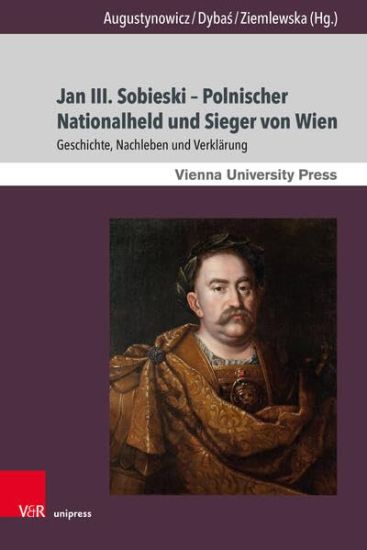
Jan III. Sobieski - Polnischer Nationalheld Und Sieger Von Wien: Geschichte, Nachleben Und Verklarung
This volume is based on the historiographical assumption that Jan Sobieski does not need to be made present in Vienna, as he has a fixed, albeit constantly changing place in the history of this city and its inhabitants. Rather, the aim is to expand the knowledge about him and to broaden the perspective in terms of seeing him as more than just the hero of one day and one military event. Rather, the aim is to show the background and context of his activities as an extremely interesting, unusual person and as a ruler firmly anchored in his time. In this sense, Sobieski is analysed as a 'lieu de memoire', a border-crossing and glimpse-exchanging place of remembrance.
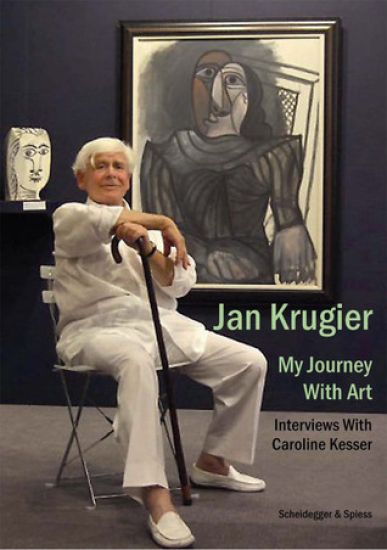
Jan Krugier

Jan Krugier

Caroline Kesser

Scheidegger und Spiess AG, Verlag
2017
sidottu
Jan Krugier, born in Poland in 1928, fought the Nazis during the war until he was caught and sent to Auschwitz. Krugier survived the camps and came to Switzerland with a Red Cross-transport where he was given the chance of starting a new life with a family in Zurich. He was educated as an artist in Zurich and Paris. Encouraged by Alberto Giacometti, Krugier turned to art education and eventually opened his own galleries in Geneva in 1962 and New York in 1966. Both houses quickly became known for ambitious, museum-quality exhibitions of established and emerging contemporary artists, such as Jawlensky, Giacometti, Morandi, Schlemmer and, in particular, Picasso. Krugier also put together a superb collection of 20th-century art. In a series of interviews, done over the last few years before his death in November 2008, the passionate collector, knowledgeable dealer and controversial expert reviews his life marked by traumatising experiences and happy coincidences. He gives a comprehensive insight into his understanding of and his thoughts about art, bringing to life all the great artists he encountered and whose work he helped to promote.
Jan Bontjes van Beek
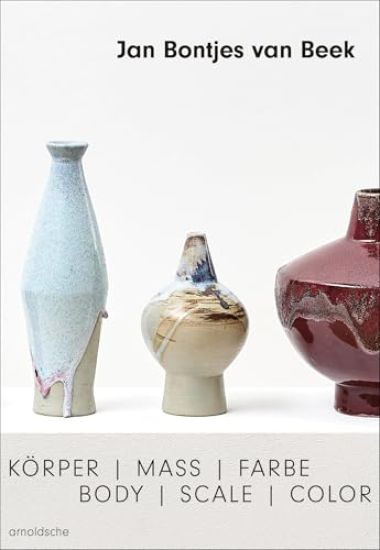
The moving life of Jan Bontjes van Beek (1899–1969) is closely associated with 20th-century German history. A “strikingly blonde sailor who could dance and play the violin,” he joined the Worpswede artist’s colony in 1919 and later found a home with the Breling family in Fischerhude, who introduced him to ceramics. With the support of his second wife, the architect Rahel Weißbach, he moved to Berlin in 1933, where his studio became a well-known meeting place for artists. Despite having been arrested by the National Socialists and his daughter Cato executed, he could not endure the GDR’s Socialist Unity Party regime either and stepped down from a teaching post at the East Berlin Weißensee art school in 1950. He broke into teaching in West Berlin and, finally, in Hamburg continued his ceramic work, which provided the free thinker with a firm footing. Like no other, he emphasised materiality in form and dynamism in colour. During tumultuous times, he sought out the perfect balance for his vessels, and ultimately for himself. Text in English and German.
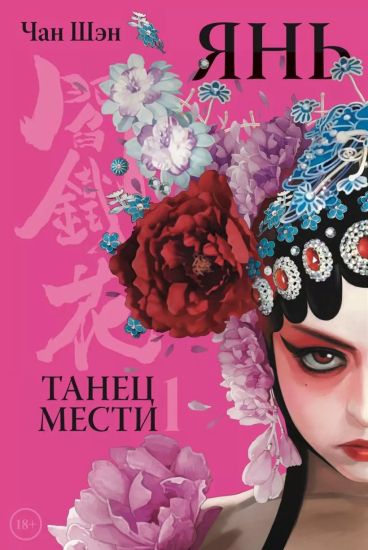
Jan. Tanets mesti. Tom 1

Jan. Tanets mesti. Tom 1

Seng Cang

Komilfo
2025
nidottu
"Ubit Billa" s tajvanskim koloritom! Tridtsat let nazad molodaja ispolnitelnitsa pekinskoj opery Jan Tekhua byla nespravedlivo osuzhdena za ubijstvo sobstvennoj semi. Posle dvadtsati let zakljuchenija ona skonchalas pri zagadochnykh obstojatelstvakh. I vdrug Jan vozvraschaetsja. Vooruzhivshis novopriobretennymi supersposobnostjami i narjadivshis v jarkij kostjum, vdokhnovlennyj traditsionnym teatrom, devushka reshaet otomstit za sebja i svoikh rodnykh. S podmostkov klassicheskoj stseny - v poraboschennyj mashinami Tajvan buduschego! Manga-laureat premii Golden Comic Award brosaet vyzov zhanram i porazhaet chitatelej vsego mira. Vas zhdut ostrye moralnye protivorechija i nezabyvaemyj boevoj ekshn: "Jan" - eto bolshe, chem prosto slepaja zhazhda mesti. Eto poisk spravedlivosti v mire, gde chelovechestvo terjaet kontrol.
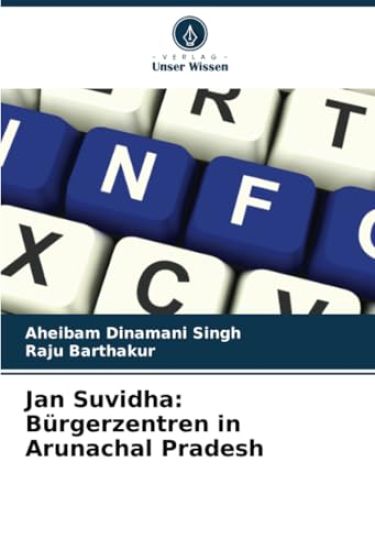
Jan Suvidha

Jan Suvidha

Aheibam Dinamani Singh; Raju Barthakur

Verlag Unser Wissen
2025
pokkari
Das Konzept eines zentralen B rgerb ros namens Jan Suvidha wurde im Mai 2007 in Tezu, dem Hauptort des Distrikts Lohit, als erster Schritt zur Bereitstellung eines transparenten und selbsttragenden Modells der E-Governance im Bundesstaat Arunachal Pradesh ins Leben gerufen. Anschlie end wurden die Jan Suvidha-Zentren in Singchung (Mai 2008), Khonsa (August 2008), Yingkiong (September 2008), Namsai (November 2008) und Bomdila (Mai 2009) eingerichtet. Das Konzept von Jan Suvidha wurde im Mai 2007 von der damaligen Distriktverwaltung von Lohit mit dem Hauptziel entwickelt, alle Dienstleistungen f r die B rger unter Verwendung von Computern unter einem Dach anzubieten. Gleichzeitig sollte damit der Zweck erf llt werden, den Verwaltungsapparat von einem uralten manuellen System auf ein elektronisches Regierungssystem umzustellen, das mit den Ver nderungen in den anderen Bundesstaaten des Landes im Besonderen und weltweit im Allgemeinen Schritt h lt. Einerseits hat ein solcher Schritt zu einer ausgewogenen Erweiterung der Bereitstellung transparenter Regierungsmechanismen gef hrt, indem diese an die Bed rfnisse der Menschen an einem bestimmten Ort angepasst wurden.
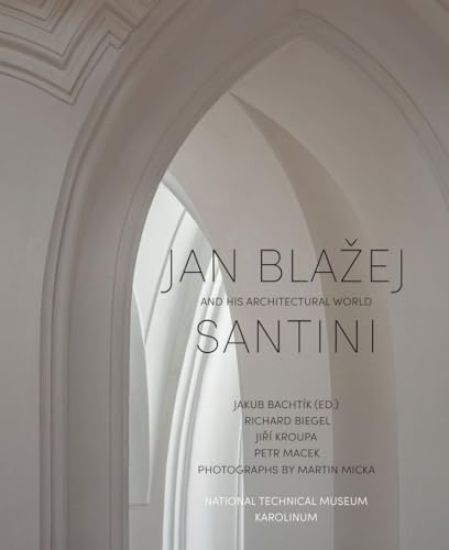
Jan Blažej Santini and His Architectural World

Jan Blažej Santini and His Architectural World

Richard Biegel; Jirí Kroupa; Petr Macek

Karolinum,Nakladatelstvi Univerzity Karlovy,Czech Republic
2026
sidottu
A fascinating look into the life of the famous Czech architect who fused Baroque and Gothic styles. At the turn of the eighteenth century, Jan Blažej Santini Aichel (1677–1723), commonly recognized as Santini, began his career as an architect in Prague and became world-renowned for his mystical Baroque Gothic architecture. In Jan Blažej Santini and His Architectural World, a new generation of scholars draws up a portrait of Santini and his gems of Czech Baroque architecture. From detailing the particulars of the everyday life of a genius architect growing up in Prague and studying under Italian architects to engaging with previous interpretations of Santini’s work, this book interrogates the true value of Santini’s influence on European architecture.