Kirjojen hintavertailu. Mukana 12 390 323 kirjaa ja 12 kauppaa.

Kirjahaku

Etsi kirjoja tekijän nimen, kirjan nimen tai ISBN:n perusteella.

1000 tulosta hakusanalla Jeffrey Toobin

A Primer of Life Histories

A Primer of Life Histories

Jeffrey A. Hutchings

Oxford University Press
2021
sidottu
Life histories can be defined as the means by which individuals (or more precisely genotypes) vary their age- or stage-specific expenditures of reproductive effort in response to genetic, phenotypic, and environmental correlates of survival and fecundity. Life histories reflect the expression of traits most closely related to individual fitness, such as age and size at maturity, number and size of offspring, and the timing of the expression of those traits throughout an individual's life. In addition to addressing questions of fundamental importance to ecology and evolution, life-history research plays an integral role in species conservation and management. This accessible primer encompasses the basic concepts, theories, and applied elements of life history evolution, including patterns of trait variability, underlying mechanisms of plastic/evolutionary change, and the practical utility of life-history traits as metrics of species/population recovery, sustainable exploitation, and risk of extinction. Empirical examples are drawn from the entire spectrum of life. A Primer of Life Histories is designed for readers from a broad range of academic backgrounds and experience including graduate students and researchers of ecology and evolutionary biology. It will also be useful to a more applied audience of academic/government researchers in fields such as wildlife biology, conservation biology, fisheries science, and the environmental sciences.

A Primer of Life Histories

A Primer of Life Histories

Jeffrey A. Hutchings

Oxford University Press
2021
nidottu
Life histories can be defined as the means by which individuals (or more precisely genotypes) vary their age- or stage-specific expenditures of reproductive effort in response to genetic, phenotypic, and environmental correlates of survival and fecundity. Life histories reflect the expression of traits most closely related to individual fitness, such as age and size at maturity, number and size of offspring, and the timing of the expression of those traits throughout an individual's life. In addition to addressing questions of fundamental importance to ecology and evolution, life-history research plays an integral role in species conservation and management. This accessible primer encompasses the basic concepts, theories, and applied elements of life history evolution, including patterns of trait variability, underlying mechanisms of plastic/evolutionary change, and the practical utility of life-history traits as metrics of species/population recovery, sustainable exploitation, and risk of extinction. Empirical examples are drawn from the entire spectrum of life. A Primer of Life Histories is designed for readers from a broad range of academic backgrounds and experience including graduate students and researchers of ecology and evolutionary biology. It will also be useful to a more applied audience of academic/government researchers in fields such as wildlife biology, conservation biology, fisheries science, and the environmental sciences.
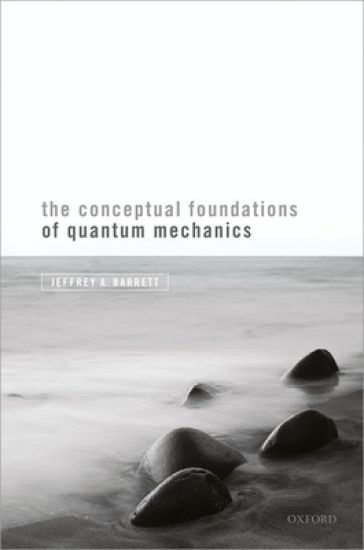
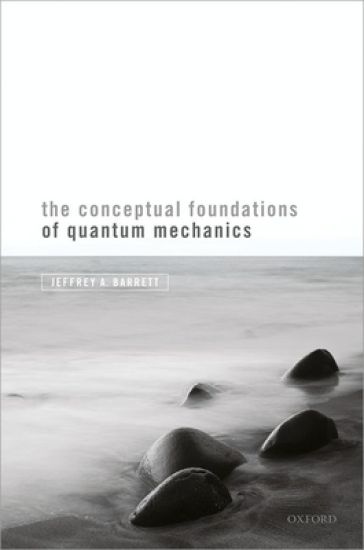
The Conceptual Foundations of Quantum Mechanics

The Conceptual Foundations of Quantum Mechanics

Jeffrey A. Barrett

Oxford University Press
2019
sidottu
In this book Jeffrey A. Barrett provides an introduction to the history and conceptual foundations of quantum mechanics. He begins with a description of classical mechanics and a discussion of the quantum phenomena that radically undermine our common-sense classical intuitions about how the physical world works. He then considers the physical and conceptual arguments that led to the standard von Neumann-Dirac formulation of quantum mechanics and how the standard theory explains quantum phenomena. This includes a discussion of how the theory's two dynamical laws work with the standard interpretation of states to explain determinate measurement records, quantum statistics, interference effects, entanglement, decoherence, and quantum nonlocality. A careful understanding of how the standard theory works ultimately leads to the quantum measurement problem. Barrett considers how this problem threatens the logical consistency of the standard theory and then turns to a discussion of the main proposals for resolving it. This includes collapse formulations of quantum mechanics, the various many-worlds theories, and Bohmian mechanics. In discussing alternative formulations he pays particular attention to the explanatory role played by each theory's empirical ontology and associated metaphysical commitments, and the conceptual trade-offs between theoretical options. The book is well-suited to those interested in physics and the history and philosophy of quantum mechanics.
The Conceptual Foundations of Quantum Mechanics

The Conceptual Foundations of Quantum Mechanics

Jeffrey A. Barrett

Oxford University Press
2019
nidottu
In this book Jeffrey A. Barrett provides an introduction to the history and conceptual foundations of quantum mechanics. He begins with a description of classical mechanics and a discussion of the quantum phenomena that radically undermine our common-sense classical intuitions about how the physical world works. He then considers the physical and conceptual arguments that led to the standard von Neumann-Dirac formulation of quantum mechanics and how the standard theory explains quantum phenomena. This includes a discussion of how the theory's two dynamical laws work with the standard interpretation of states to explain determinate measurement records, quantum statistics, interference effects, entanglement, decoherence, and quantum nonlocality. A careful understanding of how the standard theory works ultimately leads to the quantum measurement problem. Barrett considers how this problem threatens the logical consistency of the standard theory and then turns to a discussion of the main proposals for resolving it. This includes collapse formulations of quantum mechanics, the various many-worlds theories, and Bohmian mechanics. In discussing alternative formulations he pays particular attention to the explanatory role played by each theory's empirical ontology and associated metaphysical commitments, and the conceptual trade-offs between theoretical options. The book is well-suited to those interested in physics and the history and philosophy of quantum mechanics.
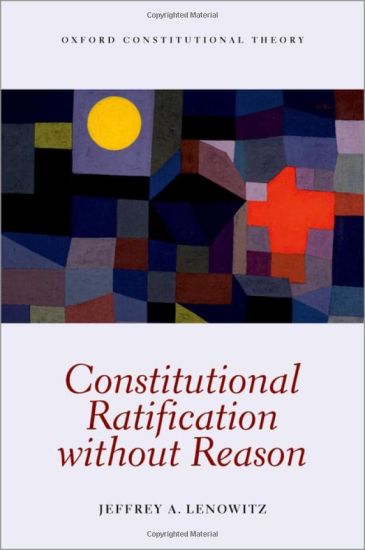
Constitutional Ratification without Reason

Constitutional Ratification without Reason

Jeffrey A. Lenowitz

Oxford University Press
2022
sidottu
This volume focuses on constitutional ratification, the procedure in which a draft constitution is submitted by its creators to the people or their representatives in an up or down vote determining implementation. Ratification is increasingly common and routinely recommended by experts. Nonetheless, it is neither neutral nor inevitable. Constitutions can be made without it and when it is used it has significant effects. This raises the central question of the book: should ratification be recommended? Put another way: is there a reason for treating the procedure as a default for the constitution-making process? Surprisingly, these questions are rarely asked. The procedure's worth is assumed, not demonstrated, while ratification is generally overlooked in the literature. In fact, this is the first sustained study of ratification. To address these oversights, this book defines ratification and its types, explains the procedure's effects, conceptual origins, and history, and then concentrates on finding reasons for its use. Specifically, it builds up and analyzes the three most likely normative justifications. These urge the implementation of ratification because the procedure: enables the constituent power to make its constitution; fosters representation during constitution-making; or helps create a legitimate constitution. Ultimately, these justifications are found wanting, leading to the conclusion that ratification lacks a convincing, context-independent justification. Thus, until new arguments are developed, experts should not give recommendations for ratification as a matter of course, practitioners should not reach for it uncritically, and-more generally-one should avoid the blanket application of concepts from democratic theory to extraordinary contexts such as constitution-making.
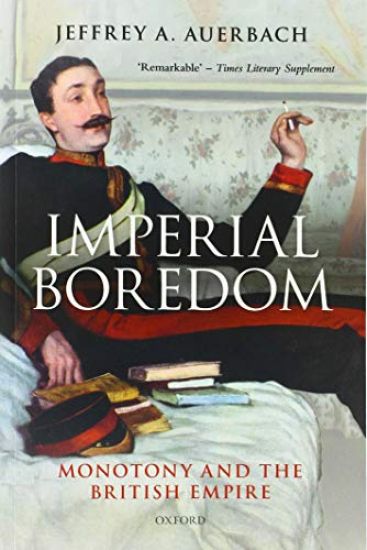
Imperial Boredom

Imperial Boredom

Jeffrey A. Auerbach

Oxford University Press
2020
nidottu
Imperial Boredom offers a radical reconsideration of the British Empire during its heyday in the nineteenth century. Challenging the long-established view that the Empire was about adventure and excitement, with heroic men and intrepid women eagerly spreading commerce and civilization around the globe, this thoroughly researched, engagingly written, and lavishly illustrated account suggests instead that boredom was central to the experience of Empire. This volume looks at what it was actually like to sail to Australia, to serve as a soldier in South Africa, or to accompany a colonial official to the hill stations of India, and agrues that for numerous men and women, from governors to convicts, explorers to tourists, the Victorian Empire was dull and disappointing. Drawing on diaries, letters, memoirs, and travelogues, it demonstrates that all across the empire, men and women found the landscapes monotonous, the physical and psychological distance from home debilitating, the routines of everyday life wearisome, and their work unfulfilling. Ocean voyages were tedious; colonial rule was bureaucratic; warfare was infrequent; economic opportunity was limited; and indigenous people were largely invisible. The seventeenth-century Empire may have been about wonder and marvel, but the Victorian Empire was a far less exciting project.
The Allegiance of Thomas Hobbes

The Allegiance of Thomas Hobbes

Jeffrey R. Collins

Oxford University Press
2007
nidottu
The Allegiance of Thomas Hobbes offers a revisionist interpretation of Thomas Hobbes's evolving response to the English Revolution. It rejects the prevailing understanding of Hobbes as a consistent, if idiosyncratic, royalist, and vindicates the contemporaneous view that the publication of Leviathan marked Hobbes's accommodation with England's revolutionary regime. In sustaining these conclusions, Professor Collins foregrounds the religious features of Hobbes's writings, and maintains a contextual focus on the broader religious dynamics of the English Revolution itself. Hobbes and the Revolution are both placed within the tumultuous historical process that saw the emerging English state coercively secure jurisdictional control over national religion and the corporate church. Seen in the light of this history, Thomas Hobbes emerges as a theorist who moved with, rather than against, the revolutionary currents of his age. The strongest claim of the book is that Hobbes was motivated by his deep detestation of clerical power to break with the Stuart cause and to justify the religious policies of England's post-regicidal masters, including Oliver Cromwell. Methodologically, Professor Collins supplements intellectual or linguistic contextual analysis with original research into Hobbes's biography, the prosopography of his associates, the reception of Hobbes's published works, and the nature of the English Revolution as a religious conflict. This multi-dimensional contextual approach produces, among other fruits: a new understanding of the political implications of Leviathan; an original interpretation of Hobbes's civil war history, Behemoth; a clearer picture of Hobbes's career during the neglected period of the 1650s; and a revisionist interpretation of Hobbes's reaction to the emergence of English republicanism. By presenting Thomas Hobbes as a political actor within a precisely defined political context, Professor Collins has recovered the significance of Hobbes's writings as artefacts of the English Revolution.
Federalism, Democratization, and the Rule of Law in Russia
Combining the approaches of three fields of scholarship - political science, law and Russian area- tudies - the author explores the foundations and future of the Russian Federation. Russia's political elite have struggled to build an extraordinarily complex federal system, one that incorporates eighty-nine different units and scores of different ethnic groups, which sometimes harbor long histories of resentment against Russian imperial and Soviet legacies. This book examines the public debates, official documents and political deals that built Russia's federal house on very unsteady foundations, often out of the ideological, conceptual and physical rubble of the ancien régime. One of the major goals of this book is, where appropriate, to bring together the insights of comparative law and comparative politics in the study of the development of Russia's attempts to create - as its constitution states in the very first article - a 'Democratic, federal, rule-of-law state'
The Quantum Mechanics of Minds and Worlds

The Quantum Mechanics of Minds and Worlds

Jeffrey A. Barrett

Oxford University Press
2001
nidottu
Jeffrey Barrett presents the most comprehensive study yet of a problem that has puzzled physicists and philosophers since the 1930s. The standard theory of quantum mechanics is in one sense the most successful physical theory ever, predicting the behaviour of the basic constituents of all physical things; no other theory has ever made such accurate empirical predictions. However, if one tries to understand the theory as providing a complete and accurate framework for the description of the behaviour of all physical interactions, it becomes evident that the theory is ambiguous, or even logically inconsistent. The most notable attempt to formulate the theory so as to deal with this problem, the quantum measurement problem, was initiated by Hugh Everett III in the 1950s. Barrett gives a careful and challenging examination and evaluation of the work of Everett and those who have followed him. His informal approach, minimizing technicality, will make the book accessible and illuminating for philosophers and physicists alike. Anyone interested in the interpretation of quantum mechanics should read it.
The Sovereignty of Parliament

The Sovereignty of Parliament

Jeffrey Goldsworthy

Oxford University Press
2001
nidottu
The doctrine of parliamentary sovereignty has long been regarded as the most fundamental element of the British Constitution. It holds that Parliament has unlimited legislative authority, and that the courts have no authority to judge statutes invalid. This doctrine has now been criticized on historical and philosophical grounds and critics claim that it is a relatively recent invention of academic lawyers that superseded an earlier tradition in which Parliament's authority was limited to common law. The critics also argue that it is based on a misunderstanding of the relationship between statutory and common law, and is morally indefensible. The Sovereignty of Parliament: History and Philosophy responds to these criticisms. It first defines and clarifies the concept of legislative sovereignty and then describes the historical origins and the development of the doctrine from the thirteenth to the end of the nineteenth century. Professor Goldsworthy goes on to identify many different reasons why persuaded statesmen, lawyers, and political theorists have endorsed the doctrine. He discusses the ideas of a large number of legal and political thinkers, including Fortescue, St German, Hooker, Coke, Bacon, Parker, Milton, Hobbes, Hale, Locke, Bolingbroke, Blackstone, and Burke. He shows that judges in Great Britain have never had authority to invalidate statutes, and that the doctrine is much older than is generally realized. The book concludes by dealing with philosophical criticisms of the doctrine. Combining the insights of earlier thinkers with those of contemporary legal philosophers, it demonstrates that these criticisms are based on a defective understanding of the nature and foundations of law, and of the relationship between legislative authority and the common law. It argues that the doctrine is morally defensible, and refutes the thesis that the judges have authority to modify or reject it.
Faith, Reason, and Revelation in Theodore Beza

Faith, Reason, and Revelation in Theodore Beza

Jeffrey Mallinson

Oxford University Press
2003
sidottu
Faith, Reason, and Revelation in the Thought of Theodore Beza investigates the direction of religious epistemology under a chief architect of Calvinism (1519-1605). Mallinson contends that Beza consolidated his tradition by balancing the subjective and objective aspects of faith and knowledge. Making use of new editions of Beza's class notes and correspondence, and examining the theological ideas found in Beza's long-neglected New Testament annotations, this study clarifies the thought of Calvin's successor. The nature of Protestant scholasticism and the relationship between faith and philosophy are observed in context, rather than from the anachronistic perspectives of modern schools that seek to establish their own continuity with Calvinism.
The Allegiance of Thomas Hobbes

The Allegiance of Thomas Hobbes

Jeffrey R. Collins

Oxford University Press
2005
sidottu
The Allegiance of Thomas Hobbes offers a revisionist interpretation of Thomas Hobbes's evolving response to the English Revolution. It rejects the prevailing understanding of Hobbes as a consistent, if idiosyncratic, royalist, and vindicates the contemporaneous view that the publication of Leviathan marked Hobbes's accommodation with England's revolutionary regime. In sustaining these conclusions, Professor Collins foregrounds the religious features of Hobbes's writings, and maintains a contextual focus on the broader religious dynamics of the English Revolution itself. Hobbes and the Revolution are both placed within the tumultuous historical process that saw the emerging English state coercively secure jurisdictional control over national religion and the corporate church. Seen in the light of this history, Thomas Hobbes emerges as a theorist who moved with, rather than against, the revolutionary currents of his age. The strongest claim of the book is that Hobbes was motivated by his deep detestation of clerical power to break with the Stuart cause and to justify the religious policies of England's post-regicidal masters, including Oliver Cromwell. Methodologically, Professor Collins supplements intellectual or linguistic contextual analysis with original research into Hobbes's biography, the prosopography of his associates, the reception of Hobbes's published works, and the nature of the English Revolution as a religious conflict. This multi-dimensional contextual approach produces, among other fruits: a new understanding of the political implications of Leviathan; an original interpretation of Hobbes's civil war history, Behemoth; a clearer picture of Hobbes's career during the neglected period of the 1650s; and a revisionist interpretation of Hobbes's reaction to the emergence of English republicanism. By presenting Thomas Hobbes as a political actor within a precisely defined political context, Professor Collins has recovered the significance of Hobbes's writings as artefacts of the English Revolution.
Stories We've Heard, Stories We've Told

Stories We've Heard, Stories We've Told

Jeffrey Kottler

Oxford University Press Inc
2014
sidottu
This is a book that integrates what is known from a wide variety of disciplines about the nature of storytelling and how it influences and transforms people's lives. Drawing on material from the humanities, sociology, anthropology, neurophysiology, media and communication studies, narrative inquiry, indigenous healing traditions, as well as education, counseling, and therapy, the book explores the ways that therapists operate as professional storytellers. In addition, our job is to hold and honor the stories of our clients, helping them to reshape them in more constructive ways. The book itself is written as a story, utilizing engaging prose, research, photographs, and powerful anecdotes to draw readers into the intriguing dynamics and processes involved in therapeutic storytelling. It sets the stage for what follows by discussing the ways that stories have influenced history, cultural development, and individual worldviews and then delves into the ways that everyday lives are impacted by the stories we hear, read, and view in popular media. The focus then moves to stories within the context of therapy, exploring how client stories are told, heard, and negotiated in sessions. Attention then moves to the ways that therapists can become more skilled and accomplished storytellers, regardless of their theoretical preferences and style.
Forgiveness and Remembrance

Forgiveness and Remembrance

Jeffrey M. Blustein

Oxford University Press Inc
2014
sidottu
Forgiveness and Remembrance examines the complex moral psychology of forgiving, remembering, and forgetting in personal and political contexts. It challenges a number of entrenched ideas that pervade standard philosophical approaches to interpersonal forgiveness and offers an original account of its moral psychology and the emotions involved in it. The volume also uses this account to illuminate the relationship of forgiveness to political reconciliation and restorative political practices in post-conflict societies. Memory is another central concern that flows from this, since forgiveness is tied to memory and to emotions associated with the memory of injury and injustice. In its political function, memory of wrongdoing -- and of its victims -- is embodied in processes of memorialization, such as the creation of monuments, commemorative ceremonies, and museums. The book casts light on the underexplored relationship of memorialization to transitional justice and politically consequential interpersonal forgiveness. It examines the symbolism and the symbolic moral significance of memorialization as a political practice, reflects on its relationship to forgiveness, and, finally, argues that there are moral responsibilities associated with memorialization that belong to international actors as well as to states.
Forgiveness and Remembrance

Forgiveness and Remembrance

Jeffrey M. Blustein

Oxford University Press Inc
2014
nidottu
Forgiveness and Remembrance examines the complex moral psychology of forgiving, remembering, and forgetting in personal and political contexts. It challenges a number of entrenched ideas that pervade standard philosophical approaches to interpersonal forgiveness and offers an original account of its moral psychology and the emotions involved in it. The volume also uses this account to illuminate the relationship of forgiveness to political reconciliation and restorative political practices in post-conflict societies. Memory is another central concern that flows from this, since forgiveness is tied to memory and to emotions associated with the memory of injury and injustice. In its political function, memory of wrongdoing -- and of its victims -- is embodied in processes of memorialization, such as the creation of monuments, commemorative ceremonies, and museums. The book casts light on the underexplored relationship of memorialization to transitional justice and politically consequential interpersonal forgiveness. It examines the symbolism and the symbolic moral significance of memorialization as a political practice, reflects on its relationship to forgiveness, and, finally, argues that there are moral responsibilities associated with memorialization that belong to international actors as well as to states.
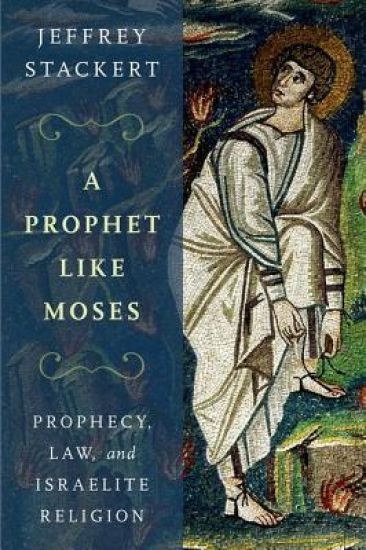
A Prophet Like Moses

A Prophet Like Moses

Jeffrey Stackert

Oxford University Press Inc
2014
sidottu
Jeffrey Stackert addresses two of the oldest and most persistent problems in biblical studies: the relationship between prophecy and law in the Hebrew Bible and the utility of the Documentary Hypothesis for understanding Israelite religion. These topics have in many ways dominated pentateuchal studies and the investigation of Israelite religion since the nineteenth century, culminating in Julius Wellhausens influential Prolegomena to the History of Ancient Israel. Setting his inquiry against this backdrop while drawing on and extending recent developments in pentateuchal theory, Stackert tackles the subject through an investigation of the different presentations of Mosaic prophecy in the four Torah sources. His book shows that these texts contain a rich and longstanding debate over prophecy, its relation to law, and its place in Israelite religion. With this argument, A Prophet Like Moses demonstrates a new role for the Documentary Hypothesis in discussions of Israelite religion. It also provides an opportunity for critical reflection on the history of the field of biblical studies. Stackert concludes with an argument for the importance of situating biblical studies and the study of ancient Israelite religion within the larger field of religious studies rather than treating them solely or even primarily as theological disciplines.
The Digital Street

The Digital Street

Jeffrey Lane

Oxford University Press Inc
2019
sidottu
The social impact of the Internet and new digital technologies is irrefutable, especially for adolescents. It is simply no longer possible to understand coming of age in the inner city without an appreciation of both the face-to-face and online relations that structure neighborhood life. The Digital Street is the first in-depth exploration of the ways digital social media is changing life in poor, minority communities. Based on five years of ethnographic observations, dozens of interviews, and analyses of social media content, Jeffrey Lane illustrates a new street world where social media transforms how young people experience neighborhood violence and poverty. Lane examines the online migration of the code of the street and its consequences, from encounters between boys and girls, to the relationship between the street and parents, schools, outreach groups, and the police. He reveals not only the risks youths face through surveillance or worsening violence, but also the opportunities digital social media use provides for mitigating it. Granting access to this new world, Jeffrey Lane shows how age-old problems of living through poverty, especially gangs and violence, are experienced differently for the first generation of teenagers to come of age on the digital street.
The Digital Street

The Digital Street

Jeffrey Lane

Oxford University Press Inc
2019
nidottu
The social impact of the Internet and new digital technologies is irrefutable, especially for adolescents. It is simply no longer possible to understand coming of age in the inner city without an appreciation of both the face-to-face and online relations that structure neighborhood life. The Digital Street is the first in-depth exploration of the ways digital social media is changing life in poor, minority communities. Based on five years of ethnographic observations, dozens of interviews, and analyses of social media content, Jeffrey Lane illustrates a new street world where social media transforms how young people experience neighborhood violence and poverty. Lane examines the online migration of the code of the street and its consequences, from encounters between boys and girls, to the relationship between the street and parents, schools, outreach workers, and the police. He reveals not only the risks youths face through surveillance or worsening violence, but also the opportunities digital social media use provides for mitigating danger. Granting access to this new world, Jeffrey Lane shows how age-old problems of living through poverty, especially gangs and violence, are experienced differently for the first generation of teenagers to come of age on the digital street.
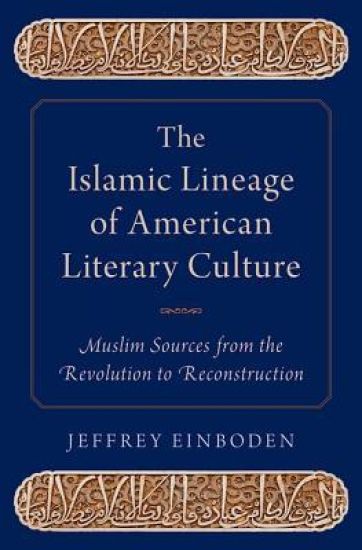
The Islamic Lineage of American Literary Culture

The Islamic Lineage of American Literary Culture

Jeffrey Einboden

Oxford University Press Inc
2016
sidottu
Uncovering Islam's formative impact on U.S. literary origins, Jeffrey Einboden traces neglected genealogies of Islamic reception from the Revolution to Reconstruction. Privileging informal engagements and intimate exchanges, the book excavates personal appeals to Islamic sources by pivotal figures of the early nation--Ezra Stiles, William Bentley, Washington Irving, Lydia Maria Child, Ralph Waldo Emerson--and discovers Muslim discourse woven into the familiar fabric of their letters and sermons, journals and journalism, memoirs and marginalia. Recovering unpublished manuscripts and material witnesses to early U.S. engagement with the Muslim world, Einboden argues that Islamic literature and Middle Eastern languages catalyzed authorial identities in early America, acting as vehicles of artistic reflection, religious contemplation, and political liberation. Reaching to the Middle East to circumvent Europe, key American authors chart new cultural alternatives in their autobiographic prose and poetry, mirroring the defining struggles of the country's first decades through domestic approaches to the Qu'ran, Hadith, and Sufi sources.
The Life and Death of International Treaties

The Life and Death of International Treaties

Jeffrey S. Lantis

Oxford University Press
2008
sidottu
This book represents one of the first comparative studies of international treaty ratification processes in multiple issue areas. The study sets out to fill a gap in political science scholarship by investigating the role that international and domestic political actors and conditions play in the critical, post-commitment phase of cooperation. The book employs the comparative case study method, drawing on original research, elite interviews, and discursive analyses of government documents in Europe, Australia, and North America. Cases examine a select number of treaties on trade cooperation, the environment, European integration, and the nuclear non-proliferation regime. The book concludes that norms and executive strategies play an especially significant role in shaping ratification outcomes. The study has implications for theories of international negotiation and foreign policy analysis as well as the practice of diplomacy.