Kirjojen hintavertailu. Mukana 12 048 151 kirjaa ja 12 kauppaa.

Kirjahaku

Etsi kirjoja tekijän nimen, kirjan nimen tai ISBN:n perusteella.

1000 tulosta hakusanalla John Hardingham

John Brett

John Brett

Christiana Payne; Charles Brett

Yale University Press
2010
sidottu
Drawing on a wealth of unpublished sketchbooks, journals, and writings, this essential guide to John Brett (1831–1902) investigates the painter who was seen as the leader of the Pre-Raphaelite landscape school. In addition to exploring the familiar early works, including The Val d'Aosta and Stonebreaker, it provides rich information on his later, less-known coastal and marine paintings. Brett’s turbulent friendship with John Ruskin is discussed, as are his relations with his beloved sister, Rosa, and his partner Mary, with whom he had seven children. His fervent interest in astronomy, his love of the sea, and his lifelong pursuit of wealth and recognition are all examined in this reassessment, which concludes with a catalogue raisonné of his works, prepared by his descendent Charles Brett.Published for the Paul Mellon Centre for Studies in British Art
John Henry Newman

John Henry Newman

Frank M. Turner

Yale University Press
2011
pokkari
A provocative reappraisal of a pivotal figure, John Henry Newman also offers an important reconsideration of the religious and intellectual history of the nineteenth century. One of the most controversial religious figures of the nineteenth century, John Henry Newman (1801–1890) began his career as a priest in the Church of England but converted to the Roman Catholic Church in 1845. He became a cardinal in 1879.Between 1833 and 1845 Newman, now best known for his autobiographical Apologia Pro Vita Sua and The Idea of a University, was the aggressive leader of the Tractarian Movement within Oxford University. Newman, along with John Keble, Richard Hurrell Froude, and E. B. Pusey, launched an uncompromising battle against the dominance of evangelicalism in early Victorian religious life. By 1845 Newman’s radically outspoken views had earned him censure from Oxford authorities and sharp criticism from the English bishops.Departing from previous interpretations, Turner portrays Newman as a disruptive and confused schismatic conducting a radical religious experiment. Turner demonstrates that Newman’s passage to Rome largely resulted from family quarrels, thwarted university ambitions, the inability to control his followers, and his desire to live in a community of celibate males.
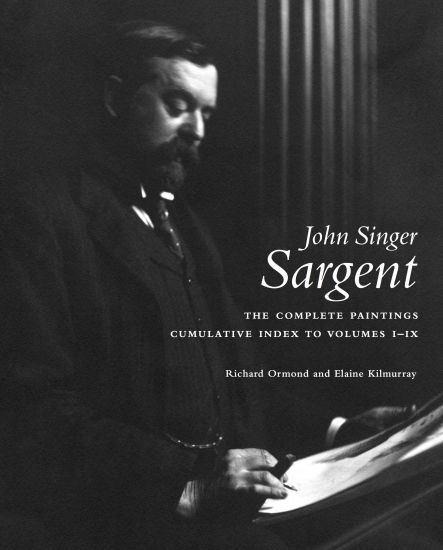
John Singer Sargent

John Singer Sargent

Richard Ormond; Elaine Kilmurray

Yale University Press
2014
sidottu
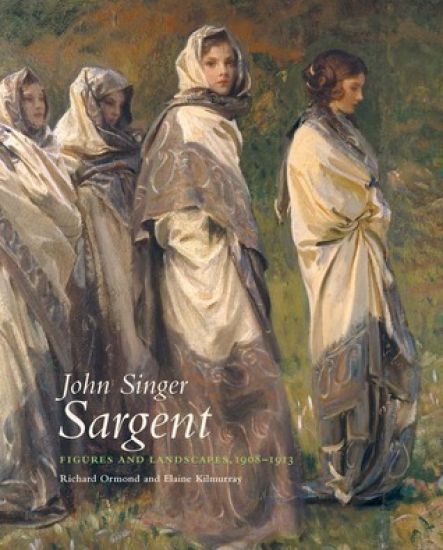
The penultimate volume of the acclaimed catalogue raisonné showcases paintings of some of Sargent’s favorite places and people After John Singer Sargent (1856–1925) determined to curtail his internationally successful portrait practice, he had more freedom to paint where and what he wanted. Volume VIII of the John Singer Sargent catalogue raisonné transports us to the artist’s most beloved locations, often with his friends and family. In the paintings featured here, Sargent returned to subjects that had always held deep personal connections and artistic challenges: mountains, streams, rocks and torrents, figures in repose, architecture and gardens, boats and shipping. He had known and painted the Alps since childhood, and his new Alpine studies make up the greatest number of works in this book. Beautifully designed, this volume represents a continuation in organization and presentation of the high standards that mark the series, and documents 299 works in oil and watercolor. Each painting is catalogued with full provenance, exhibition history, and bibliography. Wherever possible, works are illustrated in color; some are accompanied by related drawings and comparative studies by Sargent’s fellow artists. Contemporary photographs pinpoint the places and views that Sargent painted.Published in association with the Paul Mellon Centre for Studies in British Art
John Singer Sargent

John Singer Sargent

Richard Ormond; Elaine Kilmurray

Yale University Press
2016
sidottu
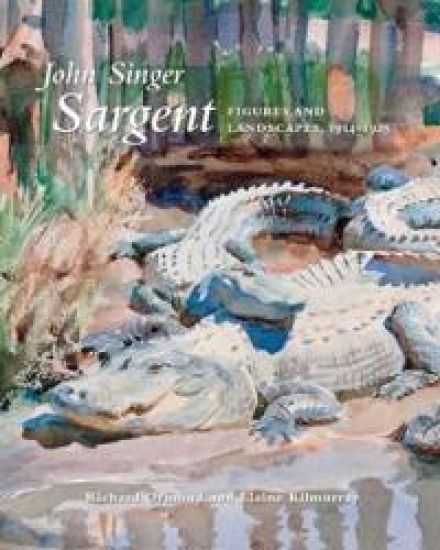
The final volume in a full survey of the work of John Singer Sargent, covering his late watercolors, designs for the Boston murals, and work as an official War Artist The last in a series of books devoted to the work of John Singer Sargent (1856–1925), this volume covers the figure and landscape works that Sargent produced between 1914 and 1925. The story begins with the artist painting with friends on vacation in Austria in the summer of 1914, unaware that war was about to be declared. The following year, he began working in London on his ideas for the murals at the Boston Public Library and the Museum of Fine Arts, Boston, before spending two years in Boston and exploring other parts of America. While in Florida to paint a portrait of John D. Rockefeller, he produced a group of uniquely Floridian watercolors that are breathtaking arrangements of color, form, and light. In July 1918 he accepted an invitation from the British government to travel to the Somme battlefields as an official war artist. This experience led him to produce a remarkable group of works depicting troop movements, off-duty soldiers relaxing, and the studies for his epic canvas, Gassed. Sargent returned to Boston in 1921 and 1922 to complete his mural projects, and visits to Maine and New Hampshire yielded numerous watercolors. Chapters on Sargent’s materials and the framing of his pictures complete this remarkable project.Published for The Paul Mellon Centre for Studies in British Art
John Brown's Spy

John Brown's Spy

Steven Lubet

Yale University Press
2012
sidottu
The first full investigation of John Brown's trusted co-conspirator and his betrayal of the doomed Harper's Ferry raidersJohn Brown's Spy tells the nearly unknown story of John E. Cook, the person John Brown trusted most with the details of his plans to capture the Harper's Ferry armory in 1859. Cook was a poet, a marksman, a boaster, a dandy, a fighter, and a womanizer—as well as a spy. In a life of only thirty years, he studied law in Connecticut, fought border ruffians in Kansas, served as an abolitionist mole in Virginia, took white hostages during the Harper's Ferry raid, and almost escaped to freedom. For ten days after the infamous raid, he was the most hunted man in America with a staggering $1,000 bounty on his head.Tracking down the unexplored circumstances of John Cook's life and disastrous end, Steven Lubet is the first to uncover the full extent of Cook's contributions to Brown's scheme. Without Cook's participation, the author contends, Brown might never have been able to launch the insurrection that sparked the Civil War. Had Cook remained true to the cause, history would have remembered him as a hero. Instead, when Cook was captured and brought to trial, he betrayed John Brown and named fellow abolitionists in a full confession that earned him a place in history's tragic pantheon of disgraced turncoats.
John Ruskin

John Ruskin

Tim Hilton

Yale University Press
2012
pokkari
Selected by New York Times Book Review as a Best Book Since 2000 “The finest and fairest life of Ruskin that has yet been written. . . . To every phase of Ruskin’s highly variegated literary oeuvre Mr. Hilton brings a judicious and informed critical intelligence. It has taken 100 years, but in Tim Hilton, Ruskin has found the champion he deserves.”—Hilton Kramer, Wall Street Journal John Ruskin, one of the greatest writers and thinkers of the nineteenth century, was also one of the most prolific. Not only did he publish some 250 works, but he also wrote lectures, diaries, and thousands of letters that have not been published. This book—the second and final volume of Tim Hilton’s acclaimed biography of Ruskin, which is published on the centenary of Ruskin’s death—draws on the original source material to give a moving account of the life of this brilliant and creative man. The book begins in 1859, when Ruskin, a famous author with a disastrous marriage behind him, is living with his parents, writing and traveling, and tutoring—among other pupils—Rose La Touche, a girl of ten, with whom he slowly falls in love. Hilton recounts how this relationship developed into one of the saddest love affairs of literary history, ending in tragedy in 1875. Thereafter, says Hilton, Ruskin’s life was punctuated by bouts of insanity and despair that culminated in total breakdown for the last ten years of his life. During these years, however, his intellect and imagination reached new heights, as he produced Praeterita andmost of Fors Clavigera, the series of monthly letters to British workers. Hilton’s magisterial narrative follows Ruskin through this period and shows that he was the most eloquent and radical of all the great Victorian writers.
John Sloan

John Sloan

Michael Lobel

Yale University Press
2014
sidottu
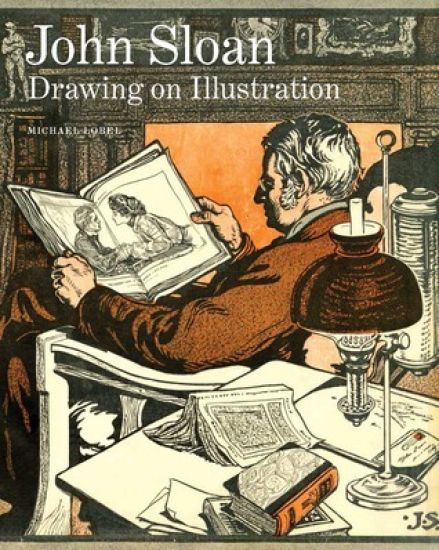
The American realist artist John Sloan (1871–1951) is best known for his portrayals of daily life in early 20th-century New York and as a member of The Eight and the Ashcan School, alongside peers like Robert Henri, Everett Shinn, and George Luks. Sloan’s artistic approach was shaped by his experience as a commercial illustrator, a type of work that inaugurated his professional career—at newspapers like the Philadelphia Press and later for mass-market magazines—and which he pursued even after he turned his focus to painting. In John Sloan: Drawing on Illustration, Michael Lobel explores the impact of Sloan’s illustrating on his wider output, including his paintings, his drawings for the radical journal The Masses, and his response to the watershed 1913 Armory Show. Illuminating the interaction between art and popular culture, this book provides an important new framework for understanding the modern genre of illustration, and in so doing touches on major 20th-century currents, including the rise and expansion of the mass media and the visual legacy of European modernism.
John Keats

John Keats

Nicholas Roe

Yale University Press
2013
pokkari
An entirely new portrait of Keats, rich with insights into the torments of his life and the imaginative sources of his works This landmark biography of celebrated Romantic poet John Keats explodes entrenched conceptions of him as a delicate, overly sensitive, tragic figure. Instead, Nicholas Roe reveals the real flesh-and-blood poet: a passionate man driven by ambition but prey to doubt, suspicion, and jealousy; sure of his vocation while bitterly resentful of the obstacles that blighted his career; devoured by sexual desire and frustration; and in thrall to alcohol and opium. Through unparalleled original research, Roe arrives at a fascinating reassessment of Keats's entire life, from his early years at Keats's Livery Stables through his harrowing battle with tuberculosis and death at age 25. Zeroing in on crucial turning points, Roe finds in the locations of Keats's poems new keys to the nature of his imaginative quest.Roe is the first biographer to provide a full and fresh account of Keats's childhood in the City of London and how it shaped the would-be poet. The mysterious early death of Keats's father, his mother's too-swift remarriage, living in the shadow of the notorious madhouse Bedlam—all these affected Keats far more than has been previously understood. The author also sheds light on Keats's doomed passion for Fanny Brawne, his circle of brilliant friends, hitherto unknown City relatives, and much more. Filled with revelations and daring to ask new questions, this book now stands as the definitive volume on one of the most beloved poets of the English language.
John Baldessari Catalogue Raisonné
The second in a projected four-volume series of the complete catalogue of works by John Baldessari Compiling four-hundred-plus unique works of art, this volume traces the shifts and developments in conceptual artist John Baldessari’s work from 1975-86. It covers his photo-based works such as the “Strobe,” “Word Chain,” and “Pathetic Fallacy” series from 1975; the “Violent Space” and the seminal “Concerning Diachronic/Synchronic Time: Above, On, Under (With Mermaid),” from 1976; and the “Blasted Allegories” series from 1977-78, which drew heavily from the artist’s vast collection of photo stills taken from commercial television.In the 1980s, Baldessari’s art took a different direction, beginning with the expansive “Fugitive Essays” triptychs from 1980 and leading to 1982’s photographic interpretations of Grimm’s Fairy Tales. Building on these themes, Baldessari began producing a body of work that was inspired in part by dreams, psychology, film, and popular culture. Ensuing works were more formal, elaborate, and large-scale. From 1984 to 1986 Baldessari created a number of works that employed his soon-to-be-signature colored discs painted over people’s faces in the photos.An introductory essay will provide a close reading of selected works and a historical context for understanding Baldessari’s art from this period. A detailed chronology and exhibition history and bibliography are also included. This is the second of a projected four-volume catalogue raisonné.Published in association with Marian Goodman Gallery
John Evelyn

John Evelyn

Gillian Darley

Yale University Press
2014
pokkari
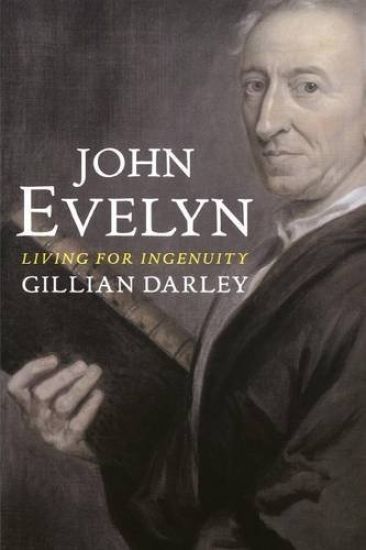
This new biography of John Evelyn, diarist, scholar, and intellectual virtuoso (1620-1706), is the first account to make full use of his huge unpublished archive, deposited at the British Library in 1995. This crucial material permits a broader and richer picture of Evelyn, his life, and his friendships than permitted by his own celebrated diaries.Gillian Darley provides a rounded portrait of Evelyn’s eighty-five years--his family life, his exile in Paris, his interests, and his preoccupations. Evelyn lived through some of England’s most tumultuous history, through five reigns, the Civil War, the Restoration, and the Revolution of 1688. He was author or translator of countless publications, tackling an enormous variety of contemporary issues. Both a religious man and a key figure in the Royal Society, he viewed Christianity and the new science as wholly compatible. Evelyn remained endlessly curious and engaged into very old age, and this absorbing biography demonstrates the liveliness of his hugely busy mind.
John Baldessari Catalogue Raisonné
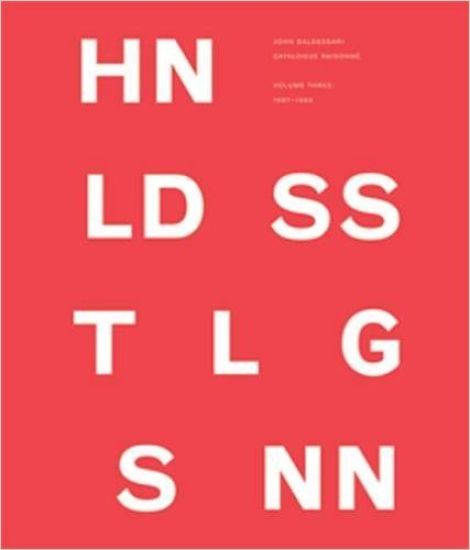
A comprehensive look at works made by Baldessari between the years 1987 and 1993 This handsome volume, the third of the John Baldessari (b. 1931) catalogue raisonné project, compiles 400-plus unique works of art made by the influential conceptual artist from 1987 through 1993. Here we see the artist’s large-scale photo-based works, many of which employed his signature colored discs painted over the faces of people in the photos, accompanied by entries that trace the shifts and developments in Baldessari’s work as his collaged photo narratives achieved maturity and mastery. A critical essay by Briony Fer provides a close reading of selected works, giving historical context for Baldessari’s art from this period. In addition to a detailed chronology, complete exhibition history, and bibliography, this volume notably features a previously unpublished conversation between Baldessari and the artist Ed Ruscha, which was undertaken specifically for this publication. In the conversation, the artists discuss their early careers in Southern California and the shared thematic concerns in their work. The artworks in this volume demonstrate Baldessari’s ability to express—and, in many cases, combine—the narrative potential of images and the associative power of language within the boundaries of a single piece. Published in association with Marian Goodman Gallery
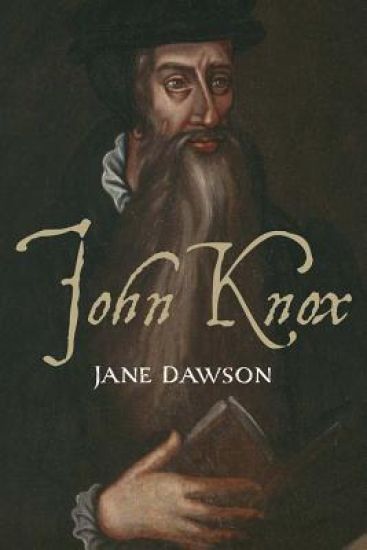
John Knox

John Knox

Jane Dawson

Yale University Press
2016
pokkari
The definitive biography of John Knox, a leader of the Protestant Reformation in sixteenth-century Scotland“Never before has there been such a thoroughly and sympathetically critical treatment of the 16th-century Scottish reformer’s thought and times. . . . A joy to read and a book to value.”—Sean Michael Lucas, Gospel Coalition Based in large part on previously unavailable sources, including the recently discovered papers of John Knox’s close friend and colleague Christopher Goodman, this biography challenges the traditionally held stereotype of the founder of the Presbyterian denomination as a strident and misogynist religious reformer whose influence rarely extended beyond Scotland. Instead, Jane Dawson maintains that Knox relied heavily on the support of his “godly sisters” and conferred as well as argued with Mary, Queen of Scots. He was a proud member of the European community of Reformed Churches and deeply involved in the religious Reformations within England, Ireland, France, Switzerland, and the Holy Roman Empire. Casting a surprising new light on the public and private personas of a highly complex, difficult, and hugely compelling individual, Dawson’s fascinating study offers a vivid, fully rounded portrait of this renowned Scottish preacher and prophet who had a seismic impact on religion and society.
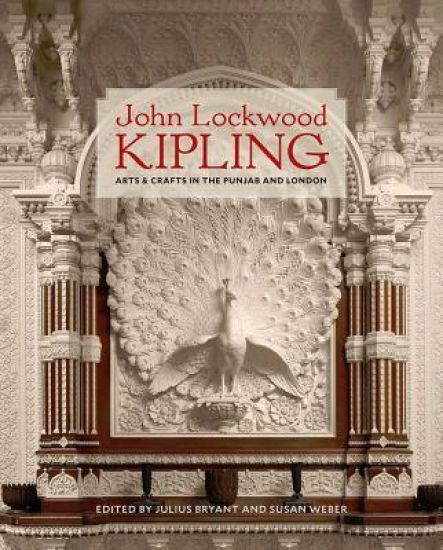
John Lockwood Kipling

John Lockwood Kipling

Yale University Press
2017
sidottu
John Lockwood Kipling (1837–1911) started his career as an architectural sculptor at the South Kensington Museum (today the Victoria and Albert Museum). Much of his life, however, was spent in British India, where his son Rudyard was born. He taught at the Bombay School of Art and later was appointed principal of the new Mayo School of Art (today Pakistan’s National College of Art and Design) as well as curator of its museum in Lahore. Over several years, Kipling toured the northern provinces of India, documenting the processes of local craftsmen, a cultural preservation project that provides a unique record of 19th-century Indian craft customs. This is the first book to explore the full spectrum of artistic, pedagogical, and archival achievements of this fascinating man of letters, demonstrating the sincerity of his work as an artist, teacher, administrator, and activist. Published in association with Bard Graduate CenterExhibition Schedule:Victoria and Albert Museum, London (01/14/17–04/02/17)Bard Graduate Center, New York (09/15/17–01/07/18)
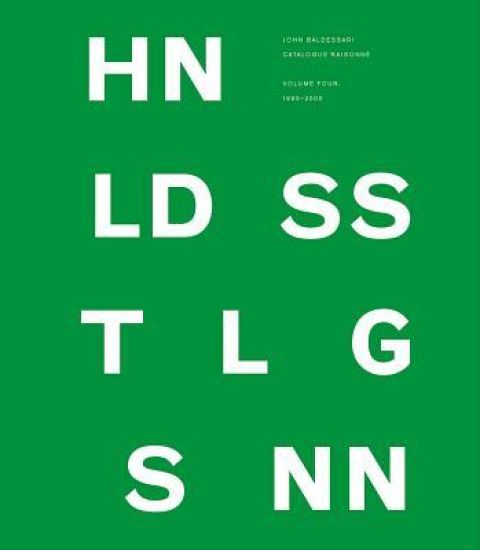
John Baldessari Catalogue Raisonné
The fourth volume of the John Baldessari Catalogue Raisonné comprises approximately 370 works that represent the activity of this iconic conceptual artist between 1994 and 2004. Here, John Baldessari (b. 1931) continues to interrogate the possibilities of photographic appropriation, further developing his unique strategies for the production of meaning and narrative within the picture frame. Included in this crucial volume is the landmark Goya series, which shows the artist revisiting his characteristic photo-text pieces established early in his career. In the serial trio Overlap, Intersection,and Junction, produced between 2000 and 2002, Baldessari riffs on the notion of pictorial space, with each series building on the preceding one. Along with a full chronology, an essay contributed by the eminent critic Robert Storr closely examines a selection of these works, articulating their place within the evolution of the artist’s career and their much broader historical climate. Published in association with Marian Goodman Gallery
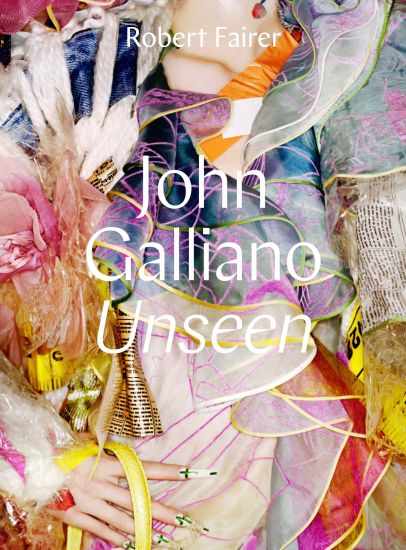
John Galliano: Unseen

John Galliano: Unseen

Robert Fairer

YALE UNIVERSITY PRESS
2017
sidottu
A striking, sumptuous portfolio of catwalk and behind-the-scene images of John Galliano's highly creative collections for his eponymous label John Galliano's (b. 1960) ascent in the world of fashion design was swift and filled with acclaim for his bold, quick-witted sensibility and his theatrical flair. He became head designer for Givenchy in 1995, and then for Christian Dior in 1996, and directed his own fashion label between 1996 and 2011. He was named Designer of the Year at the British Fashion Awards four times. Currently creative director of the Paris-based fashion house Maison Margiela, Galliano has fascinated the fashion world with his often outrageous and whimsical creations, including some of the most memorable collections of the 20th century: from the iconic Suzie Sphinx collection to luxurious and edgy reinventions of Chinese, Peruvian, Yemeni, or Mongolian costumes. Unfolding chronologically with short texts by fashion expert Claire Wilcox introducing each collection, John Galliano: Unseen captures the designer's mesmerizing creations for his eponymous label (including rich and idiosyncratic details) and the intense backstage work of Galliano's trusted collaborators. Robert Fairer's long stint as backstage photographer for Vogue gives him a unique perspective, and his exquisite photographs of Galliano's collections, many of which are published here for the first time, offer insights into the extravagance and playfulness of one of the world's most flamboyant, innovative, and controversial fashion designers at the zenith of his career.
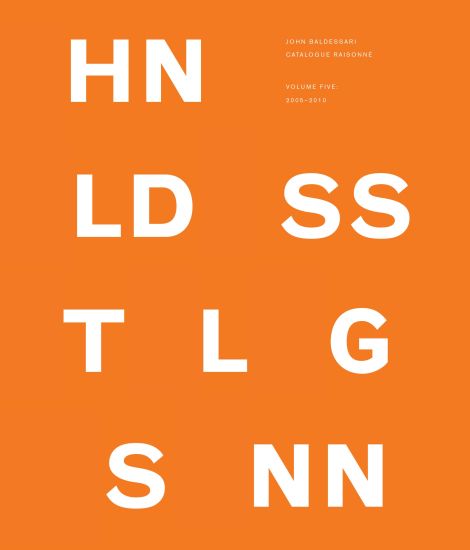
John Baldessari Catalogue Raisonné
The fifth volume of the John Baldessari Catalogue Raisonné compiles the approximately 367 works made by the influential American conceptual artist (b. 1931) from 2005 through 2010. During these years, the artist undertook a number of series, including the shaped erasures of “Blockage”; the word-and-image juxtapositions of “Prima Facie”; the explorations of the face in “Nose and Ears, Etc.” and “Raised Eyebrows/Furrowed Foreheads”; and the muted, spare “Sediment” works on canvas. Catalogue entries allow readers to trace the shifts and developments in Baldessari’s work during these years, a time of continued experimentation and aesthetic distillation that is further explored in a conversation between Baldessari and fellow artist David Salle. A critical essay by Hannah B. Higgins provides a close reading of selected works and gives a historical context for understanding Baldessari’s art from this period. Published in association with Marian Goodman Gallery
John Lewis

John Lewis

Raymond Arsenault

YALE UNIVERSITY PRESS
2024
sidottu
The first full-length biography of civil rights hero and congressman John Lewis A New Yorker “Best Book of 2024” Selection “The perfect book, at the right time.”—Michael Henry Adams, The Guardian For six decades John Robert Lewis (1940–2020) was a towering figure in the U.S. struggle for civil rights. As an activist and progressive congressman, he was renowned for his unshakable integrity, indomitable courage, and determination to get into “good trouble.” In this first book-length biography of Lewis, Raymond Arsenault traces Lewis’s upbringing in rural Alabama, his activism as a Freedom Rider and leader of the Student Nonviolent Coordinating Committee, his championing of voting rights and anti-poverty initiatives, and his decades of service as the “conscience of Congress.” Both in the streets and in Congress, Lewis promoted a philosophy of nonviolence to bring about change. He helped the Reverend Martin Luther King Jr. and other civil rights leaders plan the 1963 March on Washington, where he spoke at the Lincoln Memorial. Lewis’s activism led to repeated arrests and beatings, most notably when he suffered a skull fracture in Selma, Alabama, during the 1965 police attack later known as Bloody Sunday. He was instrumental in the passage of the Voting Rights Act of 1965, and in Congress he advocated for racial and economic justice, immigration reform, LGBTQ rights, and national health care. Arsenault recounts Lewis’s lifetime of work toward one overarching goal: realizing the “beloved community,” an ideal society based in equity and inclusion. Lewis never wavered in this pursuit, and even in death his influence endures, inspiring mobilization and resistance in the fight for social justice.
John Baldessari Catalogue Raisonne
The sixth and final volume documenting the work of an iconic American artist The sixth and final volume of this exceptional catalogue raisonné project features over 360 works made by John Baldessari (1931–2020) between 2011 and 2019. Here, Baldessari continues his longstanding tradition of borrowing from artists as varied as David Hockney, Giotto, Gustave Courbet, Maria Lassnig, Lucas Cranach the Elder, Giorgio Morandi, and Jackson Pollock. Many of the works in this volume are a testament to the artist’s fascination and engagement with art from previous eras. In one example, Baldessari’s 2012 series “Double Bill” combines scenes from pairs of paintings, such as a Willem de Kooning face atop a Jean Dubuffet body, with the words, “…And Dubuffet” painted beneath: Baldessari is effectively collaborating with artists he has revered for years. This volume also surveys Baldessari’s complete film and video output, from 1968 to 2004, as well as the artist’s books he made, from 1972 to 2019. Additionally, an appendix catalogues works, mostly pre-1974, that were unknown at the time Volume 1 was published.Published in association with Marian Goodman Gallery
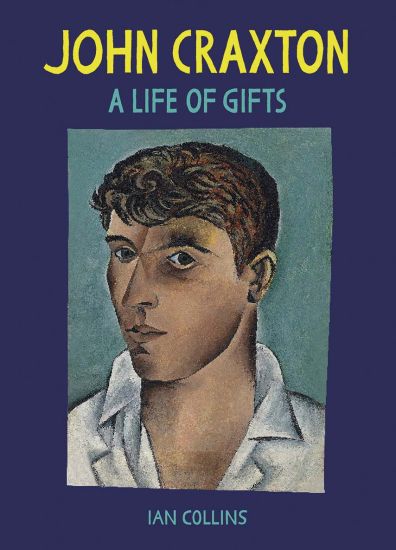
John Craxton

John Craxton

Ian Collins

Yale University Press
2021
sidottu
Uplifting and engaging, this story recounts the life and career of a rebellious 20th-century British artist Born into a large, musical, and bohemian family in London, the British artist John Craxton (1922–2009) has been described as a Neo-Romantic, but he called himself a “kind of Arcadian”. His early art was influenced by Blake, Palmer, Miró, and Picasso. After achieving a dream of moving to Greece, his work evolved as a personal response to Byzantine mosaics, El Greco, and the art of Greek life. This book tells his adventurous story for the first time. At turns exciting, funny, and poignant, the saga is enlivened by Craxton’s ebullient pictures. Ian Collins expands our understanding of the artist greatly—including an in-depth exploration of the storied, complicated friendship between Craxton and Lucian Freud, drawing on letters and memories that Craxton wanted to remain private until after his death.