
Kirjahaku
Etsi kirjoja tekijän nimen, kirjan nimen tai ISBN:n perusteella.
1000 tulosta hakusanalla Joyce Rodgers
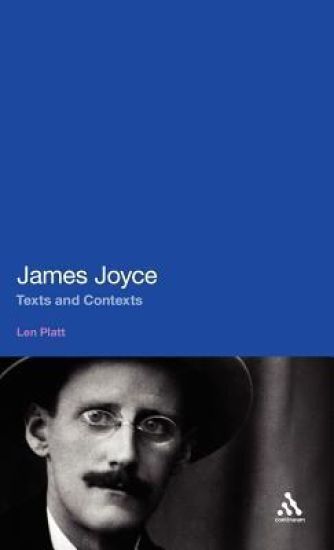
This title introduces the work of James Joyce, the literary, historical and political contexts in which he wrote and his critical reception up to the present day. James Joyce stands at the forefront of modernism - a writer whose work has gained a unique status in modern Western culture. This book offers an introduction to reading and studying Joycean texts and surveys the key contexts - literary, historical, political, philosophical and compositional - which shaped and determined them. By identifying and engaging with Joyce's writing methods and style, the book opens up strategies and approaches for reading his complex texts. It also introduces the critical reception of Joyce and his work, from the early structuralist and 'myth' critics, through deconstruction, to recent developments including historical criticism and genetic criticism.

This title introduces the work of James Joyce, the literary, historical and political contexts in which he wrote and his critical reception up to the present day. James Joyce stands at the forefront of modernism - a writer whose work has gained a unique status in modern Western culture. This book offers an introduction to reading and studying Joycean texts and surveys the key contexts - literary, historical, political, philosophical and compositional - which shaped and determined them. By identifying and engaging with Joyce's writing methods and style, this book opens up strategies and approaches for reading his complex texts. It also introduces the critical reception of Joyce and his work, from the early structuralist and 'myth' critics, through deconstruction, to recent developments including historical criticism and genetic criticism.
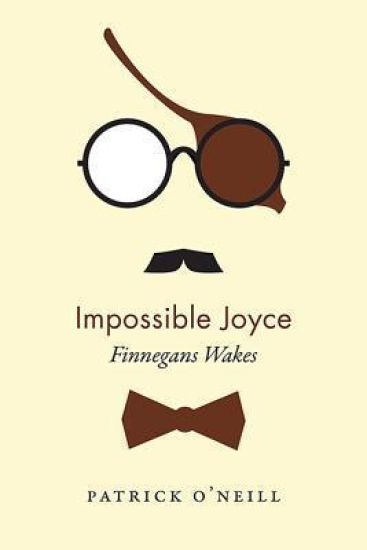
James Joyce’s Finnegans Wake has repeatedly been declared to be entirely untranslatable. Nonetheless, it has been translated, transposed, or transcreated into a surprising variety of languages – including complete renditions in French, German, Portuguese, Dutch, Japanese, and Korean, and partial renditions in Italian, Spanish, and a variety of other languages. Impossible Joyce explores the fascinating range of different approaches adopted by translators in coming to grips with Joyce’s astonishing literary text. In this study, Patrick O’Neill builds on an approach first developed in his book Polyglot Joyce, but deepens his focus by considering Finnegans Wake exclusively. Venturing from Umberto Eco’s assertion that the novel is a machine designed to generate as many meanings as possible for readers, he provides a sustained examination of the textual effects generated by comparative readings of translated excerpts. In doing so, O’Neill makes manifest the ways in which attempts to translate this extraordinary text have resulted in a cumulative extension of Finnegans Wake into an even more extraordinary macrotext encompassing and subsuming its collective renderings.
Randy Joyce Locke and the incident at Sparrow Lea
Kasey Klein
Createspace Independent Publishing Platform
2011
nidottu
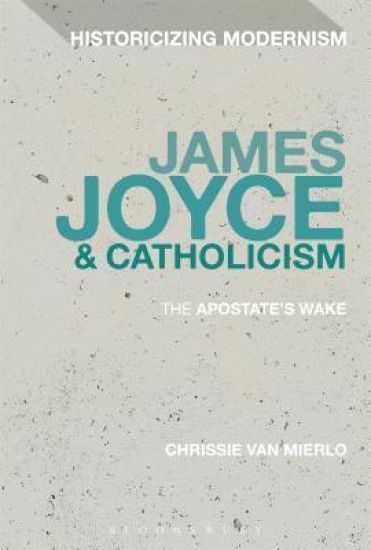
James Joyce and Catholicism is the first historicist study to explore the religious cultural contexts of Joyce's final masterpiece. Drawing on letters, authorial manuscripts and other archival materials, the book works its way through a number of crucial themes; heresy, anticlericalism, Mariology, and others. Along the way, the book considers Joyce's vexed relationship with the Catholic Church he was brought up in, and the unique forms of Catholicism that blossomed in Ireland at the turn of the last century, and during the first years of the Irish Free State.

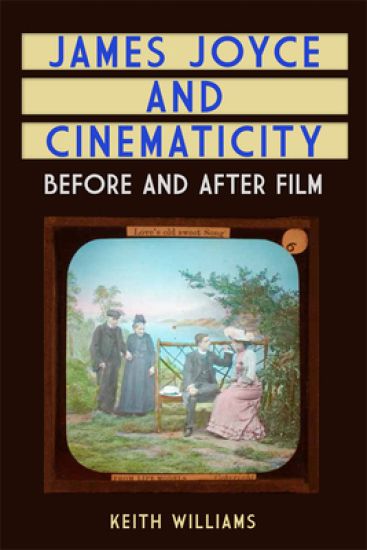
Investigates how the cinematic tendency of Joyce's writing developed from media predating filmFirst comprehensive consideration of Joyce in the context of pre-filmic 'cinematicity'.Research and analysis based on recent 'media archaeology'.Examines the shaping of Joyce's fiction by late-Victorian visual culture and science.Shows that key aspects of his literary experimentation derive from 'forgotten' popular cultural practices and 'vernacular modernism'.Shows Joyce's interaction with and critique of Modernity's developing 'media cultural imaginary'.In this book, Keith Williams explores Victorian culture's emergent 'cinematicity' as a key creative driver of Joyce's experimental fiction, showing how Joyce's style and themes share the cinematograph's roots in Victorian optical entertainment and science. The book reveals Joyce's references to optical toys, shadowgraphs, magic lanterns, panoramas, photographic analysis and film peepshows. Close analyses of his works show how his techniques elaborated and critiqued their effects on modernity's 'media-cultural imaginary'.
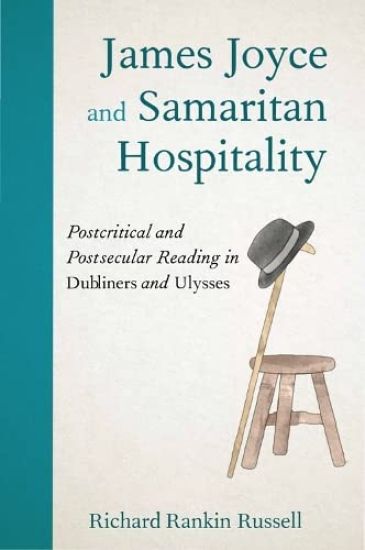
James Joyce and Samaritan Hospitality
Richard Rankin Russell
EDINBURGH UNIVERSITY PRESS
2023
sidottu
The first book-length treatment of Joyce and hospitality Assesses Joyce's employment of the Lukan Good Samaritan parable in relation to his short fiction and Ulysses Articulates how Joyce teaches us to be more charitable readers James Joyce and Samaritan Hospitality reads Dubliners and Ulysses through studies of hospitality, particularly that articulated in the Lukan parable of the Good Samaritan. It traces the origins of the novel in part to the physical attacks on Joyce in 1904 Dublin and 1907 Rome, showing how these incidents and the parable were incorporated into his short story 'Grace' and throughout Ulysses, especially its last four episodes. Richard Rankin Russell discusses the rich theory of hospitality developed by Joyce and demonstrates that he sought to make us more charitable readers through his explorations and depictions of Samaritan hospitality.
James Joyce and Samaritan Hospitality
Richard Rankin Russell
EDINBURGH UNIVERSITY PRESS
2024
nidottu
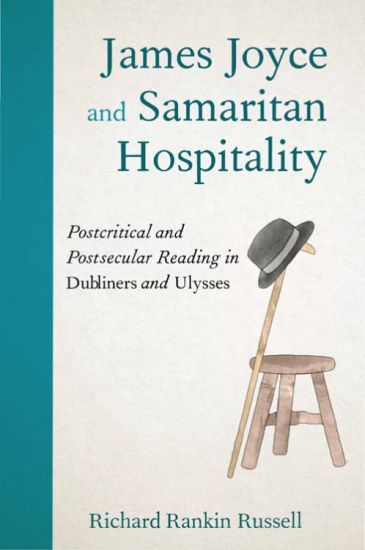
James Joyce and Samaritan Hospitality reads Dubliners and Ulysses through studies of hospitality, particularly that articulated in the Lukan parable of the Good Samaritan. It traces the origins of the novel in part to the physical attacks on Joyce in 1904 Dublin and 1907 Rome, showing how these incidents and the parable were incorporated into his short story 'Grace' and throughout Ulysses, especially its last four episodes. Richard Rankin Russell discusses the rich theory of hospitality developed by Joyce and demonstrates that he sought to make us more charitable readers through his explorations and depictions of Samaritan hospitality.
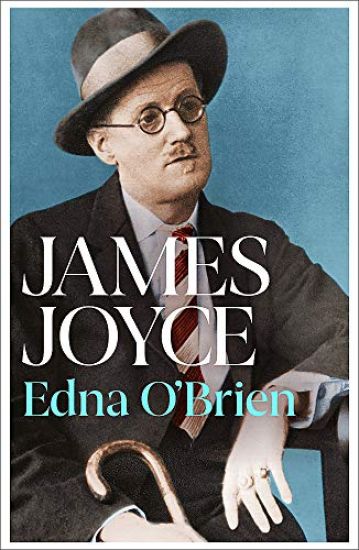
One of Ireland's greatest contemporary writers turns her attention to one of the country's greatest novelists: James Joyce - in celebration of the 100th anniversary of the iconic classic ULYSSES.'As skilful, stylish and pacy as one would expect from so adept a novelist' Sunday Telegraph'A delight from start to finish . . . achieves the near impossibility of giving a thoroughly fresh view of Joyce' Sunday Times'Accessible and passionate, it is a book which should bring Joyce in all his glory and agony to a new and very wide audience' Irish Independent Edna O'Brien depicts James Joyce as a man hammered by Church, State and family, yet from such adversities he wrote works 'to bestir the hearts of men and angels'. The journey begins with Joyce the arrogant youth, his lofty courtship of Nora Barnacle, their hectic sexuality, children, wanderings, debt and profligacy, and Joyce's obsession with the city of Dublin, which he would re-render through his words. Nor does Edna O'Brien spare us the anger and isolation of Joyce's later years, when he felt that the world had turned its back on him, and she asks how could it be otherwise for a man who knew that conflict is the source of all creation.
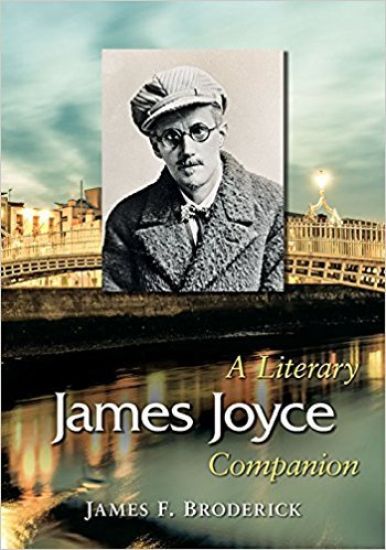
Though he published just a handful of major works in his lifetime, James Joyce (1882-1941) continues to fascinate readers around the world and remains one of the most important literary figures of the 20th century. The complexity of Joyce's style has attracted--and occasionally puzzled--generations of readers who have succumbed to the richness of his literary world. This literary companion guides readers through his four major works--Dubliners, A Portrait of the Artist as a Young Man, Ulysses and Finnegans Wake--with chapter-by-chapter discussions and critical inquiry. An A to Z format covers the works, people, history and context that influenced his writing. Appendices summarize notable Joycean literary criticism and biography, and also discuss significant films based on his work.
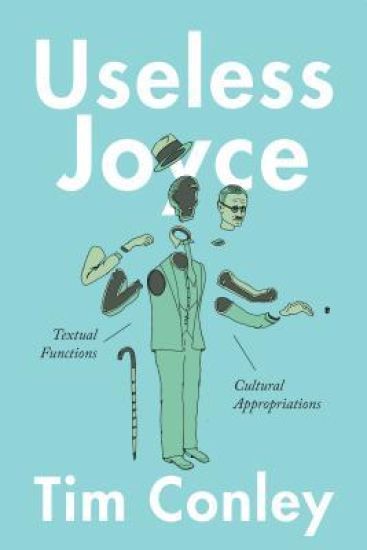
Tim Conley’s Useless Joyce provocatively analyses Joyce’s Ulysses and Finnegans Wake and takes the reader on a journey exploring the perennial question of the usefulness of literature and art. Conley argues that the works of James Joyce, often thought difficult and far from practical, are in fact polymorphous meditations on this question. Examinations of traditional textual functions such as quoting, editing, translating, and annotating texts are set against the ways in which texts may be assigned unexpected but thoroughly practical purposes. Conley’s accessible and witty engagement with the material views the rise of explication and commentary on Joyce’s work as an industry not unlike the rise of self-help publishing. We can therefore read Ulysses and Finnegans Wake as various kinds of guides and uncover new or forgotten "uses" for them. Useless Joyce invites new discussions about the assumptions at work behind our definitions of literature, interpretation, and use.
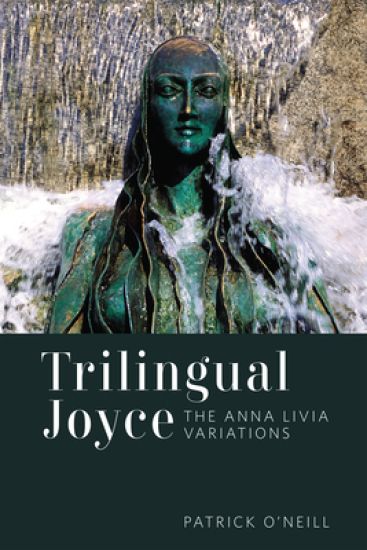
Trilingual Joyce is a detailed comparative study of James Joyce’s personal involvement in both French and Italian translations of the iconic 1928 text Anna Livia Plurabelle, which later became the eighth chapter of Finnegans Wake. Considered to be completely untranslatable at the time of its publication, the translation of Anna Livia Plurabelle represented a fascinating challenge to Joyce, who collaborated in experimental renderings of the text, first into French and later into Italian. Patrick O’Neill’s Trilingual Joyce is the first comparative study of all three of the Anna Livia Plurabelle variations, and fills a long-standing gap in Joyce studies. O’Neill, an Irish-born professor who has written widely on texts in translation, also discusses in detail the avant-guard novelist and playwright Samuel Beckett’s contribution as a young man to the French rendering of Anna Livia Plurabelle.
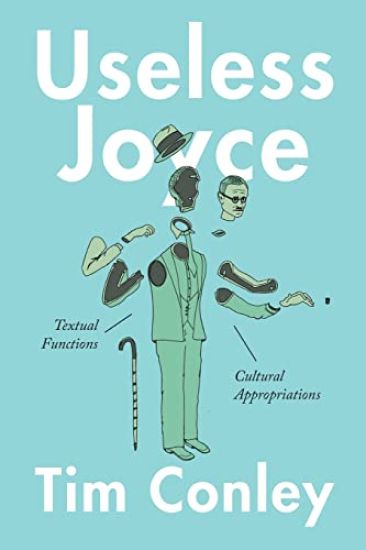
Tim Conley’s Useless Joyce provocatively analyses Joyce’s Ulysses and Finnegans Wake and takes the reader on a journey exploring the perennial question of the usefulness of literature and art. Conley argues that the works of James Joyce, often thought difficult and far from practical, are in fact polymorphous meditations on this question. Examinations of traditional textual functions such as quoting, editing, translating, and annotating texts are set against the ways in which texts may be assigned unexpected but thoroughly practical purposes. Conley’s accessible and witty engagement with the material views the rise of explication and commentary on Joyce’s work as an industry not unlike the rise of self-help publishing. We can therefore read Ulysses and Finnegans Wake as various kinds of guides and uncover new or forgotten "uses" for them. Useless Joyce invites new discussions about the assumptions at work behind our definitions of literature, interpretation, and use.

James Joyce's Finnegans Wake Illustrated
John H. Boose
Createspace Independent Publishing Platform
2014
nidottu
Some scholars see James Joyce's Finnegans Wake as a work of satire and irony; others see it as a playground for the English language. I love the book, and its release into the public domain in many parts of the world enabled me to produce this illustrated Volume. Finnegans Wake endures the reputation of being one of the most challenging works of fiction in the English language. When asked what he made of it, Ezra Pound contended, "Nothing so far as I make out, nothing short of divine vision or a new cure for the clap can possibly be worth all the circumambient peripherization." Oliver Gogarty believed it was "the most colossal leg pull in literature since Macpherson's Ossian." But if a picture can clarify a thousand words, then perhaps pictures can help illuminate Joyce's masterpiece. My copy of Finnegans Wake includes 219,035 words. At one picture per one thousand words, it would take only 220 pictures to explain the entire text. This illustrated book, Volume 1, contains Finnegans Wake Book 1, Chapters 1 and 2, at 15,751 words. I have incorporated over 300 illustrations, so you can see that these two chapters are explained awfully thoroughly. At this rate, the final set of illustrated Volumes will contain over 4,170 images, an over-explanation ratio of more than 19:1. So quickly can confusing things come to brightness. All the illustrations are authentic and promote the tradition of prickly debate started with the publication of Joyce's original book. As critic Omar Gosh says, "It is a real piece of work." "I can't wait to see the movie." - Dick Tator, The Banana Republican. "We hope to carry on the tradition for this work of many initially negative reviews, ranging from bafflement to open hostility: It's a real piece of work." - Segovia Carpet, The Unterrified English Major News. "If Boose isn't America's leading classic literature illustrator, I can see why." - Isabelle Ringing. "Where's Finnegan? Where's the wake?" - Ginger Vitas, The Typesetter Tabloid. "This is the best e-book I've ever seen." - Abraham Lincoln. "Here Comes - Pictures of - Everybody." - Vito Powers. "Even more dense and obscure than the original." - Stephen Dedalus, The Fowlmouth Forum. "Clearly, the author's mind is not polluted with a single idea." - Ira Gurgitate, The Emma Wroyd Journal of Paid Endorsements. "...truly... a book... Joyce... pictures... lunchtime..." - Felix Cited. "The author continues to erode the literary value of Finnegans Wake, now infesting it with dubious illustrations." - Daryl Lickt, The Cellar Door Shower "Boose is an unbelievable illustrator." - F. Stop Fitzgerald. "O june of eves the jenniest, thou who fleeest flicklesome the fond fervid frondeur to thickly thyself attach..." - J. Joyce, Finnegans Wake.