

Kirjahaku
Etsi kirjoja tekijän nimen, kirjan nimen tai ISBN:n perusteella.
1000 tulosta hakusanalla Keith A Mathison

This important new edition of a successful book conveys a modern and integrated picture of metabolism and metabolic regulation. It gives a global picture while avoiding too much detail and has been widely accepted as the text of choice across a number of courses worldwide. Containing much new material, this new edition covers in an integrated way: concepts and mechanisms, digestion and intestinal absorption, organs and tissues, endocrine organs and hormones, the integration of carbohydrate, fat and protein metabolism, the nervous system and metabolism, lipoprotein metabolism, diabetes mellitus, energy balance and body weight regulation and how the body copes with some extreme situations. The author, Keith Frayn, who has many years’ experience teaching and researching in this subject, has written a book of great clarity, which is an extremely valuable tool for scientists, practitioners and students working and studying across a broad range of allied health sciences including nutrition, dietetics, sports science and nursing.
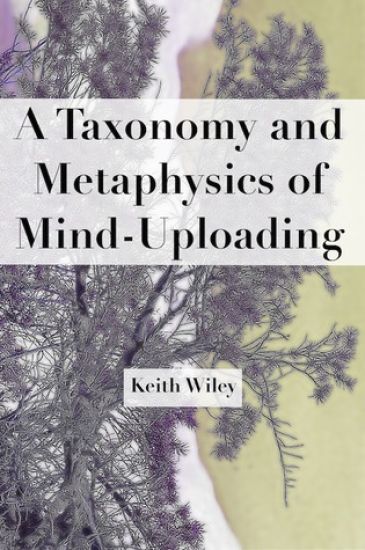
MIND-UPLOADING: the process of transferring one's mind from the brain to a new substrate, generally a computer. It is the stuff of science fiction, immediately recognizable in contemporary literature and cinema. However, it has also become increasingly respectable-or at least approachable-within technological, neurological, and philosophical circles. This book begins with a rich taxonomy of hypothetical procedures by which mind-uploading might be achieved, even if only in the realm of thought experiment. This is likely the most thorough collection of such procedures yet compiled and should form the basis of any reader's personal philosophy of mind and mind-uploading. It then offers one such philosophy of mind, along with an analysis and interpretation of the scenarios in the taxonomy through the lens of this philosophy. This book will be an important component of any curious reader's developing philosophy of mind and mind-uploading.
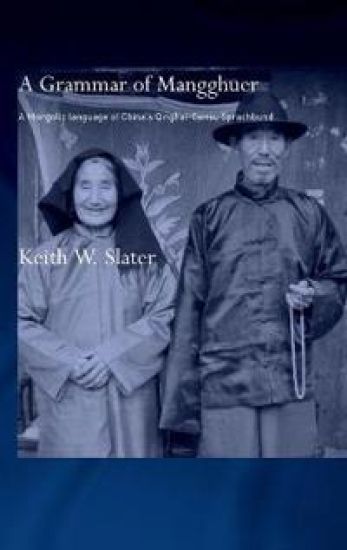
This book is a grammar of Mangghuer, a Mongolic language spoken by approximately 25,000 people in China's northwestern Qinghai Province. Mangghuer is virtually unknown outside China, and no grammar of Mangghuer has ever been published in any language. The book's primary importance is thus as a systematic grammatical description of a little-known language. The book also makes a significant contribution to comparative Mongolic studies. In addition to the synchronic description of Mangghuer, extensive comparison with other Mongolic languages is included, demonstrating the genetic relationship of Mangghuer within that family. In the course of describing Mangghuer linguistic structures, the book also examines issues of interest to linguistic typologists.

A Critical Account of English Syntax
Keith Brown; Jim Miller
Edinburgh University Press
2016
sidottu
Tackling the role of syntactic constructions in text, thiscompanion brings out the connections between syntactic structures and semantics/pragmatics and the function of different clausal structures in written and spoken texts. It also draws attention to variation in standard written English, to the grammatical structures and discourse devices in spoken English, and to ongoing changes in English grammar. It focuses on the concepts of descriptive grammar as extended and refined over the last fifty years.Encyclopedic format gives immediate access the most relevant topicCross-referencing allows students to follow a thread and explore the interrelationships between syntactic structuresInnovative structure of the volume enables lecturers to decide the order in which they wish to discuss topics and to prescribe readingThis is a practical yet flexible reference that you can return to again and again, whether it be for learning, research or teaching.
A Critical Account of English Syntax
Keith Brown; Jim Miller
Edinburgh University Press
2016
nidottu
Tackling the role of syntactic constructions in text, thiscompanion brings out the connections between syntactic structures and semantics/pragmatics and the function of different clausal structures in written and spoken texts. It also draws attention to variation in standard written English, to the grammatical structures and discourse devices in spoken English, and to ongoing changes in English grammar. It focuses on the concepts of descriptive grammar as extended and refined over the last fifty years.Encyclopedic format gives immediate access the most relevant topicCross-referencing allows students to follow a thread and explore the interrelationships between syntactic structuresInnovative structure of the volume enables lecturers to decide the order in which they wish to discuss topics and to prescribe readingThis is a practical yet flexible reference that you can return to again and again, whether it be for learning, research or teaching.
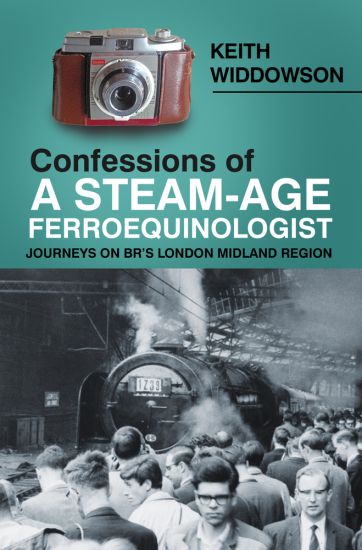
ferroequinologist (noun) Someone who studies the ‘Iron Horse’ (i.e. trains and locomotives). From the Latin ferrus ‘iron’ and equine ‘horse’ + -logist As the British steam era drew to a close, a young Keith Widdowson set out to travel on as many steam-hauled trains as possible – documenting each journey in his notebooks. In Confessions of a Steam Age Ferroequinologist, he cracks these books open and blows off the dust. His self-imposed mission, that of riding behind as many Iron Horses as possible prior to their premature annihilation, led to hours of nocturnal travels, extended periods of inactivity in station waiting rooms, missed connections and fatigue. However, any downsides of his quest were compensated by the camaraderie found amongst a group of like-minded colleagues who congregated on such trains. This is a book that no self-respecting ferroequinologist should be without.
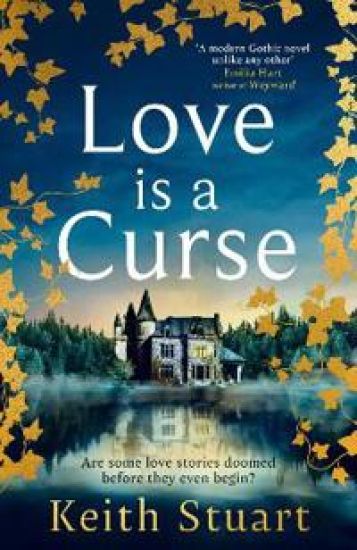
'A modern Gothic novel unlike any other, about love and loss echoing through the ages. Sad, sweet, funny and hopeful' - Emilia Hart, bestselling author of Weyward and The Sirens'Did your mother ever tell you about the curse?'Spoken by her dying aunt, these were the words that would come to define Cammy's life. As a teenager, Cammy dismissed the warning that the women in her family were doomed to lose the ones they love, writing it off as nothing more than a family myth. But when, in her late twenties, her new boyfriend is struck by a car, guilt consumes Cammy, and she begins to wonder: could the curse be real? Desperate for answers, she returns to her aunt's secluded house and begins to uncover the tangled history of her ancestors - a tragic lineage of women marked by love and loss. As she sifts through diaries, letters, and paintings, Cammy must decide: is she doomed by a fate she can't escape, or are there answers buried in the secrets of the women who came before her?'An original yet entirely universal story - sweeping in its scale, yet sweet-tempered, moving, and just the right amount of spooky. I loved it' - Samuel Burr author of The Fellowship of Puzzlemakers'Love Is a Curse uses Gothic so cleverly. I binged the ending in one sitting and was absolutely gripped (and may have had a tear or two in my eye!)' - Sarah Brooks author of The Cautious Traveller's Guide to the Wasteland
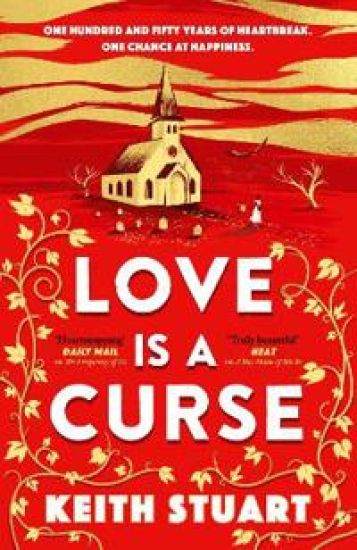
'A modern Gothic novel unlike any other, about love and loss echoing through the ages. Sad, sweet, funny and hopeful' --- Emilia Hart (author of Weyward)From acclaimed author Keith Stuart, author of A Boy Made of Blocks and The Frequency of Us, comes a daring and unique story of heartbreak and hope.A single sentence was all it took to define Cammy's life. They came as her beloved artist aunt was dying, a teenage Cammy standing by her bedside: 'Did your mother ever tell you about the curse?'Cammy is warned that the women in her family are destined always to lose the one they love. She thinks nothing of it - until the day when, in her late twenties, her new boyfriend is hit by a car. Convinced she is to blame, Cammy begins to investigate the one-hundred-and-fifty-year story of a family that is both ordinary and remarkable, tragic and beautiful.But is the curse real, or is there an answer lurking in the letters, diaries and paintings of generations of women whose hearts were broken?'An original yet entirely universal story - sweeping in its scale, yet sweet-tempered, moving, and just the right amount of spooky. I loved it' --- Samuel Burr (author of The Fellowship of Puzzlemakers)'Love Is a Curse uses Gothic so cleverly. I binged the ending in one sitting and was absolutely gripped (and may have had a tear or two in my eye!)' --- Sarah Brooks (author of The Cautious Traveller's Guide to the Wasteland)READERS ARE IN LOVE WITH LOVE IS A CURSE'One minute I'm on the edge of my seat and the next I'm reaching for tissues. Love, love, LOVED IT!'READER REVIEW? ? ? ? ?'Full of twists and drama and all you need from a good book, a fantastic novel once again bravo!!!'READER REVIEW? ? ? ? ?'This has to be my favourite of Keith Stuart's novels so far. It is an absolute celebration of the pursuit of love through adversity'READER REVIEW? ? ? ? ?'This whole book is an entire feeling. It's raw, gothic, suspenseful, thought provoking and an emotional read. Loved it'READER REVIEW? ? ? ? ?'Stuart has a gift for storytelling. Not a word is wasted and it reads beautifully.'READER REVIEW? ? ? ? ?'I loved this book. It had everything, suspense, horror, love. You name it this book had it!'READER REVIEW? ? ? ? ?'What a fantastic read, everything you'd expect from Keith Stuart and more'READER REVIEW? ? ? ? ?'Very well written, with great characters, in whom you become fully invested'READER REVIEW? ? ? ? ?
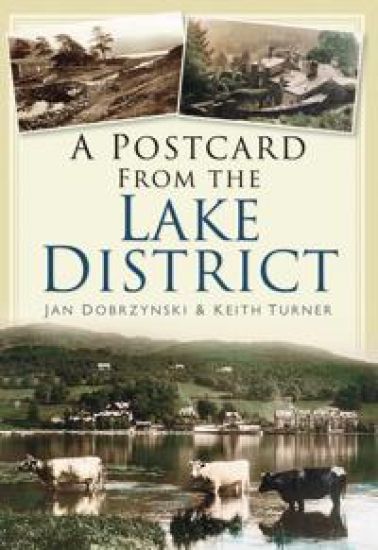
The rocks of the Lake District were laid down over millions of years of volcanic activity and sub-marine sedimentation, eroded by wind, rain, and ice age glaciers, which scoured the river valleys, widened them, and formed the lakes we know today. The towering fells hide a violent past. There were struggles over a disputed border between England and Scotland and the ruins of a Roman fort at Hardknott testify to an even earlier conflict with the Celtic Brigantes. From border settlements to market towns, mining and the coming of the railways, this book takes the reader on a journey in words and pictures across the entire Lake District along becks and rivers, down force and ghyll, across precipitous passes and over fells and through dales, using more than 200 old postcards from the authors’ extensive collections. A Postcard from the Lake District is a glorious pictorial record of soaring mountain ranges, tranquil tarns and the majestic lakes which keep visitors coming back time after time.

Genealogist Keith Gregson takes the reader on a whistle-stop tour of quirky family stories and strange ancestors rooted out by amateur and professional family historians. Each lively entry tells the story behind each discovery and then offers a brief insight into how the researcher found and then followed up their leads, revealing a range of chance encounters and the detective qualities required of a family historian. For example, one researcher discovered that his great-great-grandfather, as a child, was carried across the main street of West Hartlepool on the back of the famous tightrope walker Blondin. The Victorian newspaper report said that the rope had been tied between two chimney pots. Research into the author’s own family revealed that one of his nineteenth-century ancestors lost his leg in a Midlands coal-mining accident, and that the amputated leg was buried in the local cemetery – to be joined by the rest of him on his final demise. A Viking in the Family is full of similar unexpected discoveries in the branches of family trees.
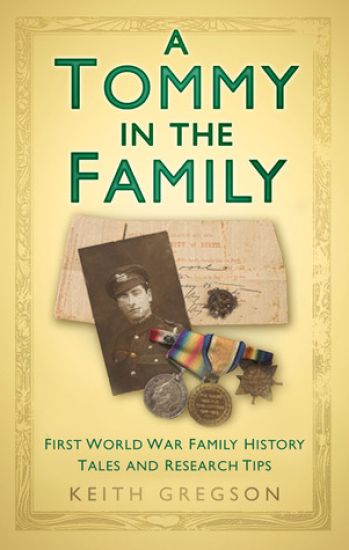
The First World War was one of the deadliest conflicts in history, and one of the most far-reaching. As a result, almost everyone’s family history has a Great War connection. In A Tommy in the Family, family historian Keith Gregson explores the human stories behind the history of the war, from the heartwarming to the tear-jerking. He encounters the mystery of the disappearance of the Norfolks; the story of a French girl’s note in a soldier’s pocket book; and the tragic tale of a group of morris dancers who paid the ultimate price while serving their country. The investigations that preceded each discovery are explored in detail, offering an insight into how the researcher found and followed up their leads. They reveal a range of chance findings, some meticulous analysis and the keen detective qualities required of a family historian. Full of handy research tips and useful background information, A Tommy in the Family will fascinate anyone with an interest in the First World War and help them to find out more about their ancestors who participated in one of the most troubled conflicts in the history of mankind
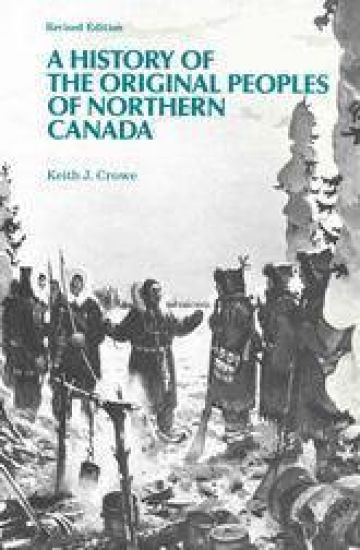
A History of the Original Peoples of Northern Canada
Keith J. Crowe
McGill-Queen's University Press
1991
nidottu
The success of this book over the years is due in large part to Crowe's approach. While the majority of works on Canadian history are essentially European in perspective, Crowe has endeavoured to interpret the history of the original peoples of northern Canada from a native standpoint. He has attempted to provide a work that native Canadians can use to learn the broad outlines of their cultural and historical development as well as details about their people, places, and events, while giving non-native people a more accurate version of northern Canadian history and ethnology. Crowe begins with the emergence, in prehistoric times, of the three great groups of hunting people -- the Algonkian, Athapaskan, and Inuit -- describing their contribution to the cultural heritage of native peoples today. He devotes particular attention to the various native tribes and some of their outstanding leaders; to the fur trade, its effects, and the emergence of the Metis people; to the devastating consequences of trading and whaling for the Arctic and the Inuit who lived there; to the Yukon Indians and the Gold Rush; to the coming of Christianity; and to the impact of governmental and economic encroachment on the North and the native peoples' response to this -- moving into the boardroom and elected office. In his new epilogue, Crowe surveys the major land claims since 1974 -- some settled, most still under negotiation, and some, like the James Bay hydro-electric project, being challenged. Crowe also explains the complexities of the land-claims process and points out the irony inherent in native peoples having to help create numerous "foreign" laws and institutions in order to protect an essentially simple way of life. He describes the native peoples' movement into and up the ranks of government at all levels and emphasizes the important role played by regional and national native associations, such as the Assembly of First Nations. He outlines the changes and developments in education in the North and provides a detailed assessment of the still very difficult economic situation, stressing the native peoples' concern that economic development in the North not be divorced from environmental considerations.
Never Love a Gambler is a showcase for the exceptional talents of Keith Ridgway. The Times (London) praised his stories as flawlessly structured yarns told in lovingly crafted prose. Ridgway s characters negotiate their way through love, madness, lust, anger, religious obsession, crime, and absence in stories told with innovative mastery brightened by fiercely vivid dialogues. Never Love a Gambler is a mental rust-remover: refreshing, bracing, and often violently funny."
Finally, Ridgway gives us A Shock, his thrilling and unsparing, slippery and shockingly good new novel. Formed as a rondel of interlocking stories with a clutch of more or less loosely connected repeating characters, it's at once deracinated yet potent with place, druggy yet frighteningly shot through with reality. His people appear, disappear, and reappear. They're on the fringes of London, clinging to sanity or solvency or a story by their fingernails, consumed by emotions and anxieties in fuzzily understood situations. A deft, high-wire act, full of imprecise yet sharp dialog as well as witchy sleights of hand reminiscent of Muriel Spark, A Shock delivers a knockout punch of an ending. Perhaps Ridgway's most breathtaking quality is his scintillating stealthiness: you can never quite put your finger on how he casts his spell--he delivers the shock of a master jewel thief (already far-off and scot-free) stealing your watch: when at some point you look down at your wrist, all you see is that in more than one way you don't know what time it is...

Frank the monster indulges his love of dancing by putting on his hat and shoes and then strutting his stuff on stage until his head unzips, his brains flop out, and he continues to lose body parts. Reprint.

What Makes a Carmelite a Carmelite?
Keith J. Egan
THE CATHOLIC UNIVERSITY OF AMERICA PRESS
2022
nidottu
Vatican II initiated lively conversations about the identity of religious orders and congregations when the council pointed out that these religious communities are divine gifts in and to the church. Keith Egan examines the nature of these charisms including, not only the original or founders' charism, but how charisms evolve over the centuries. Special theological attention to these charisms show that they are not something but, in fact, are the dynamic presence of the Holy Spirit.This volume offers a case study the original charism of the Carmelites. The first Carmelites originated when various hermits were displaced by the armies of Saladin. These dislodged hermits sought refuge on Mount Carmel in a ravine facing the Mediterranean Sea. There, these hermits, now Carmelites, sought from Saint Albert, Patriarch of Jerusalem, a description of their life of solitude. Albert's Formula of Life describes the original Carmelite charism as a life of prayer and contemplation. This Formula eventually became a Rule that made possible a transformation of hermits into friars. Egan is at work on a sequel that examines this radical transformation.

Winner, Best Book in Humanities and Cultural Studies (Literary Studies), Association for Asian American Studies Upon signing the first U.S. arms agreement with Israel in 1962, John F. Kennedy assured Golda Meir that the United States had “a special relationship with Israel in the Middle East,” comparable only to that of the United States with Britain. After more than five decades such a statement might seem incontrovertible-and yet its meaning has been fiercely contested from the start. A Shadow over Palestine brings a new, deeply informed, and transnational perspective to the decades and the cultural forces that have shaped sharply differing ideas of Israel’s standing with the United States-right up to the violent divisions of today. Focusing on the period from 1960 to 1985, author Keith P. Feldman reveals the centrality of Israel and Palestine in postwar U.S. imperial culture. Some representations of the region were used to manufacture “commonsense” racial ideologies underwriting the conviction that liberal democracy must coexist with racialized conditions of segregation, border policing, poverty, and the repression of dissent. Others animated vital critiques of these conditions, often forging robust if historically obscured border-crossing alternatives. In this rich cultural history of the period, Feldman deftly analyzes how artists, intellectuals, and organizations-from the United Nations, the Black Panther Party, and the Association of Arab American University Graduates to James Baldwin, Daniel Patrick Moynihan, Edward Said, and June Jordan-linked the unfulfilled promise of liberal democracy in the United States with the perpetuation of settler democracy in Israel and the possibility of Palestine’s decolonization.In one of his last essays, published in 2003, Edward Said wrote, “In America, Palestine and Israel are regarded as local, not foreign policy, matters.” A Shadow over Palestine maps this jagged terrain on which this came to be, amid a wealth of robust alternatives, and the undeterred violence at home and abroad unleashed as a result of this special relationship.

Liturgy in a Postmodern World
Keith Pecklers
Continuum International Publishing Group Ltd.
2006
nidottu
Liturgy in a Post-Modern World grapples with the future of liturgy at a time of exceptional uncertainty in the Christian Churches. In the summer of 2002 a conference in Rome met to look at liturgical renewal and this book is the result. Cardinal Danneels set the tone of the conference and thus of the book. After evaluating the liturgical reforms of Vatican II, he tackles the problem of incomprehensibility in a world whose symbolic system has been lost. Includes a international scholars such as Timothy Radcliffe OP, Robert F. Taft SJ, Peter C. Phan, Francisco F. Claver SJ and is edited by Keith Pecklers SJ. An Anglican perspective is contributed by Canon Donald Gray. 'Liturgy in a Post-Modern World' will be essential reading for anyone concerned with the future of liturgy.