Das vorliegende Buch bietet dem Leser einen Überblick über die Physik der Neutrinos, der leichtesten Fermionen im Standardmodell der Teilchenphysik. Neben den Grundlagen und der theoretischen Beschreibung beleuchten die Autoren aktuelle Forschung und offene Fragestellungen zur Neutrinophysik. Die Autoren besprechen die Rolle dieser Teilchen in Kosmologie und Astrophysik, gehen auf moderne Neutrino-Experimente ein und erklären die aktuellsten Ergebnisse verständlich. Grundlagen zum Verständnis des Buches sind Kenntnisse der klassischen Physik und Grundkenntnisse der Quantenmechanik - Vorkenntnisse in der Kern- und Teilchenphysik schaden nicht, sind aber auch nicht unbedingt nötig. Das Buch richtet sich an Bacheloranden, Master-Studierende, Doktorandinnen und Doktoranden und Postdocs, die im Bereich der theoretischen oder experimentellen Neutrinophysik ihre Abschlussarbeit schreiben und forschen. Aus dem Inhalt: Neutrinos im Standardmodell Neutrinooszillationen Experimente zu Neutrinooszillationen Status von Neutrinooszillationen und offene Fragen Neutrinos in Astrophysik und Kosmologie
In this volume, the Amazon and its adjacent rainforest are presented in all their important facets: First, there is the vast river system itself, with its network of white, black, and clear water rivers. The different water qualities have an enormous impact on people, animals and plants. On the other hand, the people who live along this "Rio Mar," the ocean river, are described. They are the Caboclos, the descendants of the European immigrants and the indigenous people, and it is the different indigenous peoples who have mostly settled along the riverbanks, since the rivers here replace the roads and make contact with other people possible in the first place. Although these ethnic groups have been in contact with Western civilization for generations,they have surprisingly preserved a number of remarkable traditions that are described here. The treasure of the Amazon is its plants and animals. Therefore, the most fascinating flowering plants, including numerous medicinal plants, trees, epiphytes and lianas from different habitats are described in detail and illustrated with excellent photographs. Finally, it is the animals, especially in and around the river, that have always fascinated Alexander von Humboldt. Not only is the lifestyle of the legendary pink dolphins, piranhas and tarantulas explained here, but the impressive amphibians, reptiles and mammals of the jungle are also discussed.epiphytes and lianas from different habitats are described in detail and illustrated with excellent photographs. Finally, it is the animals, especially in and around the river, that have always fascinated Alexander von Humboldt. Not only is the lifestyle of the legendary pink dolphins, piranhas and tarantulas explained here, but the impressive amphibians, reptiles and mammals of the jungle are also discussed.epiphytes and lianas from different habitats are described in detail and illustrated with excellent photographs. Finally, it is the animals, especially in and around the river, that have always fascinated Alexander von Humboldt. Not only is the lifestyle of the legendary pink dolphins, piranhas and tarantulas explained here, but the impressive amphibians, reptiles and mammals of the jungle are also discussed.This book is a translation of the original German 1st edition Faszination Amazonas by Lothar Staeck, published by Springer-Verlag GmbH Germany, part of Springer Nature in 2019. The translation was done with the help of artificial intelligence (machine translation by the service DeepL.com). A subsequent human revision was done primarily in terms of content, so that the book will read stylistically differently from a conventional translation. Springer Nature works continuously to further the development of tools for the production of books and on the related technologies to support the authors.
In der Studie werden die Märchenerzählungen der Brüder Grimm konsequent als Literatur aus Literatur in den Blick genommen. Über die Entstehungs- und Transformationsgeschichte wird transparent gemacht, wie im Zuge der Redaktion durch die Brüder Grimm, im Wesentlichen durch Wilhelm Grimm, literarische Vorlagen umdeklariert und zu den bekannten Märchenerzählungen umgeformt wurden. Anhand einer Reihe von Modelluntersuchungen – u.a. von Rapunzel, Jorinde und Joringel und Der Jude im Dorn – wird aufgezeigt, dass die Märchenerzählungen der Brüder Grimm entgegen ihrer traditionellen Einschätzung als ‚Volksmärchen‘ literarischen Ursprungs sind und selbst literarischen Charakter besitzen.
In this study, the Brothers Grimm's fairy tales are consistently examined as literature out of literature. Through the history of their creation and transformation, it becomes apparent how literary models were re-declared and transformed into the well-known fairy tale narratives, in the course of the editing process by the Brothers Grimm, essentially by Wilhelm Grimm. By means of a series of model studies – including Rapunzel, Jorinde und Joringel and Der Jude im Dorn – it is shown that the Brothers Grimm's fairy tales, contrary to their traditional assessment as 'folk tales', are of literary origin and have a literary character themselves.
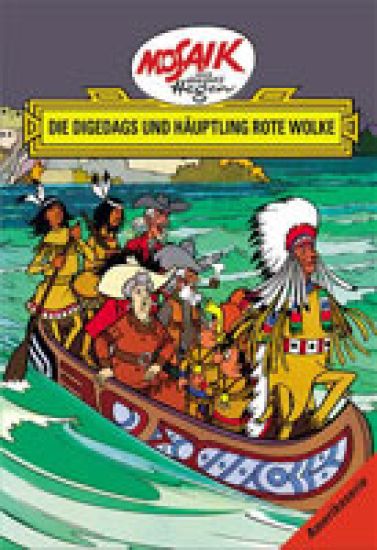
Mrs. Jefferson trifft auf der Suche nach dem Goldschatz Häuptling Rote Wolke. Er erzählt vom Volk der Tolteken, das 1519 aus Nordamerika in seine alte Heimat Mexiko zurückkehrte und dort mit den spanischen Eroberern unter Cortez zusammentraf. Auch die Digedags haben diese Begegnung miterlebt und berichten, was damals geschah.
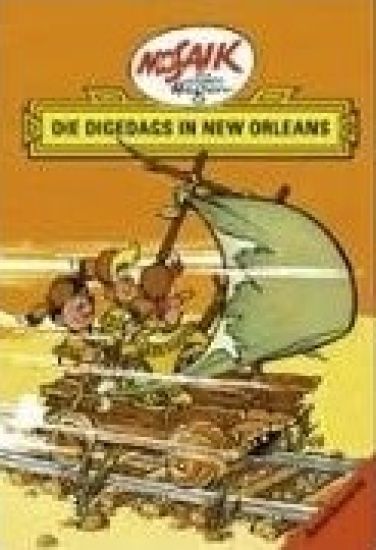
Die Digedags kehren zurück nach New Orleans. Bei einem Überfall werden ihre Tagebücher geraubt und veröffentlicht. Die Nachricht vom Goldfund versetzt ganz New Orleans in einen Goldrausch. Doch die Digedags haben eigene Pläne.
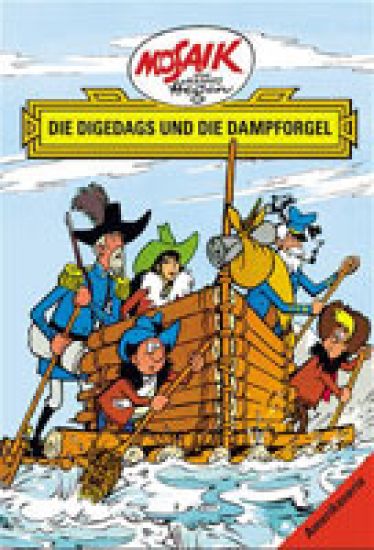
Es ist mal wieder gefährlich für die Digedags, doch der Einsatz einer Dampforgel hat ungeahnte Wirkungen und wendet das Blatt. In die Enge getrieben, verraten die Gangster das Geheimnis der Goldmine. Ein neuer Wettlauf zum Gold beginnt.
Von ihren Freunden, den Indianern, haben die Digedags erfahren, wo im Jahre 1519 der Schatz der Tolteken versenkt wurde. In einer abenteuerlichen Aktion gelingt es, diesen Schatz zu heben. Doch noch immer sind die Digedags nicht am Ziel.
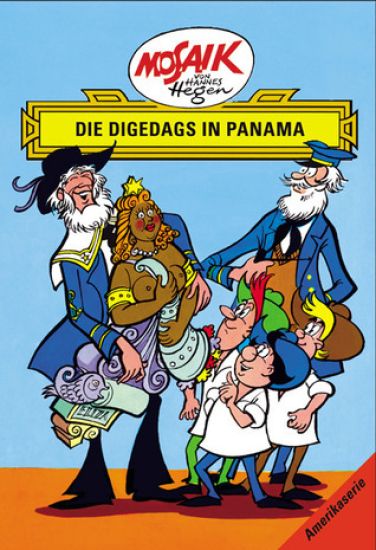
Auf einem alten Walfangschiff schiffen sich die Digedags nach Panama ein. Unterwegs geht ihr Schiff zu Bruch. Sie retten sich und den Goldschatz auf ein Floß mit einer Schildkröte als Zugtier. Auf dem Rummel besiegen sie den stärksten Mann der Welt und können mit den Schaustellern weiterreisen.
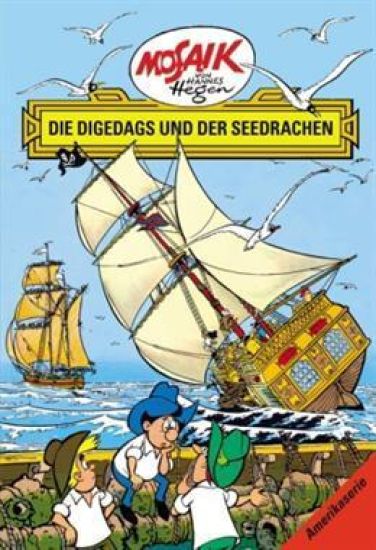
Die Digedags sind hoch oben im Burgverlies eingesperrt. Wie gut, dass der Affe, der ihnen Palmenzweige bringt, auch an den explosiven Bananensekt gedacht hat. Mit diesem Antrieb landen sie sicher auf dem englischenSeedrachen - nur leider steuert das Schiff die Insel an, von der sie gerade geflohen sind.