Kirjojen hintavertailu. Mukana 11 244 527 kirjaa ja 12 kauppaa.

Kirjahaku

Etsi kirjoja tekijän nimen, kirjan nimen tai ISBN:n perusteella.

1000 tulosta hakusanalla MARIO FARNETI
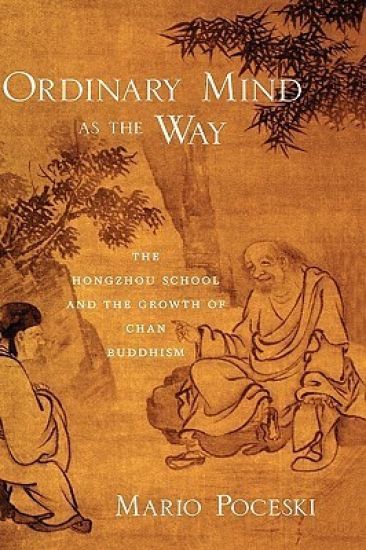
Ordinary Mind as the Way

Ordinary Mind as the Way

Mario Poceski

Oxford University Press Inc
2007
sidottu
This is a comprehensive study of Hongzhou school, which under the leadership of Mazu Daoyi (709-788) and his disciples emerged as the dominant tradition of Chan (Zen) Buddhism in China during the middle part of the Tang dynasty (618-907).
Unanticipated Gains

Unanticipated Gains

Mario Luis Small

Oxford University Press Inc
2009
sidottu
Social capital theorists have shown that inequality arises in part because some people enjoy larger, more supportive or otherwise more useful networks. But why do some people have better networks than others? Unanticipated Gains argues that the answer lies less in people's deliberate "networking" than in the institutional conditions of the colleges, firms, gyms, and other organizations in which they happen to participate routinely. The book introduces a model of social inequality that takes seriously the embeddedness of networks in formal organizations, proposing that what people gain from their connections depends on where those connections are formed and sustained. It studies an unlikely case: the experiences of mothers whose children were enrolled in New York City childcare centers. As a result of the routine practices and institutional conditions of the centers--from the structure of their parents' associations, to apparently innocuous rules such as pick-up and drop-off times---many of these mothers dramatically increased their social capital and measurably improved their wellbeing. Yet how much they gained depended on how their centers were organized. The daycare centers also brokered connections to other people and organizations, affecting not only the size of mothers' networks but also the resources available through them. Social inequality then arises not merely out of differences in skills or deliberate investments - as the conventional social scientific and political wisdom would have it - but also out of the differences in the routine organizations in which people belong. In addition to childcare centers, Small also identifies the social forces at work in many other organizations, including beauty salons, bath houses, gyms, and churches.
Aggregation and the Microfoundations of Dynamic Macroeconomics
This book argues that modern macroeconomics has completely overlooked the aggregate nature of the data. Standard models start with intertemporally maximizing agents and obtain dynamic equations linking economic variables like consumption, income, investment interest rate and employment. Such equations exhibit testable properties like cointegration, definite patterns of Granger causality, and restrictions on the parameters. The usual simplification that agents are identical leads to testing these properties directly on aggregate data. Here this simplification is systematically questioned. In Part I the homogeneity assumption is tested using disaggregate data and strongly rejected. As shown in Part II, the consequence of introducing heterogeneity is that, apart from flukes, cointegration unidirectional Granger causality, restrictions on parameters do not survive aggregation: thus the claim that modern macroeconomics has solid microfoundations is unwarranted. However, it is argued in Part III that aggregation is not necessarily bad. Some important theory-based models that do not fit aggregate data well in their representative-agent version can be reconciled with aggregate data by introducing heterogeneity.
Out of Equilibrium

Out of Equilibrium

Mario Amendola; Jean-Luc Gaffard

Clarendon Press
1998
sidottu
Standard equilibrium economic models focus on interdependencies. In Out of Equilibrium, Amendola and Gaffard develop a theory also dealing with interdependencies, but based on disequilibria, which take the form of feedback mechanisms over time. The way in which these disequilibria interact sequentially determines the evolution path of an economy. As a result, different processes may be associated with any kind of original shock. Whereas in equilibrium models these processes are determined by the 'fundamentals' of the economy, here the outcome is heavily influenced by the processes themselves, the sequential decisions taken, and policies followed. The model proposed in this book is a heuristic tool that makes it possible to explore these `disequilibria'. By using it, economic phenomena and policy recommendations appear entirely different, and in most cases the interpretations made are diametrically opposite to those advocated by the dominant equilibrium theory, thus giving a new perspective on the recent past of the Western economies.
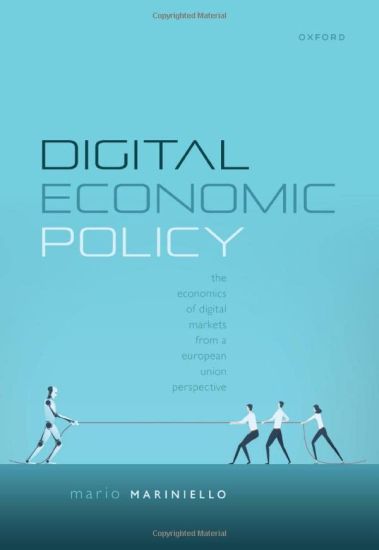
Digital Economic Policy

Digital Economic Policy

Mario (Visiting Professor Mariniello

Oxford University Press
2022
sidottu
The emergence of new technologies and business models has required a pro-active role from public authorities in defining the rules of evolving markets before issues cement. This book surveys the key areas of the digital economy that demand policy action, such as AI, cybersecurity, and e-commerce, and the EU long term strategic plans to govern them.
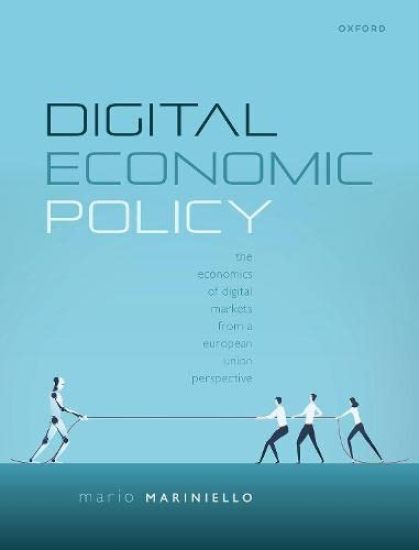
Digital Economic Policy

Digital Economic Policy

Mario Mariniello

Oxford University Press
2022
nidottu
The emergence of new technologies and business models such as data analytics, online platforms, and artificial intelligence has shaken the economy and society at their foundations. Recently, it has become apparent that public authorities must take a pro-active role to define the rules of the newly emerged markets before potential issues and concerns cement. How rules are currently written determines who will exert a stronger influence on the economy and society in the coming years. This is key reason why digital policymakers are currently exposed to tremendous pressure by stakeholders. This book takes a journey through all the main areas in the digital economy that beg for policy action. Readers may learn about the general features of a digital economy and the EU long term strategic plans to govern it. They may learn about telecom markets, the data economy, the digitization of the public sector, cybersecurity, the platform economy, liability for online content, e-commerce, the sharing economy, the impact of technology on labour markets, digital inequality, disinformation, and artificial intelligence. This book provides students with the background knowledge and analytical tools necessary to understand, analyse, and assess the impact of EU digital policies on the European economy and society. The approach is both theoretical and applied. The main goal is to prepare students to give informed and economically sound advice to an EU policymaker for digital affairs.
Roads to Reference

Roads to Reference

Mario Gómez-Torrente

Oxford University Press
2019
sidottu
How is it that words come to stand for the things they stand for? Is the thing that a word stands for - its reference - fully identified or described by conventions known to the users of the word? Or is there a more roundabout relation between the reference of a word and the conventions that determine or fix it? Do words like 'water', 'three', and 'red' refer to appropriate things, just as the word 'Aristotle' refers to Aristotle? If so, which things are these, and how do they come to be referred to by those words? In Roads to Reference, Mario Gómez-Torrente provides novel answers to these and other questions that have been of traditional interest in the theory of reference. The book introduces a number of cases of apparent indeterminacy of reference for proper names, demonstratives, and natural kind terms, which suggest that reference-fixing conventions for them adopt the form of lists of merely sufficient conditions for reference and reference failure. He then provides arguments for a new anti-descriptivist picture of those kinds of words, according to which the reference-fixing conventions for them do not describe their reference. This book also defends realist and objectivist accounts of the reference of ordinary natural kind nouns, numerals, and adjectives for sensible qualities. According to these accounts these words refer, respectively, to 'ordinary kinds', cardinality properties, and properties of membership in intervals of sensible dimensions, and these things are fixed in subtle ways by associated reference-fixing conventions.
Shakespeare and Queer Studies

Shakespeare and Queer Studies

Mario DiGangi

Oxford University Press
2025
sidottu
Shakespeare and Queer Studies offers an accessible, comprehensive, and non-polemical account of queer approaches to Shakespeare's plays and poems. Addressing the strategies and stakes of different modes of queer critique, it encourages readers to develop their own interpretive strategies for reading sexuality and gender in Shakespeare. Mario DiGangi demonstrates how concepts such as queer temporality, reproductive futurism, and intersectionality can provide new ways of understanding same-sex relations in Shakespeare. At the same time, it avoids some of the ethical and intellectual pitfalls of an insufficiently capacious queer critical practice by examining the social and political power dynamics of same-sex relationships. Critiques of queer studies from the perspectives of critical race studies, trans studies, and asexuality studies have stressed the limitations of “homonormative” or otherwise exclusionary queer approaches. Shakespeare and Queer Studies argues that the full potential of queer as an analytic for the sexually non-normative in Shakespeare can be realized only when we acknowledge the importance of intersecting axes of embodied difference (such as size, species, race, or ability); non-dyadic, non-monogamous, and promiscuous relationships; embodied transgender experiences; the asexual or celibate rejection of marriage and compulsory sexuality; and the multiplicity of sexual acts and erotic pleasures that have no socially ameliorative or reproductive function. By devoting significant attention to all of these issues, Shakespeare and Queer Studies offers new insights into the queerness of erotic experience in Shakespeare's plays and poems.
Shakespeare and Queer Studies

Shakespeare and Queer Studies

Mario DiGangi

Oxford University Press
2025
nidottu
Shakespeare and Queer Studies offers an accessible, comprehensive, and non-polemical account of queer approaches to Shakespeare's plays and poems. Addressing the strategies and stakes of different modes of queer critique, it encourages readers to develop their own interpretive strategies for reading sexuality and gender in Shakespeare. Mario DiGangi demonstrates how concepts such as queer temporality, reproductive futurism, and intersectionality can provide new ways of understanding same-sex relations in Shakespeare. At the same time, it avoids some of the ethical and intellectual pitfalls of an insufficiently capacious queer critical practice by examining the social and political power dynamics of same-sex relationships. Critiques of queer studies from the perspectives of critical race studies, trans studies, and asexuality studies have stressed the limitations of “homonormative” or otherwise exclusionary queer approaches. Shakespeare and Queer Studies argues that the full potential of queer as an analytic for the sexually non-normative in Shakespeare can be realized only when we acknowledge the importance of intersecting axes of embodied difference (such as size, species, race, or ability); non-dyadic, non-monogamous, and promiscuous relationships; embodied transgender experiences; the asexual or celibate rejection of marriage and compulsory sexuality; and the multiplicity of sexual acts and erotic pleasures that have no socially ameliorative or reproductive function. By devoting significant attention to all of these issues, Shakespeare and Queer Studies offers new insights into the queerness of erotic experience in Shakespeare's plays and poems.
Roman Comedy against the Subject

Roman Comedy against the Subject

Mario Telò

Oxford University Press
2025
sidottu
Roman Comedy against the Subject provides an expansive interpretation of four Roman comedies named after objects--Plautus's Cistellaria, Aulularia, and Rudens, and Terence's Eunuchus. In this book, the titular object provides an opportunity not to reconceive the relational politics of Roman comedy, but to conceive a different politics of familial and social relations with Roman comedy. Employing object-oriented ontology, psychoanalysis, queer theory, and Black critical theory, the book radically recasts perennial problems of Roman comedy and literature in general: the author, in relation to "mothering" (alternative maternities); character, in relation to neurodiversity; genre, in relation to sibling-like parentality; and the title itself, in relation to gendering and ungendering. Roman Comedy against the Subject explores the aesthetic and political possibilities of becoming object, of embracing "itness." Rather than assimilating objects to subjects or vital agents, the book finds emancipatory potential in renouncing the normative and intrinsically exclusionary subjecthood of "he," "she," and "they," markers of privilege that are burdened by the violence of humanization and often dehumanizing of others. The introduction features nine brief but acute readings of object-oriented modern dramas: Tennessee Williams's Glass Menagerie, Yukio Mishima's The Damask Drum, Eugène Ionesco's Les Chaises, and Alice Childress's String, among others.
Fat Economics

Fat Economics

Mario Mazzocchi; W. Bruce Traill; Jason F. Shogren
Oxford University Press
2009
sidottu
The obesity epidemic and the growing debate about what, if any, public health policy should be adopted is the subject of endless debates within the media and in governments around the world. Whilst much has been written on the subject, this book takes a unique approach by looking at the obesity epidemic from an economic perspective. Written in a language accessible to non-specialists, the authors provide a timely discussion of evolving nutrition policies in both the developing and developed world, discuss the factors influencing supply and demand of food supply, and review the evidence for various factors which may explain recent trends in diets, weight, and health. The traditional economic model assumes people choose to be overweight as part of a utility maximisation process that involves choices about what to eat and drink, how much time to spend on leisure, food preparation, and exercise, and choices about appearance and health. Market and behavioural failures, however, such as time available to a person, education, costs imposed on the health system and economic productivity provide the economic rationale for government intervention. The authors explore various policy measures designed to deal with the epidemic and examine their effectiveness within a cost-benefit analysis framework. While providing a sound economic basis for analysing policy decisions, the book also aims to show the underlying limits of the economic framework in quantifying changes in public well-being.
Fat Economics

Fat Economics

Mario Mazzocchi; W. Bruce Traill; Jason F. Shogren

Oxford University Press
2009
nidottu
The obesity epidemic and the growing debate about what, if any, public health policy should be adopted is the subject of endless debates within the media and in governments around the world. Whilst much has been written on the subject, this book takes a unique approach by looking at the obesity epidemic from an economic perspective. Written in a language accessible to non-specialists, the authors provide a timely discussion of evolving nutrition policies in both the developing and developed world, discuss the factors influencing supply and demand of food supply, and review the evidence for various factors which may explain recent trends in diets, weight, and health. The traditional economic model assumes people choose to be overweight as part of a utility maximisation process that involves choices about what to eat and drink, how much time to spend on leisure, food preparation, and exercise, and choices about appearance and health. Market and behavioural failures, however, such as time available to a person, education, costs imposed on the health system and economic productivity provide the economic rationale for government intervention. The authors explore various policy measures designed to deal with the epidemic and examine their effectiveness within a cost-benefit analysis framework. While providing a sound economic basis for analysing policy decisions, the book also aims to show the underlying limits of the economic framework in quantifying changes in public well-being.
The Legal Effects of EU Agreements

The Legal Effects of EU Agreements

Mario Mendez

Oxford University Press
2013
sidottu
This is an open access title available under the terms of a CC BY-NC-ND 3.0 International licence. It is free to read at Oxford Scholarship Online and offered as a free PDF download from OUP and selected open access locations. Comprehensively examining the legal effects of EU concluded treaties, this book provides a thorough analysis of this increasingly important and rapidly growing area of EU law. The EU has concluded more than 1000 treaties including recently its first human rights treaty (the UN Rights of Persons with Disability Convention). These agreements are regularly invoked in litigation in the Courts of the member states and before the EU courts in Luxembourg but their ramifications for the EU legal order and that of the member states remains underexplored. Through analysis of over 300 cases, the author finds evidence of a twin-track approach whereby the Court of Justice of the European Union (CJEU) adopts a maximalist approach to Treaty enforcement where EU agreements are invoked in challenges to member state level action whilst largely insulating EU action from meaningful review vis-à-vis agreements. The book also reveals novel findings regarding the use of EU agreements in EU level litigation including: the types and which specific EU agreements (including the types of provisions) have arisen in litigation; the nature of the proceedings (preliminary rulings or direct actions) and the number of occasions in which they have been addressed in challenges to member state or EU action and the outcomes; who has been litigating (individuals, institutions, or member states) and which domestic courts have been referring questions to the CJEU. The significance of the judicial developments in this area are situated within the context of the domestic constitutional ramifications for member state legal orders thus revealing a neglected dimension in the constitutionalization debates which traditionally emphasized the ramifications of internal EU law for the domestic constitutional order without expressly accommodating the constitutional significance of this external category of EU law nor the different challenges that this poses domestically. This volume will serve as a reference point for future work in this area and will also be of assistance to EU law practitioners dealing with EU agreements.
Unanticipated Gains

Unanticipated Gains

Mario Luis Small

Oxford University Press Inc
2010
nidottu
Social capital theorists have shown that some people do better than others in part because they enjoy larger, more supportive, or otherwise more useful networks. But why do some people have better networks than others? Unanticipated Gains argues that the practice and structure of the churches, colleges, firms, gyms, childcare centers, and schools in which people happen to participate routinely matter more than their deliberate "networking." Exploring the experiences of New York City mothers whose children were enrolled in childcare centers, this book examines why a great deal of these mothers, after enrolling their children, dramatically expanded both the size and usefulness of their personal networks. Whether, how, and how much the mother's networks were altered--and how useful these networks were--depended on the apparently trivial, but remarkably consequential, practices and regulations of the centers. The structure of parent-teacher organizations, the frequency of fieldtrips, and the rules regarding drop-off and pick-up times all affected the mothers' networks. Relying on scores of in-depth interviews with mothers, quantitative data on both mothers and centers, and detailed case studies of other routine organizations, Small shows that how much people gain from their connections depends substantially on institutional conditions they often do not control, and through everyday processes they may not even be aware of. Emphasizing not the connections that people make, but the context in which they are made, Unanticipated Gains presents a major new perspective on social capital and on the mechanisms producing social inequality.
Culture, Brain, and Analgesia

Culture, Brain, and Analgesia

Mario Incayawar; Knox H. Todd

Oxford University Press Inc
2013
sidottu
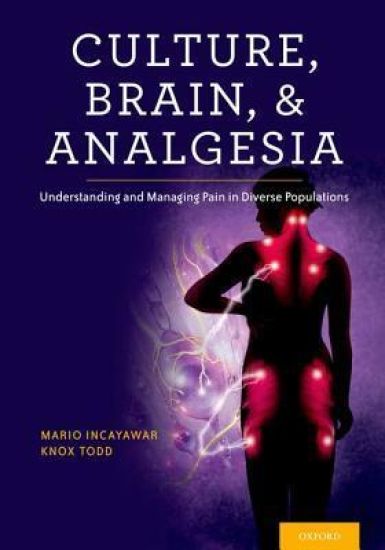
In this book, the authors have placed culture in the forefront of their approach to study pain in an integrative manner. Culture should not be considered solely for knowing more about patients' values, beliefs, and practices. It should be studied with the purpose of unveiling its effects upon biological systems and the pain neuromatrix. The book discusses how a multidisciplinary and integrative approach to pain and analgesia should be considered. Some familiarity with the cultural background of patients and awareness of the provider's own cultural characteristics will allow the pain practitioner to better understand patients' values, attitudes and preferences. Knowledge of patients' cultural practices will allow determining the impact of culture on biological processes, including the origin and development of pain-related disease, and the patients' response to pharmacological and non-pharmacological treatments. Acknowledging the interactions of molecules, genes and culture could yield a more appropriate and effective personalized pain medicine. Furthermore, this approach has the potential to transform the way pain medicine is taught to young students and future pain professionals, and in so doing meet the need of trained clinicians who are versed in multiple disciplines and are able to use an integrative approach to diagnose and treat pain. A personalized medicine will have non-negligible positive effects in improving doctor patient relationships, patient satisfaction, adherence to treatment plans, and health outcomes and inequities. It is hoped that the material in this volume will appeal to a broad cross-section of health practitioners, students and academicians, including pain medicine specialists, psychiatrists, psychologists, social workers, mental health, community and public health workers, health policy makers, and health administrators.
New Parade, Level 6

New Parade, Level 6

Mario Herrera

Pearson Education (US)
2000
nidottu
New Parade is a seven-level, communicative language program, that features Total Physical Response (TPR), rhymes, songs, chants, pair work, cooperative learning, and hands-on projects. Each level of New Parade contains the following components: A Student Book, Workbook, Teacher's Edition, Audio Program, Picture Cards, Posters, and Video and Video Guide.
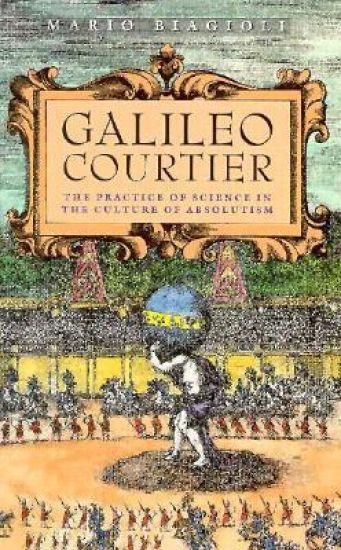
Galileo, Courtier

Galileo, Courtier

Mario Biagioli

University of Chicago Press
1994
nidottu
In the court of the Medicis and the Vatican, Galileo fashioned both his career and his science to the demands of patronage and its complex systems of wealth, power, and prestige. In this fascinating cultural and social history of science, Biagioli argues that Galileo's courtly role was integral to his science - the questions he chose to examine, his methods, even his conclusions.
Galileo's Instruments of Credit

Galileo's Instruments of Credit

Mario Biagioli

University of Chicago Press
2006
sidottu
In six short years, Galileo Galilei went from being a somewhat obscure mathematics professor running a student boarding house in Padua to a star in the court of Florence to the recipient of dangerous attention from the Inquisition for his support of Copernicanism. In that brief period, Galileo made a series of astronomical discoveries that reshaped the debate over the physical nature of the heavens: he deeply modified the practices and status of astronomy with the introduction of the telescope and pictorial evidence, proposed a radical reconfiguration of the relationship between theology and astronomy, and transformed himself from university mathematician into court philosopher. "Galileo's Instruments of Credit" proposes radical new interpretations of several key episodes of Galileo's career, including his early telescopic discoveries of 1610, the dispute over sunspots, and the conflict with the Holy Office over the relationship between Copernicanism and Scripture. Galileo's tactics during this time shifted as rapidly as his circumstances, argues Mario Biagioli, and the pace of these changes forced him to respond swiftly to the opportunities and risks posed by unforeseen inventions, further discoveries, and the interventions of his opponents. Focusing on the aspects of Galileo's scientific life that extend beyond the framework of court culture and patronage, Biagioli offers a revisionist account of the different systems of exchanges, communication, and credibility at work in various phases of Galileo's career. "Galileo's Instruments of Credit" will find grateful readers among scholars of science studies, historical epistemology, visual studies, Galilean science, and late Renaissance astronomy.
Galileo's Instruments of Credit

Galileo's Instruments of Credit

Mario Biagioli

University of Chicago Press
2007
nidottu
In six years, Galileo Galilei went from being a mathematics professor to a star in the court of Florence to a target of the Inquisition. And during that time, he made a series of astronomical discoveries that reshaped the ideas of the physical nature of the heavens and transformed him from a university mathematician into a court philosopher. Galileo's "Instruments of Credit" proposes radical new interpretations of key episodes of Galileo's career, including his telescopic discoveries of 1610, the dispute over sunspots, and the conflict with the Holy Office over the relationship between Copernicanism and Scripture. Galileo's tactics shifted as rapidly as his circumstances, argues Mario Biagioli, and these changes forced him to respond swiftly to the opportunities and risks posed by unforeseen inventions, other discoveries, and his opponents. Focusing on the aspects of Galileo's scientific life that extended beyond court culture and patronage, Biagioli offers a revisionist account of the different systems of exchanges, communication, and credibility at work in Galileo's career. Galileo's "Instruments of Credit" will fascinate readers interested in the history of astronomy and the history of science in general.