Kirjojen hintavertailu. Mukana 11 699 587 kirjaa ja 12 kauppaa.

Kirjahaku

Etsi kirjoja tekijän nimen, kirjan nimen tai ISBN:n perusteella.

1000 tulosta hakusanalla Maral Atmaca

Moral Psychology

Moral Psychology

Rowman Littlefield Publishers
2004
nidottu
Moral psychology studies the features of cognition, judgement, perception, and emotion that make human beings capable of moral action. Perspectives from feminist and race theory immensely enrich moral psychology. Writers who take these perspectives ask questions about mind, feeling, and action in contexts of social difference and unequal power and opportunity. These essays by a distinguished international cast of philosophers explore moral psychology as it connects to social life, scientific studies, and literature.
Moral Leadership and the American Presidency

Moral Leadership and the American Presidency

Robert E. Denton

Rowman Littlefield Publishers
2005
sidottu
We have a crisis of leadership in America today. We are not electing the very best to public office, nor are the best willing to serve. As a nation, we have lowered our standards and expectations of those who run and their performance in office. Robert E. Denton, Jr.'s exceptional book explores moral presidential leadership, ultimately calling for a return to a 'heroic presidency.' Briefly surveying presidential character throughout our history, he gives an overview of the decline in trust of the government and offers possible reasons for this trend. Denton argues that personal character and integrity are essential and critical presidential traits. Focusing mainly on Bill Clinton and George W. Bush, he compares the scandal-filled terms of Clinton and Richard Nixon and looks at Bush vis-^-vis the elections, September 11, and the Iraq war. Denton addresses the myth of separating private from public behavior and shows how virtually everything presidents do or say influences their decisions and impacts citizens. Moral Leadership and the American Presidency is a must-read for anyone interested in the modern role of the president or in morality in American public life.
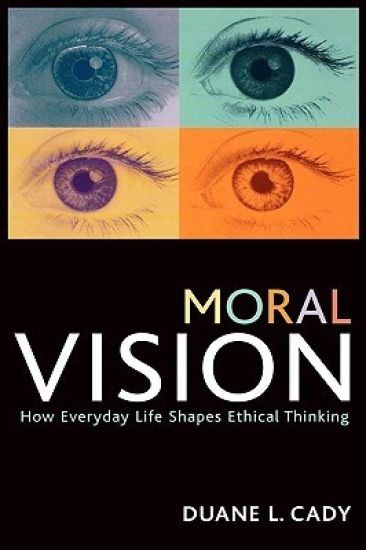
Moral Vision

Moral Vision

Duane L. Cady

Rowman Littlefield Publishers
2005
sidottu
What is moral reasoning? Are we being reasonable when we make moral decisions if we cannot supply compelling arguments, criteria, necessary and sufficient conditions, decisive empirical evidence and the like? In Moral Vision, Duane L. Cady critiques the contemporary inclination to model reason after textbook natural science, noting that our values are not conclusions of proofs or derivations but frameworks in which such reasoning may take place, frameworks that we struggle to understand and explain. Cady goes on to suggest a rich conception of reason beyond that of stereotypical science, one that reflects aesthetic, historical, experiential, and pluralistic aspects of moral thinking, one that widens and deepens descriptions of how moral thinking typically happens. This book will be of interest to anyone wondering what philosophy may contribute to our contemporary struggle with conflicting values and value collisions, both personal as well as cultural.
Moral Vision

Moral Vision

Duane L. Cady

Rowman Littlefield Publishers
2005
nidottu
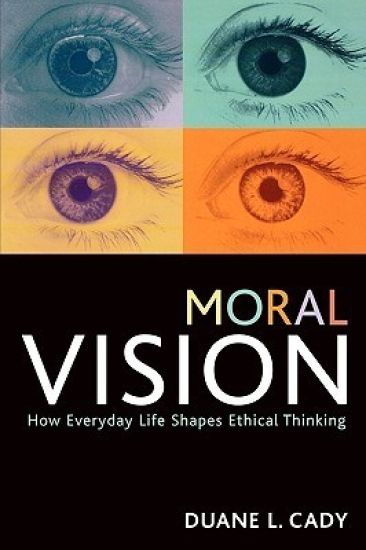
What is moral reasoning? Are we being reasonable when we make moral decisions if we cannot supply compelling arguments, criteria, necessary and sufficient conditions, decisive empirical evidence and the like? In Moral Vision, Duane L. Cady critiques the contemporary inclination to model reason after textbook natural science, noting that our values are not conclusions of proofs or derivations but frameworks in which such reasoning may take place, frameworks that we struggle to understand and explain. Cady goes on to suggest a rich conception of reason beyond that of stereotypical science, one that reflects aesthetic, historical, experiential, and pluralistic aspects of moral thinking, one that widens and deepens descriptions of how moral thinking typically happens. This book will be of interest to anyone wondering what philosophy may contribute to our contemporary struggle with conflicting values and value collisions, both personal as well as cultural.
Moral Relativism

Moral Relativism

J. Kellenberger

Rowman Littlefield Publishers
2008
nidottu
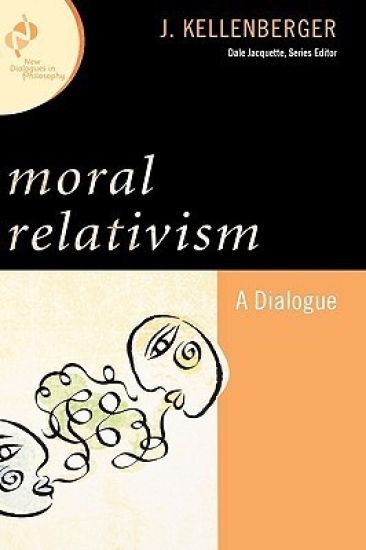
One in the series New Dialogues in Philosophy, edited by Dale Jacquette, J. Kellenberger brings together a group of hypothetical individuals from different backgrounds with real philosophical views to discuss their ideas on morality and moral relativism. What emerges from their numerous discussions are contrasting views on whether morality is objective, how moral universals differ from moral absolutes, the implications of ethnocentrism on moral judgment, the place of choice in moral decision making, and the importance and reality of moral dilemmas. The dialogues examine arguments for and against adopting a relativist stance on morality through the invented dialogues to help students resolve moral problems.
Moral Theory at the Movies

Moral Theory at the Movies

Dean Kowalski

Rowman Littlefield Publishers
2011
nidottu
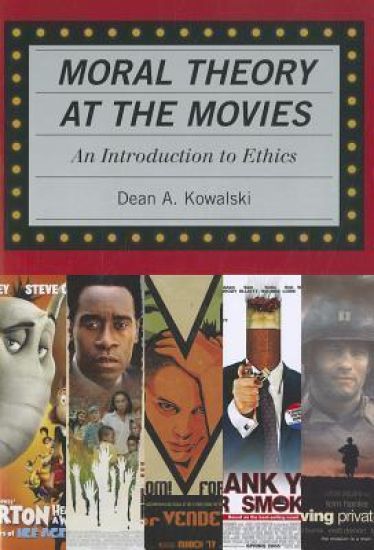
Moral Theory at the Movies provides students with a wonderfully approachable introduction to ethics. The book incorporates film summaries and study questions to draw students into ethical theory and then pairs them with classical philosophical texts. The students see how moral theories, dilemmas, and questions are represented in the given films and learn to apply these theories to the world they live in. There are 36 films and a dozen readings including: Thank you for Smoking, Plato’s Gorgias, John Start Mill’s Utilitarianism, Hotel Rwanda, Plato’s Republic, and Horton Hears a Who. Topics cover a wide variety of ethical theories including, ethical subjectivism, moral relativism, ethical theory, and virtue ethics. Moral Theory at the Movies will appeal to students and help them think about how philosophy is relevant today.
Moral Theory

Moral Theory

Mark Timmons

Rowman Littlefield Publishers
2012
sidottu
Moral Theory: An Introduction explores some of the most historically important and currently debated moral theories about the nature of the right and good. Providing an introduction to moral theory that explains and critically examines the theories of such classical moral philosophers as Aristotle, Aquinas, Kant, Bentham, Mill, and Ross, this book acquaints students with the work of contemporary moral philosophers. All of the book's chapters have been revised in light of recent work in moral theory. The second edition includes a new chapter on ethical egoism, an extensively revised chapter on moral particularism, and expanded coverage of divine command theory, moral relativism, and consequentialism. Additionally, this edition discusses recent work by moral psychologists that is making an impact on moral theory.
Moral Theory

Moral Theory

Mark Timmons

Rowman Littlefield Publishers
2012
nidottu
Moral Theory: An Introduction explores some of the most historically important and currently debated moral theories about the nature of the right and good. Providing an introduction to moral theory that explains and critically examines the theories of such classical moral philosophers as Aristotle, Aquinas, Kant, Bentham, Mill, and Ross, this book acquaints students with the work of contemporary moral philosophers. All of the book's chapters have been revised in light of recent work in moral theory. The second edition includes a new chapter on ethical egoism, an extensively revised chapter on moral particularism, and expanded coverage of divine command theory, moral relativism, and consequentialism. Additionally, this edition discusses recent work by moral psychologists that is making an impact on moral theory.
Moral Questions

Moral Questions

Jon Nuttall

Polity Press
1993
nidottu
This text discusses values and judgements, and examines moral and religious education and punishment. Nuttall looks at sexual morality, with related chapters on pornography, abortion, foetal research and children, and examines moral issues surrounding death, animal rights and moral theories.
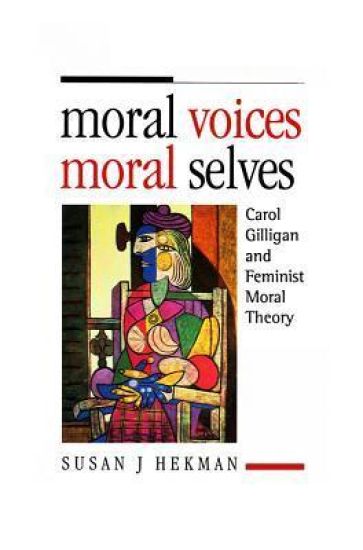
Moral Voices, Moral Selves

Moral Voices, Moral Selves

Susan J. Hekman

Polity Press
1995
nidottu
This book is an original discussion of key problems in moral theory. The author argues that the work of recent feminist theorists in this area, particularly that of Carol Gilligan, marks a radically new departure in moral thinking. Gilligan claims that there is not only one true, moral voice, but two: one masculine, one feminine. Moral values and concerns associated with a feminine outlook are relational rather than autonomous; they depend upon interaction with others. In a far-reaching examination and critique of Gilligan's theory, Hekman seeks to deconstruct the major traditions of moral theory which have been dominant since the Enlightenment. She challenges the centrepiece of that tradition: the disembodied, autonomous subject of modernist philosophy. Gilligan's approach transforms moral theory from the study of abstract universal principles to the analysis of moral claims situated in the interactions of people in definite social contexts. Hekman argues that Gilligan's approach entails a multiplicity of moral voices, not just one or even two. This book addresses moral problems in a challenging way and will find a wide readership among philosopher's, feminist thinkers and psychologists.
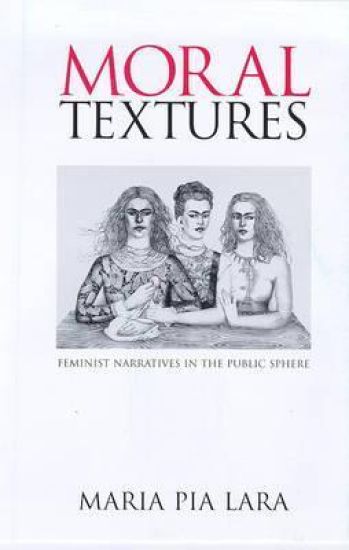
Moral Textures

Moral Textures

Maria Pia Lara

Polity Press
1998
sidottu
In this original work, the Mexican political philosopher, Maria Pia Lara, develops a new approach to public sphere theory and a novel understanding of the history of the feminist struggle. When dominated groups create publicly-oriented social movements, she argues, they seek to frame their demands in compelling narrative forms. Through these new tales, they can become, for the first time, active subjects in their own stories. Developing this theoretical model, Lara offers new interpretations of Habermas and Arendt as well as of feminist debates about their work. Critically relating Wellmer's and Ricoeur's aesthetic ideas to public sphere theory, she also confronts the limitations of the Foucaultian tradition that informs so much post-structuralist feminism today. In making her argument, Lara examines a very wide range of women's narratives, from autobiographies of eighteenth-century salonnieres and of contemporary women activists to the novels of Jane Austen and the portrayal of women in television and film. Taking stock of contemporary feminist writings in social science, history, literature, jurisprudence and philosophy, she suggests that they can be viewed not only as empirical accounts of injustices but as cultural narratives that have transformed women's particular identities even as they have expanded universal moral claims in a revolutionary way.
Moral Textures

Moral Textures

Maria Pia Lara

Polity Press
1998
nidottu
In this original work, the Mexican political philosopher, Maria Pia Lara, develops a new approach to public sphere theory and a novel understanding of the history of the feminist struggle. When dominated groups create publicly-oriented social movements, she argues, they seek to frame their demands in compelling narrative forms. Through these new tales, they can become, for the first time, active subjects in their own stories. Developing this theoretical model, Lara offers new interpretations of Habermas and Arendt as well as of feminist debates about their work. Critically relating Wellmer's and Ricoeur's aesthetic ideas to public sphere theory, she also confronts the limitations of the Foucaultian tradition that informs so much post-structuralist feminism today. In making her argument, Lara examines a very wide range of women's narratives, from autobiographies of eighteenth-century salonnieres and of contemporary women activists to the novels of Jane Austen and the portrayal of women in television and film. Taking stock of contemporary feminist writings in social science, history, literature, jurisprudence and philosophy, she suggests that they can be viewed not only as empirical accounts of injustices but as cultural narratives that have transformed women's particular identities even as they have expanded universal moral claims in a revolutionary way.
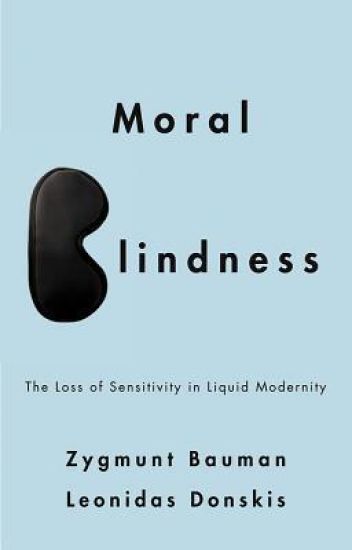
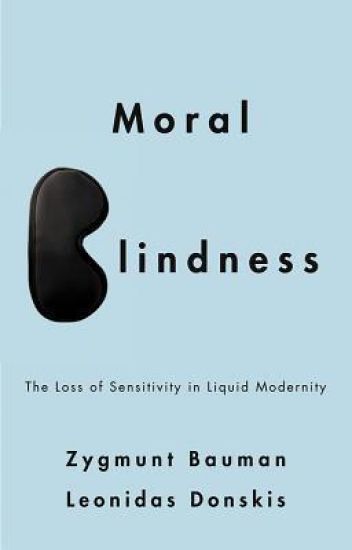
Moral Blindness

Moral Blindness

Zygmunt Bauman; Leonidas Donskis

Polity Press
2013
sidottu
Evil is not confined to war or to circumstances in which people are acting under extreme duress. Today it more frequently reveals itself in the everyday insensitivity to the suffering of others, in the inability or refusal to understand them and in the casual turning away of one’s ethical gaze. Evil and moral blindness lurk in what we take as normality and in the triviality and banality of everyday life, and not just in the abnormal and exceptional cases. The distinctive kind of moral blindness that characterizes our societies is brilliantly analysed by Zygmunt Bauman and Leonidas Donskis through the concept of adiaphora: the placing of certain acts or categories of human beings outside of the universe of moral obligations and evaluations. Adiaphora implies an attitude of indifference to what is happening in the world – a moral numbness. In a life where rhythms are dictated by ratings wars and box-office returns, where people are preoccupied with the latest gadgets and forms of gossip, in our ‘hurried life’ where attention rarely has time to settle on any issue of importance, we are at serious risk of losing our sensitivity to the plight of the other. Only celebrities or media stars can expect to be noticed in a society stuffed with sensational, valueless information. This probing inquiry into the fate of our moral sensibilities will be of great interest to anyone concerned with the most profound changes that are silently shaping the lives of everyone in our contemporary liquid-modern world.
Moral Blindness

Moral Blindness

Zygmunt Bauman; Leonidas Donskis

Polity Press
2013
nidottu
Evil is not confined to war or to circumstances in which people are acting under extreme duress. Today it more frequently reveals itself in the everyday insensitivity to the suffering of others, in the inability or refusal to understand them and in the casual turning away of one’s ethical gaze. Evil and moral blindness lurk in what we take as normality and in the triviality and banality of everyday life, and not just in the abnormal and exceptional cases. The distinctive kind of moral blindness that characterizes our societies is brilliantly analysed by Zygmunt Bauman and Leonidas Donskis through the concept of adiaphora: the placing of certain acts or categories of human beings outside of the universe of moral obligations and evaluations. Adiaphora implies an attitude of indifference to what is happening in the world – a moral numbness. In a life where rhythms are dictated by ratings wars and box-office returns, where people are preoccupied with the latest gadgets and forms of gossip, in our ‘hurried life’ where attention rarely has time to settle on any issue of importance, we are at serious risk of losing our sensitivity to the plight of the other. Only celebrities or media stars can expect to be noticed in a society stuffed with sensational, valueless information. This probing inquiry into the fate of our moral sensibilities will be of great interest to anyone concerned with the most profound changes that are silently shaping the lives of everyone in our contemporary liquid-modern world.
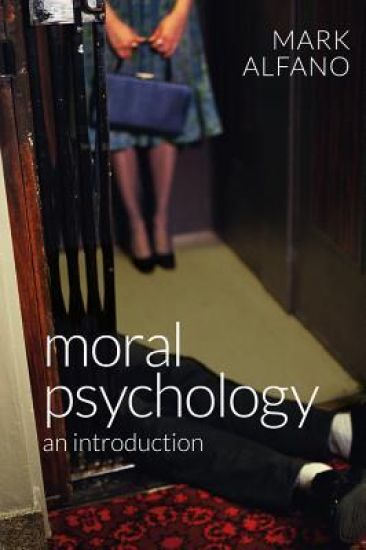
Moral Psychology

Moral Psychology

Mark Alfano

Polity Press
2016
sidottu
Moral psychology is the systematic inquiry into how morality works, when it does work, and breaks down when it doesn't work. In this comprehensive new textbook, Mark Alfano outlines the five central concepts in the study of moral psychology: agency, patiency, sociality, temporality, and reflexivity. Subsequent chapters each assess a key area of research, which Alfano relates both to the five central concepts and to empirical findings. He then draws out the philosophical implications of those findings before suggesting future directions for research. One of Alfano's guiding themes is that moral philosophy without psychological content is empty, whereas psychological investigation without philosophical insight is blind. He advocates and demonstrates a holistic vision that pictures moral psychology as a project of collaborative inquiry into the descriptive and normative aspects of the human condition. Featuring a glossary of technical terms, further reading sections and chapter-by-chapter study questions, this rich, systematic, and accessible introduction to moral psychology will be suitable for both undergraduates and researchers in philosophy, psychology and related fields.
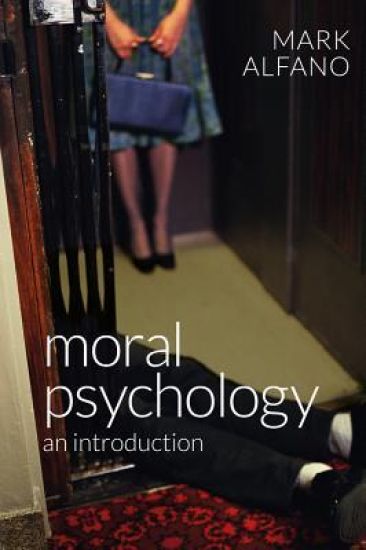
Moral Psychology

Moral Psychology

Mark Alfano

Polity Press
2016
nidottu
Moral psychology is the systematic inquiry into how morality works, when it does work, and breaks down when it doesn't work. In this comprehensive new textbook, Mark Alfano outlines the five central concepts in the study of moral psychology: agency, patiency, sociality, temporality, and reflexivity. Subsequent chapters each assess a key area of research, which Alfano relates both to the five central concepts and to empirical findings. He then draws out the philosophical implications of those findings before suggesting future directions for research. One of Alfano's guiding themes is that moral philosophy without psychological content is empty, whereas psychological investigation without philosophical insight is blind. He advocates and demonstrates a holistic vision that pictures moral psychology as a project of collaborative inquiry into the descriptive and normative aspects of the human condition. Featuring a glossary of technical terms, further reading sections and chapter-by-chapter study questions, this rich, systematic, and accessible introduction to moral psychology will be suitable for both undergraduates and researchers in philosophy, psychology and related fields.
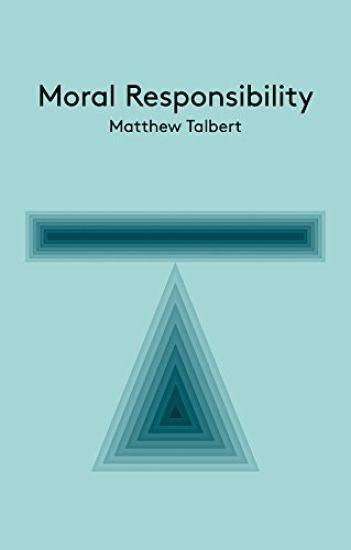
Moral Responsibility

Moral Responsibility

Matthew Talbert

Polity Press
2015
sidottu
Most people would agree that a small child, or a cognitively impaired adult, is less responsible for their actions, good or bad, than an unimpaired adult. But how do we explain that difference, and how far can anyone be praised or blamed for what they have done? In this fascinating introduction, Matthew Talbert explores some of the key questions shaping current debates about moral responsibility, including: What is free will, and is it required for moral responsibility? Are we responsible for the unforeseen consequences of our actions? Is it fair to blame people for doing what they believe is right? And are psychopaths open to blame? As Talbert argues, we are morally responsible for our actions when they are related to us in particular ways: when our actions express our true selves, for example, or when we exercise certain kinds of control over them. It is because we bear these relationships to our actions that we are open to praise and blame. Moral Responsibility will be an important resource for students and researchers in ethics, moral psychology, and philosophy of agency and of great interest to all those wishing to understand an important aspect of our moral practices.
Moral Responsibility

Moral Responsibility

Matthew Talbert

Polity Press
2015
nidottu
Most people would agree that a small child, or a cognitively impaired adult, is less responsible for their actions, good or bad, than an unimpaired adult. But how do we explain that difference, and how far can anyone be praised or blamed for what they have done? In this fascinating introduction, Matthew Talbert explores some of the key questions shaping current debates about moral responsibility, including: What is free will, and is it required for moral responsibility? Are we responsible for the unforeseen consequences of our actions? Is it fair to blame people for doing what they believe is right? And are psychopaths open to blame? As Talbert argues, we are morally responsible for our actions when they are related to us in particular ways: when our actions express our true selves, for example, or when we exercise certain kinds of control over them. It is because we bear these relationships to our actions that we are open to praise and blame. Moral Responsibility will be an important resource for students and researchers in ethics, moral psychology, and philosophy of agency and of great interest to all those wishing to understand an important aspect of our moral practices.
Moral Disorder

Moral Disorder

Margaret Atwood

Bloomsbury Publishing PLC
2006
sidottu
Margaret Atwood has frequently been cited as one of the foremost writers of our time. Moral Disorder, her new work of fiction, could be seen as a collection of eleven stories that is almost a novel or a novel broken up into eleven stories. It resembles a photograph album - a series of clearly observed moments that trace the course of a life, and the lives intertwined with it - those of parents, siblings, children, friends, enemies, teachers and even animals. And as in a photograph album, times change; every decade is here, from the 1930s through the 50s, 60s and 70s to the present day. The settings are equally varied: large cities, suburbs, farms, northern forests. The first story, 'The Bad News,' is set in the present, as a couple no longer young situate themselves in a larger world no longer safe. Then the narrative switches time, as the central character moves through childhood and adolescence, in 'The Art of Cooking and Serving', 'The Headless Horseman' and 'My Last Duchess'. We follow her into young adulthood in 'The Other Place', and then through a complex relationship, traced in four of the stories - 'Monopoly', 'Moral Disorder', 'White Horse' and 'The Entities'. The last two stories, 'The Labrador Fiasco' and 'The Boys at the Lab', deal with the heartbreaking old age of parents, but circle back to childhood again, to complete the cycle. By turns funny, moving, lyrical, incisive, tragic, earthy, shocking and deeply personal, Moral Disorder displays Atwood's celebrated storytelling gifts and inimitable style to their best advantage. As the New York Times has said, 'Atwood has complete access to her people's emotional histories, complete understanding of their hearts and imaginations.'