Kirjojen hintavertailu. Mukana 12 082 945 kirjaa ja 12 kauppaa.

Kirjahaku

Etsi kirjoja tekijän nimen, kirjan nimen tai ISBN:n perusteella.

1000 tulosta hakusanalla Maya Eisel

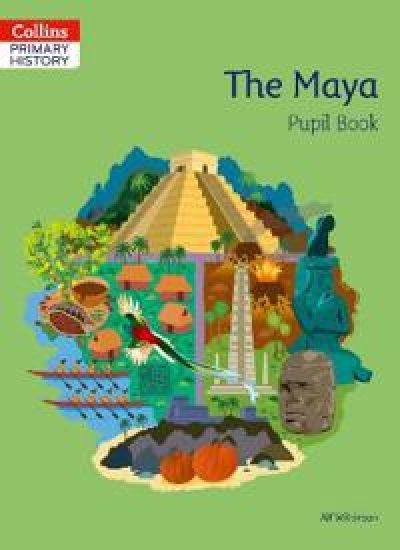
The Maya Pupil Book

The Maya Pupil Book

Alf Wilkinson

Collins
2019
nidottu
Collins Primary History provides a rich coverage of the Primary National Curriculum for History. Packed with information, source materials, questions and activities, the beautifully designed pupil books support children to explore, interpret and develop knowledge of significant historical periods. The accompanying Teacher’s Guide provides planning support and guidance on making progress in history.
Complete Maya Programming Volume II

Complete Maya Programming Volume II

David Gould

Morgan Kaufmann Publishers In
2005
nidottu
David Gould's acclaimed first book, Complete Maya Programming: An Extensive Guide to MEL and the C++ API, provides artists and programmers with a deep understanding of the way Maya works and how it can be enhanced and customized through programming. In his new book David offers a gentle, intuitive introduction to the core ideas of computer graphics. Each concept is explained progressively and is fully implemented in both MEL and C++ so that an artist or programmer can use the source code directly in their own programs. Geometry and modeling are covered in detail with progressively more complex examples demonstrating all of Maya's possible programming features. David Gould's first volume is widely regarded as the most authoritative reference on Maya programming. Volume II continues this tradition and provides an unmatched guide for the artist and programmer tackling complex tasks.
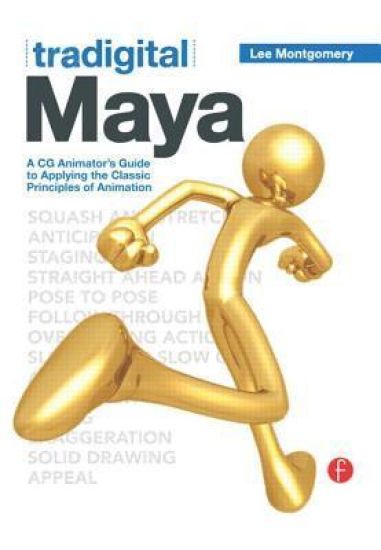
Tradigital Maya

Tradigital Maya

Lee Montgomery

Focal Press US
2011
nidottu
Explore Disney's 12 principles of animation, while learning how to animate in Maya. You can develop your own leading digital techniques rooted to traditional workflows. From squash and stretch to timing and appeal, you will enhance your creative toolset with strong classics training and cutting edge techniques. Trusted Maya Authority, Lee Montgomery offers the only artistic guide to applying the principles of traditional animation with Maya's tools, which are used in production by the best animators and VFX artists today. Add another webpage to your favourites and expand your digital workflow to include the practical resources of the Tradigital Maya with the robust companion web site that include demonstrations, project files, links to further resources, available at www.tradigitalmaya.com.
The Maya

The Maya

Matthew Restall; Amara Solari

Oxford University Press Inc
2020
nidottu
The Maya forged one of the greatest societies in the history of the ancient Americas — and in all of human history. Long before contact with Europeans, Maya communities built spectacular cities with large, well-fed large populations. They mastered the visual arts, and developed a sophisticated writing system that recorded extraordinary knowledge in calendrics, mathematics, and astronomy. The Maya achieved all this without area-wide centralized control. There was never a single, unified Maya state or empire, but always numerous, evolving ethnic groups speaking dozens of distinct Mayan languages. The people we call "Maya" never thought of themselves as such; yet something definable, unique, and endlessly fascinating - what we call Maya culture - has clearly existed for millennia. So what was their self-identity and how did Maya civilization come to be "invented?" With the Maya historically subdivided and misunderstood in so many ways, the pursuit of what made them "the Maya" is all the more important. In this Very Short Introduction, Restall and Solari explore the themes of Maya identity, city-state political culture, art and architecture, the Maya concept of the cosmos, and the Maya experience of contact with — including invasion by — outsiders. Despite its brevity, this book is unique for its treatment of all periods of Maya civilization, from its origins to the present.
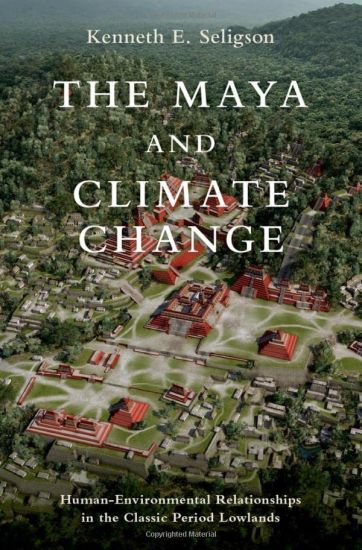
The Maya and Climate Change

The Maya and Climate Change

Kenneth E. Seligson

OXFORD UNIVERSITY PRESS INC
2023
sidottu
The Classic Maya civilization, which thrived between 200-950 CE in eastern Mesoamerica, faced many environmental challenges, including those wrought by climate change. The ability of Maya communities to adapt their resource conservation practices played a crucial role in allowing them to survive for as long as they did. Researchers today understand that the breakdown of Classic Maya society was the result of many long-term processes. Yet the story that continues to grip the public imagination is that the Maya civilization mysteriously "collapsed". The Maya and Climate Change draws on archaeological, environmental, and historical datasets to provide a comprehensive, yet accessible, overview of Classic Maya human-environment relationships, including how communities addressed the challenges of climatic and demographic changes. It works to shift the focus from the Classic Maya "collapse" to the multiple examples of adaptive flexibility that allowed Pre-Colonial Maya communities to thrive in a challenging natural environment for over seven centuries. Although the Classic Maya civilization did not leave behind much in the way of secret environmental knowledge for us to rediscover, one of the critical lessons that can be learned from studying the Classic Maya is the importance of socio-ecological adaptability--the ability and willingness to change cultural practices to address long-term challenges.
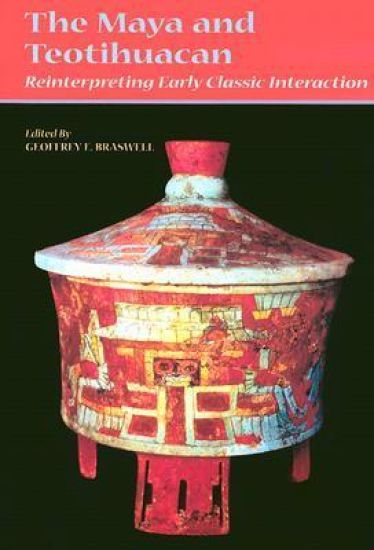
The Maya and Teotihuacan

The Maya and Teotihuacan

University of Texas Press
2004
pokkari
The contributors to this volume present extensive new evidence from archaeology, iconography, and epigraphy to offer a more nuanced understanding of the interaction between the Early Classic Maya and Teotihuacan. Winner, Choice Outstanding Academic Book, 2005Since the 1930s, archaeologists have uncovered startling evidence of interaction between the Early Classic Maya and the great empire of Teotihuacan in Central Mexico. Yet the exact nature of the relationship between these two ancient Mesoamerican civilizations remains to be fully deciphered. Many scholars have assumed that Teotihuacan colonized the Maya region and dominated the political or economic systems of certain key centers-perhaps even giving rise to state-level political organizations. Others argue that Early Classic rulers merely traded with Teotihuacan and skillfully manipulated its imported exotic goods and symbol sets to increase their prestige.Moving beyond these traditional assumptions, the contributors to this volume present extensive new evidence from archaeology, iconography, and epigraphy to offer a more nuanced understanding of the interaction between the Early Classic Maya and Teotihuacan. Investigating a range of Maya sites, including Kaminaljuyu, CopÁn, Tikal, Altun Ha, and Oxkintok, they demonstrate that the influence of Teotihuacan on the Maya varied in nature and duration from site to site, requiring a range of models to explain the patterns of interaction. Moreover, they show that the interaction was bidirectional and discuss how the Maya in turn influenced Teotihuacan.
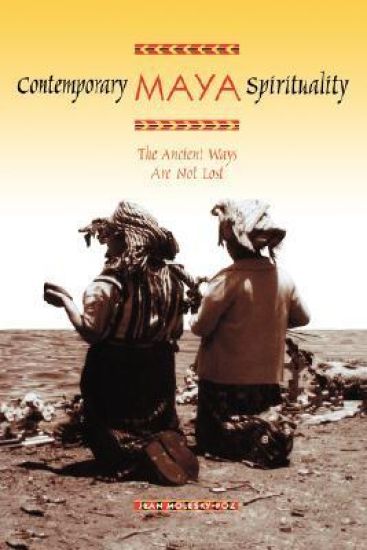
Contemporary Maya Spirituality

Contemporary Maya Spirituality

Jean Molesky-Poz

University of Texas Press
2006
pokkari
Since the mid-1980s, when Guatemala returned to civilian rule and achieved relative peace and stability, the Maya have begun openly expressing their spiritual beliefs and practices. Jean Molesky-Poz draws on in-depth dialogues with Maya Ajq'ijab' (keepers of the ritual calendar), her own participant observation, and inter-disciplinary resources to offer a comprehensive, innovative, and well-grounded understanding of contemporary Maya spirituality and its theological underpinnings. She reveals significant continuities between contemporary and ancient Maya worldviews and spiritual practices. Molesky-Poz opens with a discussion of how the public emergence of Maya spirituality is situated within the religious political history of the Guatemalan highlands, particularly the recent pan-Maya movement. She investigates Maya cosmovision and its foundational principles, as expressed by Ajq'ijab'. At the heart of this work, Ajq'ijab' interpret their obligation, lives, and spiritual work. In subsequent chapters, Molesky-Poz explores aspects of Maya spirituality-sacred geography (the reciprocal relationship between the earth and humans, sacred places, and the significance of the cross or quatrefoil map), sacred time (how the 260-day sacred calendar is "the heart of the wisdom of the Maya," the matrix of Maya culture), and ritual practice (the distinct way and method of ancestral study, with special attention to fire ceremonialism). She confirms contemporary Maya spirituality as a faith tradition with elaborate historical roots that has significance for individual, collective, and historical lives, reaffirming its own public space and legal right to be practiced.
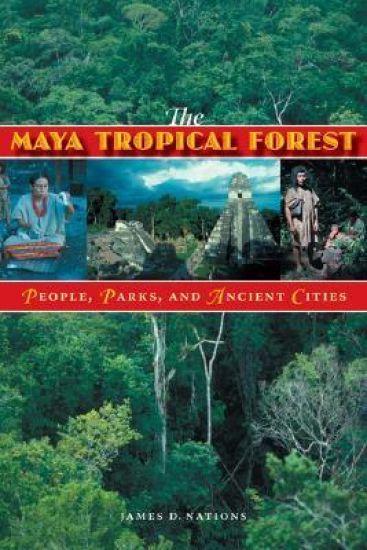
The Maya Tropical Forest

The Maya Tropical Forest

James D. Nations

University of Texas Press
2006
pokkari
The Maya Tropical Forest, which occupies the lowlands of southern Mexico, Guatemala, and Belize, is the closest rainforest to the United States and one of the most popular tourist destinations in the Western Hemisphere. It has been home to the Maya peoples for nearly four millennia, starting around 1800 BC. Ancient cities in the rainforest such as Palenque, Yaxchilan, Tikal, and Caracol draw thousands of tourists and scholars seeking to learn more about the prehistoric Maya. Their contemporary descendants, the modern Maya, utilize the forest's natural resources in village life and international trade, while striving to protect their homeland from deforestation and environmental degradation. Writing for both visitors and conservationists, James Nations tells the fascinating story of how ancient and modern Maya peoples have used and guarded the rich natural resources of the Maya Tropical Forest. He opens with a natural history that profiles the forest's significant animals and plants. Nations then describes the Maya peoples, biological preserves, and major archaeological sites in Mexico, Guatemala, and Belize. Drawing on more than twenty-five years of conservation work in the Maya Tropical Forest, Nations tells first-hand stories of the creation of national parks and other protected areas to safeguard the region's natural resources and archaeological heritage. He concludes with an expert assessment of the forest's future in which he calls for expanded archaeological tourism to create an ecologically sustainable economic base for the region.
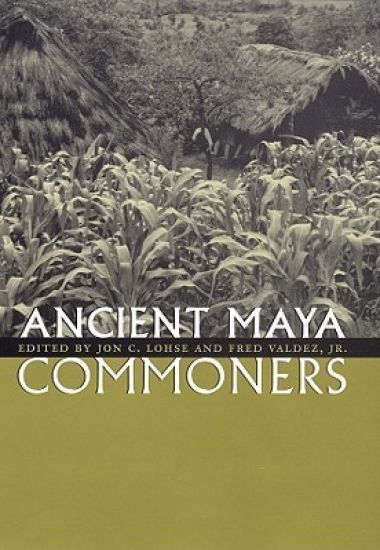
Ancient Maya Commoners

Ancient Maya Commoners

University of Texas Press
2004
pokkari
Much of what we currently know about the ancient Maya concerns the activities of the elites who ruled the societies and left records of their deeds carved on the monumental buildings and sculptures that remain as silent testimony to their power and status. But what do we know of the common folk who labored to build the temple complexes and palaces and grew the food that fed all of Maya society? This pathfinding book marshals a wide array of archaeological, ethnohistorical, and ethnographic evidence to offer the fullest understanding to date of the lifeways of ancient Maya commoners. Senior and emerging scholars contribute case studies that examine such aspects of commoner life as settlement patterns, household organization, and subsistence practices. Their reports cover most of the Maya area and the entire time span from Preclassic to Postclassic. This broad range of data helps resolve Maya commoners from a faceless mass into individual actors who successfully adapted to their social environment and who also held primary responsibility for producing the food and many other goods on which the whole Maya society depended.
Ancient Maya Wetland Agriculture

Ancient Maya Wetland Agriculture

Mary Deland Pohl

Routledge
2019
sidottu
Changes in the orientation of archaeological research in the post-World War n period affected Maya studies. The cultural ecological perspective, which was rising to prominence, put an old debate in bold relief: How had this prehistoric civilization adapted to the tropical forest environment? How could swidden cultivation have sustained the unexpectedly high population densities that settlement pattern studies appeared to be revealing? Had the ancient Maya practiced some from of intensive agriculture? Archaeologist Dennis E. Puleston went to the Maya Lowlands to investigate geographer Alfred H. Siemens's reports of possible intensive agriculture ("ridged fields") seen from the air and to study prehistoric Maya cultivation and civilization from a cultural ecological perspective. This volume presents the results of the Rio Hondo Project field research on Albion Island in northern Belize from 1973 to 1980 with the addition of selected results from Pohl's continuing work in northern Belize.
Ancient Maya Wetland Agriculture

Ancient Maya Wetland Agriculture

Mary Deland Pohl

TAYLOR FRANCIS LTD
2021
nidottu
Changes in the orientation of archaeological research in the post-World War n period affected Maya studies. The cultural ecological perspective, which was rising to prominence, put an old debate in bold relief: How had this prehistoric civilization adapted to the tropical forest environment? How could swidden cultivation have sustained the unexpectedly high population densities that settlement pattern studies appeared to be revealing? Had the ancient Maya practiced some from of intensive agriculture? Archaeologist Dennis E. Puleston went to the Maya Lowlands to investigate geographer Alfred H. Siemens's reports of possible intensive agriculture ("ridged fields") seen from the air and to study prehistoric Maya cultivation and civilization from a cultural ecological perspective. This volume presents the results of the Rio Hondo Project field research on Albion Island in northern Belize from 1973 to 1980 with the addition of selected results from Pohl's continuing work in northern Belize.
FIRST MAYA CIVILIZATION

FIRST MAYA CIVILIZATION

FRANC ESTRADA-BELLI

TAYLORFRANCIS
2019
nidottu
Ritual and Power Before the Classic Period. The First Maya Civilization discusses the most recent advances in our knowledge of the Preclassic Maya and the emergence of their rainforest civilization, with new data on settlement, political organization, architecture, iconography and epigraphy supporting a contemporary theoretical perspective that challenges prior assumptions.
Ancient Maya

Ancient Maya

WW Norton Co
2006
pokkari
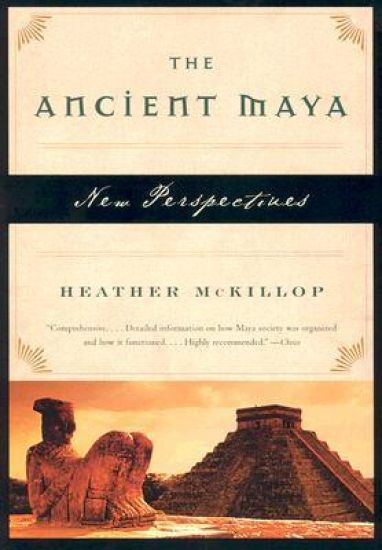
Temples lost in the rainforest. Strange inscriptions and ritual bloodletting. Such are the images popularly associated with the ancient Maya of Central America. But who really were the people of this lost civilization? How and why did their culture achieve regional dominance? Could such pressing contemporary problems as climate change and environmental degradation hold the key to the collapse of Maya civilization? Of interest to scholars and general readers alike, "The Ancient Maya" brings the controversies that have divided experts on the ancient Maya to a wider audience. Heather McKillop examines the debates concerning Mayan hieroglyphs, the Maya economy, and the conflicting theories behind the enigmatic collapse of the Maya civilization. The most readable and accessible work in the field, this book brings the general reader up to date with the latest archaeological evidence.
The Maya and Their Central American Neighbors
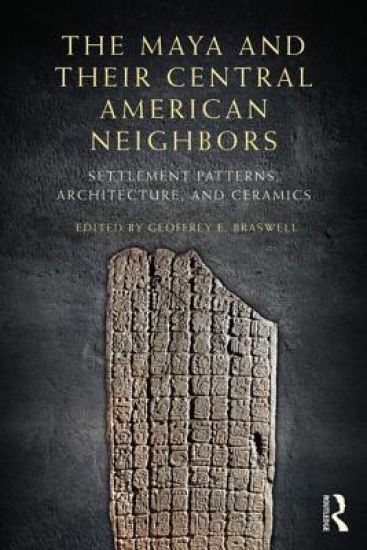
The ancient Maya created one of the most studied and best-known civilizations of the Americas. Nevertheless, Maya civilization is often considered either within a vacuum, by sub-region and according to modern political borders, or with reference to the most important urban civilizations of central Mexico. Seldom if ever are the Maya and their Central American neighbors of El Salvador and Honduras considered together, despite the fact that they engaged in mutually beneficial trade, intermarried, and sometimes made war on each other. The Maya and Their Central American Neighbors seeks to fill this lacuna by presenting original research on the archaeology of the whole of the Maya area (from Yucatan to the Maya highlands of Guatemala), western Honduras, and El Salvador.With a focus on settlement pattern analyses, architectural studies, and ceramic analyses, this ground breaking book provides a broad view of this important relationship allowing readers to understand ancient perceptions about the natural and built environment, the role of power, the construction of historical narrative, trade and exchange, multiethnic interaction in pluralistic frontier zones, the origins of settled agricultural life, and the nature of systemic collapse.
The Maya and Their Central American Neighbors
The ancient Maya created one of the most studied and best-known civilizations of the Americas. Nevertheless, Maya civilization is often considered either within a vacuum, by sub-region and according to modern political borders, or with reference to the most important urban civilizations of central Mexico. Seldom if ever are the Maya and their Central American neighbors of El Salvador and Honduras considered together, despite the fact that they engaged in mutually beneficial trade, intermarried, and sometimes made war on each other. The Maya and Their Central American Neighbors seeks to fill this lacuna by presenting original research on the archaeology of the whole of the Maya area (from Yucatan to the Maya highlands of Guatemala), western Honduras, and El Salvador.With a focus on settlement pattern analyses, architectural studies, and ceramic analyses, this ground breaking book provides a broad view of this important relationship allowing readers to understand ancient perceptions about the natural and built environment, the role of power, the construction of historical narrative, trade and exchange, multiethnic interaction in pluralistic frontier zones, the origins of settled agricultural life, and the nature of systemic collapse.
Telling Maya Tales

Telling Maya Tales

Gary H. Gossen

Routledge
1998
sidottu
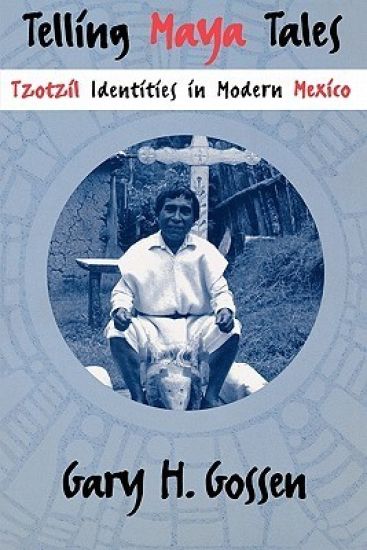
Telling Maya Tales offers an experimental ethnographic portrait of the San Juan Chamula, the largest and most influential Maya community of Highland Chiapas, in the late twentieth century--the era of the Zapatistas. In this collection of essays, the author, whose field work in the area spans two generations of anthropological thought, explores several expressions of Tzotzil ethnic affirmation, ranging from oral narrative to ritual drama and political action. His work covers the current era, when the Chamula Tzotzils mingle chaotically and sometimes violently with the social and political space of modern Mexico--most recently, in the context of the Maya Zapatista movement of 1994.
Telling Maya Tales

Telling Maya Tales

Gary H. Gossen

Routledge
1998
nidottu
Telling Maya Tales offers an experimental ethnographic portrait of the San Juan Chamula, the largest and most influential Maya community of Highland Chiapas, in the late twentieth century--the era of the Zapatistas. In this collection of essays, the author, whose field work in the area spans two generations of anthropological thought, explores several expressions of Tzotzil ethnic affirmation, ranging from oral narrative to ritual drama and political action. His work covers the current era, when the Chamula Tzotzils mingle chaotically and sometimes violently with the social and political space of modern Mexico--most recently, in the context of the Maya Zapatista movement of 1994.
Introducing Maya 2011

Introducing Maya 2011

Dariush Derakhshani

John Wiley Sons Inc
2010
nidottu
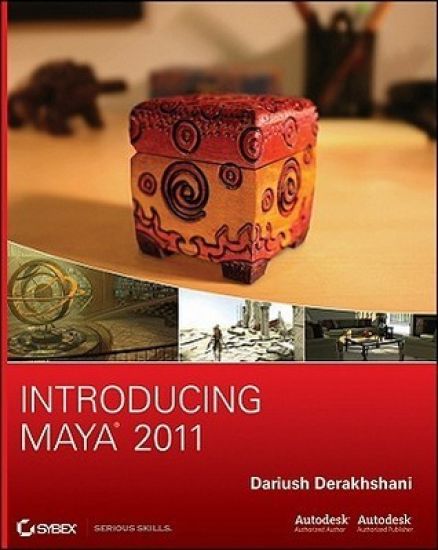
A practical, step-by-step guide to Maya 2011 Four previous editions can’t be wrong: this book is the perfect introduction to 3D and Maya. Learn to build and animate your own digital models and scenes with step-by-step instruction and fun and practical examples, while you draw inspiration from the striking examples included from talented Maya users. You’ll create a simple animation of the planets in the solar system, learn to model a human hand and a decorative box—among other projects—and master all essential tools. Provides a thorough, step-by-step introduction to Maya 2011Explains the core concepts of CG and working in 3DCovers modeling, rigging, HDRI lighting, mental ray rendering, and moreProvides project files on CD and walks you through the creation of several projects; the CD also includes images, movies, and scene filesIncludes a color insert with pages of striking examples from talented Maya beginners Build your Maya and animation skills from the ground up with this practical, thorough guide. Note: CD-ROM/DVD and other supplementary materials are not included as part of eBook file. For Instructors: Teaching supplements are available for this title.
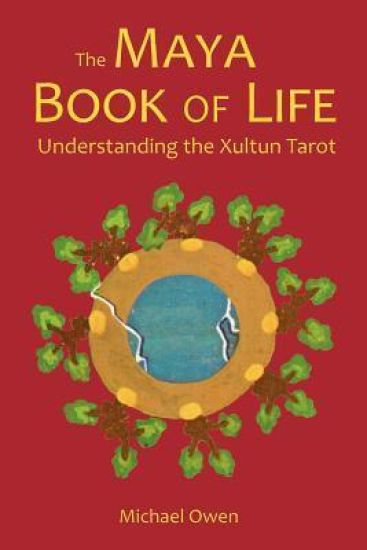
The Maya Book of Life

The Maya Book of Life

Michael Owen

Kahurangi Press
2011
pokkari
THE MAYA BOOK OF LIFE: UNDERSTANDING THE XULTUN TAROT explores the archetypes and alchemy of the major arcana of the Xultun Tarot through indigenous teachings and the analytical psychology of C G Jung. The Xultun Tarot was created by Peter Balin in 1976 based on images from Maya history and culture. It is the only tarot deck where the major arcana form a complete picture. This picture is not only a symbolic image of the alchemical marriage of spirit and matter but also a map of what Jung called the individuation process. The Maya Book of Life is the companion book to the Kahurangi Press (xultun.com) reprinting of the original edition of the Xultun Tarot in its original size and vibrant colours. Michael Owen is a clinical psychologist in private practice and author of Jung and the Native American Moon Cycles. He lives in New Zealand.