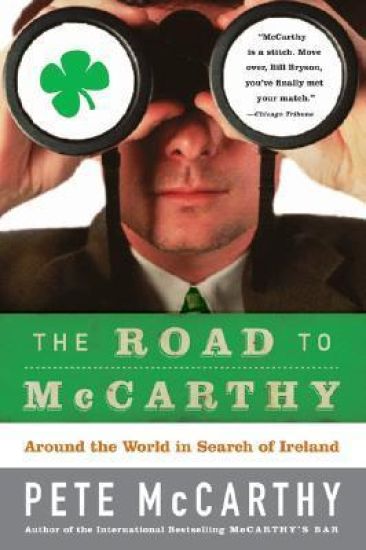
Pete McCarthy established one cardinal rule of travel in hisbestselling debut, McCarthy's Bar: "Never pass a bar withyour name on it." In this equally wry and insightful follow-up, his characteristic good humor, curiosity, and thirst for adventuretake him on a fantastic jaunt around the world in search of hisIrish roots -- from Morocco, where he tracks down the unlikelychief of the McCarthy clan, to New York, and finally to remote Mc-Carthy, Alaska. The Road to McCarthy is a quixotic and anything-but-typical Irish odyssey that confirms Pete McCarthy's status asone of our funniest and most incisive writers.
In this first of a groundbreaking multivolume set, THE MCCARTNEY LEGACY, VOL 1: 1969-73 captures the life of Paul McCartney in the years immediately following the dissolution of the Beatles, a period in which McCartney recreated himself as both a man and a musician. Informed by hundreds of interviews, extensive ground up research, and thousands of never-before-seen documents THE MCCARTNEY LEGACY, VOL 1 is an in depth, revealing exploration of McCartney’s creative and personal lives beyond the Beatles.When Paul McCartney issued a press release in April 1970 announcing that the world’s most beloved band, the Beatles, had broken up no one could have predicted that McCartney himself would go on to have one of the most successful solo careers in music history. Yet in the years after the Fab Four disbanded, Paul McCartney became a legend in his own right. Now journalist and world-renowned Beatles’ historian Allan Kozinn and award-winning documentarian Adrian Sinclair chronicle in technicolor McCartney’s pivotal years from 1969 to 1973, as he recreated himself in the immediate aftermath of the Beatles breakup – a period when, newly married and with a growing family, he conquered depression and self-doubt, formed a new band, Wings, and recorded five epochal albums culminating in the triumphant smash, Band on the Run.Part 1 of a multivolume set, THE MCCARTNEY LEGACY, VOL. 1 documents a pivotal moment in the life of a man whose legacy grows increasingly more relevant as his influence on music and pop culture remains as relevant as ever. It is the first truly comprehensive biography, and the most finely detailed exploration of McCartney’s creative life beyond the Beatles, ever undertaken.
The follow-up to The McCartney Legacy, Volume 1, the most complete work on the life and work of Paul McCartney ever published. Volume 2 continues to paint the portrait of one of the world’s greatest musicians, his work post-Beatles, and his life from 1974 to 1980.This second installment of the groundbreaking multivolume set, THE McCARTNEY LEGACY, VOLUME 2: 1974-80 finds Paul McCartney in the afterglow of Band on the Run, an album that topped the Billboard 200 three times in 1974, and won him his best reviews since his time in the Beatles. But he also faced rebuilding his band Wings, and getting it into shape not only for the studio work that would follow his most successful album to date, but also to tour Britain, Europe and Australia before conquering the USA with the groundbreaking Wings Over America tour. This intensely creative time in McCartney’s life saw him writing and recording four studio albums with Wings (Venus and Mars, Wings at the Speed of Sound, London Town and Back to the Egg), the biggest selling British single of the 1970s, ‘Mull of Kintyre,’ and a solo album packed with electronic experimentalism, McCartney II. During a period of diverse musical evolution, McCartney melded his own melody-driven approach with in-vogue styles like disco, punk and new wave.Away from Wings, McCartney dabbled in music publishing, science fiction writing, semi-autobiographical filmmaking, animation, viral marketing, journalist boycotting, and smuggling cannabis past authority figures with mixed success. McGear, an album Paul co-wrote with his brother, Mike, tops a long list of lesser known projects and collaborations – some of which never saw the light of day – that kept McCartney busy between hit records.For the second half of this decade, John Lennon, George Harrison and Ringo Starr remained ever present in McCartney’s life. Collaborations were mooted, and multi-million dollar offers for one-off reunion concerts were plentiful, but the scars of the Beatles’ bitter separation, and their complex, hard to untangle business ties complicated their private and public relationships.THE McCARTNEY LEGACY series is the first truly comprehensive biography, and the most finely detailed exploration of McCartney’s creative life beyond the Beatles, ever undertaken. As well as thousands of never-before-seen documents, this volume is informed by hundreds of interviews, including exclusive collaborations with all four surviving members of Wings – Geoff Britton, Joe English, Steve Holley and Laurence Juber – plus countless other including producers, musicians, recording engineers, designers and architects who worked with McCartney between 1974-80.
This book is a guide to Cormac McCarthy's canon from The Road to All the Pretty Horses, delving into the dominant themes in his work, his influences from Faulkner to Dante, and the current cultural debates his books have figured into.
This book is a guide to Cormac McCarthy's canon from The Road to All the Pretty Horses, delving into the dominant themes in his work, his influences from Faulkner to Dante, and the current cultural debates his books have figured into.
This is a musical analysis of Paul McCartney from 1970 to today. It is aimed at students of popular music theory; educators; musicians; and aspiring songwriters. It will also appeal to the general Beatles and McCartney fan who wishes to understand music on a deeper level - A beginner's guide to music theory and glossary are provided. Eighty of McCartney's post-Beatles songs are discussed in the format of short, but accessible essays. For each song, full details are provided concerning date of release; place of recording; instrumentation; and key signature. The description for each song details the musical techniques that McCartney uses, such as chord patterns; structure; use of instruments; vocal harmony; tonality; and key changes. In addition, every chapter details his life and work in each decade. A conclusion identifies the main characteristics of McCartney's style. The appendix details every recording location used. An invaluable guide to the music of the world's most successful songwriter.
This second volume covers a further fifty songs from Paul McCartney's career after The Beatles. McCartney's work is reviewed in the context of musical trends since 1970. Each song is in the format of a short essay, with regard to tonality, key signature, instrumentation, harmony, modulation and dynamics. The book also includes an examination of McCartney's bass guitar playing both during and after The Beatles; an extended introduction to compositional devices such as secondary dominants, circles of fifths and the Mixolydian mode. For those without a background in music theory, the book includes an extensive index with an explanation of terms and specific examples from songs. The book concludes with two extended essays; one of McCartney's compositional style and the other on McCartney's cultural influence since 1970. There is an extensive interview with Wings' drummer Geoff Britton as well as fan anecdotes. At over 170k words, this is the most thorough study of McCartney's post-Beatles work ever to be printed.
This is a musical analysis of Paul McCartney from 1970 to today. It is aimed at students of popular music theory; educators; musicians; and aspiring songwriters. It will also appeal to the general Beatles and McCartney fan who wishes to understand music on a deeper level - A beginner's guide to music theory and glossary are provided. Eighty of McCartney's post-Beatles songs are discussed in the format of short, but accessible essays. For each song, full details are provided concerning date of release; place of recording; instrumentation; and key signature. The description for each song details the musical techniques that McCartney uses, such as chord patterns; structure; use of instruments; vocal harmony; tonality; and key changes. In addition, every chapter details his life and work in each decade. A conclusion identifies the main characteristics of McCartney's style. The appendix details every recording location used. An invaluable guide to the music of the world's most successful songwriter.
Novelist Cormac McCarthy’s brilliant and challenging work demands deep engagement from his readers. In Cormac McCarthy’s House, author, painter, photographer, and actor-director Peter Josyph draws on a wide range of experience to pose provocative, unexpected questions about McCarthy’s work, how it is achieved, and how it is interpreted.As a visual artist, Josyph wrestles with the challenge of rendering McCarthy’s former home in El Paso as a symbol of a great writer’s workshop. As an actor and filmmaker, he analyzes the high art of Tommy Lee Jones in The Sunset Limited and No Country for Old Men. Invoking the recent suicide of a troubled friend, he grapples with the issue of “our brother’s keeper” in The Crossing and The Sunset Limited. But for Josyph, reading the finest prose-poet of our day is a project into which he invites many voices, and his investigations include a talk with Mark Morrow about photographing McCarthy while he was writing Blood Meridian; an in-depth conversation with director Tom Cornford on the challenges of staging The Sunset Limited and The Stonemason; a walk through the streets, waterfronts, and hidden haunts of Suttree with McCarthy scholar and Knoxville resident Wesley Morgan; insights from the cast of The Gardener’s Son about a controversial scene in that film; actress Miriam Colon’s perspective on portraying the Dueña Alfonsa opposite Matt Damon in All the Pretty Horses; and a harsh critique of Josyph’s views on The Crossing by McCarthy scholar Marty Priola, which leads to a sometimes heated debate. Illustrated with thirty-one photographs, Josyph’s unconventional journeys into the genius of Cormac McCarthy form a new, highly personal way of appreciating literary greatness.
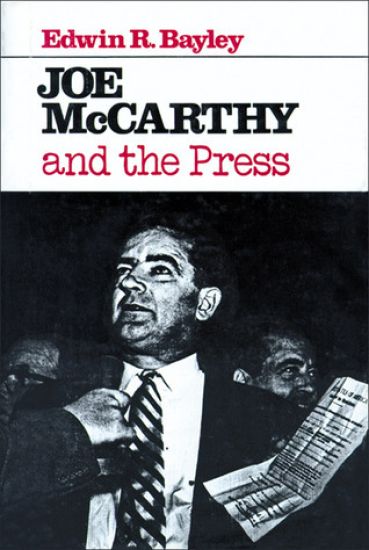
This is a book for historians, journalists - and for all of us who need to remember this turbulent time in our nation's past, and its lessons for today. ""No one who cares about liberty will read Mr. Bayley's masterful study without a shudder about the journalistic cop-outs that contributed to making the nightmare called McCarthyism. This book reminds us that it could happen here, but perhaps will make it harder to happen next time."" - Daniel Schorr
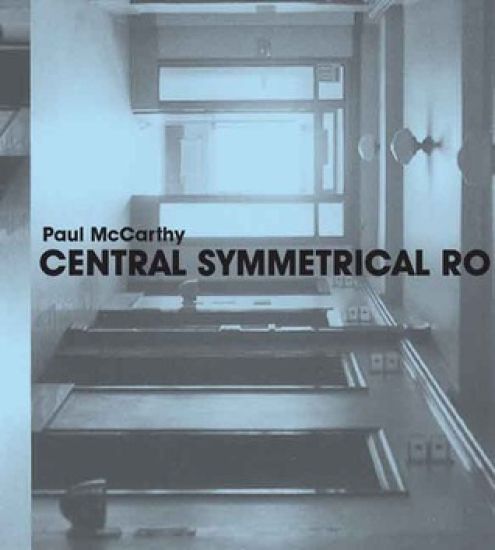
This is the first publication to explore the role of mirrors, spinning, and “neurotic” architecture––a feeling of psychological breakdown––in the work of one of America’s most important contemporary artists, Paul McCarthy (b. 1945). The book is published in conjunction with a major exhibition at the Whitney, for which McCarthy is creating two new installations to appear alongside his Bang Bang Room (1992) and two recently rediscovered film loops (1966, 1971). Each work involves a room structure that the viewer can step into and experience—often becoming disoriented as either the floor or entire structure spins, or as walls fold inward and outward. By comparing McCarthy’s use of rotational movement and visual effects to that of other artists of the 1960s and 1970s, the author seeks a new understanding of this bold innovator. An interview with McCarthy himself offers an unprecedented discussion of the influences on his art—including experimental filmmakers Stan Brakhage, Stan Vanderbeek, and Bruce Conner. The book not only raises new points but also recovers information and images from films once lost.Distributed for the Whitney Museum of American ArtExhibition Schedule:Whitney Museum of American Art (June 26 – October 12, 2008)
Strout examines how the Christian Science Monitor, a highly influential newspaper of the era, covered Joseph R. McCarthy and McCarthyism from the Senator's Lincoln Day speech in February 1950 through his censure in December 1954. Through his in-depth examination of the Monitor's interoffice communications, Strout examines how the Monitor's coverage compared with other elite and popular press newspapers and how the pressures associated with McCarthyism affected individuals at the Monitor. An extensive review of the Monitor's editorials and news articles suggests that it was remarkably thorough and fair in its reporting, while still being outspoken, but responsible in its criticism. While many newspapers attacked McCarthy personally, the Monitor concentrated on the actions of the junior senator and the negative effects they were having at home and abroad. As Strout sees it, the Monitor served as a voice of moderation, while simultaneously being a persistent critic of McCarthy's tactics.