

Kirjahaku
Etsi kirjoja tekijän nimen, kirjan nimen tai ISBN:n perusteella.
1000 tulosta hakusanalla Melvin L. Butler

Feature films function as a keeper of America's collective conscience--a repository of fears, guilt, and hopes. "Buddy films" about men of different races depict a world where a peaceful balance is possible and conflicts can be resolved. Since the 1930s these films have presented various forms of masculinity, reflecting dominant mainstream social traditions, images of men and manhood within the culture. Interracial buddy films include such examples as the Silver Streak, 48 Hrs, Beverly Hills Cop, Lethal Weapon and The Shawshank Redemption. Many of these films have been made into franchises, furthering their cultural importance as filmic versions of interracial equality. This critical study analyzes the idealized interracial relationships, the heterosexual masculine roles within the films and the appearances of this kind of film in various genres. The book is arranged in six major chapters, each focusing upon a particular era in the development of the interracial buddy film. The book also examines the film sequel as a validation of the enduring significance of interracial interaction. The scope of the work is not limited to Caucasian/African-American pairings. Films with a myriad of racial and ethnic combinations are also analyzed, such as Tin Cup, Rush Hour, Shanghai Noon and Ocean's Eleven.

This book demonstrates how horror films of the 1930s and 1940s reflected specific events and personalities of the era, most notably the Great Depression and World War II. Beginning with Dracula and Frankenstein (1931), it relates the many ways that horror films and society intersected: Franklin D. Roosevelt's skepticism toward conventional wisdom and the public's distrust of experts was mirrored in Dr. Jekyll and Mr. Hyde and Murders in the Rue Morgue; the freaks in Tod Browning's 1932 film of the same name revolted against the powerful people of the circus, much like the Bonus Army protested the sufferings of the Depression; King Kong's rampage on New York personified the anti-New York sentiment in the nation at large; Lon Chaney Jr.'s Wolf Man symbolized the experience of his creator, Curt Siodmak, as a Jewish refugee from Nazi Germany.

During the 1950s and early 1960s, school air-raid drills, bomb shelters, and unnerving civil defense films served as constant reminders of the looming threat of nuclear war. Throughout America, a widespread civil defense effort used town meetings, public school educational programs, and the mass media--television, radio, and especially, motion pictures--to mobilize every citizen for a protracted Cold War. This volume explores how American popular culture has portrayed civil defense from mid-twentieth century to the immediate post-September 11 era. With analysis of everything from early government propaganda films and 1950s science fiction films to Happy Days, the Reagan-era TV movie The Day After, and the small-screen nostalgia trend after 9/11, it shows how popular culture reflects American fears and the hope of preparedness.
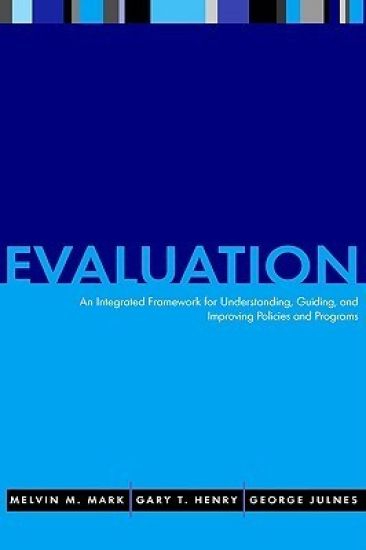
"This is one of the most coherent and comprehensive theories of evaluation yet formulated and one that makes a most valuable contribution. The authors are pioneering in important new directions."--Ernest R. House, author of Professional Evaluation and Evaluating with Validity "This book is the best I've ever read detailing a practical theory of evaluation. It is comprehensive, beautifully written, and makes sense of the evaluation enterprise. It does so by emphasizing the major function of evaluation as sense-making about policies and programs."--Thomas D. Cook, professor, sociology, psychology, education, and public policy, Northwestern UniversityPrograms that serve the needs of the public continually face changes brought by social, political, and economic forces. To survive these changes, organizations must evaluate their programs wisely and realistically. This book offers a new approach to evaluation, one that will encourage all kinds of organizations and agencies to improve their contributions to social betterment. The authors draw from three decades of evaluation practice and theory to present their own framework for conceptualizing evaluation and for pragmatically assessing social policies and programs.They analyze four purposes of evaluation:*To review the merit of programs and their value to society*To improve the organization and its services*To ensure program compliance with mandates*To build knowledge and expertise for future programsFor the practitioner, these purposes help define the approach and methods for an evaluation. The authors also enrich their discussion with four possible modes of inquiry: description, classification, causal analysis, and values inquiry. Filled with tables, charts, and figures, this resource invites organizations to make the most appropriate programming decisions based on thoughtful and systematic methods. Evaluation: An Integrated Framework for Understanding, Guiding, and Improving Policies and Programs is a tool that scholars can use to rejuvenate their view of evaluation and that practitioners can use to integrate the best techniques with a contemporary understanding of social policy and change.

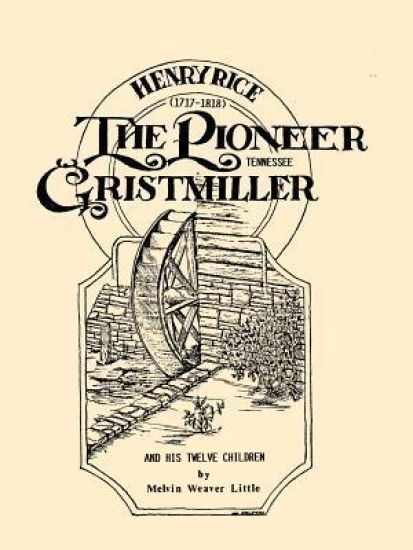
Henry Rice, (1717-1818), The Pioneer Tennessee Gristmiller and His Twelve Children
Melvin Weaver Little
Heritage Books
2009
pokkari
Alcohol Use/Abuse Among Latinos
Melvin Delgado
Routledge Member of the Taylor and Francis Group
1998
sidottu
In Alcohol Use/Abuse Among Latinos: Issues and Examples of Culturally Competent Services, you will learn how to design and improve services for Latinos with substance abuse problems by understanding that the cultures and personal backgrounds of your clients are crucial to the counseling process. This text will also show you how these service skills apply to the individual, family, or an entire community. Studies show that, according to patients, culturally sensitive and responsive practitioners are generally more credible, trusted, and effective. Alcohol Use/Abuse Among Latinos takes into account several different aspects that will help you develop these traits and provide successful services for Latinos dealing with alcohol or other drug problems. You’ll gain valuable insight into:the five elements that are vital to a successful ATOD (Alcohol, tobacco and Other Drug) service--multiculturism, resilience/strengths, competence, community capacity development, and community participation--plus a detailed explanation of why they are needed step-by-step instructions for using three methods, supervision, inservice training, and consultation, as means of providing ongoing learning of cross-cultural competencies to practitioners why key factors such as economic background, gender, and sexual orientation need to be taken into consideration for ATOD services to be effective demographic patterns and case studies of Latino users and abusers of alcohol and other drugs that illustrate the growing number of Latinos in need of ATOD services why the practitioner needs to be aware of how family importance, values attached to cooperation versus competition, sociability, respect, and action-oriented problem-solving play a role in effective services for Latinos the need for practitioners to understand how ethnic identity, biculturality, Spanish language fluency, gender-specific role expectations, skin color, and overall sense of self can affect the success of services for Latino teenagers how excessive marketing of alcohol to Latino communities, lack of representation, and a lack of community involvement are key barriers to successful ATOD services for LatinosAlcohol Use/Abuse Among Latinos also discusses Latino mens’and womens’individual needs concerning substance abuse. One of the topics addressed, the loss of self-esteem, has been found to be a contributing factor to alcohol use and abuse for Latinas. It offers ways you can promote self-esteem in your Latina clients by focusing on their cultural heritage and pride. In addition, this text takes a unique look Latina lesbians and how training through educational and agency internship programs can promote awareness to your clients’ special needs concerning substance abuse. Alcohol Use/Abuse Among Latinos will help you provide all of your Latino clients with efficient and culture-friendly services for resisting or overcoming the abuse of alcohol, tobacco, or other drugs.

Alcohol Use/Abuse Among Latinos
Melvin Delgado
Routledge Member of the Taylor and Francis Group
1998
nidottu
In Alcohol Use/Abuse Among Latinos: Issues and Examples of Culturally Competent Services, you will learn how to design and improve services for Latinos with substance abuse problems by understanding that the cultures and personal backgrounds of your clients are crucial to the counseling process. This text will also show you how these service skills apply to the individual, family, or an entire community. Studies show that, according to patients, culturally sensitive and responsive practitioners are generally more credible, trusted, and effective. Alcohol Use/Abuse Among Latinos takes into account several different aspects that will help you develop these traits and provide successful services for Latinos dealing with alcohol or other drug problems. You’ll gain valuable insight into:the five elements that are vital to a successful ATOD (Alcohol, tobacco and Other Drug) service--multiculturism, resilience/strengths, competence, community capacity development, and community participation--plus a detailed explanation of why they are needed step-by-step instructions for using three methods, supervision, inservice training, and consultation, as means of providing ongoing learning of cross-cultural competencies to practitioners why key factors such as economic background, gender, and sexual orientation need to be taken into consideration for ATOD services to be effective demographic patterns and case studies of Latino users and abusers of alcohol and other drugs that illustrate the growing number of Latinos in need of ATOD services why the practitioner needs to be aware of how family importance, values attached to cooperation versus competition, sociability, respect, and action-oriented problem-solving play a role in effective services for Latinos the need for practitioners to understand how ethnic identity, biculturality, Spanish language fluency, gender-specific role expectations, skin color, and overall sense of self can affect the success of services for Latino teenagers how excessive marketing of alcohol to Latino communities, lack of representation, and a lack of community involvement are key barriers to successful ATOD services for LatinosAlcohol Use/Abuse Among Latinos also discusses Latino mens’and womens’individual needs concerning substance abuse. One of the topics addressed, the loss of self-esteem, has been found to be a contributing factor to alcohol use and abuse for Latinas. It offers ways you can promote self-esteem in your Latina clients by focusing on their cultural heritage and pride. In addition, this text takes a unique look Latina lesbians and how training through educational and agency internship programs can promote awareness to your clients’ special needs concerning substance abuse. Alcohol Use/Abuse Among Latinos will help you provide all of your Latino clients with efficient and culture-friendly services for resisting or overcoming the abuse of alcohol, tobacco, or other drugs.
Latino Elders and the Twenty-First Century
Melvin Delgado
Routledge Member of the Taylor and Francis Group
2001
nidottu
Latino Elders and the Twenty-First Century: Issues and Challenges for Culturally Competent Research and Practice will help social workers, researchers, and organizations identify and analyze ways of meeting the demands of the increasing number of elderly Latinos. Working from conceptual frameworks, case studies, and examples, this book provides you with a demographic picture of Latino elders and investigates the needs of ethnic-specific groups. Latino Elders and the Twenty-First Century will help you develop and create culturally competent intervention methods that take the culture, beliefs, and situations of Latino elders into consideration. Addressing the future challenges to individuals involved in the field of gerontology, this book offers you current studies on the assessment of present services for Latino elders, how they can be improved, and why these individuals may be reluctant to seek financial or medical help. Latino Elders and the Twenty-First Century will assist you in devising policies and programs aimed at improving services for Latino elders, including: providing Latino and non-Latino staff with an understanding of culturally competent principles, such as values, knowledge, and skills, that will help them give attention to individual and cultural needs improving staff development by assessing issues and underlying causes of client problems using the self and other cultural awareness models to help professionals realize their own values, attitudes, and behaviors examining community resources, such as gift shops, clothing shops, and beauty parlors in Puerto Rican communities that offer interpreter services, integration of the lonely, and community leadership to the elderly considering family structure and personal identification to facilitate access to health care services minimizing stress of caregivers by fully understanding how they identify their roles within their families, evaluating their needs and capacity as caregivers, and offering counseling approaches that recognize the dynamics of caregiving examining contributing factors to substance abuse among elders and researching incidence, prevalence, patterns of use, etiology, and consequences of this behaviorLatino Elders and the Twenty-First Century explores the possibilities of further research in the areas of substance abuse among the elderly and the importance of businesses in ethnic communities to meet the growing needs of clients. In order to assist specific groups of Latinos, this book examines social and medical needs and services for Dominicans, Puerto Ricans, and Yaqui elders of Old Pascua. Latino Elders and the Twenty-First Century will help you develop culturally sensitive programs for individual clients and diminish barriers to service.

Latinos and Alcohol Use/Abuse Revisited
Melvin Delgado
Routledge Member of the Taylor and Francis Group
2005
sidottu
The one-of-a-kind exploration of effective alcohol prevention and treatment for Latinos-now and for the future!By the year 2020, the Latino population in the United States will increase to 60 million, making up 18 percent of all residents. Latinos and Alcohol Use/Abuse Revisited: Advances and Challenges for Prevention and Treatment Programs brings into sharp focus how present and future demographic shifts in Latino population are being felt in alcohol programs across the United States. Case studies and in-depth research clearly illustrate the practical steps various culturally competent programs recommend to effectively deal with alcohol use, prevention, and treatment for Latinos.Alcohol abuse, though rampant in Latino populations, has not received the attention that other types of drug abuse has received, even though the death rates, health problems, and financial costs from alcohol are staggering. Latinos and Alcohol Use/Abuse Revisited presents respected authorities tackling the tough questions about demographics, culturally competent research, and effective prevention and treatment programs. The book provides an up-to-date socio-demographic foundation, then builds upon current research and information to present a clear picture of the needs of various Latino populations for alcohol abuse programs now and in the future.Latinos and Alcohol Use/Abuse Revisited discusses: the Latino demographic profilean overview patterns of need and treatment among Mexican-origin adults in central California alcohol abuse among Dominican-Americans the onset of alcohol and other drug use among gang members incarcerated Latinas, alcohol, and other drug abuse rural Latino grandparents raising grandchildren of substance abusing parents alcohol use among Puerto Rican active injecting drug users alcohol and other drug abuse prevention for high-risk youth a case study of a Puerto Rican community in Massachusetts detailed recommendations for prevention and treatmentLatinos and Alcohol Use/Abuse Revisited is a detailed examination of prevention and treatment programs for Latinos, invaluable for substance abuse professionals, social workers, practitioners, and professionals in charge of alcohol prevention and treatment programs.

Latinos and Alcohol Use/Abuse Revisited
Melvin Delgado
Routledge Member of the Taylor and Francis Group
2005
nidottu
The one-of-a-kind exploration of effective alcohol prevention and treatment for Latinos-now and for the future!By the year 2020, the Latino population in the United States will increase to 60 million, making up 18 percent of all residents. Latinos and Alcohol Use/Abuse Revisited: Advances and Challenges for Prevention and Treatment Programs brings into sharp focus how present and future demographic shifts in Latino population are being felt in alcohol programs across the United States. Case studies and in-depth research clearly illustrate the practical steps various culturally competent programs recommend to effectively deal with alcohol use, prevention, and treatment for Latinos.Alcohol abuse, though rampant in Latino populations, has not received the attention that other types of drug abuse has received, even though the death rates, health problems, and financial costs from alcohol are staggering. Latinos and Alcohol Use/Abuse Revisited presents respected authorities tackling the tough questions about demographics, culturally competent research, and effective prevention and treatment programs. The book provides an up-to-date socio-demographic foundation, then builds upon current research and information to present a clear picture of the needs of various Latino populations for alcohol abuse programs now and in the future.Latinos and Alcohol Use/Abuse Revisited discusses: the Latino demographic profilean overview patterns of need and treatment among Mexican-origin adults in central California alcohol abuse among Dominican-Americans the onset of alcohol and other drug use among gang members incarcerated Latinas, alcohol, and other drug abuse rural Latino grandparents raising grandchildren of substance abusing parents alcohol use among Puerto Rican active injecting drug users alcohol and other drug abuse prevention for high-risk youth a case study of a Puerto Rican community in Massachusetts detailed recommendations for prevention and treatmentLatinos and Alcohol Use/Abuse Revisited is a detailed examination of prevention and treatment programs for Latinos, invaluable for substance abuse professionals, social workers, practitioners, and professionals in charge of alcohol prevention and treatment programs.

From the Hamiltonian-Jeffersonian split over English and French policy in the 1790s to the Republican-Democratic clash over Haitian policy in the 1990s, Americans and foreign observers have been troubled-and often exasperated-by the extraordinary influence of U.S. domestic politics on matters of vital national security. Some critics, including Alexis de Tocqueville, concluded-that America's democratic system would cripple the effective and efficient conduct of its foreign policy. In this first historical overview of the subject, Melvin Small examines the central role of domestic politics in the shaping and conduct of American foreign policy from the early republic to the end of the Cold War.

This award-winning study of ethnic life in Chicago richly details the various peoples and ethnic institutions in America's heartland city. This newly revised and expanded edition also includes chapters on African-American migration, Chatham, Latino Chicago, the Chinese in Chicago, Asian Indians, Korean-Americans, the new entrepreneurial immigrants, and the Swedes. There is also a new six-chapter section that examines saloons, sports, crime, churches, neighborhoods, and cemeteries.

Uses of Plants by the Indians of the Missouri River Region
Melvin R. Gilmore
University of Nebraska Press
1991
pokkari
A classic of ethnobotany, Uses of Plants by the Indians of the Missouri River Region has been enlarged for this Bison Book edition with thirty drawings, by Bellamy Parks Jansen, of plants discussed by Gilmore. The taxonomic glossary has been updated as well. Readers will find here, conveniently described, the uses that Plains Indians made of the wild plants they collected and of those plants they cultivated for food, clothing, medicine, and ornamentation. This fascinating book, originally published in 1919, reveals cultures that evolved in close harmony with their environment.

Come Fly with Us
Melvin Croft; John Youskauskas; Don Thomas
University of Nebraska Press
2019
sidottu
Winner of the 2020 Space Hipsters Prize for Best Book in Astronomy, Space Exploration, or Space HistoryCome Fly with Us is the story of an elite group of space travelers who flew as members of many space shuttle crews from pre-Challenger days to Columbia in 2003. Not part of the regular NASA astronaut corps, these professionals known as “payload specialists” came from a wide variety of backgrounds and were chosen for an equally wide variety of scientific, political, and national security reasons. Melvin Croft and John Youskauskas focus on this special fraternity of spacefarers and their individual reflections on living and working in space. Relatively unknown to the public and often flying only single missions, these payload specialists give the reader an unusual perspective on the experience of human spaceflight. The authors also bring to light NASA’s struggle to integrate the wide-ranging personalities and professions of these men and women into the professional astronaut ranks. While Come Fly with Us relates the experiences of the payload specialists up to and including the Challenger tragedy, the authors also detail the later high-profile flights of a select few, including Barbara Morgan, John Glenn (who returned to space at the age of seventy-seven), and Ilan Ramon of Israel aboard Columbia on its final, fatal flight, STS-107.
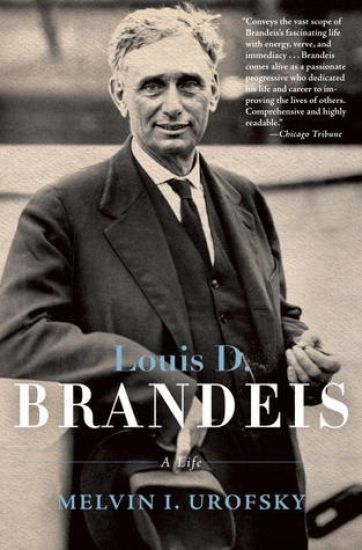
As a young lawyer in the late nineteenth and early twentieth centuries, Louis Brandeis, born into a family of reformers who came to the United States to escape European anti-Semitism, established the way modern law is practiced. He was an early champion of the right to privacy and pioneer the idea of pro bono work by attorneys. Brandeis invented savings bank life insurance in Massachusetts and was a driving force in the development of the Clayton Antitrust Act, the Federal Reserve Act, and the law establishing the Federal Trade Commission. Brandeis witnessed and suffered from the anti-Semitism rampant in the United States in the early twentieth century, and with the outbreak of World War I, became at age fifty-eight the head of the American Zionist movement. During the brutal six-month congressional confirmation battle that ensued when Woodrow Wilson nominated him to the Supreme Court in 1916, Brandeis was described as "a disturbing element in any gentlemen's club." But once on the Court, he became one of its most influential members, developing the modern jurisprudence of free speech and the doctrine of a constitutionally protected right to privacy and suggesting what became known as the doctrine of incorporation, by which the Bill of Rights came to apply to the states. In this award-winning biography, Melvin Urofsky gives us a panoramic view of Brandeis's unprecedented impact on American society and law.


The German church cantata of the eighteenth century was the culmination of a long tradition of Lutheran "sermon music" that used the proclamation, amplification, and interpretation of scripture to teach and persuade the listener. Bach's cantatas also served this didactic purpose and typically incorporate numerous allusions to scriptural passages or themes in their librettos. Unfortunately, many of these passages remain obscure to the twentieth-century musician because they demand a much closer familiarity with the Bible than is common today. The Handbook to Bach's Sacred Cantata Texts identifies scriptural references for the wording, imagery, and themes that Bach's listeners would have known. In addition, the religious or literary theme of each text is summarized within the specific context of the cantata as a whole. With interlinear translations and a full complement of indexes.

This new edition expands and updates the only general interpretation of the rise and influence of perfectionist revivalism in America and Europe. Fifteen years of expanding research on the holiness movement reinforce this volume's continuing seminal value to cultural and social research. The new concluding essay describes the history of the revival through the turn of the century. This book expands our understanding of the fragmentation and coalescence of American religion by analyzing the factors which created numerous new holiness denominations. Dieter also outlines the historical and theological factors that separate this largely Wesleyan and Methodist wing of evangelicalism from the fundamentalism of Reformed evangelicals. The identification of such nuances will prove especially helpful to those struggling with the extreme diversity in American religion, especially in evangelicalism. For students and scholars of American religious movements as well as students of the feminist, temperance, abolitionist, and populist movements in American society.