Kirjahaku
Etsi kirjoja tekijän nimen, kirjan nimen tai ISBN:n perusteella.
1000 tulosta hakusanalla Michael A. Cook




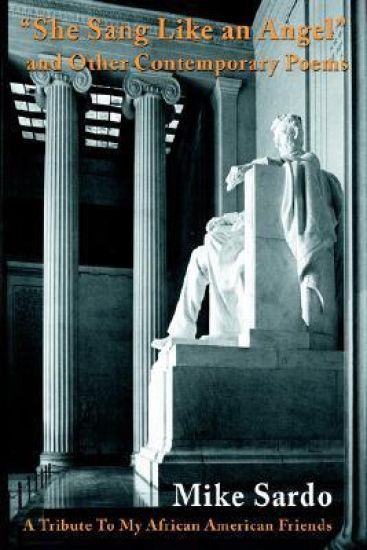
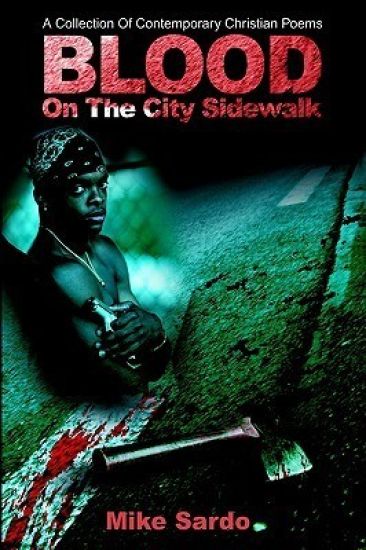
Probably one of my greatest poetic challenges is writing this volume of contemporary Christian poetry. Although these verses are contemporary and abstract in nature, they still convey a message of Christian hope and mature spirituality. Writing twenty-first century abstract and contemporary poetry is an exciting experience. This volume of poetry settles comfortably on a non-denominational plane and makes no claim of fanfare and exuberant theological expertise. These poems are written specifically for people who like to read contemporary poetry, which is inclined toward Christianity.

Contemporary, abstract poetry is an art form that gratifies, and establishes in modern thinking an image of life. Because of the complexities of 21st Century living this medium of expression is sometimes experimental in nature and may often be mistaken as primitive and bewildering. Not so I say dear fellow poets, keep writing this way.




Noah - Book 1 of the Moralist Trilogy
Michael A. Howard
Noah - Book 1 of the Moralist Trilogy
2012
nidottu

Intermediate Range: The Forensic Evidence in the Killing of Trayvon Martin
Michael A. Knox
Crime Science Books
2012
nidottu
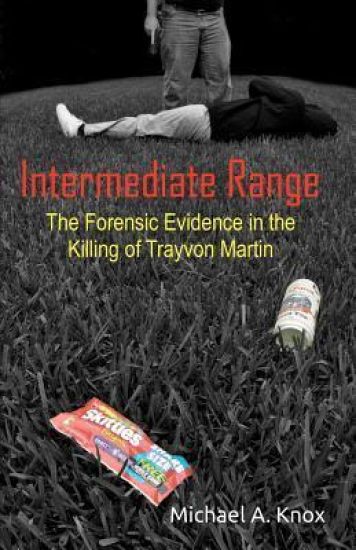
On the rainy Sunday evening of February 26, 2012, the lives of two individuals collided at the Retreat at Twin Lakes, a gated townhouse community in the Orlando suburb known as Sanford, Florida. George Zimmerman, a 28-year-old insurance underwriter and neighborhood watch volunteer, grew suspicious of Trayvon Martin, a 17-year-old high schooler who was temporarily staying at the home of his father's fiancee who lived in the small gated subdivision. Martin, unarmed and dressed in a dark-colored hooded sweatshirt, was walking home after going to a nearby 7-11 store to buy a can of Arizona Iced Tea and a bag of Skittles. Martin had committed no crime, but Zimmerman, concerned about recent burglaries and thefts in the neighborhood, called police to report "a real suspicious guy" who Zimmerman said was "up to no good . . . or was] on drugs or something." Minutes later, Trayvon Martin lay dead from a single gunshot wound to the chest.After Sanford police and prosecutors, unable to refute Zimmerman's claim of self defense, declined to charge him with the killing, Florida's governor appointed a special prosecutor, Jacksonville State Attorney Angela Corey, to investigate the case in the wake of protests and racially-charged anger that spread from coast to coast. Bypassing a grand jury, Corey filed second-degree murder charges against the neighborhood watch volunteer in a case that had become arguably the most controversial event of the decade.Now, forensic expert and crime scene reconstructionist Michael A. Knox tells the story of the forensic evidence in the killing and explains what that evidence really says about the fateful events that February evening in Sanford, Florida. Can the prosecution truly prove beyond a reasonable doubt that George Zimmerman murdered Trayvon Martin? Intermediate Range is a riveting account of the forensic evidence in the killing, much of which has been overlooked, misunderstood, or ignored by the public and the news media.
Building Insurance Your Guide
Michael A N P Cretikos
Michael Albert Netter Perandonakis Cretikos
2024
pokkari
Opting for the Minimum Replacement Value insurance coverage can result in inadequate or non-existent cover for Architect Fees and Charges and Debris Removal costs due to the potential exhaustion or underfunding of the BSI Value and will not provide for any escalation in building costs and very limited or zero accommodation expenses necessary after an Event. Should "total loss" be declared, no additional benefits besides the Building Sum Insured Value are paid. Insurance providers limit their liability to incurred costs, as allowed by laws. There is a variation among policies concerning the provision and execution of supplementary costs, such as for temporary accommodation expenses in strata insurance policies and a safeguard system with non-strata home insurance policies. For low-rise buildings, I present an appropriate method for determining the BSI Value in the event of destruction, catastrophe, total loss, or constructive total loss which incorporates an escalation factor for building costs and an escalation period of 104 weeks for accommodation expenses. I present a unique BSI Value formulation for high-rise buildings that incorporates rental values and extends the escalation period to at least 208 weeks for accommodation expenses. It addresses local council planning requirements for compliance with contemporary building codes, leading to an elevated supercharged BSI Value. This method facilitates a fair and more precise evaluation of proportional disbursement for repair and maintenance expenses among the diverse space components of the building.It is important to note that the Policy Wording/Product Disclosure Statement always supersedes the Schedule Values. To reduce such inconveniences, it would be beneficial to implement a legally established and structured insurance agreement, backed by the comprehensiveness of the Building Insurance Valuation Report, for both strata and non-strata. This would enable differentiation between BSI Values for minimum and full expenses. If the estimated full expenses valuation is selected, additional costs value should be separable, when needed, from the insured value of the BSI Value, provided that legislative amendments are made to allow this to happen.To avoid confusion with complex provisions, I propose a solution that clarifies these points in the strata or community common interest typology or the general home building insurance contract. The suggested method includes increasing the base property minimum replacement value by a fixed 15%. In case of rent loss, this change can help cover expenses or provide temporary accommodation for 104 weeks after the Event. If you prefer, it is highly recommended to increase the minimum replacement value by an extra 15% to account for higher building costs after an Event, as they may be affected by socio-economic conditions following an Event. This theory is advanced in Molly's loss story, presented in Chapter 2. By increasing the minimum replacement value by 30%, you, as the policyholder, can achieve greater autonomy over your future and eliminate reliance on the discriminatory language and volatile conditional insurance policy terms for covering replacement and additional expenses for the period deemed appropriate.Governments cannot reasonably propose that individuals insure for Full Costs when the excess or residue value cannot be distinguished and paid out as full insured value when immediately necessary. This makes insurance policies of whatever persuasion grossly unfair. If the proposed legislative modifications are not implemented, the consumer/insured will not achieve justice. This publication contributes to the progression of this matter.
Building Insurance Your Guide
Michael A N P Cretikos
Michael Albert Netter Perandonakis Cretikos
2024
sidottu
Manuscript: Building Insurance: Your GuideSynopsis-Long Form 23062024Opting for the Minimum Replacement Value insurance coverage can result in inadequate or non-existent cover for Architect Fees and Charges and Debris Removal costs due to the potential exhaustion or underfunding of the BSI Value and will not provide for any escalation in building costs and very limited or zero accommodation expenses necessary after an Event. Should "total loss" be declared, no additional benefits besides the Building Sum Insured Value are paid. Insurance providers limit their liability to incurred costs, as allowed by laws. There is a variation among policies concerning the provision and execution of supplementary costs, such as for temporary accommodation expenses in strata insurance policies and a safeguard system with non-strata home insurance policies. For low-rise buildings, I present an appropriate method for determining the BSI Value in the event of destruction, catastrophe, total loss, or constructive total loss which incorporates an escalation factor for building costs and an escalation period of 104 weeks for accommodation expenses. I present a unique BSI Value formulation for high-rise buildings that incorporates rental values and extends the escalation period to at least 208 weeks for accommodation expenses. It addresses local council planning requirements for compliance with contemporary building codes, leading to an elevated supercharged BSI Value. This method facilitates a fair and more precise evaluation of proportional disbursement for repair and maintenance expenses among the diverse space components of the building.It is important to note that the Policy Wording/Product Disclosure Statement always supersedes the Schedule Values. To reduce such inconveniences, it would be beneficial to implement a legally established and structured insurance agreement, backed by the comprehensiveness of the Building Insurance Valuation Report, for both strata and non-strata. This would enable differentiation between BSI Values for minimum and full expenses. If the estimated full expenses valuation is selected, additional costs value should be separable, when needed, from the insured value of the BSI Value, provided that legislative amendments are made to allow this to happen.To avoid confusion with complex provisions, I propose a solution that clarifies these points in the strata or community common interest typology or the general home building insurance contract. The suggested method includes increasing the base property minimum replacement value by a fixed 15%. In case of rent loss, this change can help cover expenses or provide temporary accommodation for 104 weeks after the Event. If you prefer, it is highly recommended to increase the minimum replacement value by an extra 15% to account for higher building costs after an Event, as they may be affected by socio-economic conditions following an Event. This theory is advanced in Molly's loss story, presented in Chapter 2. By increasing the minimum replacement value by 30%, you, as the policyholder, can achieve greater autonomy over your future and eliminate reliance on the discriminatory language and volatile conditional insurance policy terms for covering replacement and additional expenses for the period deemed appropriate.Governments cannot reasonably propose that individuals insure for Full Costs when the excess or residue value cannot be distinguished and paid out as full insured value when immediately necessary. This makes insurance policies of whatever persuasion grossly unfair. If the proposed legislative modifications are not implemented, the consumer/insured will not achieve justice. This publication contributes to the progression of this matter.

Suitable for individual or group use, this inductive Bible study, centered in the gospel of Matthew, looks at how the Kingdom of God formed the backbone of Jesus' teaching and ministry, and considers how it applies to the church today. 11 studies follow Matthew's account chapter by chapter starting with the genealogy of Jesus through to the fulfilment of the kingdom in heaven, looking at the Scripture record of Jesus' ministry from birth, temptations, commission for ministry and teaching through the parables. Jesus's confrontations with the religious leaders and dynamic ministry with people demonstrating the kingdom are considered, as is the element of Jubilee raised in Jesus' quoting Isaiah 61 in his commission (in Luke 4). Aspects of the fulfilment of the kingdom, judgement and the coming of the new Jerusalem lead into consideration of what the church is today in relation to the Kingdom of God, here but not complete. Reflection questions at the end of each study help focus on contextual issues for the reader, challenging the reader to apply Kingdom of God values in response to topic studied. The book has space after each question for written answers if desired. The purpose of the study is to help understand how central the Kingdom of God is to understanding God's purposes in the world.