From Iowa Territory’s nail-bitingly close referenda for statehood to the rise and subsequent erasure of German language media, Atlas of Iowa examines the state’s geography, demographics, agriculture, and political/cultural patterns. Drawing upon archival materials and synthesizing little-known secondary sources, the authors of this thematic atlas have pulled together a comprehensive map series that depicts Iowa’s complex, unique story of challenging human-environmental interaction. The narrative themes are conveyed both verbally and visually, allowing many of the state’s cultural debates to come alive. From Iowa’s rise to becoming a national leader in aspects of higher education and green energy development to its oft-critiqued social fabric, the Atlas of Iowa reveals the rich, complicated, and diverse heritage of the Hawkeye State.
In this important book, three of the leading authors in the field of international economic law discuss the law and economics of the three most frequently used contingent protection instruments: anti-dumping, countervailing measures, and safeguards. When discussing countervailing measures, the authors also discuss legal challenges against prohibited and/or actionable subsidies. The authors' choice is mandated by the fact that the effects of a subsidy cannot always be confined to the market of the WTO Member wishing to react against it. Assuming there are effects outside its market, an injured WTO Member can challenge the scheme as such before a WTO Panel. Taking the three agreements for granted as a starting point, the book provides comprehensive discussion of both the original contracts, and the case law that has substantially contributed to the understanding of these agreements.The agreements discussed by the authors provide generally worded disciplines on Members and leave a lot of discretion to the investigating authorities of such Members. A great number of the many questions that arise in the course of a domestic trade remedies investigation are not explicitly addressed in these agreements. In such a situation, the authors highlight the important role that the judge has to play. Much like domestic investigating authorities adopt a line which is either more liberal or more protectionist in the application of trade remedies, the WTO adjudicator on numerous occasions was faced with similar policy problems in applying the general rules to the facts of the case before them. The authors point out that the adjudicating bodies have insisted on the unfair character of dumping in order to substantiate their relatively deferential standard of review. In the anti-dumping / countervailing duties context, case law has generally emphasized the limited character of the obligations on investigating authorities. This implies that domestic investigating authorities, following the evolution of case law, are now facing a deferential standard of review when imposing anti-dumping and countervailing duties.The book offers a contrasting view of the Agreement on Safeguards, an instrument the use of which, according to the authors, could, in principle, be defensible: WTO Members will have extra incentives to make commitments within a flexible contract. Moreover, safeguards can, in their view, help ease the pressures from domestic lobbies by facilitating (sometimes necessary) adjustment costs. However, the case law is described by the authors as having adopted a rather inflexible stance, the end result of which is that no imposition of safeguards has survived the test of consistency with WTO law. They identify the apparent rationale for the case law as an over-insistence on what they label the highly uninformative fair/unfair trade distinction.The economic analysis employed by the authors would suggest that - in the light of the unsatisfactory nature of anti-dumping measures, contrasted with the positive incentives inherent in safeguards - ultimately one could envisage merging the three instruments of contingent protection into one new safeguards instrument. Equally, they argue, this economic approach, combined with legal doctrine, offers great insight into the current provisions, allowing them to be interpreted in a more coherent and meaningful manner.
In this important book, three of the leading authors in the field of international economic law discuss the law and economics of the three most frequently used contingent protection instruments: anti-dumping, countervailing measures, and safeguards. When discussing countervailing measures, the authors also discuss legal challenges against prohibited and/or actionable subsidies. The authors' choice is mandated by the fact that the effects of a subsidy cannot always be confined to the market of the WTO Member wishing to react against it. Assuming there are effects outside its market, an injured WTO Member can challenge the scheme as such before a WTO Panel. Taking the three agreements for granted as a starting point, the book provides comprehensive discussion of both the original contracts, and the case law that has substantially contributed to the understanding of these agreements.The agreements discussed by the authors provide generally worded disciplines on Members and leave a lot of discretion to the investigating authorities of such Members. A great number of the many questions that arise in the course of a domestic trade remedies investigation are not explicitly addressed in these agreements. In such a situation, the authors highlight the important role that the judge has to play. Much like domestic investigating authorities adopt a line which is either more liberal or more protectionist in the application of trade remedies, the WTO adjudicator on numerous occasions was faced with similar policy problems in applying the general rules to the facts of the case before them. The authors point out that the adjudicating bodies have insisted on the unfair character of dumping in order to substantiate their relatively deferential standard of review. In the anti-dumping / countervailing duties context, case law has generally emphasized the limited character of the obligations on investigating authorities. This implies that domestic investigating authorities, following the evolution of case law, are now facing a deferential standard of review when imposing anti-dumping and countervailing duties.The book offers a contrasting view of the Agreement on Safeguards, an instrument the use of which, according to the authors, could, in principle, be defensible: WTO Members will have extra incentives to make commitments within a flexible contract. Moreover, safeguards can, in their view, help ease the pressures from domestic lobbies by facilitating (sometimes necessary) adjustment costs. However, the case law is described by the authors as having adopted a rather inflexible stance, the end result of which is that no imposition of safeguards has survived the test of consistency with WTO law. They identify the apparent rationale for the case law as an over-insistence on what they label the highly uninformative fair/unfair trade distinction.The economic analysis employed by the authors would suggest that - in the light of the unsatisfactory nature of anti-dumping measures, contrasted with the positive incentives inherent in safeguards - ultimately one could envisage merging the three instruments of contingent protection into one new safeguards instrument. Equally, they argue, this economic approach, combined with legal doctrine, offers great insight into the current provisions, allowing them to be interpreted in a more coherent and meaningful manner.
This open access book develops a framework for advancing agroecology transformations focusing on power, politics and governance. It explores the potential of agroecology as a sustainable and socially just alternative to today’s dominant food regime. Agroecology is an ecological approach to farming that addresses climate change and biodiversity loss while contributing to the Sustainable Development Goals. Agroecology transformations represent a challenge to the power of corporations in controlling food system and a rejection of the industrial food systems that are at the root of many social and ecological ills. In this book the authors analyse the conditions that enable and disable agroecology’s potential and present six ‘domains of transformation’ where it comes into conflict with the dominant food system. They argue that food sovereignty, community-self organization and a shift to bottom-up governance are critical for the transformation to a socially just and ecologically viablefood system. This book will be a valuable resource to researchers, students, policy makers and professionals across multidisciplinary areas including in the fields of food politics, international development, sustainability and resilience.
More than 3,000 outstanding images of both common and rare skin diseases make Andrews' Diseases of the Skin Clinical Atlas, 2nd Edition, your one-stop resource for superb visual guidance in this challenging area. Designed as both a superior standalone atlas and a pictorial companion to Andrews' Disease of the Skin, the Clinical Atlas clearly depicts a wide spectrum of skin diseases in all skin types across adults, children, and newborns. Concise introductory text for each chapter offers a quick overview and understanding to aid diagnosis. Features more than 3,000 high-quality, full-color images-400+ new to this edition. Nearly 1000 images in skin of color patients. Includes never-before-published images contributed by global leaders in dermatology. Includes new diseases and rare conditions, along with relevant hair, nail, and mucous membrane findings. Aligns its Table of Contents with Andrews’ Diseases of the Skin, allowing both books to be used in tandem. Enhanced eBook version included with purchase. Your enhanced eBook allows you to access all the text, figures, and references from the book on a variety of devices.
Toward the late 1990s, several research groups independently began developing new, related theories in mathematical finance. These theories did away with the standard stochastic geometric diffusion “Samuelson” market model (also known as the Black-Scholes model because it is used in that most famous theory), instead opting for models that allowed minimax approaches to complement or replace stochastic methods. Among the most fruitful models were those utilizing game-theoretic tools and the so-called interval market model. Over time, these models have slowly but steadily gained influence in the financial community, providing a useful alternative to classical methods.A self-contained monograph, The Interval Market Model in Mathematical Finance: Game-Theoretic Methods assembles some of the most important results, old and new, in this area of research. Written by seven of the most prominent pioneers of the interval market model and game-theoretic finance, the work provides a detailed account of several closely related modeling techniques for an array of problems in mathematical economics. The book is divided into five parts, which successively address topics including:· probability-free Black-Scholes theory;· fair-price interval of an option;· representation formulas and fast algorithms for option pricing;· rainbow options;· tychastic approach of mathematical finance based upon viability theory.This book provides a welcome addition to the literature, complementing myriad titles on the market that take a classical approach to mathematical finance. It is a worthwhile resource for researchers in applied mathematics and quantitative finance, and has also been written in a manner accessible to financially-inclined readers with a limited technical background.
This work has been selected by scholars as being culturally important and is part of the knowledge base of civilization as we know it.This work is in the public domain in the United States of America, and possibly other nations. Within the United States, you may freely copy and distribute this work, as no entity (individual or corporate) has a copyright on the body of the work.Scholars believe, and we concur, that this work is important enough to be preserved, reproduced, and made generally available to the public. To ensure a quality reading experience, this work has been proofread and republished using a format that seamlessly blends the original graphical elements with text in an easy-to-read typeface.We appreciate your support of the preservation process, and thank you for being an important part of keeping this knowledge alive and relevant.
This book introduces the near crisis phase of conflict and escalation. These time-sensitive disputes between states, and even with violent non-state actors, do not involve significant risk of military escalation, at least in the moment. Investigating how and why some near crises escalate, while others do not, requires an explanation of the different dynamics of international disputes and the policy tools that states and international institutions can employ. We ask an expanded set of questions about specific cases and general patterns of conflict behavior, such as: why did Israeli leaders respond to Hezbollah’s 2006 cross-border raid with escalation, resulting in the Second Lebanon War, while in previous instances the Israelis limited their retaliation? Why didn’t the 2015 Iranian Ballistic Missile Test or the 1995 Norwegian Black Brant Missile Launch escalate, while the 2009 North Korea Missile Movement and the 1995 Taiwan Straits dispute tipped into a full-blown crisis, and why did the 2008 Russia-Georgia conflict escalate from near crisis to war? We use primary sources and newly created data on near crises to answer these questions and others. The overall conclusion is that an ounce of prevention at the near crisis phase is worth a pound of cure in averting a full-blown crisis or war.This book will be of great interest to students of security studies, conflict studies, foreign policy, and international relations.
This book introduces the near crisis phase of conflict and escalation. These time-sensitive disputes between states, and even with violent non-state actors, do not involve significant risk of military escalation, at least in the moment. Investigating how and why some near crises escalate, while others do not, requires an explanation of the different dynamics of international disputes and the policy tools that states and international institutions can employ. We ask an expanded set of questions about specific cases and general patterns of conflict behavior, such as: why did Israeli leaders respond to Hezbollah’s 2006 cross-border raid with escalation, resulting in the Second Lebanon War, while in previous instances the Israelis limited their retaliation? Why didn’t the 2015 Iranian Ballistic Missile Test or the 1995 Norwegian Black Brant Missile Launch escalate, while the 2009 North Korea Missile Movement and the 1995 Taiwan Straits dispute tipped into a full-blown crisis, and why did the 2008 Russia-Georgia conflict escalate from near crisis to war? We use primary sources and newly created data on near crises to answer these questions and others. The overall conclusion is that an ounce of prevention at the near crisis phase is worth a pound of cure in averting a full-blown crisis or war.This book will be of great interest to students of security studies, conflict studies, foreign policy, and international relations.
This book offers an accessible introduction to the topic of impact evaluation and its practise in development. While the book is geared principally towards development practitioners and policymakers designing prospective impact evaluations, we trust that it will be a valuable resource for students and others interested in using impact evaluation. Prospective impact evaluations should be used selectively to assess whether or not a programme has achieved its intended results, or to test alternatives for achieving those results. We consider that more and better impact evaluation will help strengthen the evidence base for development policies and programmes around the world. If governments and development practitioners can make policy decisions based on evidence - including evidence generated through impact evaluation - our hope is that development resources will be spent more effectively, and ultimately have a greater impact on reducing poverty and improving people’s lives. The three chapters in this handbook provide a non-technical introduction to impact evaluations, including “Why Evaluate” in Chapter 1, “How to Evaluate” in Chapter 2 and “How to Implement Impact Evaluations” in Chapter 3. These elements are the basic ‘tools’ needed in order to successfully carry out an impact evaluation.From a methodological standpoint our approach to impact evaluation is largely pragmatic: we think that the most appropriate methods should be identified to fit the operational context and not the other way around. This is best achieved at the outset of the programme, through the design of prospective impact evaluation that can be built into the project’s implementation. We argue that gaining consensus between key stakeholders and identifying an evaluation design that fits the political and operational context is as important as the method itself. We also believe strongly that impact evaluations should be upfront about their limitations and caveats. Finally, we strongly encourage policymakers and programme managers to consider impact evaluations in a logical framework that clearly sets out the causal pathways by which the programme works to produce outputs and influence final outcomes, and to combine impact evaluations with monitoring and selected complementary evaluation approach to gain a full picture of performance.This book builds on a core set of teaching materials developed for the “Turning Promises to Evidence” workshops organised by the office of the Chief Economist for Human Development (HDNCE) in partnership with regional units and the Development Economics Research Group (DECRG) at the World Bank.
The second edition of the Impact Evaluation in Practice handbook is a comprehensive and accessible introduction to impact evaluation for policy makers and development practitioners. First published in 2011, it has been used widely across the development and academic communities. The book incorporates real-world examples to present practical guidelines for designing and implementing impact evaluations. Readers will gain an understanding of impact evaluations and the best ways to use them to design evidence-based policies and programs. The updated version covers the newest techniques for evaluating programs and includes state-of-the-art implementation advice, as well as an expanded set of examples and case studies that draw on recent development challenges. It also includes new material on research ethics and partnerships to conduct impact evaluation. The handbook is divided into four sections: Part One discusses what to evaluate and why; Part Two presents the main impact evaluation methods; Part Three addresses how to manage impact evaluations; Part Four reviews impact evaluation sampling and data collection. Case studies illustrate different applications of impact evaluations. The book links to complementary instructional material available online, including an applied case as well as questions and answers. The updated second edition will be a valuable resource for the international development community, universities, and policy makers looking to build better evidence around what works in development.
The second edition of the Impact Evaluation in Practice handbook is a comprehensive and accessible introduction to impact evaluation for policymakers and development practitioners.
The second edition of the Impact Evaluation in Practice handbook is a comprehensive and accessible introduction to impact evaluation for policymakers and development practitioners.
Toward the late 1990s, several research groups independently began developing new, related theories in mathematical finance. These theories did away with the standard stochastic geometric diffusion “Samuelson” market model (also known as the Black-Scholes model because it is used in that most famous theory), instead opting for models that allowed minimax approaches to complement or replace stochastic methods. Among the most fruitful models were those utilizing game-theoretic tools and the so-called interval market model. Over time, these models have slowly but steadily gained influence in the financial community, providing a useful alternative to classical methods.A self-contained monograph, The Interval Market Model in Mathematical Finance: Game-Theoretic Methods assembles some of the most important results, old and new, in this area of research. Written by seven of the most prominent pioneers of the interval market model and game-theoretic finance, the work provides a detailed account of several closely related modeling techniques for an array of problems in mathematical economics. The book is divided into five parts, which successively address topics including:· probability-free Black-Scholes theory;· fair-price interval of an option;· representation formulas and fast algorithms for option pricing;· rainbow options;· tychastic approach of mathematical finance based upon viability theory.This book provides a welcome addition to the literature, complementing myriad titles on the market that take a classical approach to mathematical finance. It is a worthwhile resource for researchers in applied mathematics and quantitative finance, and has also been written in a manner accessible to financially-inclined readers with a limited technical background.
This is the exceptionally rich story of Rembrandt’s fame and influence in Britain. No other nation has witnessed such a passionate – and sometimes eccentric – craziness for Rembrandt’s works. His imagery has become ubiquitous, making him one of the most recognised artists in history. In this book, the world’s leading experts reveal how the taste for Rembrandt’s paintings, drawings and prints evolved, growing into a mania that gripped collectors and art lovers across the country. This reached a fever pitch in the late 1700s, before the dawn of a new century ushered in a re-evaluation of Rembrandt’s reputation and opportunities for the wider public to see his masterpieces for themselves. The story of Rembrandt’s profound and inspirational impact on the British imagination is illustrated by over 130 lavish paintings and drawings by the master himself, as well as by some of Britain’s best-loved artists, including William Hogarth, James Abbott McNeill Whistler, Eduardo Paolozzi and John Bellany.
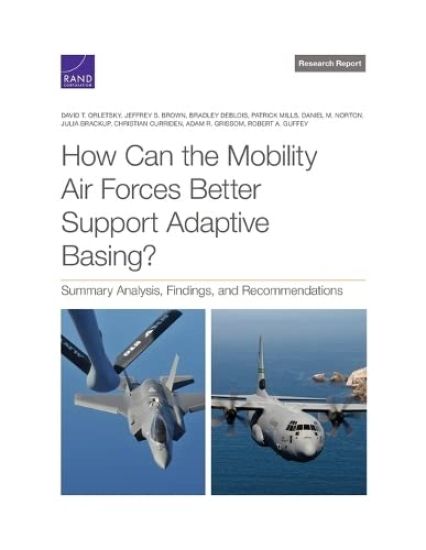
The U.S. Air Force is exploring adaptive basing (AB) concepts to reduce the vulnerability of U.S. forces and to preserve critical combat capabilities in highly contested environments. These concepts are likely to stress the U.S. Air Force's global mobility capabilities. This report assesses the impact of AB concepts on the Mobility Air Forces and to recommends enhancements to better support AB operations in a contested environment.