Do you ever feel powerless?The people of the early church discovered what true power looks like. Jesus transformed their lives--and they changed the world Acts is the extraordinary record of what these early Christian disciples did. The power that you see in action in this book is the same power that can transform your life. As Phyllis J. Le Peau leads you through the first half of Acts in this twelve-session LifeGuide(R) Bible Study, you will begin to understand what the Holy Spirit can do in you and in the world.LifeGuide Bible Studies feature questions for starting group discussions and for meeting God in personal reflection. Also included are leader's notes with information on study preparation, leading small group discussion, and additional insights into specific Bible passages. Presented in a convenient workbook format and featuring the inductive Bible study approach, LifeGuides are proven and popular guides for digging into Scripture on your own or with a group.
Do you ever feel powerless?The people of the early church discovered what true power looks like. Jesus transformed their lives--and they changed the world Acts is the extraordinary record of what these early Christian disciples did. The power that you see in action in this book is the same power that can transform your life. As Phyllis J. Le Peau leads you through the second half of Acts in this twelve-session LifeGuide(R) Bible Study, you will begin to understand what the Holy Spirit can do in you and in the world.LifeGuide Bible Studies feature questions for starting group discussions and for meeting God in personal reflection. Also included are leader's notes with information on study preparation, leading small group discussion, and additional insights into specific Bible passages. Presented in a convenient workbook format and featuring the inductive Bible study approach, LifeGuides are proven and popular guides for digging into Scripture on your own or with a group.
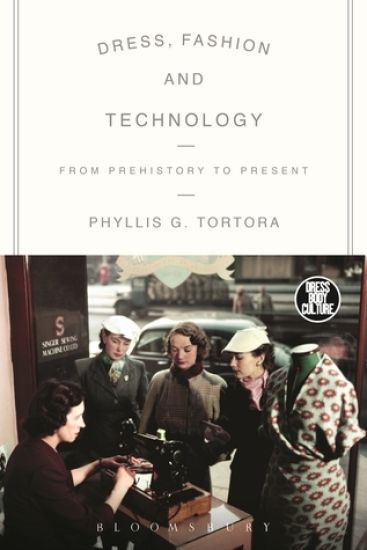
Technology has been an essential factor in the production of dress and the cultures of fashion throughout human history. Structured chronologically from prehistory to the present day, this is the first broad study of the complex relationship between dress and technology.Over the course of human history, dress-making and fashion technology has changed beyond recognition: from needles and human hands in the ancient world to complex 20th-century textile production machines, it has now come to include the technologies that influence dress styles and the fashion industry, while fashion itself may drive aspects of technology. In the last century, new technologies such as the electronic media and high-tech manufacturing have helped not just to produce but to define fashion: the creation of automobiles prompted a decline in long skirts for women while the beginnings of space travel caused people to radically rethink the function of dress. In many ways, technology has itself created avant garde and contemporary fashions.Through an impressive range of international case studies, the book challenges the perception that fashion is unique to western dress and outlines the many ways in which dress and technology intersect. Dress, Fashion and Technology is ideal reading for students and scholars of fashion studies, textile history, anthropology and cultural studies.
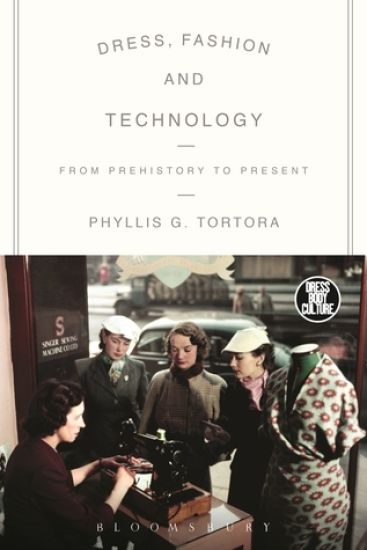
Technology has been an essential factor in the production of dress and the cultures of fashion throughout human history. Structured chronologically from prehistory to the present day, this is the first broad study of the complex relationship between dress and technology.Over the course of human history, dress-making and fashion technology has changed beyond recognition: from needles and human hands in the ancient world to complex 20th-century textile production machines, it has now come to include the technologies that influence dress styles and the fashion industry, while fashion itself may drive aspects of technology. In the last century, new technologies such as the electronic media and high-tech manufacturing have helped not just to produce but to define fashion: the creation of automobiles prompted a decline in long skirts for women while the beginnings of space travel caused people to radically rethink the function of dress. In many ways, technology has itself created avant garde and contemporary fashions.Through an impressive range of international case studies, the book challenges the perception that fashion is unique to western dress and outlines the many ways in which dress and technology intersect. Dress, Fashion and Technology is ideal reading for students and scholars of fashion studies, textile history, anthropology and cultural studies.
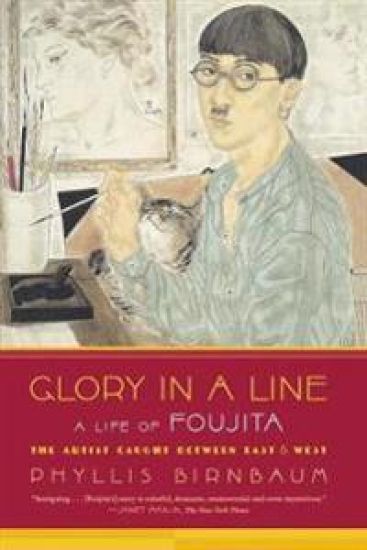
The first biography in English of the Japanese artist who was a central figure in the dazzling artistic milieu of 1920s ParisWhen we think of expatriates in Paris during the early decades of the twentieth century, certain names come to mind: Hemingway, Picasso, Modigliani--and Foujita, the Japanese artist whose distinctive works, bringing elements of Japanese art to Western oil painting, made him a major cultural figure in 1920s Montparnasse. Foujita was the only Japanese artist to be considered part of the "School of Paris," which also counted among its members such prominent artists as Picasso and Modigliani. Noteworthy, too, was Foujita's personal style, flamboyant even for those flamboyant times. He was best known for his drawings of female nudes and cats, and for his special white color upon which he could draw a masterful line--one that seemed to outline a woman's whole body in a single unbroken stroke. With the advent of the Second World War, Foujita returned to Japan, where he allied himself with the ruling Japanese mili-tarists and painted canvases in support of the war effort. After Japan's defeat, he was scorned for his devotion to the military cause and returned to France, where he remained until his death in 1968. Acclaimed writer and translator Phyllis Birnbaum not only explores Foujita's fascinating, tumultuous life but also assesses the appeal of his paintings, which, in their mixture of Eastern and Western traditions, are memorable for their vibrancy of form and purity of line.
Phyllis Moen describes the meshing of work and family roles not only as the private dilemma of individual women and their families but also as a public dilemma for the nation. This is an issue linked to deep apprehensions about families' and children's well-being, to demands for gender equality, to the outcry of some for a return to the traditional wife-as-homemaker role, and to growing concerns about labor market needs, productivity, and economic competitiveness.Moen addresses the following central question: What are the major implications--for society, families, husbands, children, and women themselves--of the substantial and progressive movement of American women into the labor force? The dominant focus is on employed mothers of young children (those under the age of six) since it is these women who have experienced the greatest change and who encounter the greatest difficulty in reconciling employment demands and family responsibilities. An overriding theme is the unevenness of social change: American mothers of young children may be moving into the labor force in unprecendented numbers, but husbands, employers, and public policies are slow to accommodate this emerging reality. The issues raised are of concern to a broad spectrum of the educated public, but the book should be no less valuable to social scientists seeking to extend their knowledge of issues in this area of growing concern and can be used in courses relating to the sociology of the family, social problems, gender roles, and social policy.
Phyllis Moen describes the meshing of work and family roles not only as the private dilemma of individual women and their families but also as a public dilemma for the nation. This is an issue linked to deep apprehensions about families' and children's well-being, to demands for gender equality, to the outcry of some for a return to the traditional wife-as-homemaker role, and to growing concerns about labor market needs, productivity, and economic competitiveness.Moen addresses the following central question: What are the major implications--for society, families, husbands, children, and women themselves--of the substantial and progressive movement of American women into the labor force? The dominant focus is on employed mothers of young children (those under the age of six) since it is these women who have experienced the greatest change and who encounter the greatest difficulty in reconciling employment demands and family responsibilities. An overriding theme is the unevenness of social change: American mothers of young children may be moving into the labor force in unprecendented numbers, but husbands, employers, and public policies are slow to accommodate this emerging reality. The issues raised are of concern to a broad spectrum of the educated public, but the book should be no less valuable to social scientists seeking to extend their knowledge of issues in this area of growing concern and can be used in courses relating to the sociology of the family, social problems, gender roles, and social policy.
This anthology, arriving in Tennessee's bicentennial year, is a bountiful showcase of the state's rich literary output. Like its predecessor, the widely read Homewords, published in 1986 for Tennessee's Homecoming, this new volume feature fiction, poetry, and nonfiction by living writers - from senior literati such as Shelby Foote, John Egerton, and Nikki Giovanni to numerous newly emerging talents, including Ann Patchett, Steve Womack, and Jerome Wilson. The writings contained here are of such rich and marvelous variety that they elude easy reduction to a set of common themes or concerns. Readers of this book, says editor Phyllis Tickle in her preface, will discover the pervasive influence of Native American culture upon Tennessee's worldview - "not so much overt and politically correct as inherent and incorporated." Beyond that, however, the selections are, if anything, characterized by the relative absence of those qualities usually associated with southern literature: the legacy of the Civil War, dialect and colloquialisms, and, most notably, "a sense of place." Yet, however much the posture of Tennessee writers may have shifted from regionalist to citizen of the moment, something essential remains. Throughout these pages, Tickle notes, "there resides the kind of dry, wise humor that is born of endurance and the secured perspective of those who know where and what home is ... which is why, in the end, we settled upon our title, HomeWorks - that is, works of the heart and mind, done from and for home."
It is hard to believe there was a time when you could not go out for Chinese food in Minnesota, but there was until brothers and entrepreneurs Woo Yee Sing and Woo Du Sing opened their canton restaurant (later called Johns place) in Minneapolis in 1883. Chinese, Japanese, Thai, Indian, and Cambodian immigrants have left an indelible and flavourful mark on our collective culinary history. many cooks sought not only to make a living but also to preserve the memory of their homeland through the dishes set before family and patrons alike, to the great benefit of diners from the metro area to Duluth to the red river valley. The book includes interviews with pioneering chefs, features on beloved restaurants, stories of farmers and food businesses, and, of course, more than 150 treasured recipes that have nourished and inspired Minnesotans. Try Dar Cheen chicken from Wing Ying Huie's Chinese Lantern in Duluth, or Supenn Harrison's egg rolls made famous at her state fair booth beginning in 1976, or Reiko Westons sukiyaki from the original Fuji Ya in Minneapolis.Let Asian food experts Phyllis Louise Harris and raghavan iyer take you on a tour through this comprehensive history, lavishly illustrated with historical and contemporary photography, from the Philippines to south Korea to Nepal, from the 1870s through today. Includes 160 recipes.
When Phyllis Barber’s thirty-three-year marriage ended, she had to redefine herself as a woman, a mother, and an artist. Raw Edges is her moving account of the “lean years” that followed her divorce. It is interwoven with a narrative of the marriage of two gifted people that begins with “sealing” in a Mormon temple, endures through the birth of four sons and the development of two careers, and founders when the couple’s personal needs no longer match their aspirations or the rigid strictures of Mormon life. Raw Edges reflects the predicament that many women experience as their marriages disintegrate and they fail to achieve their own expectations as well as those set by their society and their faith. It is also a story of hope, of how a woman overcome by grief and confusion eventually finds a new approach to life.
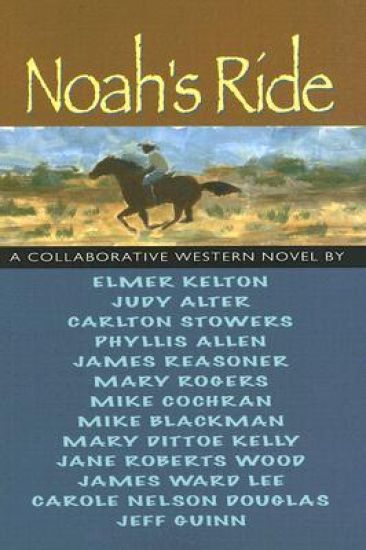
Naked Came the Stranger set the format, but not always the tone or subject matter, for a whole string of books that appeared in the 1970s. Called collaborative or serial novels, the multi-author works were set in the suburbs, the Blue Ridge Mountains, Florida, the American West, but never in Texas. Now, a dozen Texas authors have gotten together to create a good old-fashioned western novel. Each contributing author will write a chapter that builds on the work that precedes his or her chapter. The plot features Noah, a plantation slave who escapes and makes his way to the Union forces and, finally, Texas, where he establishes a small ranch, runs a few cattle, and, with wife Nelly, begins to raise a family. But Noah, who has taken the name Freeman and named his ranch Free Land, cannot leave his past behind. The slave catcher Quint Carpenter is the local sheriff, and he's out for blood - specifically Noah's blood - after Noah's sister kills Quint's younger son. And carpetbagger Bear Coltrain, who once wanted to kidnap Noah and sell him back into slavery, now wants Noah's land. And then, John Malone comes along - Noah once saved the former cavalry officer's life, and he wants to repay his debt. Can he help when someone kidnaps Noah's baby girl? Can he help save the ranch - and, finally, save Noah's life? At press time for this catalog, half the chapters remain yet to be written, so the plot may change some - but that's the magic of a project such as this one. In cooperation with TCU Press, the ""Fort Worth Star-Telegram"" announced a contest in which the winner became one of the contributing authors. Entries were posted on the ""Star-Telegram"" web page, where the best three entries were chosen by popular vote. The staff of TCU Press chose the winner from among those entries. She is Mary Dittoe Kelly, and this will be her first published writing. A celebration at Fort Worth's Bass Hall will bring all the authors together onstage to talk about the work, and the joys and problems of working in collaboration. Former ""Star-Telegram"" book editor, Jeff Guinn will moderate.
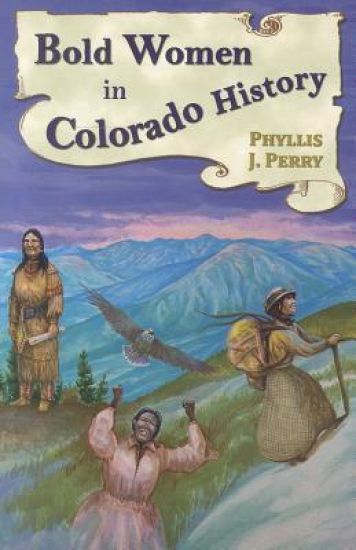
Bold Women in Colorado History shares the stories of ten Centennial State women, among them Clara Brown, a former slave who ventured west and remade herself into a respected entrepreneur; Chipeta, a Kiowa Apache woman adopted into the Ute tribe, who helped negotiate for peace between her people and the white outsiders; and Dr. Justina Ford, who overcame both racial and gender prejudice to become the first black female physician in the state.Perfect for school or home, these collections of short but informative biographies are both a valuable resource and an entertaining read. For readers young and old, the Bold Women series proves what women can accomplish when they dare to be bold.
This charming, best-selling board book introduces eight adorable baby animals, featuring high-contrast black-and-white illustrations perfect for babies from birth to age two. Research has shown that infants respond more readily to contrasting black and white images, making this book an ideal choice for the youngest of eyes. Up-close images of a playful Dalmatian puppy, a cuddly panda cub, a striped zebra, and other loveable animals grace each page. A final two-page spread completes this charming book with a clever surprise.
Diminutive Rhode Island offers great diversity. Explore more than 400 miles of sandy beaches and rocky headlands, the splendid historic mansions of Newport, and the fine restaurants of Providence’s Federal Hill; enjoy the tranquil beauty of Block Island and fascinating museums and historic sites. Veteran travel writers Méras and Imbrie capture it all in this revised and expanded edition.
Since 1973, Storey's Country Wisdom Bulletins have offered practical, hands-on instructions designed to help readers master dozens of country living skills quickly and easily. There are now more than 170 titles in this series, and their remarkable popularity reflects the common desire of country and city dwellers alike to cultivate personal independence in everyday life.