Human papillomaviruses (HPV) are double-stranded, DNA, epitheliotropic viruses that infect skin and mucosal membranes. Over 200 types of HPV have been identified and classified into alpha (α), beta (β), gamma (γ), mu (μ), and nu (ν) genera. HPV in the genus α mainly infect mucosal membranes, cause the majority of the ano-genital cancers, and are widely studied. However, epidemiology of HPV in the other genera, which mainly infect skin, is poorly understood. Few studies have reported the seroprevalence of cutaneous HPV among healthy individuals, and to date, no study has prospectively examined the association between cutaneous HPV seropositivity and development of external genital lesions (EGLs) in men. The objectives of this study were to estimate the seroprevalence of cutaneous HPV types and investigate factors associated with the seropositivity, and evaluate the association between seropositivity to cutaneous HPV types and the risk of development of EGLs. In conclusion, our data show that exposure to cutaneous HPV was common in men although different risk factors were independently associated with grouped and type-specific cutaneous HPV seropositivity.
Erfolgreich in Singapore: Wirtschaftlicher Auf- und Ausbau im Herzen Asiens Aishah Rahman Singapore hat sich als ein pulsierendes Wirtschaftszentrum und globales Handelsdrehkreuz etabliert. Dieses Buch beleuchtet die dynamischen Chancen und Herausforderungen, die Unternehmen beim Auf- und Ausbau ihrer Gesch ftsaktivit ten in dieser einzigartigen Metropole erwarten. Von der strategischen Markteintrittsplanung ber die Nutzung der logistischen Vorteile bis hin zu den Feinheiten der multikulturellen Gesch ftsetikette - Aishah Rahman bietet fundierte Einblicke und praktische Ratschl ge f r Unternehmer und Investoren. Erfahren Sie, wie Sie lokale Finanzierungsoptionen optimal nutzen, rechtliche und regulatorische H rden berwinden und nachhaltige Gesch ftsstrategien entwickeln k nnen. Tauchen Sie ein in die faszinierende Welt des singapurischen Marktes und lernen Sie, wie Sie Ihr Unternehmen im Herzen Asiens erfolgreich positionieren. Mit konkreten Fallstudien und bew hrten Methoden ist dieses Buch ein unverzichtbarer Leitfaden f r alle, die in Singapore durchstarten wollen.
Erfolgreich in Singapore: Wirtschaftlicher Auf- und Ausbau im Herzen Asiens Aishah Rahman Singapore hat sich als ein pulsierendes Wirtschaftszentrum und globales Handelsdrehkreuz etabliert. Dieses Buch beleuchtet die dynamischen Chancen und Herausforderungen, die Unternehmen beim Auf- und Ausbau ihrer Gesch ftsaktivit ten in dieser einzigartigen Metropole erwarten. Von der strategischen Markteintrittsplanung ber die Nutzung der logistischen Vorteile bis hin zu den Feinheiten der multikulturellen Gesch ftsetikette - Aishah Rahman bietet fundierte Einblicke und praktische Ratschl ge f r Unternehmer und Investoren. Erfahren Sie, wie Sie lokale Finanzierungsoptionen optimal nutzen, rechtliche und regulatorische H rden berwinden und nachhaltige Gesch ftsstrategien entwickeln k nnen. Tauchen Sie ein in die faszinierende Welt des singapurischen Marktes und lernen Sie, wie Sie Ihr Unternehmen im Herzen Asiens erfolgreich positionieren. Mit konkreten Fallstudien und bew hrten Methoden ist dieses Buch ein unverzichtbarer Leitfaden f r alle, die in Singapore durchstarten wollen.
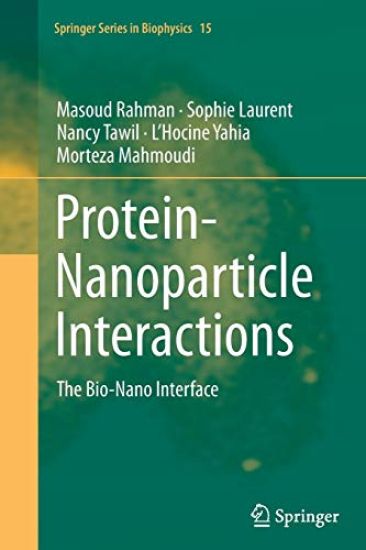
In recent years, the fabrication of nanomaterials and exploration of their properties have attracted the attention of various scientific disciplines such as biology, physics, chemistry, and engineering. Although nanoparticulate systems are of significant interest in various scientific and technological areas, there is little known about the safety of these nanoscale objects. It has now been established that the surfaces of nanoparticles are immediately covered by biomolecules (e.g. proteins, ions, and enzymes) upon their entrance into a biological medium. This interaction with the biological medium modulates the surface of the nanoparticles, conferring a “biological identity” to their surfaces (referred to as a “corona”), which determines the subsequent cellular/tissue responses. The new interface between the nanoparticles and the biological medium/proteins, called “bio-nano interface,” has been very rarely studied in detail to date, though the interest in this topic is rapidly growing.In this book, the importance of the physiochemical characteristics of nanoparticles for the properties of the protein corona is discussed in detail, followed by comprehensive descriptions of the methods for assessing the protein-nanoparticle interactions. The advantages and limitations of available corona evaluation methods (e.g. spectroscopy methods, mass spectrometry, nuclear magnetic resonance, electron microscopy, X-ray crystallography, and differential centrifugal sedimentation) are examined in detail, followed by a discussion of the possibilities for enhancing the current methods and a call for new techniques. Moreover, the advantages and disadvantages of protein-nanoparticle interaction phenomena are explored and discussed, with a focus on the biological impacts.
In recent years, the fabrication of nanomaterials and exploration of their properties have attracted the attention of various scientific disciplines such as biology, physics, chemistry, and engineering. Although nanoparticulate systems are of significant interest in various scientific and technological areas, there is little known about the safety of these nanoscale objects. It has now been established that the surfaces of nanoparticles are immediately covered by biomolecules (e.g. proteins, ions, and enzymes) upon their entrance into a biological medium. This interaction with the biological medium modulates the surface of the nanoparticles, conferring a “biological identity” to their surfaces (referred to as a “corona”), which determines the subsequent cellular/tissue responses. The new interface between the nanoparticles and the biological medium/proteins, called “bio-nano interface,” has been very rarely studied in detail to date, though the interest in this topic is rapidly growing.In this book, the importance of the physiochemical characteristics of nanoparticles for the properties of the protein corona is discussed in detail, followed by comprehensive descriptions of the methods for assessing the protein-nanoparticle interactions. The advantages and limitations of available corona evaluation methods (e.g. spectroscopy methods, mass spectrometry, nuclear magnetic resonance, electron microscopy, X-ray crystallography, and differential centrifugal sedimentation) are examined in detail, followed by a discussion of the possibilities for enhancing the current methods and a call for new techniques. Moreover, the advantages and disadvantages of protein-nanoparticle interaction phenomena are explored and discussed, with a focus on the biological impacts.