Kirjojen hintavertailu. Mukana 12 550 268 kirjaa ja 12 kauppaa.

Kirjahaku

Etsi kirjoja tekijän nimen, kirjan nimen tai ISBN:n perusteella.

1000 tulosta hakusanalla Reginald Audrick

Preaching The Lectionary

Preaching The Lectionary

Reginald H. Fuller; Daniel Westberg

Liturgical Press
2006
pokkari
Although originally intended for use by Catholics, Preaching the Lectionary has become truly ecumenical in intention and tone. It is based on the New Revised Standard Version and integrates the Revised Common Lectionary to enhance the versatility of the preacher's task of proclaiming the Word of God as effectively and as broadly as possible.This third edition of Preaching the Lectionary will appeal to homilists and others who have a ministerial or preparatory role in the Sunday liturgy. Written with the needs of the active pastor, homilist, and liturgist in mind, it offers brief, technical discussions balanced with practical insights and reflections. This new edition of a classic approach to the Lectionary has been updated to reflect the thinking of a wide range of biblical scholars and theologians.Reginald H. Fuller, STD, DD, a former parish priest and seminary professor with a specialty in New Testament literature, has written numerous books. He lives in Richmond, Virginia.Daniel Westberg, D Phil, is a former parish priest who teaches moral theology and Christian ethics at Nashotah House Episcopal Seminary in Wisconsin. He is the author of Right Practical Reason, a book on the ethics of Thomas Aquinas.
Preaching the Gospel of Black Revolt

Preaching the Gospel of Black Revolt

Reginald A. Wilburn

Duquesne University Press
2014
sidottu
Pursuing things yet unattempted in literary criticism, Reginald A. Wilburn offers the first scholarly work to theorize African American authors rebellious appropriations of Milton and his canon. This comparative and hybrid study engages African Americans transatlantic negotiations with perhaps the preeminent freedom writer in the English tradition. Preaching the Gospel of Black Revolt: Appropriating Milton in Early African American Literature contends that early African American authors appropriated and remastered Milton by completing and complicating England s epic poet of liberty with the intertextual originality of repetitive difference. Wilburn focuses on a diverse array of early African American authors, such as Phillis Wheatley, Frances Ellen Watkins Harper, Frederick Douglass, and Anna Julia Cooper, to name a few. He examines the presence of Milton in these works as a reflection of early African Americans rhetorical affiliations with the poet s satanic epic for messianic purposes of freedom and racial uplift. Wilburn explains that early African American authors were attracted to Milton because of his preeminent status in literary tradition, strong Christian convictions, and poetic mastery of the English language. This tripartite ministry makes Milton an especially indispensible intertext for authors whose writings and oratory were, sometimes, presumed beneath the dignity of criticism. Through close readings of canonical and obscure texts, Preaching the Gospel of Black Revolt explores how various authors rebelled against such assessments of black intellect by altering Milton s meanings, themes, and figures beyond orthodox interpretations and imbuing them with hermeneutic shades of interpretive and cultural difference. However they remastered Milton, these artists respected his oeuvre as a sacred yet secular talking book of revolt, freedom, and cultural liberation. Preaching the Gospel of Black Revolt particularly draws upon recent satanic criticism in Milton studies, placing it in dialogue with methodologies germane to African American literary studies. By exposing the subversive workings of an intertextual Middle Passage in black literacy, Wilburn invites scholars from diverse areas of specialization to traverse within and beyond the cultural veils of racial interpretation and along the color line in literary studies."
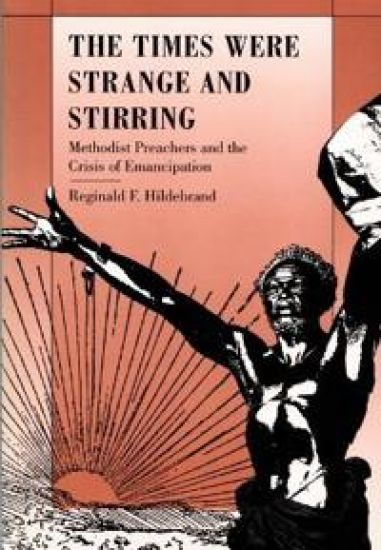
The Times Were Strange and Stirring

The Times Were Strange and Stirring

Reginald F. Hildebrand

Duke University Press
1995
sidottu
With the conclusion of the Civil War, the beginnings of Reconstruction, and the realities of emancipation, former slaves were confronted with the possibility of freedom and, with it, a new way of life. In The Times Were Strange and Stirring, Reginald F. Hildebrand examines the role of the Methodist Church in the process of emancipation-and in shaping a new world at a unique moment in American, African American, and Methodist history.Hildebrand explores the ideas and ideals of missionaries from several branches of Methodism-the African Methodist Episcopal Church, the Colored Methodist Episcopal Church, and the northern-based Methodist Episcopal Church-and the significant and highly charged battle waged between them over the challenge and meaning of freedom. He traces the various strategies and goals pursued by these competing visions and develops a typology of some of the ways in which emancipation was approached and understood. Focusing on individual church leaders such as Lucius H. Holsey, Richard Harvey Cain, and Gilbert Haven, and with the benefit of extensive research in church archives and newspapers, Hildebrand tells the dramatic and sometimes moving story of how missionaries labored to organize their denominations in the black South, and of how they were overwhelmed at times by the struggles of freedom.
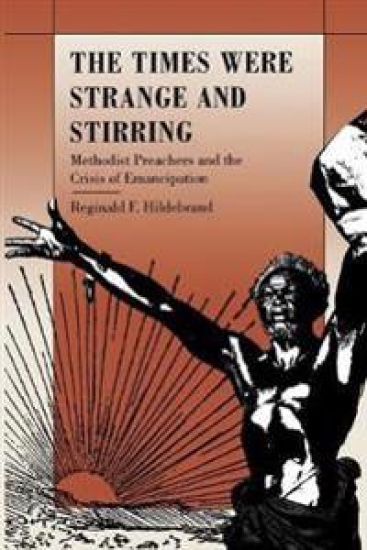
The Times Were Strange and Stirring

The Times Were Strange and Stirring

Reginald F. Hildebrand

Duke University Press
1995
pokkari
With the conclusion of the Civil War, the beginnings of Reconstruction, and the realities of emancipation, former slaves were confronted with the possibility of freedom and, with it, a new way of life. In The Times Were Strange and Stirring, Reginald F. Hildebrand examines the role of the Methodist Church in the process of emancipation-and in shaping a new world at a unique moment in American, African American, and Methodist history.Hildebrand explores the ideas and ideals of missionaries from several branches of Methodism-the African Methodist Episcopal Church, the Colored Methodist Episcopal Church, and the northern-based Methodist Episcopal Church-and the significant and highly charged battle waged between them over the challenge and meaning of freedom. He traces the various strategies and goals pursued by these competing visions and develops a typology of some of the ways in which emancipation was approached and understood. Focusing on individual church leaders such as Lucius H. Holsey, Richard Harvey Cain, and Gilbert Haven, and with the benefit of extensive research in church archives and newspapers, Hildebrand tells the dramatic and sometimes moving story of how missionaries labored to organize their denominations in the black South, and of how they were overwhelmed at times by the struggles of freedom.
Some Are Drowning

Some Are Drowning

Reginald Shepherd

University of Pittsburgh Press
1995
nidottu
This first collection of poems enacts the struggle of a young black gay man in his search for identity. Many voices haunt these poems: black and white, male and female, the oppressor's voice as well as the oppressed. The poet's aim, finally, is to rescue some portion of the drowned and the drowning.
Angel Interrupted

Angel Interrupted

Reginald Shepherd

University of Pittsburgh Press
1996
nidottu
Angel, Interupted is Reginald Shepherd's second poetry collection. The poems are lyrical, streetwise and contemporary, yet timeless, classically referential, and introspective.
Wrong

Wrong

Reginald Shepherd

University of Pittsburgh Press
1999
nidottu
The poems of Reginald Shepherd’s third book move among, mix, and manufacture stories, seeking to redefine the meaning of mythology. From the ruined representatives of Greek divinity (broken statues and fragmented stories), and the dazzling extravagances of predecessors like Hart Crane and Wallace Stevens, to the fleeting promises of popular music and the laconic demigods of the contemporary gay subculture, they sketch maps of a world in which desire may find a restless home. But desire leads the maps astray and maps mislead desire. The poems poems both enact language’s powers to create a world and enforce the world’s insistence (material, social, sexual, racial, historical) that mind (and body) surrender to circumstance. The struggle between these two halves that will never make a whole produces new myths of occasion, “packing the rifts/with sleeplessness, filling the gaps with lack.” In that space between promise and deprivation, Wrong builds its song.
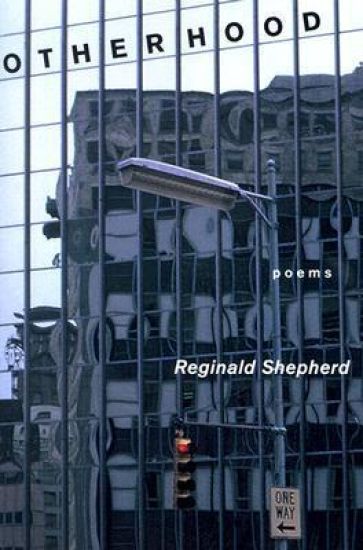
Otherhood

Otherhood

Reginald Shepherd

University of Pittsburgh Press
2003
nidottu
Written in the spaces between otherness and brotherhood, Otherhood combines traditional lyricism with experimentalism, passionate engagement with cold-eyed investigation, and personal details with a depersonalized distance to create a new poetic synthesis.
Fata Morgana

Fata Morgana

Reginald Shepherd

University of Pittsburgh Press
2007
nidottu
Fata Morgana mingles personal experience, history, mythology, politics, and natural science to explore the relationships of conception and perception, the self finding its way through a physical and social world not of its own making, but changing the world by its presence.
Red Clay Weather

Red Clay Weather

Reginald Shepherd

University of Pittsburgh Press
2011
nidottu
“Among other things, Shepherd has always been an elemental poet. His work abounds with the imagery and motifs of water and fire, and while those elements are important here, it is air and earth that are the more dominant elements in this collection. . . .Clay, red clay in particular, recurs several times throughout the collection as a motif of earth. It is the substance of creation, but always of impermanent things, whether heroes or Babylonian statues with feet of clay, or of things durable but fragile, such as the cuneiform tablets of ‘A Parking Lot Just Outside the Ruins of Babylon.’”—Robert Philen, from the Foreword
Polysaccharide Association Structures in Food

Polysaccharide Association Structures in Food

Reginald H. Walter

CRC Press Inc
1998
sidottu
"Focuses on the physical-chemical origins and structures formed by the association of aqueous, dispersed polysaccharides with related and unrelated chemical species. Covers the origin of polysaccharide supramolecular assemblies; polysaccharide molecular structures; gel formation and ultrastructure in food polysaccharides; structures and phase transitions of starch polymers; microcrystalline cellulose technology; cyclodextrins; starch-lipid interactions; interactions in whey protein/polysaccharide mixtures; and more."
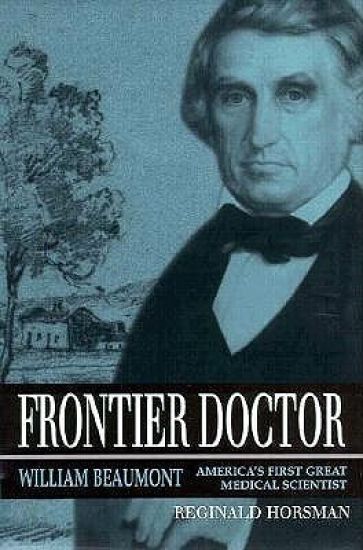
Frontier Doctor

Frontier Doctor

Reginald Horsman

University of Missouri Press
1996
sidottu
This is the biography of William Beaumont, a 19th century doctor whose pioneering research on human digestion gained him international renown as a physiologist. The book details his medical career in the army, his experiments and research, and his publications.
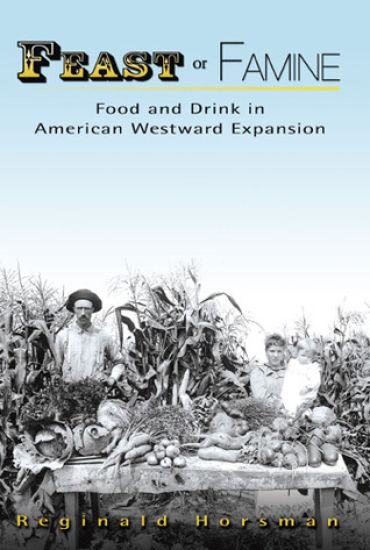
Feast or Famine

Feast or Famine

Reginald Horsman

University of Missouri Press
2008
sidottu
When settlers began advancing across North America, they endured great hardships but for the most part did not go hungry. With a seemingly inexhaustible supply of wildlife and an abundance of vegetation, even the poorest lived comfortably.""Feast or Famine"" is the first comprehensive account of food and drink in the winning of the West, describing the sustenance of successive generations of western pioneers. Drawing on journals of settlers and travelers - as well as a lifetime of research on the American West - Reginald Horsman examines more than one hundred years of history, from the first advance of explorers into the Mississippi valley to the movement of ranchers and farmers onto the Great Plains, recording not only the components of their diets but food preparation techniques as well.Most settlers were able to obtain food beyond the dreams of ordinary Europeans, for whom meat was a luxury. Not only were buffalo, deer, and wild turkey there for the taking, pioneers also gathered greens such as purslane, dandelion, and pigweed - as well as wild fruits, berries, and nuts. They replaced sugar with wild honey or maple syrup, and when they had no tea, they made drinks out of sage, sassafras, and mint. Horsman also reveals the willingness of Indians to convey their knowledge of food to newcomers, sharing salmon in the Pacific Northwest, agricultural crops in the arid Southwest.Horsman tells how agricultural expansion and transportation opened a veritable cornucopia and how the development of canning soon made it possible for meals to transcend simple frontier foods, with canned oysters and crystallized eggs in airtight cans on merchants' shelves. He covers food on different regional frontiers, as well as the cuisines of particular groups such as fur traders, soldiers, miners, and Mormons. He also discusses food shortages that resulted from poor preparation, temporary scarcity of game, marginal soil, or simply bad luck. At times, as with the ill-fated Donner Party, pioneers starved.Engagingly written and meticulously researched, ""Feast or Famine"" is a one-of-a-kind look at a subject too long ignored in histories of the West. By revealing the spectrum of frontier fare across years and regions, it shows us that the land of opportunity was often a land of plenty.
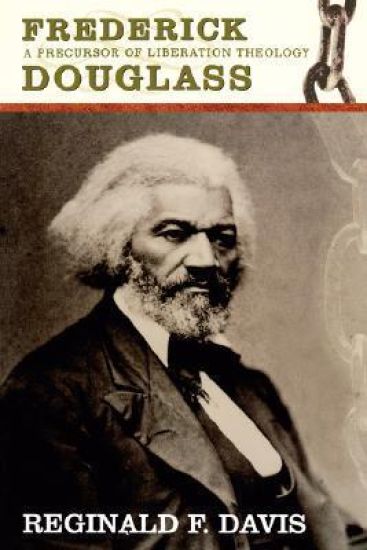
Frederick Douglass

Frederick Douglass

Reginald F. Davis

Mercer University Press
2009
nidottu
Frederick Douglass: A Precursor of Liberation Theology deals with the evolution of Frederick Douglass's philosophical and theological development. This book is another paradigm that expands the debate and places Douglass's thought in a more appropriate context, namely anticipating liberation theology. Since no consensus exists about Douglass's philosophical and theological development, Reginald F. Davis attempts to settle a dispute in Douglass studies that revolves around his religious odyssey and in particular the character and cause of his philosophical and theological development. The dispute among scholars is concerned with where to locate Douglass on the theological spectrum. Some scholars identify Douglass as having moved away from traditional forms of Christian millennialism, which elevates not the human agent but an omnipotent God who apocalyptically intervenes in human affairs and history. Still others interpret Douglass as having moved outside the circle of theism to enlightenment humanism. There is also an unsettled debate about the cause of Douglass's theological shift. One view attributes Douglass's shift to a psychological factor of rejection by White Churchmen over his support for radical policies like abolitionism. Another perspective attributes Douglass's shift to enlightenment principles of natural law and rationality. Davis utilizes selected categories from liberation theology to provide a more accurate exegesis of Douglass's study to encourage a new angle of interpretation of Douglass's philosophical and theological evolution.
Substance Abuse in the Workplace

Substance Abuse in the Workplace

Reginald Campbell; R. Everett Langford

CRC Press Inc
1995
sidottu
Substance Abuse in the Workplace makes a valuable contribution to the national movement to help stem the tide of drug abuse. The book begins with the history of substance abuse, continues with a discussion of how the human body functions normally or under the influence of chemicals, and follows with a toxicological description of the more common chemicals abused today in America. It discusses ways to help the abuser through identification and assistance programs and also covers the laws involved. The broad audience for Substance Abuse in the Workplace is includes middle and upper management, labor leaders, industrial hygienists, safety personnel, and workers.