Kirjojen hintavertailu. Mukana 11 717 486 kirjaa ja 12 kauppaa.

Kirjahaku

Etsi kirjoja tekijän nimen, kirjan nimen tai ISBN:n perusteella.

1000 tulosta hakusanalla Robert D. Lesslie

Difference Methods for Initial Value Problems: Interscience Tracts in Pure and Applied Mathematics, No. 4
Difference Methods for Initial Value Problems is a book written by Robert D. Richtmyer and published as part of the Interscience Tracts in Pure and Applied Mathematics series. The book focuses on the use of difference methods for solving initial value problems in mathematics. It covers topics such as the numerical solution of partial differential equations, the stability of difference schemes, and the accuracy of numerical methods. The book is intended for graduate students and researchers in mathematics and engineering who are interested in numerical methods for solving initial value problems. It provides a comprehensive overview of the subject, including detailed explanations of the underlying theory and practical applications. The book is written in a clear and concise style, making it accessible to readers with a range of mathematical backgrounds. Overall, Difference Methods for Initial Value Problems is an essential resource for anyone interested in numerical methods for solving initial value problems.Additional Editor Is J. J. Stoker.This scarce antiquarian book is a facsimile reprint of the old original and may contain some imperfections such as library marks and notations. Because we believe this work is culturally important, we have made it available as part of our commitment for protecting, preserving, and promoting the world's literature in affordable, high quality, modern editions, that are true to their original work.
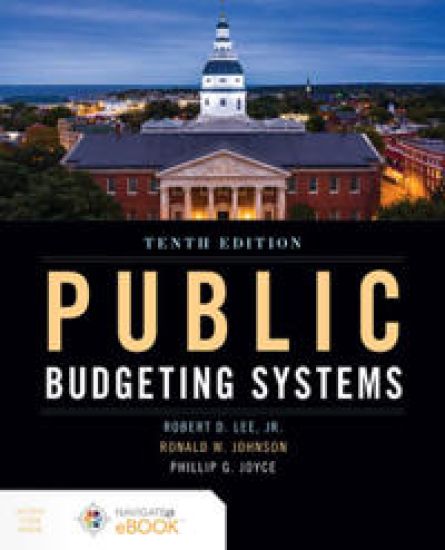
Public Budgeting Systems

Public Budgeting Systems

Robert D. Lee Jr.; Ronald W. Johnson; Philip G. Joyce

Jones and Bartlett Publishers, Inc
2020
nidottu
Public Budgeting Systems, Tenth Edition is the most comprehensive and balanced treatment of the current state of budgeting throughout all levels of the United States government. Current and prospective public managers, accordingly, often succeed or fail in their careers based in large part on whether they are intelligent consumers of financial data and have an adequate understanding of the budget process. By providing a detailed overview of all budgeting and financial management, the book enables students to gain an appropriate understanding of a complex topic.Significantly updated, the Tenth Edition has been revised to include:- Updated data, references and more timely examples throughout- An expansive discussion of the COVID- 9 recession, and a special appendix discussing the fiscal effects of the pandemic- Up to date information on tax revenues, including the 2 7 Tax Cuts and Jobs Act, sales taxes on online purchases, cannabis sales, and legalization of sports betting in some states- Significantly revised chapter on the Congressional budget process - Recent developments in information technology security, including both security breaches and new cybersecurity protocols- Each new print copy includes Navigate 2 eBook Access to read your digital textbook online or offline, on computers, tablets, and mobile devices.
Interagency Cometh: Is the National Security System of 1947 Capable of Handling the Challenges of 2009?
Despite the complexity of the Contemporary Operating Environment, the United States is still wedded to a national security system created in 1947. The United States places itself in jeopardy by using a system created at the end of World War II for a world where state actors were the primary threat, with the Soviet Union, the Cold War, and nuclear deterrence taking center stage. The National Security Council (NSC) is no longer capable of efficiency. The advisory body created by congress and President Truman has been overcome in recent years by the complex environment evolving from the end of the Cold War. The NSC's efficiency began to falter in Vietnam, and its failed policies have resulted in numerous interagency failures throughout the last 40 years. Compounding the issues at the national policy planning level is the current regional policy execution system. The United States has militarized its foreign policy. It has done so out of circumstance vice design. The evolution of the Department of Defense since 1949 has led it to create Geographic Combatant Commands, which are staffed and capable of regional policy execution. Recent inclusion of other agency personnel into the commands to enable them to plan in an "interagency" fashion has given them even more capability to act as the regional foreign policy arm of the United States. Adding to this militarization of policy execution is the lack of regional capability within the Department of State. The evolution of the State Department has led it to create an ambassador-centric organization, which engages single countries in diplomacy instead of approaching diplomacy regionally. Without a systemic change at national and regional levels, the United States runs the risk of improperly identifying future problems, and creating policy that when implemented may exacerbate global tensions. This monograph recommends changes to the national and regional policy planning and implementation systems. While changes at the national l This work has been selected by scholars as being culturally important, and is part of the knowledge base of civilization as we know it. This work was reproduced from the original artifact, and remains as true to the original work as possible. Therefore, you will see the original copyright references, library stamps (as most of these works have been housed in our most important libraries around the world), and other notations in the work. This work is in the public domain in the United States of America, and possibly other nations. Within the United States, you may freely copy and distribute this work, as no entity (individual or corporate) has a copyright on the body of the work. As a reproduction of a historical artifact, this work may contain missing or blurred pages, poor pictures, errant marks, etc. Scholars believe, and we concur, that this work is important enough to be preserved, reproduced, and made generally available to the public. We appreciate your support of the preservation process, and thank you for being an important part of keeping this knowledge alive and relevant.