Kirjojen hintavertailu. Mukana 12 016 292 kirjaa ja 12 kauppaa.

Kirjahaku

Etsi kirjoja tekijän nimen, kirjan nimen tai ISBN:n perusteella.

831 tulosta hakusanalla Rp Edwards

Studies in International Law and History

Studies in International Law and History

R.P. Anand

Martinus Nijhoff
2004
sidottu
Although modern international law is now recognized as universally applicable to all the states as soon as they emerge as independent entities (whether members of the United Nations or not, they are accepted as members of the ever-expanding international society, and are bound by its rules and seek its protection), this is only a recent phenomenon not older than the United Nations itself. Before the Second World War, modern international law was supposed to be merely a law of and for the civilized Western European Christian states, or states of European origin, and applicable only between them. Not only Asian and African states which had come to be colonized, but also the position of independent states, such as Persia, Siam, China, Abyssinia, and the like, was said to be anomalous. Since they belonged to different civilizations, questions were raised as to how far relations with their governments could be based on the rules of international law. If that is the case, when did European international law become universally binding? Can states, which did not, and could not, participate in its origin and development question some of its rules, which are inimical to their interests? How can and does this law change, or be modified, in the absence of any supra-national legislature or other authority? What has been the attitude and practice of these newly independent Asian and African states towards international law, which was largely developed by and for the benefit of the rich and industrialized states of Western Europe and the United States, and even more importantly, their role in its development? The author, an Asian scholar and well-known Professor of International Law, trained and educated in the West, has sought to deal with these and other questions in the nine papers contained in this book.
Dignaga on the Interpretation of Signs

Dignaga on the Interpretation of Signs

R.P. Hayes

Kluwer Academic Publishers
1988
sidottu
Buddhist philosophy in India in the early sixth century C. E. took an important tum away from the traditional methods of explaining and systematizing the teachings in Siitra literature that were attributed to the Buddha. The new direction in which several Indian Buddhist philosophers began to move was that of following reasoning to its natural conclusions, regardless whether the conclusions conflicted with traditional teachings. The central figure in this new movement was DiIinaga, a native of South India who found his way to the centre of Buddhist education at Nalanda, studied the treatises that were learned by the Buddhist intellectuals of his day, and eventually wrote works of his own that formed the core of a distinctly new school of Buddhist thought. Inasmuch as virtually every Indian philosopher after the sixth century had either to reject Dirinaga's methods or build upon the foundations provided by his investigations into logic, epistemology and language, his influence on the evolution of Indian philosophy was considerable, and indeed some familiarity with Dirinaga's arguments and conclusions is indispensable for anyone who wishes to understand the historical development of Indian thought. Moreover, since the approach to Buddhism that grew out of Dirinaga's meditations on language and the limits of knowledge dominated the minds of many of the scholars who took Buddhism to Tibet, some familiarity with Dirinaga is also essential to those who wish to understand the intellectual infrastructure of Tibetan Buddhist philosophy and practice.
Quantitative videoangiocardiography

Quantitative videoangiocardiography

R.P. van Wijk van Brievingh

Kluwer Academic Publishers
1975
nidottu
2. Vidicor 3. Anacor 4. Digicor 5. Magnetic Recording of the Videosignal VI. GEOMETRIC MODEL I. Introduction 2. Survey of Models 3. Preparation of Casts 4. Index of Irregularity 5. In Vitro Tests VII. DETECTION OF THE VENTRICULAR CONTOUR I. Introduction 2. Semi-automatic Methods 3. The Influence of the Trained Operator 4. Conclusions VIII. DATA CONVERSION 1. Introduction 2. Light-pen System and Contour Memory 3. Digicor 4. Evaluation Procedure 5. Data Presentation IX. SOFTWARE SYSTEM 1. Introduction 2. Modular Structure 3. Data Conversion 4. Volume Calculation 5. Data Presentation 6. Special Programs X. IN VIVO TESTS 1. Introduction 2. Materials and Methods 3. Results XI. UNCERTAINTY ANALYSIS I. Introduction 2. Uncertainty Intervals for Relevant Variables Propagation 3. of Uncertainty 4. Uncertainty Interval in the Result XII. DISCUSSION XIII. APPENDIX 1. Glossary 2. Dedvations 3. Results XIV. REFERENCES 1. Literature 2. Internal Reports ACKNOWLEDGEMENTS VIII Illustrations Figure Block-diagram of Instrumentation 12 1. 1 Central Synchronization 17 2. 1 2. 2 Effect of Scattered Radiation (Biplane) 18 Block-diagram of X-ray/TV-system 2. 3 21 2. 4 Test-object for OTF-measurement 25 Spatial Responses and Optical Transfer Functions 2. 5 26 Deviation from Isoplanasy and Influence of Additional Equipment 2. 6 28 2. 7 Temporal Modulation Transfer Function Curves 31 2. 8 Biplane Projections 33 2. 9 X-ray Aiming Device 36 2. 10 Calibration Curve 37 3. 1 Concentration vs. Tube Voltage Curves 45 3. 2 Markers and Applicators 48 3. 3.
Opial Inequalities with Applications in Differential and Difference Equations
In 1960 the Polish mathematician Zdzidlaw Opial (1930--1974) published an inequality involving integrals of a function and its derivative. This volume offers a systematic and up-to-date account of developments in Opial-type inequalities. The book presents a complete survey of results in the field, starting with Opial's landmark paper, traversing through its generalizations, extensions and discretizations. Some of the important applications of these inequalities in the theory of differential and difference equations, such as uniqueness of solutions of boundary value problems, and upper bounds of solutions are also presented. This book is suitable for graduate students and researchers in mathematical analysis and applications.
Advanced Topics in Difference Equations

Advanced Topics in Difference Equations

R.P. Agarwal; Patricia J.Y. Wong

Springer
2010
nidottu
. The theory of difference equations, the methods used in their solutions and their wide applications have advanced beyond their adolescent stage to occupy a central position in Applicable Analysis. In fact, in the last five years, the proliferation of the subject is witnessed by hundreds of research articles and several monographs, two International Conferences and numerous Special Sessions, and a new Journal as well as several special issues of existing journals, all devoted to the theme of Difference Equations. Now even those experts who believe in the universality of differential equations are discovering the sometimes striking divergence between the continuous and the discrete. There is no doubt that the theory of difference equations will continue to play an important role in mathematics as a whole. In 1992, the first author published a monograph on the subject entitled Difference Equations and Inequalities. This book was an in-depth survey of the field up to the year of publication. Since then, the subject has grown to such an extent that it is now quite impossible for a similar survey, even to cover just the results obtained in the last four years, to be written. In the present monograph, we have collected some of the results which we have obtained in the last few years, as well as some yet unpublished ones.
Focal Boundary Value Problems for Differential and Difference Equations
The last fifty years have witnessed several monographs and hundreds of research articles on the theory, constructive methods and wide spectrum of applications of boundary value problems for ordinary differential equations. In this vast field of research, the conjugate (Hermite) and the right focal point (Abei) types of problems have received the maximum attention. This is largely due to the fact that these types of problems are basic, in the sense that the methods employed in their study are easily extendable to other types of prob­ lems. Moreover, the conjugate and the right focal point types of boundary value problems occur frequently in real world problems. In the monograph Boundary Value Problems for Higher Order Differential Equations published in 1986, we addressed the theory of conjugate boundary value problems. At that time the results on right focal point problems were scarce; however, in the last ten years extensive research has been done. In Chapter 1 of the mono­ graph we offer up-to-date information of this newly developed theory of right focal point boundary value problems. Until twenty years ago Difference Equations were considered as the dis­ cretizations of the differential equations. Further, it was tacitly taken for granted that the theories of difference and differential equations are parallel. However, striking diversities and wide applications reported in the last two decades have made difference equations one of the major areas of research.
Positive Solutions of Differential, Difference and Integral Equations

Positive Solutions of Differential, Difference and Integral Equations

R.P. Agarwal; Donal O'Regan; Patricia J.Y. Wong

Springer
2010
nidottu
In analysing nonlinear phenomena many mathematical models give rise to problems for which only nonnegative solutions make sense. In the last few years this discipline has grown dramatically. This state-of-the-art volume offers the authors' recent work, reflecting some of the major advances in the field as well as the diversity of the subject. Audience: This volume will be of interest to graduate students and researchers in mathematical analysis and its applications, whose work involves ordinary differential equations, finite differences and integral equations.
Oscillation Theory for Difference and Functional Differential Equations

Oscillation Theory for Difference and Functional Differential Equations

R.P. Agarwal; Said R. Grace; Donal O'Regan

Springer
2010
nidottu
This monograph is devoted to a rapidly developing area of research of the qualitative theory of difference and functional differential equations. In fact, in the last 25 years Oscillation Theory of difference and functional differential equations has attracted many researchers. This has resulted in hundreds of research papers in every major mathematical journal, and several books. In the first chapter of this monograph, we address oscillation of solutions to difference equations of various types. Here we also offer several new fundamental concepts such as oscillation around a point, oscillation around a sequence, regular oscillation, periodic oscillation, point-wise oscillation of several orthogonal polynomials, global oscillation of sequences of real­ valued functions, oscillation in ordered sets, (!, R, ~)-oscillate, oscillation in linear spaces, oscillation in Archimedean spaces, and oscillation across a family. These concepts are explained through examples and supported by interesting results. In the second chapter we present recent results pertaining to the oscil­ lation of n-th order functional differential equations with deviating argu­ ments, and functional differential equations of neutral type. We mainly deal with integral criteria for oscillation. While several results of this chapter were originally formulated for more complicated and/or more general differ­ ential equations, we discuss here a simplified version to elucidate the main ideas of the oscillation theory of functional differential equations. Further, from a large number of theorems presented in this chapter we have selected the proofs of only those results which we thought would best illustrate the various strategies and ideas involved.
Asymptotic Methods for Ordinary Differential Equations
In this book we consider a Cauchy problem for a system of ordinary differential equations with a small parameter. The book is divided into th ree parts according to three ways of involving the small parameter in the system. In Part 1 we study the quasiregular Cauchy problem. Th at is, a problem with the singularity included in a bounded function j , which depends on time and a small parameter. This problem is a generalization of the regu­ larly perturbed Cauchy problem studied by Poincare [35]. Some differential equations which are solved by the averaging method can be reduced to a quasiregular Cauchy problem. As an example, in Chapter 2 we consider the van der Pol problem. In Part 2 we study the Tikhonov problem. This is, a Cauchy problem for a system of ordinary differential equations where the coefficients by the derivatives are integer degrees of a small parameter.
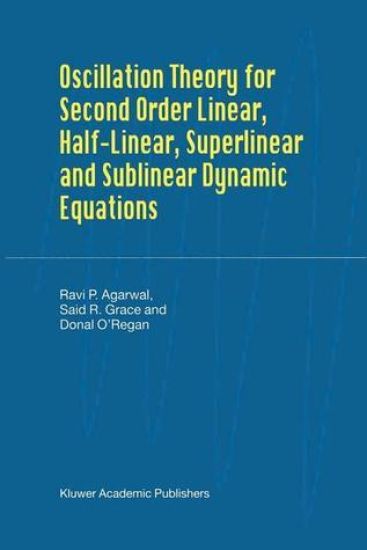
Oscillation Theory for Second Order Linear, Half-Linear, Superlinear and Sublinear Dynamic Equations
In this monograph, the authors present a compact, thorough, systematic, and self-contained oscillation theory for linear, half-linear, superlinear, and sublinear second-order ordinary differential equations. An important feature of this monograph is the illustration of several results with examples of current interest. This book will stimulate further research into oscillation theory. This book is written at a graduate level, and is intended for university libraries, graduate students, and researchers working in the field of ordinary differential equations.
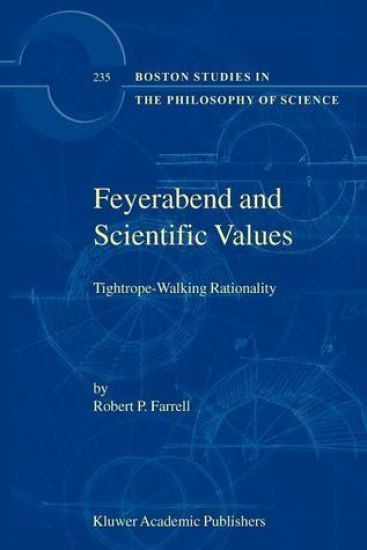
Feyerabend and Scientific Values
Every philosopher of science, and every student of the philosophy of science, has heard of Paul Feyerabend: the iconoclast who supposedly asserted that science is not rational, nor objective, but is characterised by anarchism, relativism, subjectivism and power. In this book it is argued that this picture of Feyerabend is false. Though Feyerabend was an iconoclast, his destructive philosophy was also creative. Feyerabend was deeply critical of a particular theory of scientific rationality, herein labelled 'Rationalism' - characterised as the algorithmic application of universal, necessary, atemporal rules - but he did not completely reject the idea of scientific rationality. It is argued that Feyerabend implicitly supported an alternative theory of rationality, herein labelled tightrope-walking rationality, characterised as the context-sensitive balancing of inherently irreconcilable values. The first half of the book deals with the entrenched misunderstandings of Feyerabend's philosophy that have arisen through a lack of appreciation of the target of Feyerabend's criticisms. The second half of the book brings together the positive elements to be found in Feyerabend's work, and presents these elements as a coherent alternative conception of scientific rationality.
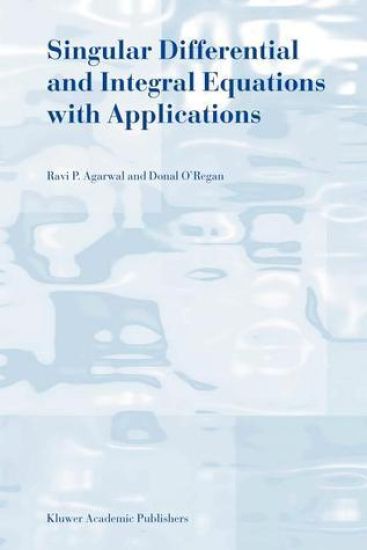
Singular Differential and Integral Equations with Applications
In the last century many problems which arose in the science, engineer­ ing and technology literature involved nonlinear complex phenomena. In many situations these natural phenomena give rise to (i). ordinary differ­ ential equations which are singular in the independent and/or dependent variables together with initial and boundary conditions, and (ii). Volterra and Fredholm type integral equations. As one might expect general exis­ tence results were difficult to establish for the problems which arose. Indeed until the early 1990's only very special examples were examined and these examples were usually tackled using some special device, which was usually only applicable to the particular problem under investigation. However in the 1990's new results in inequality and fixed point theory were used to present a very general existence theory for singular problems. This mono­ graph presents an up to date account of the literature on singular problems. One of our aims also is to present recent theory on singular differential and integral equations to a new and wider audience. The book presents a compact, thorough, and self-contained account for singular problems. An important feature of this book is that we illustrate how easily the theory can be applied to discuss many real world examples of current interest. In Chapter 1 we study differential equations which are singular in the independent variable. We begin with some standard notation in Section 1. 2 and introduce LP-Caratheodory functions. Some fixed point theorems, the Arzela- Ascoli theorem and Banach's theorem are also stated here.
Gharelu Illaj

Gharelu Illaj

R.P. Prashar

V S Publishers
2016
nidottu
Puuree duniya mein aaj aayurvedik chikitsa atyadhik lokpriya hotee ja rahee hai aur bade-bade chikitsa vijnaaniyon ne bhee isakee mahattv ko sveekaar kar liya hai, kyoonki yah rogee ke ilaaj kee prakritik vyavastha karatee hai. Yah vah pranaalee hai, jo maanav shareer ke buniyaadee kamiyoon aur kamajooriyoon ko duur kar rog pratirodhak kshamata badhaatee hai. Isake said ifekts bilkul bhee naheen hoote hain. Eeloopaithee mein chhoote se chhootee ilaaj bhee mahange aur jatil ho gaye hain . Aap chootee-badee kisee bhee aspataal mein jayen, santooshajanak ilaaj ke abhaav mein aap niraash hoone lagenge. Isee sabasee nijaat dilaane ka prayaas hai yah upayoogee pustak. Isamein muulatah aayurvedik jadee-buutiyon par bal diya gaya hai, jo baajaar mein aasaanee se upalabdh hain tatha aapakee rasooie ghar mein, aapakee paas-padoos mein, aapakee bagiya mein, ya ghar ke kisee bhee kone, ya stor-rum mein sahaj sulabh hain . Is pustak ke anusaar yadi ilaaj kiya jayega, to aapako daaktar ke paas jaane kee jaruurat hee nahein padegee. Isamein aayurveed se sambandhit shaastreey tatha petent davaiyoon kee alag-alag jaanakaariyaan dee gaee hain. Yee tamaam jaanakaariyaan pramaanik evan praayogik hain. Yah pustak har ghar mein ghareluu davaakhaae ke ruup mein avashy sthaapit ho jayegee. Ise hamesha apne paas rakhiee, padhen aur laabh uthaiey.(A home remedy is a treatment to cure a disease or ailment that employs certain spices, vegetables, or other common items. Home remedies have become increasingly popular as the expense and hassle of conventional medicine continues to rise. Today herbs are catching a lot of attention due to their very nature of cure: simple, no side effects, no chemicals, inexpensive, plus the ability of being able to cure yourself. Traditionally, in India, plants with medicinal value were used effectively as self help remedies for managing common ailments, such as to boost your child's immune system, preventing avoiding hair loss, treating persistent acne or dandruff, treating aches, pains or cuts and burns. This book describes the ailments and prescribes various medications based on readily available products. ) #v&spublishers
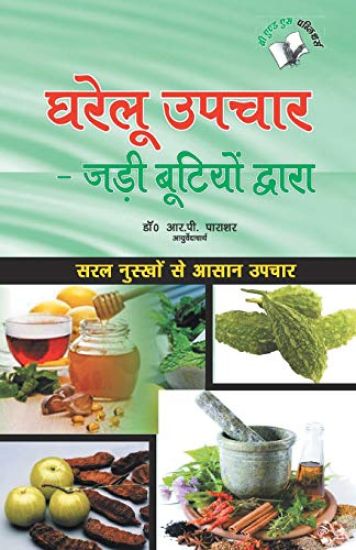
Gharelu Upchar - Jadi Butiyo Dwara

Gharelu Upchar - Jadi Butiyo Dwara

R.P. Prashar

V S Publishers
2016
nidottu
Puuree duniya mein aaj aayurvedik chikitsa atyadhik lookapriya hootee ja rahee hai aur bade-bade chikitsa vigyanaaniyon ne bhee isakee mahattv ko sveekaar kar liya hai, kyoonki yah roogee ke ilaaj ke praakrtik vyavastha karatee hai. Yah vah pranaalee hai, jo maanav shareer ke buniyaadee kamiyon aur kamjoriyon ko duur kar rog pratirodhak kshamata barhaatee hain. Isake said ifekts bilkul bhee naheen hootee. Elopaithee mein choote se choota ilaaj bhee mahange aur jatil hoo gaye hain . Aap choote-bade kisee bhee aspataal mein jayen, santooshajanak ilaaj ke abhaav mein aap niraash hone lagenge. Isee sabasee nijat dilaanee ka prayaas hai yah upayoogee pustak. Isameen muulatah aayurveedik jaree-butiyoon par bal diya gaya hai, jo baajaar mein aasaanee se upalabdh hain tatha aapakee rasoi ghar mein, aapakee paas-paroos mein, aapakee bagiya mein, ya ghar ke kisee bhee koonee, ya stor-ruum mein sahaj sulabh hain . Is pustak ke anusaar yadi ilaaj kiya jaye, to aapako daktar ke paas jaanee kee jaruurat hee naheen pareegee. Isameen aayurveed se sambandhit shaastreey tatha petent davaiyon kee alag-alag jaanakaariyaan de gaye hain. Ye tamaam jaanakaariyaan praamaanik evam praayogik hain. Yah pustak har ghar mein ghareluu davaakhaanee kee ruup mein avashy sthaapit ho jaeegee. Ise hamesha paas rakhiye, padhiye aur laabh uthaiee.(A home remedy is a treatment to cure a disease or ailment that employs certain spices, vegetables, or other common items. Home remedies have become increasingly popular as the expense and hassle of conventional medicine continues to rise. Today herbs are catching a lot of attention due to their very nature of cure: simple, no side effects, no chemicals, inexpensive, plus the ability of being able to cure yourself. Traditionally, in India, plants with medicinal value were used effectively as self help remedies for managing common ailments, such as to boost your child's immune system, preventing avoiding hair loss, treating persistent acne or dandruff, treating aches, pains or cuts and burns. This book describes the ailments and prescribes various medications based on readily available products. ) #v&spublishers