Kirjojen hintavertailu. Mukana 12 083 983 kirjaa ja 12 kauppaa.

Kirjahaku

Etsi kirjoja tekijän nimen, kirjan nimen tai ISBN:n perusteella.

1000 tulosta hakusanalla Satish Modh

Maschinelles Lernen-1

Maschinelles Lernen-1

G Naga Satish; L Lakshmi

Verlag Unser Wissen
2023
pokkari
Maschinelles Lernen ist ein Teilgebiet der Informatik, das sich mit der Entwicklung von Algorithmen befasst, die auf einer Sammlung von Beispielen f r ein bestimmtes Ph nomen beruhen, um n tzlich zu sein. Diese Beispiele k nnen aus der Natur stammen, von Menschenhand geschaffen oder von einem anderen Algorithmus generiert werden. Maschinelles Lernen kann auch definiert werden als der Prozess der L sung eines praktischen Problems durch 1) Sammeln eines Datensatzes 2) Algorithmische Erstellung eines statistischen Modells auf der Grundlage dieses Datensatzes.
Apprentissage automatique -1

Apprentissage automatique -1

G Naga Satish; L Lakshmi

Editions Notre Savoir
2023
pokkari
L'apprentissage automatique est un sous-domaine de l'informatique qui s'int resse la construction d'algorithmes qui, pour tre utiles, s'appuient sur une collection d'exemples d'un certain ph nom ne. Ces exemples peuvent provenir de la nature, tre labor s la main par des humains ou g n r s par un autre algorithme. L'apprentissage automatique peut galement tre d fini comme le processus de r solution d'un probl me pratique en 1) Collecte d'un ensemble de donn es 2) construisant de mani re algorithmique un mod le statistique bas sur cet ensemble de donn es.
Apprendimento automatico -1

Apprendimento automatico -1

G Naga Satish; L Lakshmi

Edizioni Sapienza
2023
pokkari
L'apprendimento automatico un sottocampo dell'informatica che si occupa della costruzione di algoritmi che, per essere utili, si basano su una raccolta di esempi di qualche fenomeno. Questi esempi possono provenire dalla natura, essere creati dall'uomo o generati da un altro algoritmo. L'apprendimento automatico pu anche essere definito come il processo di risoluzione di un problema pratico mediante 1) Raccolta di un insieme di dati 2) costruendo algoritmicamente un modello statistico basato su quel set di dati.
Aprendizagem de máquinas -1

Aprendizagem de máquinas -1

G Naga Satish; L Lakshmi

Edicoes Nosso Conhecimento
2023
pokkari
A aprendizagem de m quinas um subcampo da inform tica que se ocupa da constru o de algoritmos que, para serem teis, se baseiam numa colec o de exemplos de alguns fen menos. Estes exemplos podem provir da natureza, ser feitos m o por seres humanos ou gerados por outro algoritmo. A aprendizagem de m quinas tamb m pode ser definida como o processo de resolu o de um problema pr tico atrav s 1) Reunir um conjunto de dados 2) Constru o algor tmica de um modelo estat stico baseado nesse conjunto de dados.
Fuzzy Soft Ternary G-Semirings

Fuzzy Soft Ternary G-Semirings

Dr T Satish

Lap Lambert Academic Publishing
2024
pokkari
Fuzzy soft ternary gamma semirings are an advanced mathematical structure that combines elements from fuzzy logic, soft set theory, ternary operations, and gamma semirings. This book provides information on Fuzzy Soft Quasi TΓ-Ideals in Fuzzy Soft TΓ-Semirings, On Fuzzy Soft Interior TΓ-Ideals, Fuzzy Soft Radicals in Fuzzy Soft TΓ-Semirings, Fuzzy Soft TΓ-Homomorphism in TΓ-Semirings. Each topic has been started with introductory part and developed gradually up to the standard form.
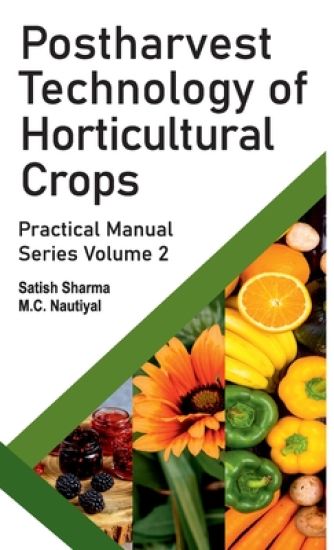
Postharvest Technology of Horticultural Crops

Postharvest Technology of Horticultural Crops

Sharma Kumar Satish

New India Publishing Agency
2021
sidottu
The book serves as a comprehensive, ready-reference manual for both students and teachers involved in undergraduate and postgraduate programs in the field of horticulture and postharvest technology. Spanning 33 chapters, the book covers a wide range of topics, including an introduction to equipment and machinery, maturity indices, pre-storage treatments, low-cost storage technologies, and processing and value-added products such as jams, jellies, marmalades, beverages, pickles, chutneys, tomato products, and canned fruits and vegetables. The book also covers cut-out analysis and the preparation of cider, as well as vase life analysis of flowers, physicochemical and sensory analysis of fresh and processed products. Additionally, ten annexures have been included that provide helpful information on fruit product orders, temperature corrections for measuring TSS, maturity indices, and units of conversion, as well as a guide to preparing cleaning and chemical solutions, food additives, and information on suppliers of machinery and equipment. The book has been written in simple language, with separate instructions for students, teachers, and relevant information on each topic to make the conduct of practical experiments easy and systematic. The book also includes color plates of some of the machinery and equipment to aid identification, even if the equipment or machinery is not available in a particular laboratory. This book aims to fulfill the long-standing need for practical manuals on various aspects of postharvest technology in horticultural crops, and it will be of great use to students, researchers, teachers, and anyone with an interest in the subject.
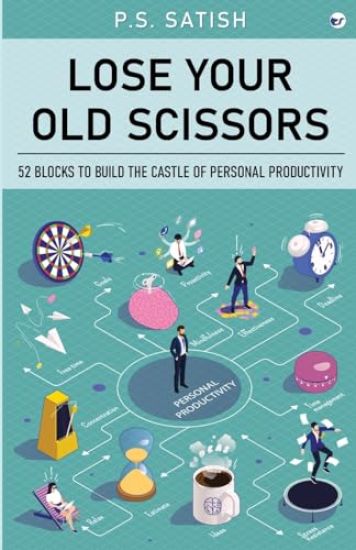
Lose your old scissors: 52 aspects to lead oneself through personal productivity
I am a Corporate Trainer and Mentor for Industries, Individuals, and Institutions. I have shared in this book aspects related to enhancing personal productivity to lead yourself, which I have personally used over the years. 52 Chapters signify 52 weeks of the year. Each of 52 individual flowers represents personal productivity ideas and practices, making a bouquet. A wonderful present you can give yourself. This book is for you, if the answer is YES for any one of the following questions --Do you want to achieve more and be successful in your life and career?-Are you curious to know ways to enhance your personal productivity to be a better version of yourself?-Do you want to lead a more fulfilled life?-Are you keen to exploit your potential and capability fully?-Do you want to be more effective in your work?-How can you incorporate daily practices and reflections to enhance your competencies?-Do you feel that you can do more than what you are doing now?
Andragogical Interventions

Andragogical Interventions

Krishna Nath Pandey Satish Chandra

Zorba Books
2023
nidottu
Andragogical Interventions Higher Education in India Chapter 1 Introduction 1.1 Statement of the Problem 1.2 Research Objectives 1.3 Research Gaps 1.4 Research Questions 1.5 Scope of the Study 1.6 Significance of the Study 1.7 Organization of the Research Chapter 2 Context 2.1 Key Concepts of Flipped Learning Pedagogy and Its Evolvement 2.1.1 Historical Background 2.1.2 The Concept of Flipped Learning 2.1.3 Misconceptions about Flipped Learning 2.2 Theoretical Frameworks 2.3 Rising Interest in Flipped Learning Pedagogy 2.3.1 Research Studies on the Effects of Flipped Learning 2.3.2 Motivations to Apply Flipped Learning in Higher Education 2.3.3 Challenges and Barriers Faced in Flipped Learning 2.5 Pedagogical Framework and Course Design for Flipped Learning 2.6 Factors Impacting the Adoption of the Flipped Classroom 2.7 Strategies for Successful Implementation of Flipped Learning 2.8 Flipped Learning Use in Higher Education in India - Current Status and Challenges 2.9 Conceptual Framework of Flipped Learning in the Indian Context Chapter 3 Research Methodology 3.1 Research Design 3.1.1 Study Area 3.1.2 Data Sources 3.1.3 Rapid Appraisal Methodology 3.1.4 Questionnaire Survey 3.2 Unit of Analysis 3.3 Data Collection and Tools 3.3.1 Case Study of JIS College of Engineering, Kalyani, India 3.3.2 Interviews with Key Informants 3.3.3 Focus Group Discussion. 3.3.4 Questionnaire Survey, Sample Size, and Reliability Chapter 4 Findings and Analysis 4.1 Application of Flipped Learning Pedagogy in Higher Education in India 4.1.1 Findings and Observations from a Visit to a College in India . 4.1.2 Findings from the Interviews 4.1.3 Findings from the Focus Group Discussion 4.2 Key Drivers for the Adoption of Flipped Learning 4.2.1 Findings and Descriptive Analysis 4.2.1.1 Breakdown of Respondents 4.2.1.2 Awareness of Flipped Learning 4.2.1.3 Experience with Flipping a Course 4.2.1.4 Educator Perspective on Students in Flipped Learning 4.2.1.5 Institutional Support 4.2.1.6 Challenges to Flip Courses 4.2.1.7 The Indian Context 4.2.2 Factor Analysis 4.3 Challenges Faced in Adoption of Flipped Learning in Higher Education in India 4.3.1 Total Interpretative Structural Modeling 4.3.1.1 Methodology for Challenges Identification and Validation 4.3.2 TISM Methodology and Model Development 4.4 Framework for Effective Implementation of Flipped Learning in Higher Education in India Chapter 5 Conclusion 5.1 Findings and Recommendations 5.2 Conclusion 5.3 Policy Recommendations and Actions for Indian Higher Education Institutes 5.4 Future Research