Kirjojen hintavertailu. Mukana 11 944 791 kirjaa ja 12 kauppaa.

Kirjahaku

Etsi kirjoja tekijän nimen, kirjan nimen tai ISBN:n perusteella.

1000 tulosta hakusanalla Stephanie Modell

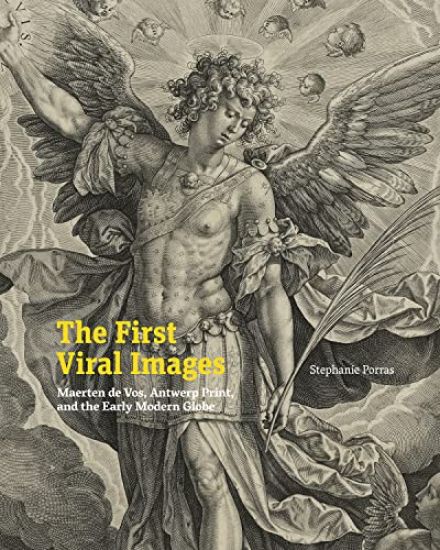
The First Viral Images

The First Viral Images

Stephanie Porras

Pennsylvania State University Press
2024
pokkari
As a social phenomenon and a commonplace of internet culture, virality provides a critical vocabulary for addressing questions raised by the global mobility and reproduction of early modern artworks. This book uses the concept of virality to study artworks’ role in the uneven processes of early modern globalization.Drawing from archival research in Asia, Europe, and the Americas, Stephanie Porras traces the trajectories of two interrelated objects made in Antwerp in the late sixteenth century: Gerónimo Nadal’s Evangelicae historiae imagines, an illustrated devotional text published and promoted by the Society of Jesus, and a singular composition by Maerten de Vos, St. Michael the Archangel. Both were reproduced and adapted across the early modern world in the seventeenth century. Porras examines how and why these objects traveled and were adopted as models by Spanish and Latin American painters, Chinese printmakers, Mughal miniaturists, and Filipino ivory carvers. Reassessing the creative labor underpinning the production of a diverse array of copies, citations, and reproductions, Porras uses virality to elucidate the interstices of the agency of individual artists or patrons, powerful gatekeepers and social networks, and economic, political, and religious infrastructures. In doing so, she tests and contests several analytical models that have dominated art-historical scholarship of the global early modern period, putting pressure on notions of copying, agency, context, and viewership. Vital and engaging, The First Viral Images sheds new light on how artworks, as agents of globalization, navigated and contributed to the emerging and intertwined global infrastructures of Catholicism, commerce, and colonialism.

The Pursuit of Race and Gender Equity in American Academe

The Pursuit of Race and Gender Equity in American Academe

Stephanie L. Witt

Praeger Publishers Inc
1990
sidottu
This volume explores American attitudes toward affirmative action policies through an extensive study of a national sample of university faculty. By examining views about affirmative action in academia within a framework that outlines the larger issues involved in using affirmative action to promote equality of opportunity for historical victims of discrimination, Stephanie Witt offers new insights into the competing values in American society which the policy of affirmative action serves to bring into conflict. She finds important differences in the perceptions of white males as opposed to those of protected categorical groups in regard to affirmative action, findings which suggest that further progress toward gender and racial equality via affirmative action may be slow in coming. The analysis also includes an extended treatment of the impact of recent Supreme Court decisions on affirmative action.Witt begins by providing a general overview of the policy of affirmative action as expressed in the official statements and policy clarifications supplied by the U.S. Commission on Civil Rights. She then examines the historical progress--or lack thereof--made in increasing the numbers of women and minority faculty in American universities in recent decades. Two chapters explore the conflict between competing values of individualism and egalitarianism which are thrown into sharp relief by affirmative action policies. The remaining chapters are devoted to an in-depth analysis of the empirical data derived from the study. Witt's results indicate that the objective self-interest of the respondent--whether he or she is a white male or a member of a protected minority--is the most predictive factor of his or her views toward affirmative action policies. Policymakers as well as scholars in women's studies and ethnic studies will find Witt's work a sobering assessment of the progress that can be expected from affirmative action programs.
Sharpened Edge

Sharpened Edge

Stephanie Athey

Praeger Publishers Inc
2003
sidottu
This collection of essays examines the relationship of women of color's armed resistance to their aesthetic struggles, tension and transformation in feminist practice, and the impact of the gender-based design of state-sponsored terror, human rights debates, and the economic development for women of color.Athey brings together new scholarship testing the possibility of transnational feminist action and theorizing historical and contemporary aspects of resistance for women of color. Included are essays by and about women of Africa, India, and the Americas, including women of African American, Chicana, Puerto Rican, and Yaqui origins. Essays examine regional and historical contexts to demonstrate the central role of women of color in armed resistance struggle and in sustaining cultures of resistance, despite the fact that the agency, speech, and writing of women of color have received the least attention in studies of resistance.Contributors challenge thinking across many disciplines: sociology, literary and cultural studies, history, political science, and education. Resistance struggles examined include women in armed struggle for national self-determination, political and economic struggle for human rights and against state-sponsored repression; and women sustaining political and cultural resistance against specific religious, feminist, or nationalist doctrines, and against the repression of multiple forms of political, sexual, intellectual, and artistic expression.
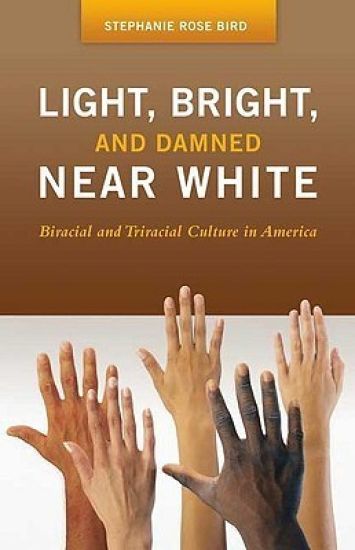
Light, Bright, and Damned Near White

Light, Bright, and Damned Near White

Stephanie R. Bird

Praeger Publishers Inc
2009
sidottu
The election of America's first biracial president brings the question dramatically to the fore. What does it mean to be biracial or tri-racial in the United States today? Anthropologist Stephanie Bird takes us into a world where people are struggling to be heard, recognized, and celebrated for the racial diversity one would think is the epitome of America's melting pot persona. But being biracial or tri-racial brings unique challenges - challenges including prejudice, racism and, from within racial groups, colorism. Yet America is now experiencing a multiracial baby boom, with at least three states logging more multiracial baby births than any other race aside from Caucasians. As the Columbia Journalism Review reported, American demographics are no longer black and white. In truth, they are a blended, difficult-to-define shade of brown.Bird shows us the history of biracial and tri-racial people in the United States, and in European families and events. She presents the personal traumas and victories of those who struggle for recognition and acceptance in light of their racial backgrounds, including celebrities such as golf expert Tiger Woods, who eventually quit trying to describe himself as Cablanasin, a mix including Asian and African American. Bird examines current events, including the National Mixed Race Student Conference, and the push to dub this Generation MIX. And she examines how American demographics, government, and society are changing overall as a result. This work includes a guide to tracing your own racial roots.
Discovering Folk Music

Discovering Folk Music

Stephanie P. Ledgin; Gregg Spiridellis; Evan Spiridellis

Praeger Publishers Inc
2010
sidottu
From Ani DiFranco to Bob Dylan to Woodie Guthrie, American folk music comprises a truly diverse and rich tradition—one that's almost impossible to define in broad terms. This book explains why folk music is still highly relevant in the digital age. From indigenous music to Pete Seeger and Bruce Springsteen singing "This Land Is Your Land" side-by-side at the pre-inaugural concert for our first African American president, folk music has been at the center of America's history. Thomas Jefferson wooed his bride-to-be with fiddle playing. Stephen Foster captured the mood of our country in transition. The Carter Family adapted music from across the pond to Appalachia. Paul Robeson carried folk music of many lands to the world stage. Woody Guthrie's dust bowl ballads spoke to the common man, while Sixties protest music put folk on the map, following the Kingston Trio's hit, "Tom Dooley." Folk music has evolved with America's changing landscape, celebrating its multi-cultural traditions. From Irish step dancers to rap, parlor songs to Dixieland, blues to classical, Discovering Folk Music presents the genre as surprisingly diverse, every bit the product of our national melting pot. Demonstrating continuing relevance of folk music in our everyday lives, the book spotlights an amazing array of personalities, with special emphasis on the folk revival era when Dylan, Baez, Odetta, and Peter, Paul and Mary sang out. These and others influenced such contemporary performers as Shawn Colvin and Ani DiFranco. Those on today's "fringes of folk" scene continue to look to these deep roots while embracing alternative sounds. Included are interviews with such legendary artists as Janis Ian, Tom Paxton, and Jean Ritchie. Nora Guthrie, Woody's daughter, also weighs in. Discovering Folk Music is a ground-breaking look at 21st-century folk music in our rapidly changing digital world, family friendly while ripe for rediscovery by the Woodstock generation.
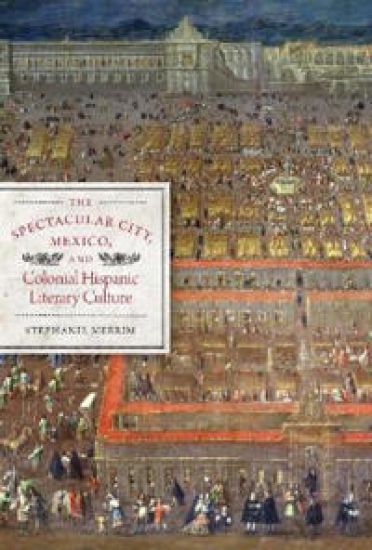
The Spectacular City, Mexico, and Colonial Hispanic Literary Culture
Winner, Katherine Singer Kovacs Prize, Modern Language Association, 2010The Spectacular City, Mexico, and Colonial Hispanic Literary Culture tracks the three spectacular forces of New World literary culture-cities, festivals, and wonder-from the sixteenth to the seventeenth century, from the Old World to the New, and from Mexico to Colombia, Peru, and Bolivia. It treats a multitude of imperialist and anti-imperialist texts in depth, including poetry, drama, protofiction, historiography, and journalism. While several of the landmark authors studied, including HernÁn CortÉs and Sor Juana InÉs de la Cruz, are familiar, others have received remarkably little critical attention. Similarly, in spotlighting creole writers, Merrim reveals an intertextual tradition in Mexico that spans two centuries. Because the spectacular city reaches its peak in the seventeenth century, Merrim's book also theorizes and details the spirited work of the New World Baroque. The result is the rich examination of a trajectory that leads from the Renaissance ordered city to the energetic revolts of the spectacular city and the New World Baroque.
Forests of Belonging

Forests of Belonging

Stephanie Karin Rupp

University of Washington Press
2011
sidottu
Forests of Belonging examines the history and ongoing transformation of ethnic and social relationships among four distinct communities--Bangando, Baka, Bakwéle, and Mbomam--in the Lobéké forest region of southeastern Cameroon. By slotting forest communities into ecological categories such as "hunters" and "gatherers," previous analyses of social relationships in tropical forests have resulted in binary frameworks that render real-life relationships invisible and that have perpetuated correspondingly misleading labels, such as "pygmy." Through rich descriptive detail resulting from field work among the Bangando, Stephanie Rupp illustrates the complexity of social ties among groups and individuals, and their connections with the natural world. She demonstrates that social and ethno-ecological relations in equatorial African forests are nuanced, contested, and shifting, and that the intricacy of these links must be considered in the design and implementation of aid policies and strategies for conservation and development.
Forests of Belonging

Forests of Belonging

Stephanie Karin Rupp

University of Washington Press
2011
pokkari
Forests of Belonging examines the history and ongoing transformation of ethnic and social relationships among four distinct communities--Bangando, Baka, Bakwéle, and Mbomam--in the Lobéké forest region of southeastern Cameroon. By slotting forest communities into ecological categories such as "hunters" and "gatherers," previous analyses of social relationships in tropical forests have resulted in binary frameworks that render real-life relationships invisible and that have perpetuated correspondingly misleading labels, such as "pygmy." Through rich descriptive detail resulting from field work among the Bangando, Stephanie Rupp illustrates the complexity of social ties among groups and individuals, and their connections with the natural world. She demonstrates that social and ethno-ecological relations in equatorial African forests are nuanced, contested, and shifting, and that the intricacy of these links must be considered in the design and implementation of aid policies and strategies for conservation and development.
Horace Between Freedom and Slavery

Horace Between Freedom and Slavery

Stephanie McCarter

University of Wisconsin Press
2015
sidottu
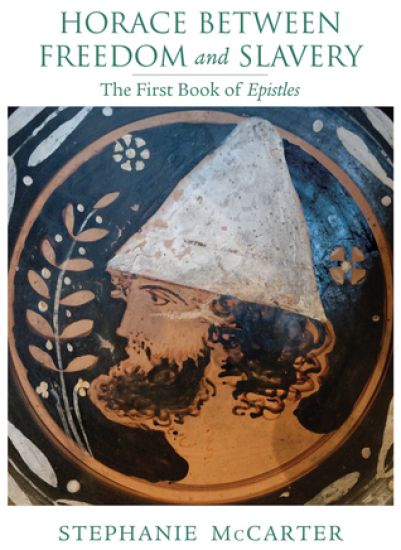
During the Roman transition from Republic to Empire in the first century B.C.E., the poet Horace found his own public success in the era of Emperor Augustus at odds with his desire for greater independence. In Horace between Freedom and Slavery, Stephanie McCarter offers new insights into Horace’s complex presentation of freedom in the first book of his Epistles and connects it to his most enduring and celebrated moral exhortation, the golden mean.She argues that, although Horace commences the Epistles with an uncompromising insistence on freedom, he ultimately adopts a middle course. She shows how Horace explores in the poems the application of moderate freedom first to philosophy, then to friendship, poetry, and place. Rather than rejecting philosophical masters, Horace draws freely on them without swearing permanent allegiance to any—a model for compromise that allows him to enjoy poetic renown and friendships with the city’s elite while maintaining a private sphere of freedom. This moderation and adaptability, McCarter contends, become the chief ethical lessons that Horace learns for himself and teaches to others. She reads Horace’s reconfiguration of freedom as a political response to the transformations of the new imperial age.
Horace between Freedom and Slavery

Horace between Freedom and Slavery

Stephanie McCarter

University of Wisconsin Press
2015
nidottu
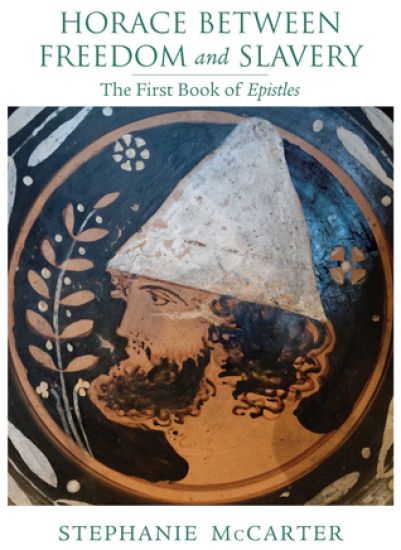
During the Roman transition from Republic to Empire in the first century B.C.E., the poet Horace found his own public success in the era of Emperor Augustus at odds with his desire for greater independence. In Horace between Freedom and Slavery, Stephanie McCarter offers new insights into Horace's complex presentation of freedom in the first book of his Epistles and connects it to his most enduring and celebrated moral exhortation, the golden mean. She argues that, although Horace commences the Epistles with an uncompromising insistence on freedom, he ultimately adopts a middle course. She shows how Horace explores in the poems the application of moderate freedom first to philosophy, then to friendship, poetry, and place. Rather than rejecting philosophical masters, Horace draws freely on them without swearing permanent allegiance to any--a model for compromise that allows him to enjoy poetic renown and friendships with the city's elite while maintaining a private sphere of freedom. This moderation and adaptability, McCarter contends, become the chief ethical lessons that Horace learns for himself and teaches to others. She reads Horace's reconfiguration of freedom as a political response to the transformations of the new imperial age.
Listen. Write. Present.

Listen. Write. Present.

Stephanie Roberson Barnard; Deborah St James

Yale University Press
2012
pokkari
Even the best ideas have little value if they are not explained clearly, concisely, and convincingly to others. Scientists, engineers, health care professionals, and technology specialists become leaders in their fields not just by way of discovery, but by communication. In this essential book, two seasoned communication consultants offer specific, focused advice to help professionals develop, improve, and polish their interpersonal communication, writing, and presentation skills. The authors explain exactly how to manage multiple projects and interactions, collaborate with colleagues and others, gain support for ideas through presentations and proposals, and much more.
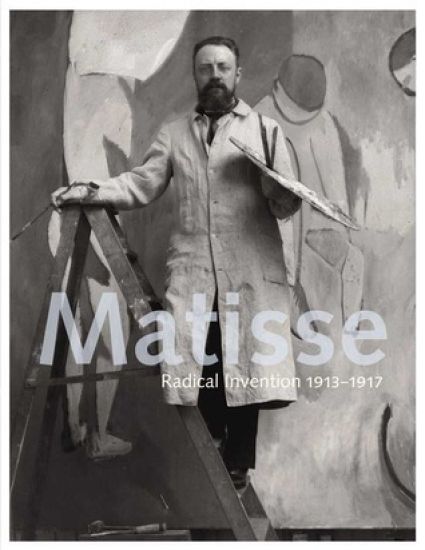
Matisse

Matisse

Stephanie D'Alessandro; John Elderfield

Yale University Press
2011
pokkari
A major reassessment of a critical moment in the work of one of the 20th century’s most important artists The works that Henri Matisse (1869–1954) executed between late 1913 and 1917 are among his most demanding, experimental, and enigmatic. Often sharply composed, heavily reworked, and dominated by the colors black and gray, these compositions are rigorously abstracted and purged of nearly all descriptive detail. Although they have typically been treated as unrelated to one another, as aberrations within the artist’s oeuvre, or as singular responses to Cubism or World War I, Matisse: Radical Invention, 1913–1917 reveals the deep connections among them and their critical role in an ambitious, cohesive project that took the act of creation itself as its main focus.This book represents the first sustained examination of Matisse’s output from this important period, revealing fascinating information about his working method, experimental techniques, and compositional choices uncovered through extensive new historical, technical, and scientific research. The lavishly illustrated volume is published to accompany a major exhibition consisting of approximately 125 paintings, sculptures, drawings, and prints. It features in-depth studies of individual works such as Bathers by a River and The Moroccans, which Matisse himself counted as among the most pivotal of his career, and facilitates a greater understanding of the artist’s innovative process and radical stylistic evolution.Distributed for the Art Institute of ChicagoExhibition Schedule:Art Institute of Chicago (March 20 – June 6, 2010)Museum of Modern Art, New York (July 18 – October 11, 2010)
Heroic Failure and the British

Heroic Failure and the British

Stephanie Barczewski

Yale University Press
2016
sidottu
From the Charge of the Light Brigade to Scott of the Antarctic and beyond, it seems as if glorious disaster and valiant defeat have been essential aspects of the British national character for the past two centuries. In this fascinating book, historian Stephanie Barczewski argues that Britain’s embrace of heroic failure initially helped to gloss over the moral ambiguities of imperial expansion. Later, it became a strategy for coming to terms with diminishment and loss. Filled with compelling, moving, and often humorous stories from history, Barczewski’s survey offers a fresh way of thinking about the continuing legacy of empire in British culture today.
They Were Her Property

They Were Her Property

Stephanie E. Jones-Rogers

Yale University Press
2020
pokkari
Winner of the Los Angeles Times Book Prize in History: a bold and searing investigation into the role of white women in the American slave economy “Stunning.”—Rebecca Onion, Slate “Makes a vital contribution to our understanding of our past and present.”—Parul Sehgal, New York Times “Bracingly revisionist. . . . [A] startling corrective.”—Nicholas Guyatt, New York Review of Books Bridging women’s history, the history of the South, and African American history, this book makes a bold argument about the role of white women in American slavery. Historian Stephanie E. Jones-Rogers draws on a variety of sources to show that slave-owning women were sophisticated economic actors who directly engaged in and benefited from the South’s slave market. Because women typically inherited more slaves than land, enslaved people were often their primary source of wealth. Not only did white women often refuse to cede ownership of their slaves to their husbands, they employed management techniques that were as effective and brutal as those used by slave-owning men. White women actively participated in the slave market, profited from it, and used it for economic and social empowerment. By examining the economically entangled lives of enslaved people and slave-owning women, Jones-Rogers presents a narrative that forces us to rethink the economics and social conventions of slaveholding America.
We Were Here: A History of Black People and Alternative Music
A long-overdue corrective to the history of rock 'n' roll and alternative music, repopulating it with the extraordinary Black artists and influential figures who steered its course The history of rock and roll and alternative music is often told in bold, sweeping, isolated moments that are removed from the context of their time. Upon closer inspection, however, it becomes clear that the stories we tell center primarily on the achievements of white men like Elvis Presley, The Ramones, Nirvana, and David Bowie. White men who were the stars, white men who supposedly changed the game, white men who seemingly were at the forefront of every musical innovation in the 20th and 21st centuries. These rock and roll retellings perpetuate the belief that white men were the most important people to wield a guitar, strut on stage, or pound out a pummeling drumbeat. What is missing in these stories is everything in between--the people, the places, and the scenes that connect the dots--and you can't tell the history of any music scene, let alone alternative music, without the Black community. In We Were Here: A History of Black People and Alternative Music, author, journalist, and musician Stephanie Phillips, the singer and guitarist of British post punk band Big Joanie, presents readers with a revised history of rock and roll and alternative music, repopulating it with the extraordinary Black artists and influential figures who truly steered its course. From the genre's earliest moments, Black musicians--like gospel entertainer Sister Rosetta Tharpe in the 1930s-40s and rock and roll legend Chuck Berry in the 1950s--have consistently pushed musical boundaries that forever impacted the music that followed. Throughout the decades, numerous Black entertainers continued to add their take on rock and alternative genres, expanding and building on what was already there to create what we know as alternative music today: look no further than the electric fire of Jimi Hendrix's guitar licks in the '60s, the kaleidoscopic melee of hardcore and reggae that was Bad Brains in the late '70s, and the funkadelic swagger of Living Colour in the '80s. Despite their groundbreaking contributions, why have Black musicians been so neglected from the historical canon? Is alternative music still seen as a white genre, and how are Black musicians and fans making space for themselves in the music scenes they love? This book tells the story of Black artists performing in alternative genres from punk to rock and roll, indie to new wave, alongside their Black fans. Through brand new interviews and meticulous research, Phillips documents the history of Black people's influence on these genres, highlighting the key players, assessing the legacy of their work, and drawing attention to those who have been obscured from history. Where rock magazines and music books previously omitted or misunderstood the stories of Black artists and fans, this book centers their voices and attempts to right the wrongs of the past. Along the way, Phillips infuses her own coming-of-age story as a Black female musician in the punk scene, alongside a cultural analysis of rock and alternative music history.
Healing from Toxic Relationships

Healing from Toxic Relationships

Stephanie M Sarkis

Hachette Books
2022
pokkari
Surviving and escaping a toxic or abusive relationship can often only be part of the struggle. Long after, survivors often struggle to heal; your self-esteem may be damaged, you may feel rage and betrayal, and you may punish and/or blame yourself. The author of Gaslighting and specialist in toxic behavior, narcissistic abuse, and personality disorders, Dr. Stephanie Sarkis has seen it all--and she is here to help you understand how to move forward. In Healing from Toxic Relationships, Dr. Sarkis extends compassion and knowledge to survivors, helping you understand the underpinnings of toxic behavior and how to find peace.Highlighting ten essential steps, Dr. Sarkis provides survivors with an accessible framework that can be applied to anyone preparing to heal: 1. Block or Limit Contact2. Create Your Own Closure3. Forgive Yourself4. Establish Boundaries5. Talk to a Professional6. Practice Self-Care7. Reconnect8. Grieve9. Look Outward10. Prevent: Keeping Toxic People AwayAnyone who is in a toxic relationship-whether it's with a romantic partner, colleague, family member, or friend-deserves a way out and a path forward. Dr. Sarkis offers help and hope.
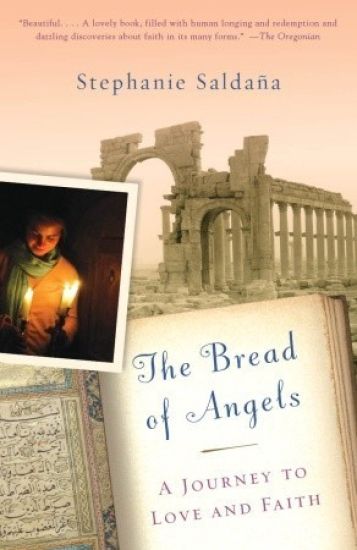
The Bread of Angels

The Bread of Angels

Stephanie Saldana

Random House Inc
2011
pokkari
A riveting memoir about one woman's journey into Syria under the Baathist regime and an unexpected love story between two strangers searching for meaning. When Stephanie Saldana arrives in Damascus, she is running away from a broken heart and a haunted family history that she has crossed the world to escape. Yet as she moves into a tumbling Ottoman house in the heart of the Old City, she is unprepared for the complex world that awaits her: an ancient capital where Sunni and Shia Muslims, Christians, Alawites, Kurds, and Palestinian and Iraqi refugees share a fragile co-existence. Soon she is stumbling through the Arabic language, fielding interviews from the secret police, and struggling to make the city her own. But as the political climate darkens and the war in neighboring Iraq threatens to spill over, she flees to an ancient Christian monastery carved into the desert cliffs, where she is forced to confront the life she left behind. Soon she will meet a series of improbable teachers: an iconoclastic Italian priest, a famous female Muslim sheikh, a wounded Iraqi refugee, and Frederic, a young French novice monk who becomes her best friend. What follows is a tender story of a woman falling in love: with God, with her own life, with a country on the brink of chaos, and with a man she knows she can never have. Wise, funny, and heartbreaking, "The Bread of Angels "celebrates the hope that appears even in war, the surprising places we can call home, and the possibility of true love.
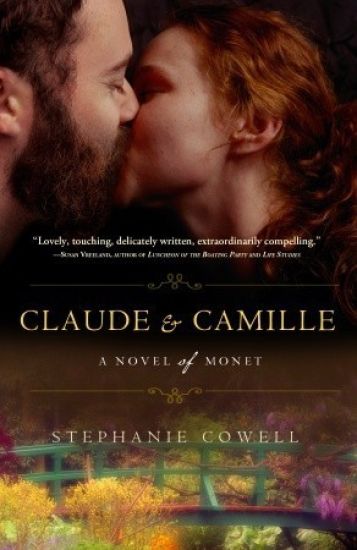
Claude & Camille: A Novel of Monet

Claude & Camille: A Novel of Monet

Stephanie Cowell

Crown Publishing Group (NY)
2011
nidottu
A vividly-rendered portrait of both the rise of Impressionism and of the artist at the center of the movement, Claude and Camille is above all a love story of the highest romantic order. In the mid-nineteenth century, a young man named Claude Monet decided that he would rather endure a difficult life painting landscapes than take over his father's nautical supplies business in a French seaside town. Against his father's will, and with nothing but a dream and an insatiable urge to create a new style of art that repudiated the Classical Realism of the time, he set off for Paris. But once there he is confronted with obstacles: an art world that refused to validate his style, extreme poverty, and a war that led him away from his home and friends. But there were bright spots as well: his deep, enduring friendships with men named Renoir, C zanne, Pissarro, Manet--a group that together would come to be known as the Impressionists, and that supported each other through the difficult years. Even more illuminating was his lifelong love, Camille Doncieux, a beautiful, upper-class Parisian girl who threw away her privileged life to be by the side of the defiant painter and embrace the lively Bohemian life of their time. His muse, his best friend, his passionate lover, and the mother to his two children, Camille stayed with Monet--and believed in his work--even as they lived in wretched rooms and often suffered the indignities of destitution. But Camille had her own demons--secrets that Monet could never penetrate--including one that when eventually revealed would pain him so deeply that he would never fully recover from its impact.