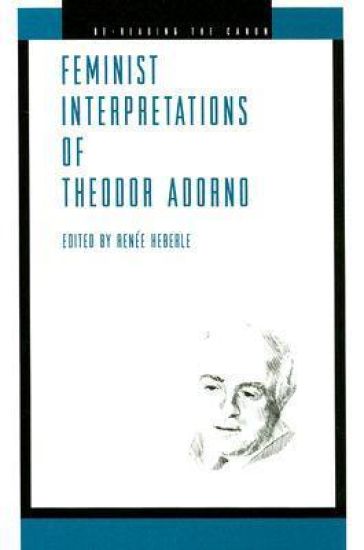
Adorno is often left out of the “canon” of influences on contemporary feminist theory, but these essays show that his work can provide valuable material for feminist thinking about a wide range of issues. Theodor Adorno was a leading scholar of the Institute for Social Research in Frankfurt, Germany, otherwise known as the Frankfurt School. With Max Horkheimer he contributed to the advance of critical theorizing about Enlightenment philosophy and modernity. Inflected by Kant, Marx, Nietzsche, and Freud, Adorno’s thinking defies easy categorization. Ranging across the disciplines of philosophy, musicology, and sociology, his work has had an impact in many fields. His Dialectic of Enlightenment (written with Max Horkheimer) was profoundly influential as a critique of fascistic and authoritarian impulses in Enlightenment thinking in the context of late capitalism.Questions addressed in the volume range from dilemmas in feminist aesthetic theory to the politics of suffering and democratic theory. The essays are exemplary as works in interdisciplinary scholarship, covering a wide range of issues and ideas in feminism as authors critically interpret the many facets of Adorno’s work. They take Adorno’s historical situatedness as a scholar into consideration while exploring the relevance of his ideas for post-Enlightenment feminist theory. His philosophical and cultural investigations inspire reconsideration of Enlightenment principles as well as a rethinking of “postmodern” ideas about identity and the self. Feminist Interpretations of Theodor Adorno will introduce feminists to Adorno’s work and Adorno scholars to modes of feminist critique. It will be especially valuable for senior undergraduate and graduate courses in contemporary political, social, and cultural theory. In addition to the editor, contributors are Paul Apostolidis, Mary Caputi, Rebecca Comay, Jennifer Eagan, Mary Ann Franks, Eva Geulen, Sora Han, Andrew Hewitt, Gillian Howie, Lisa Yun Lee, Bruce Martin, and Lambert Zuidervaart.
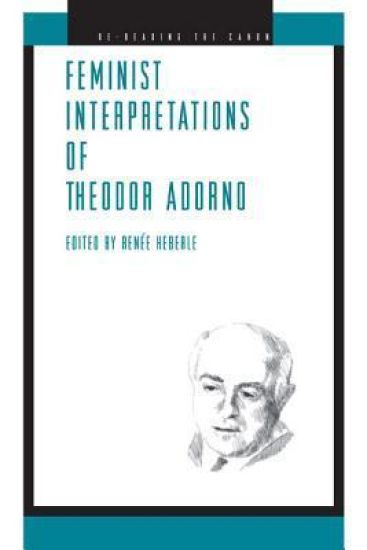
Adorno is often left out of the “canon” of influences on contemporary feminist theory, but these essays show that his work can provide valuable material for feminist thinking about a wide range of issues. Theodor Adorno was a leading scholar of the Institute for Social Research in Frankfurt, Germany, otherwise known as the Frankfurt School. With Max Horkheimer he contributed to the advance of critical theorizing about Enlightenment philosophy and modernity. Inflected by Kant, Marx, Nietzsche, and Freud, Adorno’s thinking defies easy categorization. Ranging across the disciplines of philosophy, musicology, and sociology, his work has had an impact in many fields. His Dialectic of Enlightenment (written with Max Horkheimer) was profoundly influential as a critique of fascistic and authoritarian impulses in Enlightenment thinking in the context of late capitalism.Questions addressed in the volume range from dilemmas in feminist aesthetic theory to the politics of suffering and democratic theory. The essays are exemplary as works in interdisciplinary scholarship, covering a wide range of issues and ideas in feminism as authors critically interpret the many facets of Adorno’s work. They take Adorno’s historical situatedness as a scholar into consideration while exploring the relevance of his ideas for post-Enlightenment feminist theory. His philosophical and cultural investigations inspire reconsideration of Enlightenment principles as well as a rethinking of “postmodern” ideas about identity and the self. Feminist Interpretations of Theodor Adorno will introduce feminists to Adorno’s work and Adorno scholars to modes of feminist critique. It will be especially valuable for senior undergraduate and graduate courses in contemporary political, social, and cultural theory. In addition to the editor, contributors are Paul Apostolidis, Mary Caputi, Rebecca Comay, Jennifer Eagan, Mary Ann Franks, Eva Geulen, Sora Han, Andrew Hewitt, Gillian Howie, Lisa Yun Lee, Bruce Martin, and Lambert Zuidervaart.
Up to the end of the nineteenth century, Germany largely perceived itself as "the nation of poets and philosophers." But with the enormous popularity of Schubert and Wagner, this began to change. Suddenly, composers also began to play a greater role in theories of national identity, and music theory became and important element of German thought. The essays in this volume reflect this, and are by a range of writers: Adorno, Bloch, Thomas Mann, Wachenroder, Herder, E. T. A. Hoffmann, Hegel, Bettina von Arnim, Nietzsche, Max Weber, Brecht, and others.
Theodor Adorno is a widely-studied figure, but most often with regard to his work on cultural theory, philosophy and aesthetics. The Sociology of Theodor Adorno provides the first thorough English-language account of Adorno's sociological thinking. Matthias Benzer reads Adorno's sociology through six major themes: the problem of conceptualising capitalist society; empirical research; theoretical analysis; social critique; the sociological text; and the question of the non-social. Benzer explains the methodological and theoretical ideas informing Adorno's reflections on sociology and illustrates Adorno's approach to examining social life, including astrology, sexual taboos and racial prejudice. Benzer clarifies Adorno's sociology in relation to his work in other disciplines and the inspiration his sociology took from social thinkers such as Marx, Weber, Durkheim, Kracauer and Benjamin. The book raises critical questions about the viability of Adorno's sociological mode of procedure and its potential contributions and challenges to current debates in social science.
Theodor Adorno is a widely-studied figure, but most often with regard to his work on cultural theory, philosophy and aesthetics. The Sociology of Theodor Adorno provides the first thorough English-language account of Adorno's sociological thinking. Matthias Benzer reads Adorno's sociology through six major themes: the problem of conceptualising capitalist society; empirical research; theoretical analysis; social critique; the sociological text; and the question of the non-social. Benzer explains the methodological and theoretical ideas informing Adorno's reflections on sociology and illustrates Adorno's approach to examining social life, including astrology, sexual taboos and racial prejudice. Benzer clarifies Adorno's sociology in relation to his work in other disciplines and the inspiration his sociology took from social thinkers such as Marx, Weber, Durkheim, Kracauer and Benjamin. The book raises critical questions about the viability of Adorno's sociological mode of procedure and its potential contributions and challenges to current debates in social science.
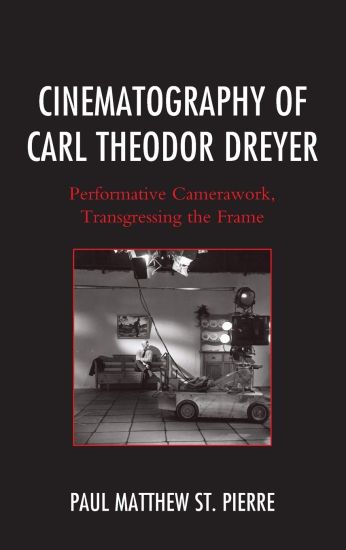
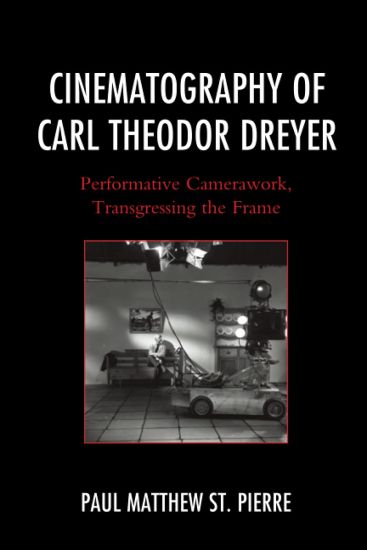
Legendary Danish filmmaker Carl Theodor Dreyer (3 February 1889-20 March 1968) was born in Copenhagen to a single mother, Josefine Bernhardine Nilsson, a Swede. His Danish father, Jens Christian Torp, a married farmer, employed Nilsson as a housekeeper. After spending his first two years in orphanages, Dreyer was adopted by Carl Theodor Dreyer, a typographer, and his wife, Inger Marie Dreyer. He was given his adoptive father’s name. At age 16, he renounced his adoptive parents and worked his way into the film industry as a journalist, title card writer, screenwriter, and director. Throughout his career he concealed his birth name and the details of his upbringing and his adult private life, which included a period in which he explored his homosexual orientation and endured a nervous breakdown. Despite his relatively small output of fourteen feature films and seven documentary short films, 1919-64, he is considered one of the greatest filmmakers in history because of the diversity of his subjects, themes, techniques, and styles, and the originality of the bold visual grammar he mastered. In Cinematography of Carl Theodor Dreyer: Performative Camerawork, Transgressing the Frame, I argue: 1) that Dreyer, an anonymous orphan, an unsourced subject, manufactured his individuality through filmmaking, self-identifying by shrouding himself in the skin of film, and 2) that, as a screenwriter-director who blocked entire feature films in his imagination in advance—sets, lighting, photography, shot breakdowns, editing—and imposed his vision on camera operators, lighting directors, actors, and crews in production, he saw filmmaking essentially as camerawork and he directed in the style of a performative cinematographer.
Legendary Danish filmmaker Carl Theodor Dreyer (3 February 1889-20 March 1968) was born in Copenhagen to a single mother, Josefine Bernhardine Nilsson, a Swede. His Danish father, Jens Christian Torp, a married farmer, employed Nilsson as a housekeeper. After spending his first two years in orphanages, Dreyer was adopted by Carl Theodor Dreyer, a typographer, and his wife, Inger Marie Dreyer. He was given his adoptive father’s name. At age 16, he renounced his adoptive parents and worked his way into the film industry as a journalist, title card writer, screenwriter, and director. Throughout his career he concealed his birth name and the details of his upbringing and his adult private life, which included a period in which he explored his homosexual orientation and endured a nervous breakdown. Despite his relatively small output of fourteen feature films and seven documentary short films, 1919-64, he is considered one of the greatest filmmakers in history because of the diversity of his subjects, themes, techniques, and styles, and the originality of the bold visual grammar he mastered. In Cinematography of Carl Theodor Dreyer: Performative Camerawork, Transgressing the Frame, I argue: 1) that Dreyer, an anonymous orphan, an unsourced subject, manufactured his individuality through filmmaking, self-identifying by shrouding himself in the skin of film, and 2) that, as a screenwriter-director who blocked entire feature films in his imagination in advance—sets, lighting, photography, shot breakdowns, editing—and imposed his vision on camera operators, lighting directors, actors, and crews in production, he saw filmmaking essentially as camerawork and he directed in the style of a performative cinematographer.
While Theodor Adorno has continued to be influential since his death in 1969, his very centrality has led to the left simplifying his ideas while the right placed him at the center of a myriad of wild conspiracy theories, all of them filed under the category of Cultural Marxism. Adorno has wrongly been blamed for everything from the Beatles to postmodernism, but he has continued to be read, if read badly. Stuart Walton's introduction to Adorno attempts to explain how this idiosyncratic thinker reframed elements of the Hegelian-Marxist dialectical in the fields of philosophy, sociology, politics and aesthetics and to rectify some of the major misunderstandings about Adorno and the Frankfurt School. When Walton began studying Adorno at Oxford in 1983 he felt that Adorno was nowhere in the English-speaking world, but that he should be everywhere. Now Adorno is everywhere, but hardly anywhere sufficiently or deeply understood.
This book discusses how from their different backgrounds and on different levels, the German philosopher, sociologist and musicologist,Theodor W. Adorno, (1903-1969) and the Irish playwright, Brian Friel,(1929-2015) came to the conclusion that the modern crisis rendered art’s affirmative essence, like all positivistic fixations, obsolete. Only a new conception of dialectics, based on the reciprocity of opposites, rather than on antitheses, is capable of healing modern dichotomies. Independent of Adorno’s Negative Dialectics and Critical Theory, Friel is aware that with the processual character of life this requires of the artist in particular an attitude both critical and conciliatory and a persistent readiness to change. Reality is in need of possibility, its dialectic other. Uncertainty, in Friel’s Theatre of Hope and Despair is no longer a defect of our time, but a source of creation in art as well as in life.


![Ein Beitrag Zu Theodor Storm's Stimmungskunst [Microform]](/covers/9781248120750.jpg)