UNLUCKY MONEYWhen Chinese American private-eye Wendy Lu takes on her first murder case, she doesn't realize how dangerous it's going to be. Probing into the murder of Susan Fontaine, the wife of her client, wealthy real-estate developer Whit Fontaine-the primary suspect in the case-Wendy fights to prove he was framed. Wendy used to be a cop but quit after a rookie mistake caused the death of her partner. Now she leads a more traditional life, dealing with her guilt, feeling she has disappointed her parents. Yet despite hostility from Fontaine's arrogant business partner, opposition from the police, and violent threats on her life, she perseveres in the case.And that's when Wendy discovers things that Fontaine, his partner Tom McKenna, and even Ryan Connolly, the police detective in charge of the murder investigation, would like to keep secret-that Fontaine-McKenna Associates is using criminal-syndicate money to finance the casino the firm wants to build. Now she is forced to use everything she's learned just to stay alive.
The third, and final, book in 'The Ramblings Begin..' series. This series was intended to give introduction to the perspective of the Bipolar Punkrock Redneck Hippie.Words that help to describe the way my bipolar affects the way I think and the ramblings that go through my head.These words might make you cry. They might make you laugh. They might just confuse the heck out of you Whatever thoughts and emotions you may experience while reading these word rearrangements, please remember that there are many people who suffer from bipolar disorder along with so many other hidden illnesses, including many of the people you know... whether you know it or not. Please read and discuss, and if you are a sufferer, I encourage you to put your words out there The silence and stigma of mental illness will not go away if we are silent. Please #RecoverLoudly
The book on essays is for you if you prefer to learn by example rather than explanation or direction. The learning method is unique because it focuses on showing you, rather than telling you, how to write an essay. Fifteen different types of essays are defined and exemplified using five-paragraph mini-essays. The examples are for Analytical, Argumentative, Cause, Comparison and Contrast, Critical Analysis, Definition (Specific), Definition (Subjective), Descriptive, Effect, Expository, Illustration/exemplification, Narration, Persuasive, Process (Information), and Process (Direction) type essays. Each mini-essay has an introduction, body, and conclusion. Simply follow and expand upon the examples provided, and you will be able to write quality essays. The book on words for college papers and presentations lists words that can be used to create papers and presentations that are more academic or professional. Complex words are listed along with their meaning for easy understanding.
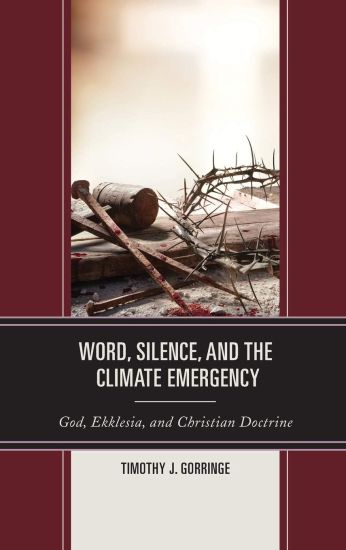
Word, Silence, and the Climate Emergency: God, Ekklesia, and Christian Doctrine is an exposition of Christian doctrine taking into account the current global emergency. Gorringe grounds our knowledge of God first in the revelation to the prophets and specifically in their political stance but above all in Jesus of Nazareth. God, or the NAME, Gorringe argues, is the antithesis of all the gods of projection, known in the silence of the cross and of the isolation cell. In a Triune format, the nature of God and the discourse of creation and providence are first considered before turning to the claim that “God was in Christ.” The final third of the book considers the nature and task of ekklesia, especially in the light of the global emergency which, Gorringe argues, is a confessional issue and the heart of ekklesia's present concern.
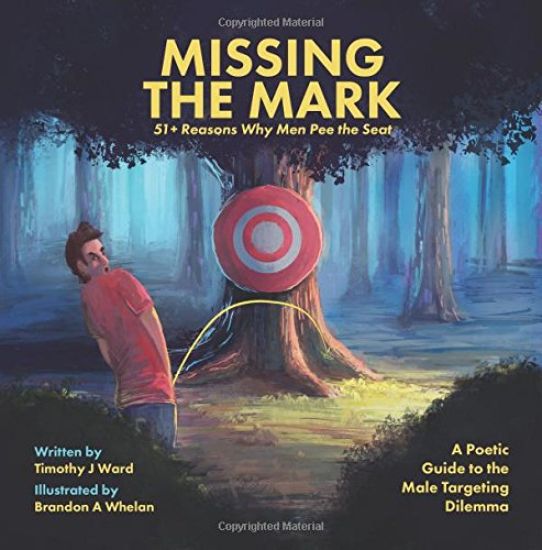
Finally There has been one topic that has vexed women for hundreds of years, and at last, it has been solved When men and boys use the bathroom, why does pee end up everywhere? Look no further than "Missing the Mark" a one-of-a-kind book of poetry that explains away one of life's biggest mysteries. Filled with beautiful and tastefully descriptive language, plenty of rhymes, and even an Italian sonnet, "Missing the Mark" hits the mark for literary excellence. With over 10 different types of poetry included in the book, "Missing the Mark" can (and should) be used in English classes around the world. Goodbye uninspiring, unrelatable topics from bygone eras that nobody cares about. Students would have a blast exploring various aspects of poetic craft all while admiring inspired artwork and making connections to their real, first-world problems. For the home bodies, "Missing the Mark" makes bathroom reading fun again In an age when nearly everyone brings their fancy technology into the bathroom, the time-honored tradition of reading print material when doing your business has fallen to the wayside and been flushed away. There is no better time to bring this back into style than now to bust out the old wicker basket and stuff it with a copy of this book. Just place it off the floor and out of the target zone. A great present for birthdays, Christmas, and of course, Valentine's day, "Missing the Mark" makes a great gift for all genders Men will marvel at the fact that someone captured what they've been trying to explain for years to all the women in their lives. They'll nod their heads in approval as they remember the times their streams went astray in the manner described. Women will finally understand, and maybe even sympathize with, their husbands, boyfriends, brothers, and/or sons. Without a doubt the funniest poetry book you will ever read, this book will turn even the most dull family gathering into a lively discussion that will be remembered forever. Snagging a copy of this book may be one of the best decisions you could ever make.
mom, dad and timmy are all gathered together, albeit in a scattered fashion, to break through the dark of dysfunctionality. the "lumpy" rug in the center stage is truly the main character of the play; mom, dad, and timmy are simply what lies underneath, yet visible to those who can see them. will they break through to "unlump" the rug that is their existence? welcome to the denial family; may you stay for the entire duration of timothy j. verret's kaleidoscope of an american family that might be yours?
A collection of short stories, essays and interviews in celebration of Candas Jane Dorsey. Contains work by Timothy J. Anderson, Greg Bechtel, Eileen Bell, Gregg Chamberlain, Alexandrea Flynn and Annalise Glinker, Barb Galler-Smith, Anita Jenkins, Laina Kelly, Derryl Murphy, John Park, Rhonda Parrish, Ursula Pflug, Robert Runt , Diane L. Walton, BD Wilson and S.G. Wong.
This is the first in-depth study of the foreign and defence policies of the Coalition, a government that saw the Conservatives restored to power for the first time since the Iraq War and the Liberal Democrats enter government for the first time. It explores the idea of Britain as a ‘Great Power’ since 1945 to show how the Coalition’s policies fitted into wider historical understandings of Britain’s role in the world. Drawing on a range of evidence from the time of the Coalition, it shows that this period was one of continued change in British foreign policy. The Coalition conducted the first strategic defence review since 1998, significantly reduced the funding allocations for defence and foreign affairs, raised overseas aid spending to record levels, engaged in overseas military action in two sovereign states (and were denied a chance to participate in another), as well as a wide array of other policies. This book argues that evaluating these events and the historical background of the Coalition is critical to understanding the current crises gripping British politics.
This is the first in-depth study of the foreign and defence policies of the Coalition, a government that saw the Conservatives restored to power for the first time since the Iraq War and the Liberal Democrats enter government for the first time. It explores the idea of Britain as a ‘Great Power’ since 1945 to show how the Coalition’s policies fitted into wider historical understandings of Britain’s role in the world. Drawing on a range of evidence from the time of the Coalition, it shows that this period was one of continued change in British foreign policy. The Coalition conducted the first strategic defence review since 1998, significantly reduced the funding allocations for defence and foreign affairs, raised overseas aid spending to record levels, engaged in overseas military action in two sovereign states (and were denied a chance to participate in another), as well as a wide array of other policies. This book argues that evaluating these events and the historical background of the Coalition is critical to understanding the current crises gripping British politics.
In the 1980’s sonochemistry was considered to be a rather restricted branch of chemistry mainly involving the ways in which ultrasound could improve synthetic procedures, predominantly in heterogeneous systems and particularly for organometallic reactions. This volume traces the evolution of sonochemistry from a century ago when the effects of acoustic cavitation were first reported almost as a scientific curiosity, through the 1980’s to the present. It describes the ways in which scientific interest grew rapidly during the 1990’s with the formation of the European Society of Sonochemistry in 1990 and the launch of a new journal Ultrasonics Sonochemistry in 1994. It also includes two chapters relating to the evolution of the subject as seen through the particular experiences of the authors Tim Mason and Mircea Vinatoru, both pioneers of sonochemistry. One chapter is devoted to the ultrasonically assisted extraction (UAE) of chemicals from plant material. This also illustrates the different ways in which sonochemical technologies can be applied in both batch and flow systems leading to the development of large-scale processing. The other chapter relating to environmental protection shows the wide range of applications of sonochemistry in this important field for both biological and chemical decontamination.
Benjamin Smith Lyman (1835–1920) was an American geologist and mining engineer who worked for the Japanese government as a foreign expert in the 1870s. He is famous among linguists for an article about a set of Japanese morphophonemic alternations known as rendaku (sometimes translated as “sequential voicing”). Lyman published this article in 1894, several years after he returned to the United States, and it contains a version of what linguists today call Lyman’s Law. This book includes a brief biography of Lyman and explains how an amateur linguist was able to make such a lasting contribution to the field. It also reproduces Lyman’s 1894 article as well as his earlier article on the pronunciation system of Japanese, each followed by extensive commentary. In addition, it offers an English translation of a thorough critique of Lyman’s 1894 article, published in 1910 by the prominent Japanese linguist Ogura Shinpei. Lyman’s work on rendaku included much more than just Lyman’s Law, and the final chapter of this book assesses all his proposals from the standpoint of a modern researcher.
In the 1980’s sonochemistry was considered to be a rather restricted branch of chemistry involving the ways in which ultrasound could improve synthetic procedures, predominantly in heterogeneous systems and particularly for organometallic reactions. Within a few years the subject began to expand into other disciplines including food technology, environmental protection and the extraction of natural materials. Scientific interest grew and led to the formation of the European Society of Sonochemistry in 1990 and the launch of a new journal Ultrasonics Sonochemistry in 1994. The subject continues to develop as an exciting and multi-disciplinary science with the participation of not only chemists but also physicists, engineers and biologists. The resulting cross-fertilisation of ideas has led to the rapid growth of interdisciplinary research and provided an ideal way for young researchers to expand their knowledge and appreciation of the ways in which different sciences can interact. It expands scientific knowledge through an opening of the closed doors that sometimes restrict the more specialist sciences. The journey of exploration in sonochemistry and its expansion into new fields of science and engineering is recounted in "Sonochemistry Evolution and Expansion" written by two pioneers in the field. It is unlike other texts about sonochemistry in that it follows the chronological developments in several very different applications of sonochemistry through the research experiences of the two authors Tim Mason and Mircea Vinatoru. Designed for chemists and chemical engineers Written by two experts and practitioners in the subject Volume 1 covers the historical background and evolution of sonochemistry Volume 2 explains the wider applications and expansion of the subject VOLUME 2 Applications and Developments Volume 2 contains six chapters which detail the developments of sonochemistry in fields which continue to attract considerable research and development interest from academia and industry. The topics range from the important developments in chemical synthesis through food technology and materials processing to therapeutic ultrasound. The authors have made contributions to all of these and so the content is written in a way which should be understandable to readers whose expertise may not necessarily be in the individual topic. Each of the applications and developments described help to illustrate not only the diverse nature of sonochemistry but also the unifying theme of the effects of acoustic cavitation on a wide range of procedures.
Timothy Wiarda examines the way Peter is portrayed in the narratives of the canonical gospels and reflects on the implications of that portrayal. He gives attention to aspects of Peter's individual characterization and his relationship with Jesus as well as to a recurring motif in which Peter makes a well intentioned move only to meet with rebuke, correction or failure. Timothy Wiarda draws several conclusions: a consistent and distinctive cluster of traits is associated with Peter in the gospel narratives; each of the evangelists displays specific interest in Peter as a character; and a model of conservative redaction rooted in the memory of the earliest Christians best explains the gospel presentation.In addition the author pays attention to methodology in his study. He offers fresh exegetical analysis of fifteen gospel episodes, seeking to demonstrate the importance of sensitivity to the immediate narrative scene and to details of characterization. He argues that such sensitivity can serve as corrective to approaches which move too quickly toward symbolic/theological interpretation while bypassing an episode's realistic portrayal of human responses and interactions. He further explores the interplay between story, rhetoric, and history. The author concludes that all three of these interests come together in the narrative material of the gospels and that there is no inherent obstacle to an integrating approach to interpretation.
Justification by faith alone defined teaching in Evangelical churches of the sixteenth century. In 1550 the former reformer of Nuremberg, Andreas Osiander (1498-1552), as a new professor of theology at the University of Königsberg in East Prussia, advocated a divergent understanding of that doctrine, arguing that a Christian's righteousness consisted of the indwelling of Christ's divine nature. In the ensuing years, almost all other Evangelical churches and theologians in German-speaking lands rejected his position. In this book Timothy J. Wengert studies their objections to Osiander's theology in detail, offering a theological perspective on the process of confessionalization among Lutherans in the period after Martin Luther's death in 1546 and before publication of the Book of Concord in 1580. Reactions against Osiander represented a singular literary event in the development of Evangelical churches in central Europe, with over 100 tracts for and against Osiander's position being published between 1551 and 1559. The lines between so-called "genuine" followers of Luther and backers of Philip Melanchthon disappeared, as nearly all Lutheran theologians joined in the attack. Timothy J. Wengert, after providing an outline of Osiander's position in an initial chapter, focuses on his opponents' published responses. Not only does he provide a detailed chronology for these tracts, he also looks at the various theological themes struck by their authors. Separate chapters pay special attention to the contributions of Gnesio-Lutherans (Joachim Mörlin, Matthias Flacius and Nicholas Gallus), to the very different approaches to the dispute pursued by Johannes Brenz and Philip Melanchthon, especially after Osiander's death, and to the struggle over Martin Luther's writings and their authority. Philip Melanchthon's contributions, especially a speech from 1551 and his 1556 commentary on Romans, are also examined.
Timothy J. Stone explores the canonical shape of the third part of the Hebrew canon, the Writings, challenging the common assumption that the collection is an anthology of unrelated books. First he analyzes the formation and various orders for the Writings in antiquity. Conceptions of sacred literature differed in Judaism, but within temple circles, the Writings and the Hebrew canon were likely solidified prior to the end of the first century. Despite the consensus that there are a large number of orders for the Writings, there is only evidence of the Masoretic and the Talmudic orders prior to the twelfth century. Stone also examines the books of the "Megilloth" for signs of their compilation, especially Ruth and Esther. He concludes that the codification of the "Megilloth" into a collection is integral to the canonical process and preserved in the shape of the Writings' ancient arrangements.