Kirjojen hintavertailu. Mukana 12 016 292 kirjaa ja 12 kauppaa.

Kirjahaku

Etsi kirjoja tekijän nimen, kirjan nimen tai ISBN:n perusteella.

1000 tulosta hakusanalla Virginia Woolf

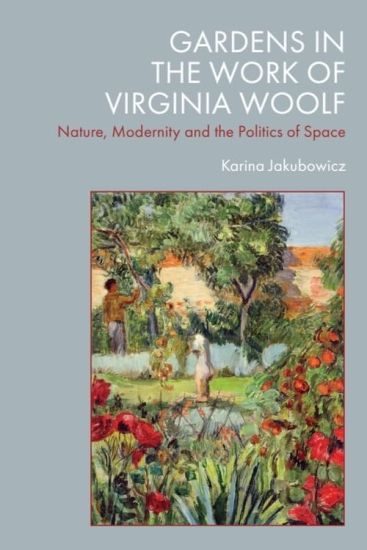
Gardens in the Work of Virginia Woolf

Gardens in the Work of Virginia Woolf

Karina Jakubowicz

EDINBURGH UNIVERSITY PRESS
2026
sidottu
This study reads Woolf’s fictional gardens in light of her development as a writer, tracing these spaces alongside elements of her personal life and her changing understanding of nature and space. In the course of this work, these locations are revealed to be emotionally and imaginatively charged, acting as vehicles for powerful sentiments and vital intellectual arguments. Through extensive examinations of texts including The Voyage Out, ‘Kew Gardens’, Jacob’s Room, Mrs Dalloway, To the Lighthouse and The Waves, this book frames Woolf’s literary gardens as expressive and innovative spheres that formed part of wider early twentieth-century attempts to reimagine nature and domesticity as vibrant, even radical, facets of modern life.
Wahrnehmung Und Perspektivik in Ausgewaehlten Romanen Virginia Woolfs
Die Bedeutung, die die Kommunikation mit dem Leser fur Virginia Woolf einnahm, wurde in der bisherigen Forschung unterschatzt. Diese Arbeit zeigt, dass in ihren Romanen uber die lebensweltliche Erfahrung der Wahrnehmung eine Kommunikationsbasis hergestellt wird. Die von den Figuren erfahrenen Gesetzmassigkeiten der Wahrnehmung und Erkenntnis gelten auch fur die Erzahlinstanz und werden ausserdem durch die Textgestaltung insgesamt reflektiert. Die Interpretationen ausgewahlter Romane in chronologischer Folge zeigen, dass in jedem der Texte ein anderer Aspekt der Thematik dominiert: in "The Voyage Out" der Diskurscharakter von Wirklichkeitsauffassungen und Ideologien, in "Jacob's Room" das Verhaltnis zwischen Kunst und Wirklichkeit und in "Mrs Dalloway" die Gegenuberstellung von komplexer Wirklichkeit und Vorstellung. In "The Waves" wirken verschiedene Aspekte zusammen: das Verhaltnis zwischen Wahrnehmung und leitmotivischem Bild, das Spannungsverhaltnis zwischen Personlichkeitskern und multipler Personlichkeit und die Interaktion der Textperspektiven."
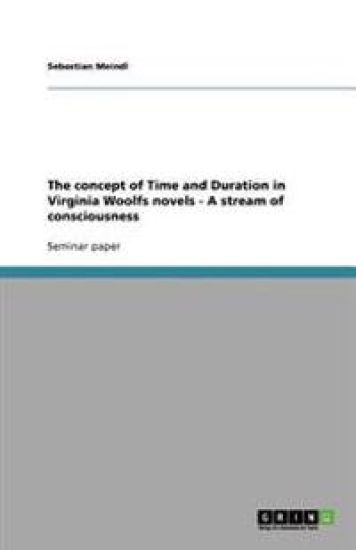
The concept of Time and Duration in Virginia Woolfs novels - A stream of consciousness
Seminar paper from the year 2008 in the subject English - Literature, Works, grade: 2.3, University of Regensburg (Anglistik und Amerikanistik), course: Proseminar Virginia Woolf und Jeanette Winterson, language: English, abstract: "I believe that all novels, that is to say, deal with character, and that it is to express character- not to preach doctrines, sing songs, or celebrate the glories of the British Empire, that the form of the novels, so clumsy, verbose, and undramatic, so rich and unelastic, and alive, has been evolved. To express character, I have said." Virginia Woolf made this "character expressing" to the centre of her work and brought it to perfection in her late novels. She began using a stream technique in Jacob's Room to describe characters' thoughts and feelings. In phase II she built her novels on characters' thoughts, formed the plot through description and characters mind progression. In To The Lighthouse Woolf let the plot progress through the developments of character. The Waves completely relies on the description of the characters' minds and is phase III of her development. "She reaches perfection in characters' thought and mind description" through the "stream of consciousness." The purpose of this work is to cover a basic approach on the stream technique Woolf uses in her novels, as well as embed some text passages in the psychological background William James and Henri Bergson gave in their theories. Bergson and James are both psychologists who gave way to theories oftime and duration, as well as to the theory of consciousness. Bergson, who was senior of William James, was highly influenced by James' work and it is said that Bergson's writing of Les donn es imm diates de la conscience was influenced by James' article "On Some Omissions of Introspective Psychology." Concurrently Bergson was highly regarded by James: "So modest and unpretending a man but such a genius intellectually I have the strongest suspicions that the tendency which
Konstitution Von Aesthetischen Sinnsystemen in Sieben Hauptwerken Virginia Woolfs
Vorrangiges Ziel dieser Arbeit ist es, Woolfs Oeuvre hinsichtlich seiner asthetischen Struktursysteme und seines utopisch-ideologischen Aussagegehalts werkintentional zu interpretieren. Die solchermassen erfassten Metonymiesysteme werden zueinander beziehungsweise zu einem, sich als strukturell analog erweisenden, philosophischen Hintergrund in jene Beziehung gesetzt, die schliesslich den noch entwicklungsfahigen Gedanken an die Ruckfuhrbarkeit der philosophischen und asthetischen Losungsvorschlage auf ubergreifende gesellschaftliche Sinndefizite nahelegt."
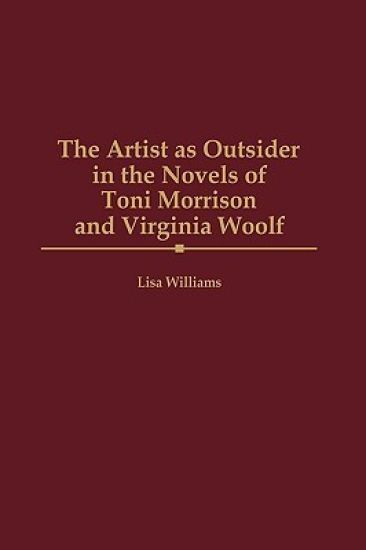
The Artist as Outsider in the Novels of Toni Morrison and Virginia Woolf
On first consideration, Nobel prize winning African-American author Toni Morrison would seem to have little in common with Virginia Woolf, the British writer who challenged Victorian concepts of womanhood. But Woolf's achievement and influence have been enduring, so much so that Morrison wrote her masters thesis on Woolf and William Faulkner. In that thesis, Morrison gives special attention to issues of isolation, and she notes that for Woolf, isolation brought a sense of freedom that the attached could never comprehend. This book examines the literary relationship between Woolf and Morrison. In her own novels, Morrison redefined Woolf's concept of isolation in terms of American racism. While Morrison's female characters are clearly outsiders, they can nevertheless experience a sense of community that Woolf's characters cannot. Woolf's female characters, on the other hand, are often alienated because of their repressed erotic longing for women. Both Morrison and Woolf consider the severe obstacles the female artist must encounter and overcome before she can create art. This volume looks at the similarities that link Morrison and Woolf together despite their racial, ethnic, national, and historical differences, and it examines how differing structures of domination define their art.
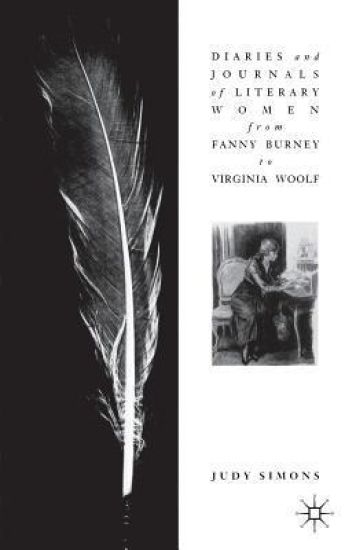
Diaries and Journals of Literary Women from Fanny Burney to Virginia Woolf
This highly original book investigates the part played by their personal writings in the lives of eight literary women. Can private journals provide information about their authors' public works? Do diaries dramatise the development of an individual literary `voice'? What was the special attraction of the diary form for women, and why has it been so undervalued? Drawing on current feminist critical approaches, Judy Simons explores these and other questions in a stimulating and wide-ranging study of women's diary writing, which revises our entire way of thinking about this traditionally neglected genre and its particular implications for the woman writer.
Bloomsbury Group: Clive Bell, Virginia Woolf, Lytton Strachey.
This work has been selected by scholars as being culturally important and is part of the knowledge base of civilization as we know it.This work is in the public domain in the United States of America, and possibly other nations. Within the United States, you may freely copy and distribute this work, as no entity (individual or corporate) has a copyright on the body of the work.Scholars believe, and we concur, that this work is important enough to be preserved, reproduced, and made generally available to the public. To ensure a quality reading experience, this work has been proofread and republished using a format that seamlessly blends the original graphical elements with text in an easy-to-read typeface.We appreciate your support of the preservation process, and thank you for being an important part of keeping this knowledge alive and relevant.
Jane Austen, Virginia Woolf and Worldly Realism

Jane Austen, Virginia Woolf and Worldly Realism

Pam Morris

Edinburgh University Press
2017
sidottu
Who would have expected Jane Austen to be up-to-date on gun technology or Virginia Woolf to recognise the class politics of plumbing?Austen and Woolf are materialists, this book argues. 'Things' in their novels give us entry into some of the most contentious issues of the day. This wholly materialist understanding produces worldly realism, an experimental writing practice which asserts egalitarian continuity between people, things and the physical world. This radical redistribution of the importance of material objects and biological existence, challenges the traditional idealist hierarchy of mind over matter that has justified gender, class and race subordination. Entering their writing careers at the critical moments of the French Revolution and the First World War respectively, and sharing a political inheritance of Scottish Enlightenment scepticism, Austen's and Woolf's rigorous critiques of the dangers of mental vision unchecked by facts is more timely than ever in the current world dominated by fundamentalist neo-liberal, religious and nationalist belief systems.Key FeaturesThe book uses close readings from Sense and Sensibility, Mrs Dalloway, Emma, The Waves, Persuasion and The Years to demonstrate the materialist sensibilities of Austen and WoolfIt traces the anti-individualism of their view of self and consciousness as deriving from embodied experienceEach chapter foregrounds the constitutive interrelationship of things, people, social and physical worldsThe book reconceptualises a progressive view of realism worldly realism drawing upon Jacques Ranciere's thesis that a new democratic aesthetic regime is inaugurated around the end of the eighteenth century