Kirjojen hintavertailu. Mukana 12 211 157 kirjaa ja 12 kauppaa.

Kirjahaku

Etsi kirjoja tekijän nimen, kirjan nimen tai ISBN:n perusteella.

1000 tulosta hakusanalla Wilson-Perry Maxine Wilson-Perry

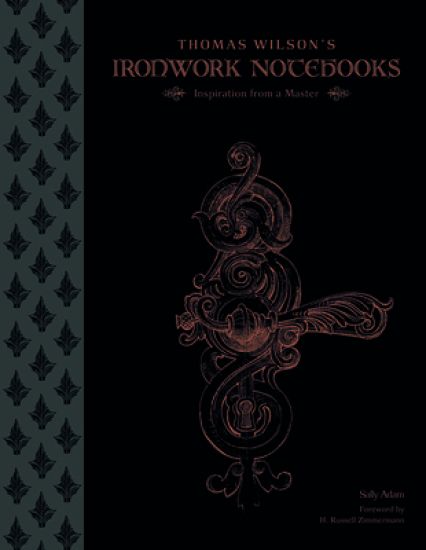
Thomas Wilson's Ironwork Notebooks

Thomas Wilson's Ironwork Notebooks

Sally Adam; H. Russell Zimmermann

Schiffer Publishing Ltd
2016
sidottu
This collection of 5,000+ designs from Thomas Wilson’s drawing notebooks harvests the creative output of four decades of ironwork design. Wilson—ironwork designer, master blacksmith, artist, sculptor, illustrator, author, and restorer—is at the forefront of design in metal. The designs here demonstrate the core role that drafting and drawing play in artistic work. Rendered on everything from notebook pages to paper napkins, they range from traditional to wildly creative. This volume incorporates the best of all that Wilson's eyes and mind have absorbed, and offers inspirational creative reference for anyone interested in design. Some of the drawings are spontaneous, simple idea sketches; others are fully evolved renderings of works of art. From chairs to hinges, chandeliers to fences, benches to belt buckles, the images will inspire design professionals, architects, interior designers, art students, blacksmiths, ironwork enthusiasts, jewelers, and artists of all kinds.
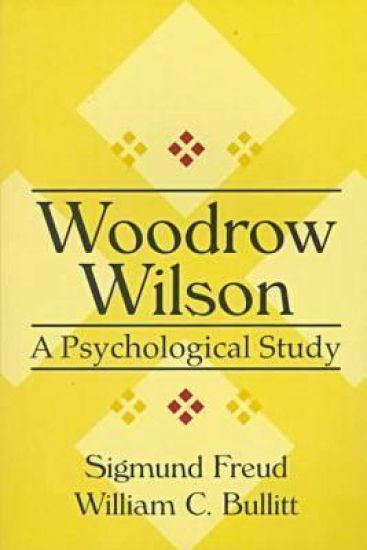
Woodrow Wilson

Woodrow Wilson

William Bullitt

Transaction Publishers
1998
nidottu
This volume originated when William C. Bullitt began working on a book of studies of the principle personalities surrounding the Treaty of Versailles. In discussing this project with Sigmund Freud, the idea arose of a collaborative work on Woodrow Wilson. They worked on the book for ten years, reading all of Wilson's published books and speeches as well as volumes written about Wilson. After perusing this material, Bullitt and Freud realized that they could not write an analysis of Wilson's character unless they deepened their understanding of his nature with private, unpublished information from his intimates. They then set out to collect diaries, letters, records, and memoranda from various associates of Wilson.Freud writes in his introduction that he did not begin this study with an objective view of Wilson, but rather held an unsympathetic view of him. But he goes on to say that while reading through materials about Wilson, his strong emotions underwent a thorough subjugation. He describes Wilson as a person for whom mere facts held no significance; he esteemed highly nothing but human motives and opinions. As a result, writes Freud, it was natural for him in his thinking to ignore the facts of the real outer world, even to deny they existed if they conflicted with his hopes and wishes. This habit of thought is visible in his contacts with others. Freud also notes that there was an intimate connection between Wilson's alienation from the world of reality and his religious convictions.The book opens with a thirty-page biography of Wilson written by Bullitt. The collaborative psychological study that makes up the bulk of the volume then follows. Woodrow Wilson provides readers with a more intimate knowledge of the man, which in turn leads to a more exact estimate of his achievements. This intriguing psychoanalytic study will be of continuing interest to historians, political scientists, psychologists, and sociologists.
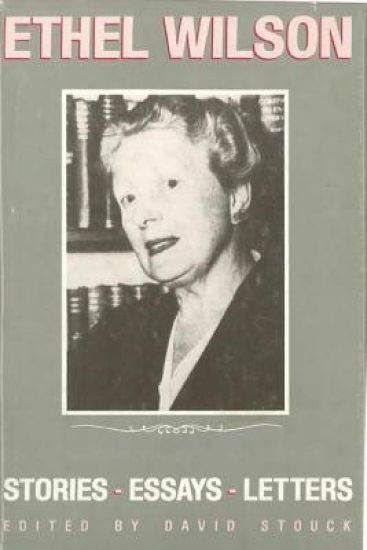
Ethel Wilson

Ethel Wilson

David Stouck

University of British Columbia Press
1987
sidottu
When Ethel Wilson published her first novel, Hetty Dorval,in 1947, she was nearly sixty years old. With her following books, sheestablished herself as British Columbia's most distinguishedfiction writer and one of Canada's best loved and most studiedauthors. Although she enjoyed and even encouraged her reputation as anunambitious latecomer who wrote for her own pleasure, she was, as DavidStouck reveals in this book, a person who took her writing veryseriously. Drawing on the Wilson papers held at the University of BritishColumbia, Stouck provides an important survey of Wilson's talentswhile at the same time offering the fullest biography of the author todate. Especially interesting is Wilson's previously unpublishedcorrespondence with her editor John Gray and with fellow writers suchas Mazo de la Roche, Earle Birney, Dorothy Livesay, and MargaretLaurence. Nine short stories are included in this volume, eight of which arepreviously unpublished and one which is reprinted for the first time ina collection of Wilson's work.
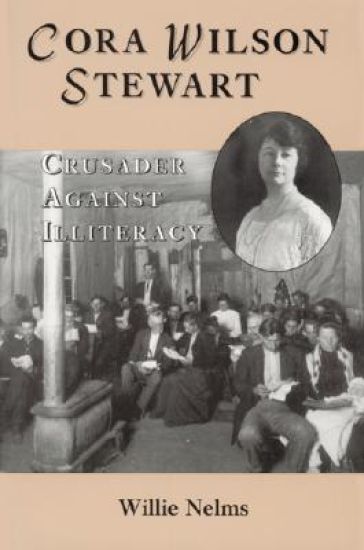
Cora Wilson Stewart

Cora Wilson Stewart

Willie Nelms

McFarland Co Inc
1997
pokkari
In 1911 Cora Wilson Stewart founded the Moonlight Schools in Rowan County, Kentucky, an innovative night program that taught illiterate adults to read. Hoping that 150 people would attend the first classes, Stewart was amazed that over 1,200 men and women enrolled. She quickly developed reading material for these men and women that appealed to them instead of the children's texts that most educators were using with adults. With the success of the Moonlight Schools, Stewart moved forward in her crusade against illiteracy; she quickly became the most prominent advocate for the cause on both the national and international scene. Stewart took the fight against illiteracy at a time when it was an accepted part of American life. She shocked the nation when she pointed out that 25 percent of the men who signed up for the draft in 1917 could neither read nor write. From her beginnings in the mountains of Kentucky, she went on to chair the Illiteracy Section of the World Conference of Education Associations five times; she founded the National Illiteracy Crusade in 1926. She even received one vote for president at the 1920 Democratic convention. Her crusade came despite the fact she was a victim of domestic abuse who suffered through three failed marriages. Her life reflects the challenges faced by female reformers in the early part of the 20th century.
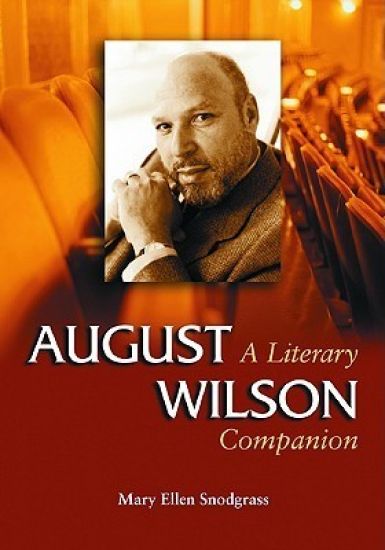
August Wilson

August Wilson

Mary Ellen Snodgrass

McFarland Co Inc
2004
pokkari
Award-winning African-American playwright August Wilson created a cultural chronicle of black America through such works as Ma Rainey's Black Bottom, Fences, Joe Turner's Come and Gone, The Piano Lesson, and Two Trains Running. The authentic ring of wit, anecdote, homily, and plaint proved that a self-educated Pittsburgh ghetto native can grow into a revered conduit for a century of black achievement. He forced readers and audiences to examine the despair generated by poverty and racism by exploring African-American heritage and experiences over the course of the twentieth century. This literary companion provides the reader with a source of basic data and analysis of characters, dates, events, allusions, staging strategies and themes from the work of one of America's finest playwrights. The text opens with an annotated chronology of Wilson's life and works, followed by his family tree. Each of the 166 encyclopedic entries that make up the body of the work combines insights from a variety of sources along with generous citations; each concludes with a selected bibliography on such relevant subjects as the blues, Malcolm X, irony, roosters, and Gothic mode. Charts elucidate the genealogies of Wilson's characters, the Charles, Hedley, and Maxson families, and account for weaknesses in Wilson's female characters. Two appendices complete the generously cross-referenced work: a timeline of events in Wilson's life and those of his characters, and a list of 40 topics for projects, composition, and oral analysis.
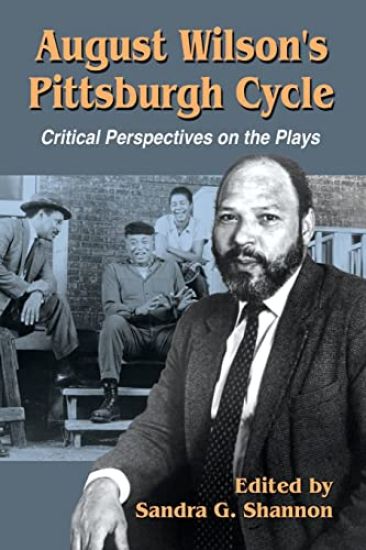
August Wilson's Pittsburgh Cycle
Providing a detailed study of American playwright August Wilson (1945-2005), this collection of new essays explores the development of the author's ethos across his twenty-five-year creative career--a process that transformed his life as he retraced the lives of his fellow "Africans in America." While Wilson's narratives of Pittsburgh and Chicago are microcosms of black life in America, they also reflect the psychological trauma of his disconnection with his biological father, his impassioned efforts to discover and reconnect with the blues, with Africa and with poet/activist Amiri Baraka, and his love for the vernacular of Pittsburgh.
Ethel Wilson

Ethel Wilson

David Stouck

University of Toronto Press
2003
sidottu
When Ethel Wilson published her first novel, Hetty Dorval, she was in her sixtieth year. With her subsequent books, among them the widely read Swamp Angel (1954), she established herself as one of Canada's most important writers. Although she fostered a reputation for being an unambitious latecomer, a happily married doctor's wife who wrote for her own pleasure, she in fact took her writing very seriously, trying for several years to place her work with major American publishers. David Stouck's engaging biography of this elusive Canadian writer draws on archival material and interviews to describe, in detail, her early life as an orphan in England and Vancouver and her long writer's apprenticeship, spanning from the publication of some children's stories in 1919 to the appearance of Hetty Dorval in 1947. Stouck's narrative charts the resistance among publishers, critics, and readers to the curious mixture in her work of an Edwardian sensibility and a postmodern intelligence. He also documents her own resistance to both literary nationalism and creative writing classes as strategies for promoting literature. She was nevertheless one of the few Canadian women writers to emerge from the 1950s, and she is still being read - all her books remaining in print. Stouck observes that Wilson's writing is marked by epistemological and ethical uncertainties that are rooted in the contingencies of language, because, as Wilson herself liked to quote from Lewis Carroll, the 'meaning [of words] depends on who is the master.' Ethel Wilson: A Critical Biography is the story of a distinguished writer whose works are rightly considered classics of Canadian literature.
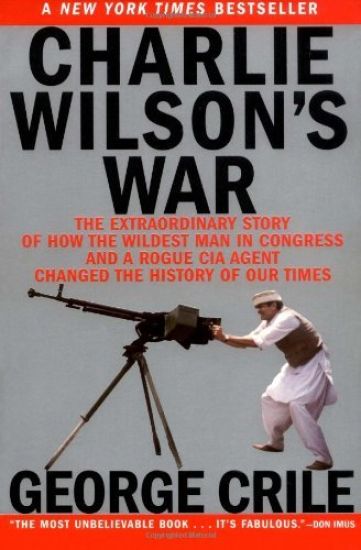
Charlie Wilson's War

Charlie Wilson's War

George Crile

Grove Press / Atlantic Monthly Press
2004
nidottu
Charlie Wilson's War was a publishing sensation and a New York Times, Washington Post, and Los Angeles Times bestseller. In the early 1980s, a Houston socialite turned the attention of maverick Texas congressman Charlie Wilson to the ragged band of Afghan "freedom fighters" who continued, despite overwhelming odds, to fight the Soviet invaders. Wilson, who sat on the all-powerful House Appropriations Committee, managed to procure hundreds of millions of dollars to support the mujahideen. The arms were secretly procured and distributed with the help of an out-of-favor CIA operative, Gust Avrokotos, whose working-class Greek-American background made him an anomaly among the Ivy League world of American spies. Avrakotos handpicked a staff of CIA outcasts to run his operation and, with their help, continually stretched the Agency's rules to the breaking point. Moving from the back rooms of the Capitol, to secret chambers at Langley, to arms-dealers' conventions, to the Khyber Pass, this book presents an astonishing chapter of our recent past, and the key to understanding what helped trigger the sudden collapse of the Soviet Union and ultimately led to the emergence of a brand-new foe in the form of radical Islam.
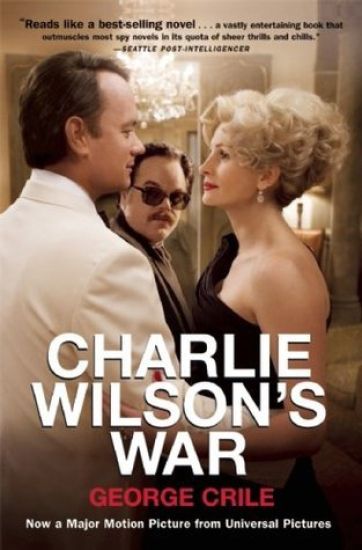
Charlie Wilson's War

Charlie Wilson's War

George Crile

Grove Press / Atlantic Monthly Press
2007
nidottu
A bestseller in hardcover, "Charlie Wilsons War" tells what became of the largest covert operation in history. Moving from the back rooms of the Capitol to arms-dealer conventions to the Khyber Pass, this is a compulsively readable account of the inside workings of the CIA.
Woodrow Wilson, 1913-1921

Woodrow Wilson, 1913-1921

H. W. Brands

Times Books
2003
sidottu
A noted historian offers a definitive account of the administration of Woodrow Wilson, detailing Wilson's unusual route to the White House, his campaign against corporate interests, his influential shaping of American foreign policy, his political successes and failures, and his decline in popularity and health after Congress's rejection of his League of Nations. 25,000 first printing.
After Wilson

After Wilson

Craig Douglas B.

The University of North Carolina Press
2010
nidottu
Craig examines the bitter disputes that shook the Democratic Party in the 1920s and early 1930s and stressed ideological conflicts between conservative and progressive Democrats over economic and social policy. He provides insights into the nature of Democratic dissension during the years after Woodrow Wilson's progressive tenure and thus places the later revolt of conservative Democrats against the New Deal in an ideological and political context.A UNC Press Enduring Edition -- UNC Press Enduring Editions use the latest in digital technology to make available again books from our distinguished backlist that were previously out of print. These editions are published unaltered from the original, and are presented in affordable paperback formats, bringing readers both historical and cultural value.
The Wilson Era

The Wilson Era

Daniels Josephus

The University of North Carolina Press
2011
nidottu
In this volume, Daniels tells how Wilson, having fought against war with monumental patience, finally led this country into world conflict. He proved himself a militant fighter and strategist, and when victory came he believed that it had made possible a warless world. Wilson's fight for the League of Nations is vigorously told, as is the deep damnation of its defeat.A UNC Press Enduring Edition -- UNC Press Enduring Editions use the latest in digital technology to make available again books from our distinguished backlist that were previously out of print. These editions are published unaltered from the original, and are presented in affordable paperback formats, bringing readers both historical and cultural value.
The Wilson Era

The Wilson Era

Daniels Josephus

The University of North Carolina Press
2011
nidottu
This volume presents a crowded story. When Wilson entered the White House, China and Japan were on the agenda, revolution was flaming in Mexico, and Europe was on the verge of war. With the outbreak of war in 1914, the struggle for neutrality and preparedness began. The book includes lively portraits of a young FDR, a great Bryan, a grand old Admiral Dewey, and inexplicable Lodge, and a memorable Edison.A UNC Press Enduring Edition -- UNC Press Enduring Editions use the latest in digital technology to make available again books from our distinguished backlist that were previously out of print. These editions are published unaltered from the original, and are presented in affordable paperback formats, bringing readers both historical and cultural value.
Woodrow Wilson and a Revolutionary World, 1913-1921

Woodrow Wilson and a Revolutionary World, 1913-1921

Link Arthur S.

The University of North Carolina Press
2011
nidottu
In a dazzling array of the most recent research and writing, the contributors deal with Wilson's approach to the Mexican and Russian revolutions; his Polish policy; his relationship with the European Left, world order, and the League of Nations; and Wilson and the problems of world peace. They show that Wilson was in many ways the pivot of twentieth-century world affairs; his commitment to anticolonialism, antiimperialism, and self-determination still guides U.S. foreign policy.A UNC Press Enduring Edition -- UNC Press Enduring Editions use the latest in digital technology to make available again books from our distinguished backlist that were previously out of print. These editions are published unaltered from the original, and are presented in affordable paperback formats, bringing readers both historical and cultural value.
Woodrow Wilson, Revolutionary Germany, and Peacemaking, 1918-1919

Woodrow Wilson, Revolutionary Germany, and Peacemaking, 1918-1919

Schwabe Klaus

The University of North Carolina Press
2011
nidottu
Schwabe examines the political, economic, and ideological motivations that prompted American and German leaders to adopt strategies that led to discord during this period of transition from war to peace in the international field and from monarchy to republic in Germany. He disputes the interpretation that Wilson betrayed his ideals at Versailles and the thesis that a secret conspiracy between the United States and Germany attempted to contain the Bolshevik threat.A UNC Press Enduring Edition -- UNC Press Enduring Editions use the latest in digital technology to make available again books from our distinguished backlist that were previously out of print. These editions are published unaltered from the original, and are presented in affordable paperback formats, bringing readers both historical and cultural value.
James Wilson

James Wilson

Smith Charles Page

The University of North Carolina Press
2011
nidottu
James Wilson, signer of the federal constitution and one of the most influential leaders in the formative period of the republic, has been the only great figure of his age to be without a biography. As a consequence his name is virtually unknown to the general public. It was in the task of framing a sound government for the republic that Wilson, one of the principal theorists of federalism, made his greatest contribution to the future welfare and stability of his country.A UNC Press Enduring Edition -- UNC Press Enduring Editions use the latest in digital technology to make available again books from our distinguished backlist that were previously out of print. These editions are published unaltered from the original, and are presented in affordable paperback formats, bringing readers both historical and cultural value.
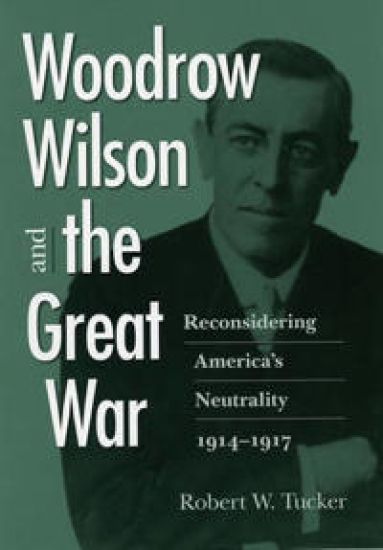
Woodrow Wilson and the Great War

Woodrow Wilson and the Great War

Robert W. Tucker

University of Virginia Press
2007
sidottu
In recent years, and in light of U.S. attempts to project power in the world, the presidency of Woodrow Wilson has been more commonly invoked than ever before. Yet ""Wilsonianism"" has often been distorted by a concentration on American involvement in the First World War. In ""Woodrow Wilson and the Great War: Reconsidering America's Neutrality, 1914-1917"", prominent scholar Robert Tucker turns the focus to the years of neutrality. Arguing that our neglect of this prewar period has reduced the complexity of the historical Wilson to a caricature or stereotype, Tucker reveals the importance that the law of neutrality played in Wilson's foreign policy during the fateful years from 1914 to 1917, and in doing so he provides a more complete portrait of our nation's twenty-eighth president. By focusing on the years leading up to America's involvement in the Great War, Tucker reveals that Wilson's internationalism was always highly qualified, dependent from the start upon the advent of an international order that would forever remove the specter of another major war. World War I was the last conflict in which the law of neutrality played an important role in the calculations of belligerents and neutrals, and it is scarcely an exaggeration to say that this law - or rather Woodrow Wilson's version of it - constituted almost the whole of his foreign policy with regard to the war. Wilson's refusal to find any significance, moral or otherwise, in the conflict beyond the law and its violation led him to see the war as meaningless, save for the immense suffering and sense of utter futility it fostered. Treating issues of enduring interest, such as the advisability and effectiveness of U.S. interventions in, or initiation of, conflicts beyond its borders, ""Woodrow Wilson and the Great War"" will appeal to anyone interested in the president's power to determine foreign policy, and in constitutional history in general.
Woodrow Wilson and the Great War

Woodrow Wilson and the Great War

Robert W. Tucker

University of Virginia Press
2015
nidottu
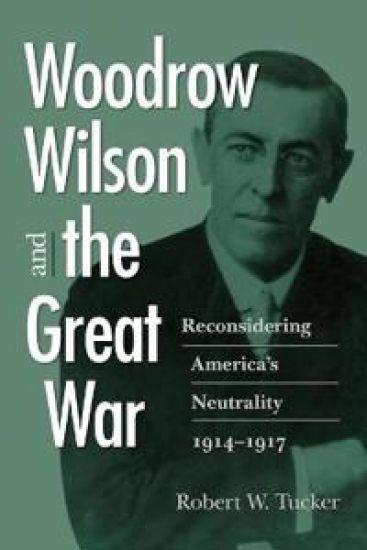
In recent years, and in light of U.S. attempts to project power in the world, the presidency of Woodrow Wilson has been more commonly invoked than ever before. Yet ""Wilsonianism"" has often been distorted by a concentration on American involvement in the First World War. In Woodrow Wilson and the Great War: Reconsidering America’s Neutrality, 1914-1917, prominent scholar Robert Tucker turns the focus to the years of neutrality. Arguing that our neglect of this prewar period has reduced the complexity of the historical Wilson to a caricature or stereotype, Tucker reveals the importance that the law of neutrality played in Wilson’s foreign policy during the fateful years from 1914 to 1917, and in doing so he provides a more complete portrait of our nation’s twenty-eighth president.By focusing on the years leading up to America’s involvement in the Great War, Tucker reveals that Wilson’s internationalism was always highly qualified, dependent from the start upon the advent of an international order that would forever remove the specter of another major war. World War I was the last conflict in which the law of neutrality played an important role in the calculations of belligerents and neutrals, and it is scarcely an exaggeration to say that this law?or rather Woodrow Wilson’s version of it?constituted almost the whole of his foreign policy with regard to the war. Wilson’s refusal to find any significance, moral or otherwise, in the conflict beyond the law and its violation led him to see the war as meaningless, save for the immense suffering and sense of utter futility it fostered.Treating issues of enduring interest, such as the advisability and effectiveness of U.S. interventions in, or initiation of, conflicts beyond its borders, Woodrow Wilson and the Great War will appeal to anyone interested in the president’s power to determine foreign policy, and in constitutional history in general.