Kirjojen hintavertailu. Mukana 11 717 486 kirjaa ja 12 kauppaa.

Kirjahaku

Etsi kirjoja tekijän nimen, kirjan nimen tai ISBN:n perusteella.

1000 tulosta hakusanalla ART WIEDERHOLD

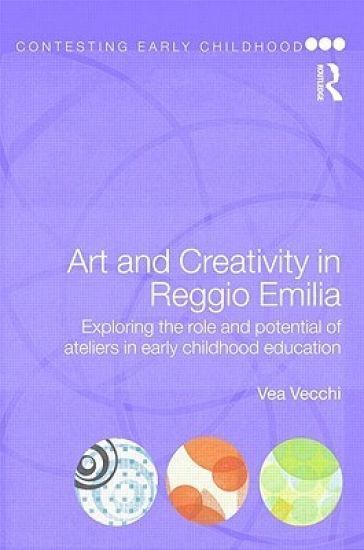
Art and Creativity in Reggio Emilia
This book explores the contribution of and art and creativity to early education, and examines the role of the atelier (an arts workshop in a school) and atelierista (an educator with an arts background) in the pioneering pre-schools of Reggio Emilia. It does so through the unique experience of Vea Vecchi, one of the first atelieristas to be appointed in Reggio Emilia in 1970.Part memoir, part conversation and part reflection, the book provides a unique insider perspective on the pedagogical work of this extraordinary local project, which continues to be a source of inspiration to early childhood practitioners and policy makers worldwide.Vea’s writing, full of beautiful examples, draws the reader in as she explains the history of the atelier and the evolving role of the atelierista. Key themes of the book include: • processes of learning and knowledge construction• the theory of the hundred languages of childhood and the role of poetic languages• the importance of organisation, ways of working and tools, in particular pedagogical documentation• the vital contribution of the physical environment• the relationship between the atelier, the atelierista, the school and its teachers This enlightening book is essential reading for students, practitioners, policy makers and researchers in early childhood education, and also for all those in other fields of education interested in the relationship between the arts and learning.
Art and Ethics in a Material World

Art and Ethics in a Material World

Jennifer McMahon

Routledge
2013
sidottu
In this book, McMahon argues that a reading of Kant’s body of work in the light of a pragmatist theory of meaning and language (which arguably is a Kantian legacy) leads one to put community reception ahead of individual reception in the order of aesthetic relations. A core premise of the book is that neo-pragmatism draws attention to an otherwise overlooked aspect of Kant’s "Critique of Aesthetic Judgment," and this is the conception of community which it sets forth. While offering an interpretation of Kant’s aesthetic theory, the book focuses on the implications of Kant’s third critique for contemporary art. McMahon draws upon Kant and his legacy in pragmatist theories of meaning and language to argue that aesthetic judgment is a version of moral judgment: a way to cultivate attitudes conducive to community, which plays a pivotal role in the evolution of language, meaning, and knowledge.
Art and the Performance of Memory
This book investigates the role that the visual and performing arts play in our experience and understanding of the past. Expanding upon longstanding concerns in cultural history about the relation of text and image, the book highlights the distinction between enactive and cognitive memory and the implications of this for artists and their publics.
Art Therapy and Learning Disabilities
In this book Stephanie Bull and Kevin O’Farrell bring together practising clinicians who provide an insight into using contemporary art therapy with people with learning disabilities. The authentic voice of people who have learning disabilities is central to the book, and case examples, snapshots of thoughts, dialogue, photographs and artwork are included to ensure that the subjects' voices are heard. The book covers: having a learning disability loss and bereavement attachment and separation infantilisation fear powerlessness self and identity.This accessible and thought-provoking book is essential reading for anyone involved with people with learning disabilities including art therapists, psychotherapists, counsellors, students and carers.
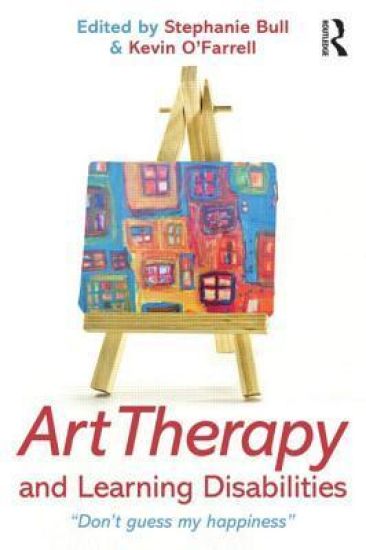
Art Therapy and Learning Disabilities
In this book Stephanie Bull and Kevin O’Farrell bring together practising clinicians who provide an insight into using contemporary art therapy with people with learning disabilities. The authentic voice of people who have learning disabilities is central to the book, and case examples, snapshots of thoughts, dialogue, photographs and artwork are included to ensure that the subjects' voices are heard. The book covers: having a learning disability loss and bereavement attachment and separation infantilisation fear powerlessness self and identity.This accessible and thought-provoking book is essential reading for anyone involved with people with learning disabilities including art therapists, psychotherapists, counsellors, students and carers.
Art, Creativity and Imagination in Social Work Practices
Harnessing the inspiration available from the arts and the imagination brings to life sensitive and effective social work practice. Workers feel most satisfied while service users and communities are more likely to benefit when creative thinking can be applied to practice dilemmas. Drawing on contributions from Canada, England and Utrecht this book illustrates the transforming effect of creatively applied thinking to social problems. The first part of the book considers how use of the self can be enhanced by analytic reflection and application to difficulties facing individuals and communities. The second part shows psychodynamic theory to be a valuable aid when thinking about issues faced by social workers facing threats and accusations, therapeutic work with children and restorative youth justice. The third part of the book considers the implications of working with the arts in community settings – an ex-mining community in North West England, the Tate Gallery in London and the ‘cultural capital’ of Liverpool. Taken as a whole these chapters combine to inspire and provoke thought of how the arts and the imagination can be used creativity to help service users confronted by problems with living and the workers who attempt to get alongside them to think about these.This book was published as a special issue of the Journal of Social Work Practice.
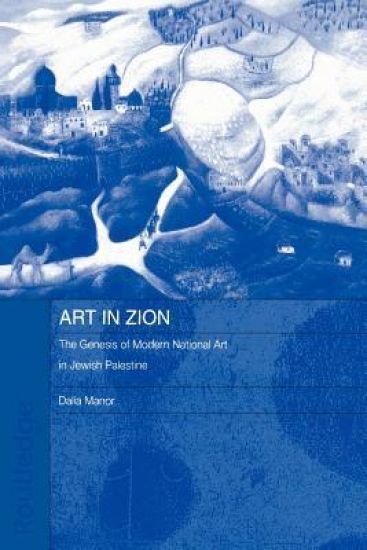
Art in Zion

Art in Zion

Dalia Manor

Routledge
2010
nidottu
Art in Zion deals with the link between art and national ideology and specifically between the artistic activity that emerged in Jewish Palestine in the first decades of the twentieth century and the Zionist movement. In order to examine the development of national art in Jewish Palestine, the book focuses on direct and indirect expressions of Zionist ideology in the artistic activity in the yishuv (the Jewish community in Palestine). In particular, the book explores two major phases in the early development of Jewish art in Palestine: the activity of the Bezalel School of Art and Crafts, and the emergence during the 1920s of a group of artists known as the Modernists.
Art Of Memory

Art Of Memory

F A Yates

Routledge
2010
nidottu
First Published in 1999. This title is the third volume in the ten-volume set titled the Selected Works of Frances Yates. Greyscale illustrations and figures are included throughout - alongside the related descriptive work where applicable. The art in this volume seeks to memorise through a technique of impressing 'places' and 'images' on memory. It has usually been classed as 'mnemotechnics', which appears an unimportant branch of human activity. However, the author discusses in this title that the manipulation of images in memory must always, to some extent, involve the psyche.
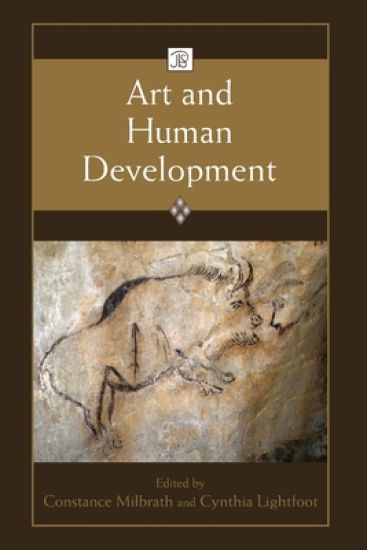
Art and Human Development

Art and Human Development

Psychology Press Ltd
2012
nidottu
This interdisciplinary volume explores art, its development, and its role in the construction of knowledge. Presenting theory and research on artistic development as a cultural and creative endeavor, contributors examine the origins of human art during the Paleolithic cultural revolution, as part of a modern cultural transformation, in the growth of a creative artist, and in developing children. Target chapters expressing the disciplinary perspectives of psychology, archaeology, communications, education, and the performing arts are followed by commentaries from internationally acclaimed scholars of human development. Part 1 explores how cultures harness and exploit the arts to give expression to values, social practices, and traditions. This section traces the emergence of new art forms that arose during social unrest, including the symbolization of spiritual beliefs expressed on the walls of Paleolithic caves, and the racial identity and cultural values expressed in the media of the hip-hop generation. Part 2 examines the journeys of a composer and a group of students to highlight the process of becoming an artist and the role education plays in its development. The book concludes with a focus on the development of aesthetic appreciation and artistic activity in childhood and adolescence, including, for example, how a child’s developing theory of mind affects appreciation for the arts, and how developing empathy and emotional regulation contribute to the cognitive and affective underpinnings of acting in adolescence. As a whole contributors explore the developmental, sociocultural, and evolutionary processes that make the creation and experience of art possible. Intended for researchers and advanced students in both human development and the arts, this book will also serve as a textbook for advanced courses on psychology and the arts and/or special topics courses in cognitive and/or human development.
Art Platforms and Cultural Production on the Internet
In this book, Goriunova offers a critical analysis of the processes that produce digital culture. Digital cultures thrive on creativity, developing new forces of organization to overcome repetition and reach brilliance. In order to understand the processes that produce culture, the author introduces the concept of the art platform, a specific configuration of creative passions, codes, events, individuals and works that are propelled by cultural currents and maintained through digitally native means. Art platforms can occur in numerous contexts bringing about genuinely new cultural production, that, given enough force, come together to sustain an open mechanism while negotiating social, technical and political modes of power.Software art, digital forms of literature, 8-bit music, 3D art forms, pro-surfers, and networks of geeks are test beds for enquiry into what brings and holds art platforms together. Goriunova provides a new means of understanding the development of cultural forms on the Internet, placing the phenomenon of participatory and social networks in a conceptual and historical perspective, and offering powerful tools for researching cultural phenomena overlooked by other approaches.
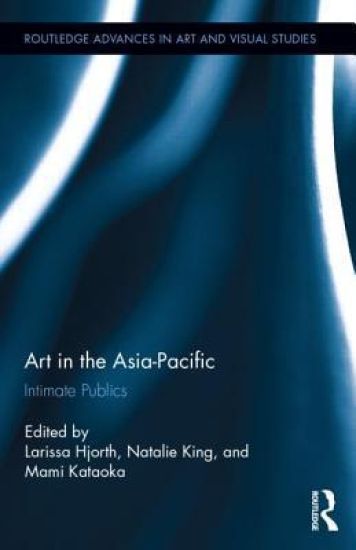
Art in the Asia-Pacific
As social, locative, and mobile media render the intimate public and the public intimate, this volume interrogates how this phenomenon impacts art practice and politics. Contributors bring together the worlds of art and media culture to rethink their intersections in light of participatory social media. By focusing upon the Asia-Pacific region, they seek to examine how regionalism and locality affect global circuits of culture. The book also offers a set of theoretical frameworks and methodological paradigms for thinking about contemporary art practice more generally.
Art, Culture and Enterprise (Routledge Revivals)
First published in 1990, this investigative overview of the politics of arts’ and cultural funding examines the question of public support for the arts. Looking at both popular commercial forms of culture, including radio, pop music and cinema, and the more traditional highbrow arts such as drama and opera, Art, Culture and Enterprise was the first book of its kind to deal systematically with the politics of contemporary culture. Drawing examples from specific British venues, Justin Lewis shows how innovative projects work in practice, and considers arts marketing and the promotion of culture as an economic strategy. A particularly relevant title in the context of the debate surrounding Arts Council funding, this reissue will prove valuable for artists, administrators and students of media and cultural studies, alongside those with a general interest in the future of public art and culture.
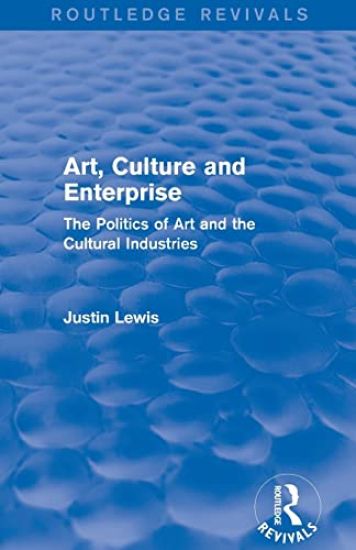
Art, Culture and Enterprise (Routledge Revivals)
First published in 1990, this investigative overview of the politics of arts’ and cultural funding examines the question of public support for the arts. Looking at both popular commercial forms of culture, including radio, pop music and cinema, and the more traditional highbrow arts such as drama and opera, Art, Culture and Enterprise was the first book of its kind to deal systematically with the politics of contemporary culture. Drawing examples from specific British venues, Justin Lewis shows how innovative projects work in practice, and considers arts marketing and the promotion of culture as an economic strategy. A particularly relevant title in the context of the debate surrounding Arts Council funding, this reissue will prove valuable for artists, administrators and students of media and cultural studies, alongside those with a general interest in the future of public art and culture.
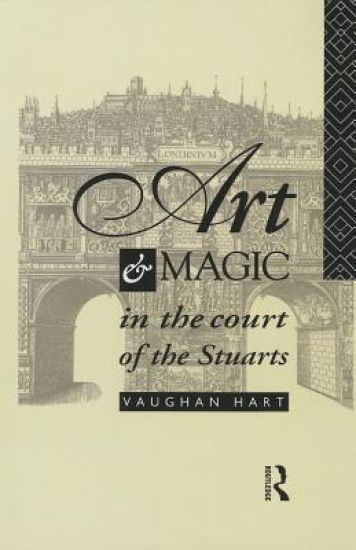
Art and Magic in the Court of the Stuarts
Spanning from the inauguration of James I in 1603 to the execution of Charles I in 1649, the Stuart court saw the emergence of a full expression of Renaissance culture in Britain. Hart examines the influence of magic on Renaissance art and how in its role as an element of royal propaganda, art was used to represent the power of the monarch and reflect his apparent command over the hidden forces of nature. Court artists sought to represent magic as an expression of the Stuart Kings' divine right, and later of their policy of Absolutism, through masques, sermons, heraldry, gardens, architecture and processions. As such, magic of the kind enshrined in Neoplatonic philosophy and the court art which expressed its cosmology, played their part in the complex causes of the Civil War and the destruction of the Stuart image which followed in its wake.
Art And The Unconscious

Art And The Unconscious

John M Thorburn

Routledge
2014
nidottu
First published in 1999. This is a reproduction of John Thorburn’s work of 1925, Art and the Unconscious: A Psychological Approach to a Problem of Philosophy; covering the psychology of the artistic process and a discussion on symbolic or 'eternal'.
Art as Abstract Machine

Art as Abstract Machine

Stephen Zepke

Routledge
2015
nidottu
The aim of this book is to understand what Deleuze and Guattari mean by art. Stephen Zepke argues that art, in their account, is an ontological term and an ontological practice that results in a new understanding of aesthetics. For Deleuze and Guattari understanding what art is means understanding how it works, what it does, how it becomes, and finally, how it lives. This book illuminates these philosophers' discussion of ontology from the viewpoint of art-and vice versa-in a thorough questioning of aesthetic criteria as they are normally understood.
Art and Phenomenology
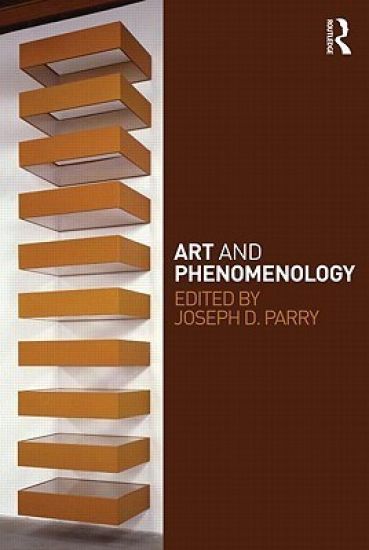
Philosophy of art is traditionally concerned with the definition, appreciation and value of art. Through a close examination of art from recent centuries, Art and Phenomenology is one of the first books to explore visual art as a mode of experiencing the world itself, showing how in the words of Merleau-Ponty ‘Painting does not imitate the world, but is a world of its own’. An outstanding series of chapters by an international group of contributors examine the following questions: Paul Klee and the body in art colour and background in Merleau-Ponty’s phenomenology of art self-consciousness and seventeenth-century painting Vermeer and Heidegger philosophy and the painting of Rothko embodiment in Renaissance art sculpture, dance and phenomenology. Art and Phenomenology is essential reading for anyone interested in phenomenology, aesthetics, and visual culture.
Art and Phenomenology
Philosophy of art is traditionally concerned with the definition, appreciation and value of art. Through a close examination of art from recent centuries, Art and Phenomenology is one of the first books to explore visual art as a mode of experiencing the world itself, showing how in the words of Merleau-Ponty ‘Painting does not imitate the world, but is a world of its own’. An outstanding series of chapters by an international group of contributors examine the following questions: Paul Klee and the body in art colour and background in Merleau-Ponty’s phenomenology of art self-consciousness and seventeenth-century painting Vermeer and Heidegger philosophy and the painting of Rothko embodiment in Renaissance art sculpture, dance and phenomenology. Art and Phenomenology is essential reading for anyone interested in phenomenology, aesthetics, and visual culture.