Kirjojen hintavertailu. Mukana 11 717 486 kirjaa ja 12 kauppaa.

Kirjahaku

Etsi kirjoja tekijän nimen, kirjan nimen tai ISBN:n perusteella.

1000 tulosta hakusanalla Adrian Rodriguez

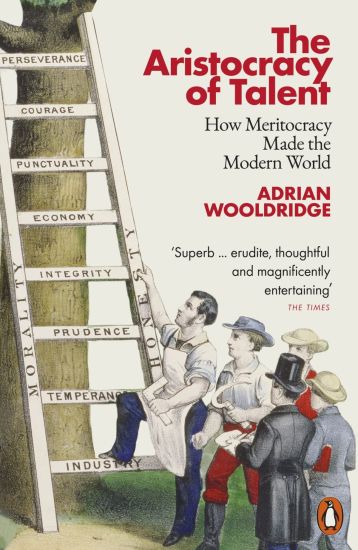
The Aristocracy of Talent

The Aristocracy of Talent

Adrian Wooldridge

PENGUIN BOOKS LTD
2023
pokkari
THE TIMES BOOK OF THE YEAR*Shortlisted for the 2021 Financial Times and McKinsey & Company Business Book of the Year Award*'This unique and fascinating history explains why the blame now being piled upon meritocracy for many social ills is misplaced-and that assigning responsibilities to the people best able to discharge them really is better than the time-honoured customs of corruption, patronage, nepotism and hereditary castes' Steven PinkerMeritocracy: the idea that people should be advanced according to their talents rather than their status at birth. For much of history this was a revolutionary thought, but by the end of the twentieth century it had become the world's ruling ideology. How did this happen, and why is meritocracy now under attack from both right and left?Adrian Wooldridge traces the history of meritocracy forged by the politicians and officials who introduced the revolutionary principle of open competition, the psychologists who devised methods for measuring natural mental abilities and the educationalists who built ladders of educational opportunity. He looks outside western cultures and shows what transformative effects it has had everywhere it has been adopted, especially once women were brought into the meritocractic system.Wooldridge also shows how meritocracy has now become corrupted and argues that the recent stalling of social mobility is the result of failure to complete the meritocratic revolution. Rather than abandoning meritocracy, he says, we should call for its renewal.
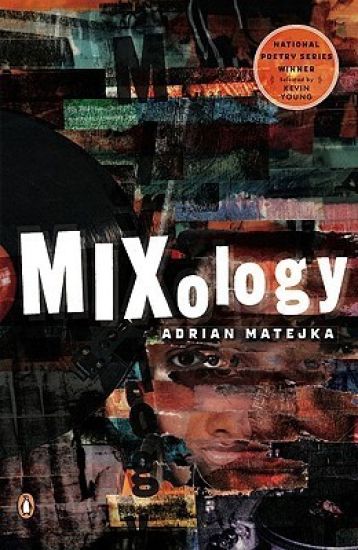
Mixology

Mixology

Adrian Matejka

Penguin USA
2009
pokkari
Selected for the 2008 National Poetry Series by Kevin Young The poems in Adrian Matejka's second collection, Mixology, shapeshift through the myriad meanings of "mixing" to explore and explode ideas of race, skin politics, appropriation, and cultural identity. Whether the focus of the individual poems is musical, digital, or historical, the otherness implicit in being of more than one racial background guides Matejka's work to the inevitable conclusion that all things-no matter how disparate-are parts of the whole.
The Big Smoke

The Big Smoke

Adrian Matejka

The Penguin Press
2013
pokkari
A finalist for both the Pulitzer Prize and the National Book Award in Poetry--a collection that examines the myth and history of the prizefighter Jack Johnson The legendary Jack Johnson (1878-1946) was a true American creation. The child of emancipated slaves, he overcame the violent segregationism of Jim Crow, challenging white boxers--and white America--to become the first African-American heavyweight world champion. The Big Smoke, Adrian Matejka's third work of poetry, follows the fighter's journey from poverty to the most coveted title in sports through the multi-layered voices of Johnson and the white women he brazenly loved. Matejka's book is part historic reclamation and part interrogation of Johnson's complicated legacy, one that often misremembers the magnetic man behind the myth.
Map To The Stars

Map To The Stars

Adrian Matejka

Penguin USA
2017
nidottu
A resonant new collection of poetry from Adrian Matejka, author of The Big Smoke, a finalist for The Pulitzer Prize and the National Book Award Map to the Stars, the fourth poetry collection from National Book Award and Pulitzer Prize finalist Adrian Matejka, navigates the tensions between race, geography, and poverty in America during the Reagan Era. In the time of space shuttles and the Strategic Defense Initiative, outer space is the only place equality seems possible, even as the stars serve to both guide and obscure the earthly complexities of masculinity and migration. In Matejka's poems, hope is the link between the convoluted realities of being poor and the inspiring possibilities of transcendence and escape—whether it comes from Star Trek, the dream of being one of the first black astronauts, or Sun Ra's cosmic jazz.
The Truth About Denial

The Truth About Denial

Adrian Bardon

Oxford University Press Inc
2019
sidottu
This is an open access title available under the terms of a CC BY-NC-ND 4.0 International license. It is free to read at Oxford Scholarship Online and offered as a free PDF download from OUP and selected open access locations. People believe what they want to believe. It is a striking-yet all too familiar-fact about human beings that our belief-forming processes can be so distorted by fears, desires, and prejudices that an otherwise sensible person may sincerely uphold a false claim about the world despite overwhelming evidence to the contrary. When we describe someone as being "in denial," we mean that he or she is personally threatened by some set of facts and consequently fails to assess the situation properly according to the evidence, instead arguing and interpreting evidence in light of a pre-established conclusion. In a world polarized over politics, culture, race, and religion, it is evident that ideological commitments can influence one's perception of reality in socially destructive ways, especially when one perceives a threat to these commitments. When group interests, creeds, or dogmas are threatened by unwelcome factual information, biased thinking can become ideological denialism. This is a problem that affects everybody: Whereas denial can interfere with individual well-being, ideological denialism can stand in the way of urgent advancements in public policy. This book offers an accessible, historically and scientifically informed overview of our understanding of denial and denialism. Adrian Bardon introduces the reader to the latest developments in the interdisciplinary study of denial, and then investigates the role of human psychology and ideology in, respectively, science denial, economic policy, and religious belief.
The Truth About Denial

The Truth About Denial

Adrian Bardon

Oxford University Press Inc
2019
nidottu
This is an open access title available under the terms of a CC BY-NC-ND 4.0 International license. It is free to read at Oxford Scholarship Online and offered as a free PDF download from OUP and selected open access locations. People believe what they want to believe. It is a striking-yet all too familiar-fact about human beings that our belief-forming processes can be so distorted by fears, desires, and prejudices that an otherwise sensible person may sincerely uphold a false claim about the world despite overwhelming evidence to the contrary. When we describe someone as being "in denial," we mean that he or she is personally threatened by some set of facts and consequently fails to assess the situation properly according to the evidence, instead arguing and interpreting evidence in light of a pre-established conclusion. In a world polarized over politics, culture, race, and religion, it is evident that ideological commitments can influence one's perception of reality in socially destructive ways, especially when one perceives a threat to these commitments. When group interests, creeds, or dogmas are threatened by unwelcome factual information, biased thinking can become ideological denialism. This is a problem that affects everybody: Whereas denial can interfere with individual well-being, ideological denialism can stand in the way of urgent advancements in public policy. This book offers an accessible, historically and scientifically informed overview of our understanding of denial and denialism. Adrian Bardon introduces the reader to the latest developments in the interdisciplinary study of denial, and then investigates the role of human psychology and ideology in, respectively, science denial, economic policy, and religious belief.
The James Bond Songs

The James Bond Songs

Adrian Daub

Oxford University Press Inc
2015
sidottu
Starting with 1964's Goldfinger, every James Bond film has followed the same ritual, and so has its audience: after an exciting action sequence the screen goes black and the viewer spends three long minutes absorbing abstract opening credits and a song that sounds like it wants to return to 1964. In The James Bond SongsR authors Adrian Daub and Charles Kronengold use the genre to trace not only a changing cultural landscape, but also evolving conceptionsof what a pop song is. They argue that the story of the Bond song is the story of the pop song more generally, and perhaps even the story of its end. Each chapter discusses a particular segment of the Bond canon and contextualizes it in its eras music and culture. But the book also asks how Bond and his music reflected and influenced our feelings about such topics as masculinity, race, money, and aging. Through these individual pieces the book presents the Bond song as the perfect anthem of late capitalism. The Bond songs want to talk about the fulfillment that comes from fast cars, shaken Martinis and mindless sex, but their unstablespeakers, subjects, and addressees actually undercut the logic of the lifestyle James Bond is sworn to defend. The book is an invitation to think critically about pop music, about genre, and about the political aspects of popular culture in the twentieth century and beyond.
Frozen Empires

Frozen Empires

Adrian Howkins

Oxford University Press Inc
2017
sidottu
Perpetually covered in ice and snow, the mountainous Antarctic Peninsula stretches southwardd towards the South Pole where it merges with the largest and coldest mass of ice anywhere on the planet. Yet far from being an otherworldly "Pole Apart," the region has the most contested political history of any part of the Antarctic Continent. Since the start of the twentieth century, Argentina, Britain, and Chile have made overlapping sovereignty claims, while the United States and Russia have reserved rights to the entire continent. The environment has been at the heart of these disputes over sovereignty, placing the Antarctic Peninsula at a fascinating intersection between diplomatic history and environmental history. In Frozen Empires, Adrian Howkins argues that there has been a fundamental continuity in the ways in which imperial powers have used the environment to support their political claims in the Antarctic Peninsula region. British officials argued that the production of useful scientific knowledge about the Antarctic helped to justify British ownership. Argentina and Chile made the case that the Antarctic Peninsula belonged to them as a result of geographical proximity, geological continuity, and a general sense of connection. Despite various challenges and claims, however, there has never been a genuine decolonization of the Antarctic Peninsula region. Instead, imperial assertions that respective entities were conducting science "for the good of humanity" were reformulated through the terms of the 1959 Antarctic Treaty, and Antarctica's "frozen empires" remain in place to this day. In arguing for imperial continuity in the region, Howkins counters the official historical narrative of Antarctica, which rests on a dichotomy between "bad" sovereignty claims and "good" scientific research. Frozen Empires instead suggests that science, politics, and the environment have been inextricably connected throughout the history of the Antarctic Peninsula region--and remain so--and shows how political prestige in the guise of conducting "science for the good of humanity" continues to influence international climate negotiations.
Restoring Consumer Sovereignty

Restoring Consumer Sovereignty

Adrian Kuenzler

Oxford University Press Inc
2017
sidottu
In today's highly concentrated marketplaces, social and cultural values--such as the lifestyle connotations that manufacturers and sellers confer upon their goods--often shape consumers' prior beliefs and attitudes and affect the weight given to new information by consumers who make purchasing decisions in the marketplace. Such consumer goods present the largely unexplored problem of contemporary market regulatory theory according to which an increased amount of product differentiation has rendered everyday purchasing decisions such as the choice between an iPhone or a Samsung Galaxy Note as much a matter of personal identity rather than merely one of tangible product attributes. The basic challenge for market regulators and courts in such an environment is to make markets work effectively by providing a more efficient exchange of information about consumer preferences relating to tangible product features, functions, and quality. This book demonstrates that improved legal policy can assist consumers and increase market efficiency. It acknowledges that once particular beliefs held by consumers have become culturally or socially entrenched, they are very difficult to change. What is more, changing such beliefs is no longer simply a matter of educating people through the provision of additional information. Developing a novel framework through a detailed analysis of case law relating to consumer goods markets, this book delivers an accessible introduction to the law and economics of consumer decision-making, and a forceful critique of contemporary market regulatory policy.
Specters of Belonging

Specters of Belonging

Adrián Félix

Oxford University Press Inc
2019
sidottu
As the United States hardens its border with Mexico, how do migrants make transnational claims of citizenship in both nation-states? By enacting citizenship in both countries, Mexican migrants are challenging the meaning of membership and belonging from the margins of both citizenship regimes. With their incessant border-shattering political practices, Mexican migrants have become the embodiment of transnational citizenship on both sides of the divide. Drawing on his experiences leading citizenship classes for Mexican migrants and working with cross-border activists, Adrián Félix examines the political lives (and deaths) of Mexican migrants in Specters of Belonging. Tracing transnationalism across the different stages of the migrant political life cycle - beginning with the so-called political baptism of naturalization and ending with the practice by which migrant bodies are repatriated to Mexico for burial after death - Félix reveals the varied ways in which Mexican transnational subjects practice citizenship in the United States as well as Mexico. As such, Félix unearths how Mexican migrants' specters of belonging perennially haunt the political projects of nationalism, citizenship, and democracy on both sides of the border.
Specters of Belonging

Specters of Belonging

Adrián Félix

Oxford University Press Inc
2019
nidottu
As the United States hardens its border with Mexico, how do migrants make transnational claims of citizenship in both nation-states? By enacting citizenship in both countries, Mexican migrants are challenging the meaning of membership and belonging from the margins of both citizenship regimes. With their incessant border-shattering political practices, Mexican migrants have become the embodiment of transnational citizenship on both sides of the divide. Drawing on his experiences leading citizenship classes for Mexican migrants and working with cross-border activists, Adrián Félix examines the political lives (and deaths) of Mexican migrants in Specters of Belonging. Tracing transnationalism across the different stages of the migrant political life cycle - beginning with the so-called political baptism of naturalization and ending with the practice by which migrant bodies are repatriated to Mexico for burial after death - Félix reveals the varied ways in which Mexican transnational subjects practice citizenship in the United States as well as Mexico. As such, Félix unearths how Mexican migrants' specters of belonging perennially haunt the political projects of nationalism, citizenship, and democracy on both sides of the border.
What the Ballad Knows

What the Ballad Knows

Adrian Daub

OXFORD UNIVERSITY PRESS INC
2022
sidottu
Over the course of the 19th century, ballads proliferated in German-speaking Europe in a truly remarkable range of contexts. Audiences were of course likely encounter balladry in the volumes of Goethe and Schiller, in various anthologies or illustrated editions. But they were just as likely to come across objects billed as ballads in recitation evenings by popular actors, in song-settings by Schubert and Loewe, in piano pieces by Chopin, in the opera house and the concert hall, in mass-produced drawings, paintings and even chinaware. Ballads were poems one could use - schoolteachers used them to train their students' memory (or punish them), women composers used them to assert their place in the musical canon, actors used them to bolster their income, mothers used them to put their children to sleep. Ballads intersected with gender and class, promising to democratize art, while in fact helping make distinctions. In What the Ballad Knows: The Ballad Genre, Memory Culture and German Nationalism, Adrian Daub tells the story of this itinerant genre across media, periods, regions and social strata and shows that, even though it was often positioned as an authentic product of "German spirit," the ballad frequently unsettled and subverted the national project. The popular imagination rooted these poems in pre-modern oral culture, among bards and peasants in the everyday life of common folk. But in fact nineteenth-century ballads were in the end all about modernity – modern modes of association, of attention, of dissemination.
Tragedy

Tragedy

Adrian Poole

Oxford University Press
2005
nidottu
What do we mean by 'tragedy' in present-day usage? When we turn on the news, does a report of the latest atrocity have any connection with the masterpieces of Sophocles, Shakespeare and Racine? What has tragedy been made to mean by dramatists, story-tellers, critics, philosophers, politicians and journalists over the last two and a half millennia? Why do we still read, re-write, and stage these old plays? This book argues for the continuities between 'then' and 'now'. Addressing questions about belief, blame, mourning, revenge, pain, witnessing, timing and ending, Adrian Poole demonstrates the age-old significance of our attempts to make sense of terrible suffering. ABOUT THE SERIES: The Very Short Introductions series from Oxford University Press contains hundreds of titles in almost every subject area. These pocket-sized books are the perfect way to get ahead in a new subject quickly. Our expert authors combine facts, analysis, perspective, new ideas, and enthusiasm to make interesting and challenging topics highly readable.
Concepts of Materials Science

Concepts of Materials Science

Adrian P. Sutton

Oxford University Press
2021
nidottu
All technologies depend on the availability of suitable materials. The progress of civilisation is often measured by the materials people have used, from the stone age to the silicon age. Engineers exploit the relationships between the structure, properties and manufacturing methods of a material to optimise their design and production for particular applications. Scientists seek to understand and predict those relationships. This short book sets out fundamental concepts that underpin the science of materials and emphasizes their relevance to mainstream chemistry, physics and biology. These include the thermodynamic stability of materials in various environments, quantum behaviour governing all matter, and active matter. Others include defects as the agents of change in crystalline materials, materials at the nanoscale, the emergence of new science at increasing length scales in materials, and man-made materials with properties determined by their structure rather than their chemistry. The book provides a unique insight into the essence of materials science at a level suitable for pre-university students and undergraduates of materials science. It will also be suitable for graduates in other subjects contemplating postgraduate study in materials science. Professional materials scientists will also find it stimulating and occasionally provocative.
Concepts of Materials Science

Concepts of Materials Science

Adrian P. Sutton

Oxford University Press
2021
sidottu
All technologies depend on the availability of suitable materials. The progress of civilisation is often measured by the materials people have used, from the stone age to the silicon age. Engineers exploit the relationships between the structure, properties and manufacturing methods of a material to optimise their design and production for particular applications. Scientists seek to understand and predict those relationships. This short book sets out fundamental concepts that underpin the science of materials and emphasizes their relevance to mainstream chemistry, physics and biology. These include the thermodynamic stability of materials in various environments, quantum behaviour governing all matter, and active matter. Others include defects as the agents of change in crystalline materials, materials at the nanoscale, the emergence of new science at increasing length scales in materials, and man-made materials with properties determined by their structure rather than their chemistry. The book provides a unique insight into the essence of materials science at a level suitable for pre-university students and undergraduates of materials science. It will also be suitable for graduates in other subjects contemplating postgraduate study in materials science. Professional materials scientists will also find it stimulating and occasionally provocative.
The Modern Law of Evidence

The Modern Law of Evidence

Adrian Keane; Paul McKeown

Oxford University Press
2022
nidottu
A superbly clear, direct, and detailed explanation of the rules that underpin the law of evidence. The Modern Law of Evidence is a lucid, engaging, and authoritative guide to a fascinating and stimulating subject. Practical in its approach, it provides concise and focused analysis of the theory behind the law, with an emphasis on recent discussion and current debates. An ideal text for undergraduate law students and students studying on professional qualifying law courses, The Modern Law of Evidence is also an authoritative reference point for practitioners and judges. Digital formats and resources The fourteenth edition is available for students and institutions to purchase in a variety of formats, and is supported by online resources. The e-book offers a mobile experience and convenient access along with functionality tools, navigation features and links that offer extra learning support: www.oxfordtextbooks.co.uk/ebooks The online resources that support the book include: - Selected guidance on approaching the questions contained in the book - General advice on taking examinations in evidence - Regular updates on key developments - A list of web links to essential resources
Private International Law in English Courts

Private International Law in English Courts

Adrian Briggs

Oxford University Press
2023
sidottu
The first edition of this book offered a restatement of European and English Private International Law as it was applied in the English courts. The decision of the UK to withdraw from the EU, and of the EU to bar the UK from entry to the Lugano Convention, has meant that the broad structure of the book needed fundamental change to reflect the new - but in some ways, much more archaic - law. In working out and working through the complex consequences of the separation, it is apparent that the law has lost some of the coherence it had developed. Whether the rough edges of the new system can be smoothed, and how that can be achieved, is something which only time will tell. In this developing situation, this new edition endeavours to describe and explain how it all works (and sometimes does not work). The book provides critical analysis and guidance relevant both before and during litigation. Written by an academic and practising barrister with over 40 years of experience, this book offers an approach to private international law as it stands six years after the national referendum, in much the same way as the previous edition did with the hybrid system of English and European law before that event. Only by having understood the state, structure, and coherence of the law prior to Brexit, can one really comprehend the effect of the new legal reality.
Combinatorial Physics

Combinatorial Physics

Adrian Tanasa

Oxford University Press
2021
sidottu
The interplay between combinatorics and theoretical physics is a recent trend which appears to us as particularly natural, since the unfolding of new ideas in physics is often tied to the development of combinatorial methods, and, conversely, problems in combinatorics have been successfully tackled using methods inspired by theoretical physics. We can thus speak nowadays of an emerging domain of Combinatorial Physics. The interference between these two disciplines is moreover an interference of multiple facets. Its best known manifestation (both to combinatorialists and theoretical physicists) has so far been the one between combinatorics and statistical physics, as statistical physics relies on an accurate counting of the various states or configurations of a physical system. But combinatorics and theoretical physics interact in various other ways. This book is mainly dedicated to the interactions of combinatorics (algebraic, enumerative, analytic) with (commutative and non-commutative) quantum field theory and tensor models, the latter being seen as a quantum field theoretical generalisation of matrix models.
The Struggle to teach English as an International Language

The Struggle to teach English as an International Language

Adrian Holliday

Oxford University Press
2005
nidottu
This book is about the worlds and conflicts of TESOL teachers and researchers whose professional lives are both enriched and problematized by the cultural and political interfaces created by working with an international language. Central to this discussion is the balance of power in classroom and curriculum settings, the relationship between language, culture, and discourse, and the change in the ownership of English.