Kirjojen hintavertailu. Mukana 11 979 070 kirjaa ja 12 kauppaa.

Kirjahaku

Etsi kirjoja tekijän nimen, kirjan nimen tai ISBN:n perusteella.

1000 tulosta hakusanalla Bateman

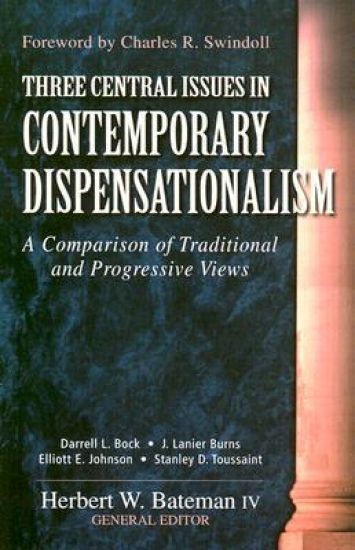
Three Central Issues in Contemporary Dispensationalism

Three Central Issues in Contemporary Dispensationalism

Herbert W. Bateman

Kregel Publications,U.S.
1999
nidottu
For several years two groups of dispensationalists, commonly known by the terms traditionalists and progressives, have engaged in an ongoing debate centered around three crucial issues: 1. The interpretation of Scripture. What rules of hermeneutics our understanding of Scripture? 2. The Abrahamic, Davidic, and new covenants. To whom do these covenants apply and how are they fulfilled or yet to be fulfilled? 3. Israel and the church. How are we to understand the present relationship and future destiny of these two peoples of God? In an irenic debate format, this book demonstrates that those on either side of the issues care deeply about Scripture and its meaning. "Each (contributor) should be given credit for a congenial and helpful contribution to the dispensational discussion."
Charts on the Book of Hebrews

Charts on the Book of Hebrews

Herbert W. Bateman Iv

Kregel Publications,U.S.
2012
nidottu
The book of Hebrews presents interpretive challenges and theological comparisons unrivaled in the New Testament. Charts on the Book of Hebrews puts this demanding yet rewarding information in an accessible and useful format. The charts fall into four categories: Introductory matters (e.g., authorship of Hebrews) Influences in Hebrews (e.g. Second Temple messianic figures) Theological issues (e.g. words of exhortation) Exegetical concerns (e.g. figures of speech)Students will find this an invaluable companion to classes on Hebrews. Pastors and teachers will benefit from these insightful charts to quickly clarify difficult concepts while teaching. And all visual learners will find that these charts make Hebrews more comprehensible.
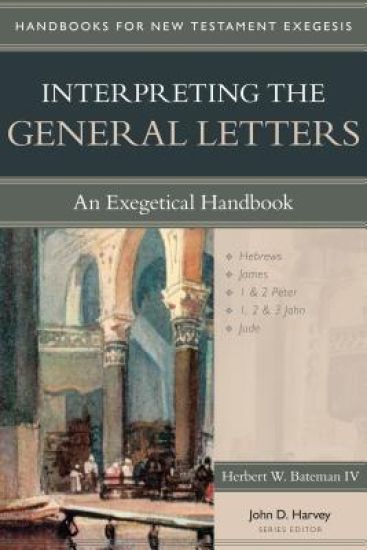
Interpreting the General Letters – An Exegetical Handbook

Interpreting the General Letters – An Exegetical Handbook

Herbert W. Bateman Iv

Kregel Publications,U.S.
2013
nidottu
A concise guide to the interpretive process for the eight New Testament general lettersThis handbook is designed as a step-by-step approach for analyzing and communicating eight letters of the New Testament: Hebrews, James, the Petrine Letters, the Johannine Letters, and Jude. Interpreting the General Letters provides important background material for the interpretation of these books by exploring the types and component parts of letter writing, the importance of an amanuensis; the historical background of the Greco-Roman world, and implications of each of these factors for interpreting the general letters.This foundation is followed by a discussion of the theology of the general letters. Specific consideration is given to the era of promise in Hebrew Scriptures, the era of fulfillment as underscored in the general letters, and how the theology of each letter contributes to the overall canon of Scripture.Finally, Bateman provides nine steps that move from interpretation to communication: three steps for preparing to interpret the letters, three for interpreting, and finally three for communicating the letters. All explanations include examples in order to develop a student's or pastor's skills for accurate interpretation and convicting communication of God's Word.
James – An Exegetical Guide for Preaching and Teaching

James – An Exegetical Guide for Preaching and Teaching

Herbert W. Bateman Iv; William Varner

KREGEL PUBLICATIONS,U.S.
2022
sidottu
To read the Greek text of James is to face a rugged style and brief phrasing that match the fervency of the letter's meaning. The book of James powerfully exhorts the earliest Christian believers to faithful living. Biblical Greek experts Herbert W. Bateman IV and William C. Varner lay out the linguistic and grammatical features unique to James--such as his specialized vocabulary and prolific use of imperatives--to show how the book's many strong statements connect to one another in this masterwork on living according to the teachings of Jesus. The Big Greek Idea series provides all the relevant information from the Greek text for preaching and teaching the New Testament. Each New Testament book is divided into units of thought, revealing a big Greek idea (the author's main idea in the passage), and individual clauses are displayed visually to illustrate their relationships, portraying the biblical author's logical flow. Greek clauses are accompanied by an original English translation. Each volume in this series contains many practical features: - Helpful charts, tables, and diagrams illustrate key points - Numerous callouts provide deeper insights into word meanings and theological issues - Visual cues highlight important information - An introduction to each biblical book summarizes the grammar, style, and vocabulary, including reminders and explanations of key terms
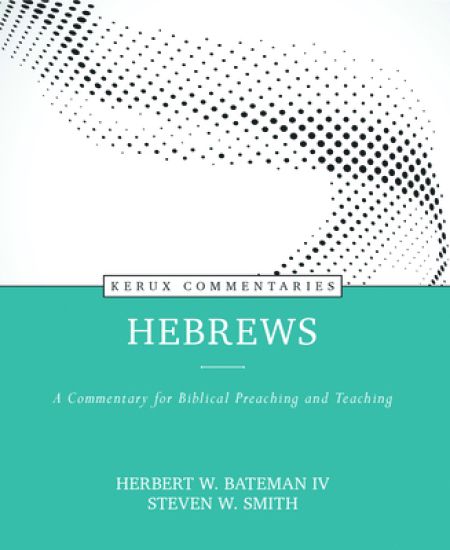
Hebrews – A Commentary for Biblical Preaching and Teaching

Hebrews – A Commentary for Biblical Preaching and Teaching

Herbert W. Bateman Iv; Steven Smith

KREGEL PUBLICATIONS,U.S.
2021
sidottu
Kerux Commentaries enable pastors and teachers to understand and effectively present the main message in a biblical text. Each volume uniquely combines the insights of an experienced Bible exegete (trained in interpretation) and a homiletician (trained in preaching). These two authors work together to explain the essential message for the original listeners or readers, unpack its timeless truth, and then provide a contemporary restatement and communication insights for the key biblical concept. Every book is a resource designed and written with the real needs of the pastor and teacher always in sight, providing many ways to creatively express the principal thought in a biblical passage. Based on the Big Idea preaching model, Kerux enhances the reader's ability to deliver a message that is biblical, cohesive, and dynamic.
Hebrews: Developing Confidence for Reading the Letter

Hebrews: Developing Confidence for Reading the Letter

Dr Herbert W. Bateman IV; Dr George H. Guthrie

Cyber-Center for Biblical Studies
2018
nidottu
This book, Hebrews: Developing Confidence for Reading the Letter, is part of the Let's Know the Bible series intended to build confidence in reading the Bible one book at a time. The book was initially designed for a Let's Know the Bible Conference held in Northern Indiana for people who what to read the Bible with understanding but redesigned to be used with corresponding (free) YouTube videos. The book opens with Bateman and Guthrie examining the new covenant. Whereas Bateman discusses the new covenant in Jeremiah and its application in several Dead Sea Scrolls, Guthrie shows how the new covenant is a central argument in Hebrews. After the discussion about the new covenant, Guthrie provides three ways to transform your reading of Hebrews by understanding the backdrop for Hebrews, tracking the Christ-ology in Hebrews, and hearing the word of encourage in Hebrews. Bateman provides numerous charts that reinforces Guthrie's presentation. Hebrews: Developing Confidence for Reading the Letter ends with a collection of short essays on building confidence for reading the Bible written by pastors who pastor in Northern Indiana. Reading a Good Translation, Grasping God's Big Picture, Read the Bible in Big Chunks, Read the Bible with Others, Increasing a Congregation's Bible knowledge are a few titles.
Homer and Allied Families, Genealogical and Biographical; Comp. for Arthur Bartlett Homer ..
This book is a family history of the Homers and their genealogical and biographical connections to other families. Through extensive research, Bateman has created an informative and engaging narrative that covers several generations. Homer and Allied Families will appeal to anyone interested in genealogy or family history.This work has been selected by scholars as being culturally important, and is part of the knowledge base of civilization as we know it.This work is in the "public domain in the United States of America, and possibly other nations. Within the United States, you may freely copy and distribute this work, as no entity (individual or corporate) has a copyright on the body of the work.Scholars believe, and we concur, that this work is important enough to be preserved, reproduced, and made generally available to the public. We appreciate your support of the preservation process, and thank you for being an important part of keeping this knowledge alive and relevant.