Kirjojen hintavertailu. Mukana 11 699 587 kirjaa ja 12 kauppaa.

Kirjahaku

Etsi kirjoja tekijän nimen, kirjan nimen tai ISBN:n perusteella.

1000 tulosta hakusanalla Benedict Boo

The Life of the Venerable Benedict Joseph Labre, who Died at Rome, ... April, 1783. Translated From the French, by Mr. James Barnard. Together With an Appendix,
The 18th century was a wealth of knowledge, exploration and rapidly growing technology and expanding record-keeping made possible by advances in the printing press. In its determination to preserve the century of revolution, Gale initiated a revolution of its own: digitization of epic proportions to preserve these invaluable works in the largest archive of its kind. Now for the first time these high-quality digital copies of original 18th century manuscripts are available in print, making them highly accessible to libraries, undergraduate students, and independent scholars.Rich in titles on English life and social history, this collection spans the world as it was known to eighteenth-century historians and explorers. Titles include a wealth of travel accounts and diaries, histories of nations from throughout the world, and maps and charts of a world that was still being discovered. Students of the War of American Independence will find fascinating accounts from the British side of conflict. ++++The below data was compiled from various identification fields in the bibliographic record of this title. This data is provided as an additional tool in helping to insure edition identification: ++++Bodleian Library (Oxford)T221992The author is identified in the translator's preface as "Rev. Mr. Joseph Marconi, .. who published his Life in Italian: and an abridgement of it has been made in French: from which this edition is translated." In this issue the title includes "by Mr. James Barnard. Together."London: printed by J. P. Coghlan, 1785. xxv, 1],231, 1]p., plate: port.; 12

Spies of Revolutionary Connecticut: From Benedict Arnold to Nathan Hale
Covert intelligence played a critical role in the American Revolution. Connecticut produced an extraordinary number of spies on both sides of the conflict, from the infamous traitor and Norwich-born Benedict Arnold to Patriot Nathan Hale, executed by the British for espionage. Spying during the Revolution entailed coded messages, early submarines with the first exploding torpedoes and the penalty of death for those caught in the act. Despite the risk, some spies even played both sides as double agents, such as Edward Bancroft, who was never caught. With stories of Silas Deane, Ethan Allen, Thomas Knowlton, the Culper Spy Ring and others, author Mark Allen Baker navigates the intrigues, dangers and double crosses of Connecticut's most legendary Revolutionary spies.
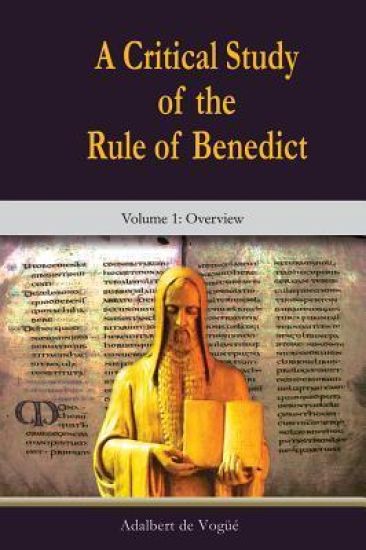
Critical Study of the Rule of Benedict, A

Critical Study of the Rule of Benedict, A

De Vogue Adalbert OSB

New City Press
2017
nidottu
The work of Dom Adalbert de Vogue, O.S.B. (1924-2011) serves as the basis of all serious study of the Rule of Benedict. In the first volume of this edition, Vogue uses literary criticism to show how the Rule of Benedict developed. He establishes the dependence of the Rule of Benedict on the Rule of the Master.
A Critical Study of the Rule of Benedict

A Critical Study of the Rule of Benedict

Adalbert De Vogue

New City Press
2017
nidottu
The work of Dom Adalbert de Vogue O.S.B. (1924-2011) serves as the basis of all serious study of the Rule of Benedict. In the first volume of this edition, Vogue uses literary criticism to show how the Rule of Benedict developed. He establishes the dependence of the Rule of Benedict on the Rule of the Master.
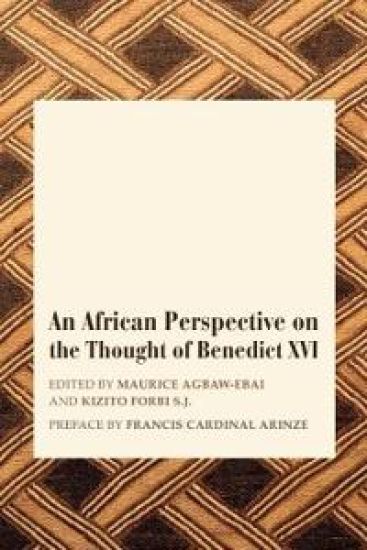
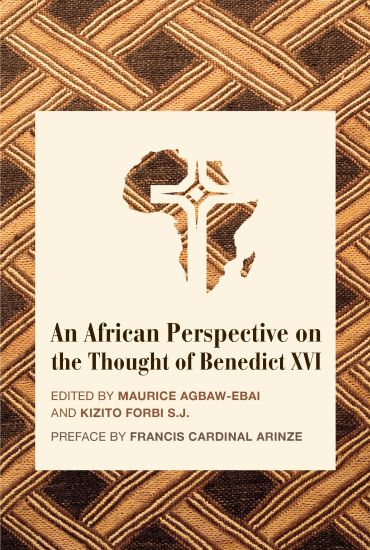
An African Perspective on the Thought of Benedict XVI

An African Perspective on the Thought of Benedict XVI

Maurice Ashley Agbaw–ebai; Stephen Kizito Forbi

ST AUGUSTINE'S PRESS
2023
nidottu
Catholicism continues to experience an exponential growth in Africa. Going by the figures and the intensity of religious practice, Africa can unarguably be described as the new center of the Christianity in general, and Catholicism in particular. With over 236 million Catholics, Africa considers itself as having come of age and capable of making its voice heard on matters pertaining to global Catholicism/Christianity. And if there is a contemporary theologian greatly loved and admired by African scholars, Joseph Ratzinger/Benedict XVI ranks premium on that list. His convening a second synod on Africa on the theme of justice, peace and reconciliation, further endeared him to the African theologians. This book is a testimony to the affection that the Church in Africa has for Benedict XVI. In effect, as Africa finds its voice on the stage of global Catholicism, the theology of Joseph Ratzinger/Benedict XVI provides a fruitful space for Africa's engagement with the wider Church. Benedict XVI described Africa as the spiritual lung of the world. This volume testifies to the vitality and healthiness of that lung, a must read for all interested in African Catholicism and its definite impact on global Christianity as a whole.
An African Perspective on the Thought of Benedict XVI

An African Perspective on the Thought of Benedict XVI

Maurice Ashley Agbaw–ebai; Stephen Kizito Forbi

ST AUGUSTINE'S PRESS
2023
sidottu
Catholicism continues to experience an exponential growth in Africa. Going by the figures and the intensity of religious practice, Africa can unarguably be described as the new center of the Christianity in general, and Catholicism in particular. With over 236 million Catholics, Africa considers itself as having come of age and capable of making its voice heard on matters pertaining to global Catholicism/Christianity. And if there is a contemporary theologian greatly loved and admired by African scholars, Joseph Ratzinger/Benedict XVI ranks premium on that list. His convening a second synod on Africa on the theme of justice, peace and reconciliation, further endeared him to the African theologians. This book is a testimony to the affection that the Church in Africa has for Benedict XVI. In effect, as Africa finds its voice on the stage of global Catholicism, the theology of Joseph Ratzinger/Benedict XVI provides a fruitful space for Africa's engagement with the wider Church. Benedict XVI described Africa as the spiritual lung of the world. This volume testifies to the vitality and healthiness of that lung, a must read for all interested in African Catholicism and its definite impact on global Christianity as a whole.
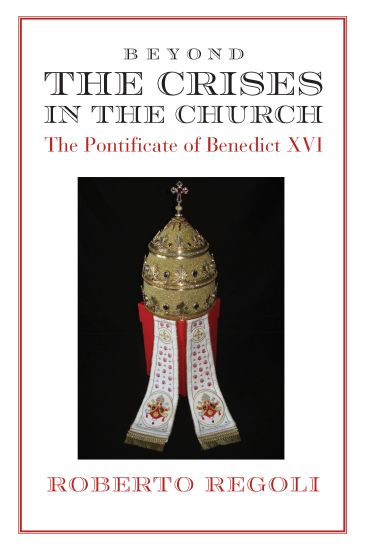
Beyond the Crises – The Pontificate of Benedict XVI
"I have felt like Saint Peter with the Apostles in the boat on the Sea of Galilee: the Lord has given us so many days of sun and of light winds, days when the catch was abundant; there were also moments when the waters were rough and the winds against us, as throughout the Church’s history, and the Lord seemed to be sleeping. But I have always known that the Lord is in that boat, and I have always known that the barque of the Church is not mine but his. Nor does the Lord let it sink; it is he who guides it, surely also through those whom he has chosen, because he so wished. This has been, and is, a certainty which nothing can shake." ––Benedict XVI, General Audience, 27 February 2013 Roberto Regoli offers a keen and comprehensive preview of Pope Benedict XVI's pontificate, which will be better understood only after time has passed and more becomes available. As an historian, Regoli provides ample context to frame the theology and pastoral priorities of a pope, professor, priest, and figure of history who has been shaped by his times, and who will undoubtedly be remembered as deeply orienting the Church toward the future. The perspective and questions offered by Regoli will likewise be a key component to the scholarship surrounding Pope Benedict's pontificate for decades to come, and he significantly broadens what has already been compiled by Anglophone writers.
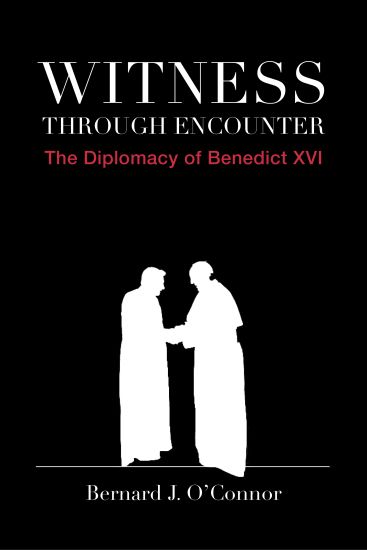
Witness through Encounter – The Diplomacy of Benedict XVI

Witness through Encounter – The Diplomacy of Benedict XVI

Bernard J. O`connor

ST AUGUSTINE'S PRESS
2021
sidottu
Appealing to dialogue is often just a safe way of referring to something negative, or at best blandly neutral: the avoidance of conflict, the denial of similarity, not stirring deep-seated disagreement, etc. When Bernard o’Connor says pope Benedict XVI facilitated dialogue, however, he means something quite positive, very much tangible and certainly transformative. In providing an account of the pope’s interactions with various groups of the international community, O’Connor attempts to convey Benedict XVI’s diplomacy as encounter, where even in the sphere of international relations exhortations to “dialogue” are invitations to see more clearly and be moved as much as move. To dialogue is to embrace, revise perception such that our approaches to the great questions of our day are not simply shared but correct. As O’Connor writes, “Pope Benedict attempts to promote the outlook that a renewed emphasis upon objective, critical and structured philosophical reasoning positions practice, diplomatic and otherwise, to regain its lost foundation and framework. the quest for integrity, if nothing else, should motivate our fidelity to academic pursuit, to intellectual investigation, and to rigorous interdisciplinary inquiry. so influenced, practice will then reject what is arbitrary and be guided by what is time-tested and enduring.”O’Connor illustrates true dialogue emerging from the encounter, and in turn provides scores of characteristics of this encounter as it unfolds in papal diplomacy. In providing scores of addresses and speeches to various bodies, O’Connor presents pope Benedict XVI as an example of effective diplomacy that treats the meetings on the world stage as engaging in true dialogue. encounter is the true basis of dialogue and one that allows it to open to what is truly a catalyst for change toward cooperation––witness, both personal and collective. As o’Connor shows, “where there is authentic encounter, as meeting in mutual trust, what arises is context for witness.” If authentic even the diplomatic encounter has the means to deepen and transform one’s being.Witness Through Encounter intends to fulfill multiple needs. the diplomatic approach exemplified herein is singular and worthy of study among political scientists, sociologists, philosophers and diplomats eager to embrace a worldview that is more personal than simply humanistic. this work will also be useful in inter-religious settings. An additional advantage of O’Connor’s presentation of Benedict XVI’s diplomatic approach, his witness through encounter, is that it contains insight valuable to the scholar alongside the resources used.
Explanation of the Rule of Benedict

Explanation of the Rule of Benedict

Hildegard Of Bingen; Jo Ann McNamara

Wipf Stock Publishers
2005
pokkari
Hildegard of Bingen (1098 - 1179) was the outstanding female religious figure of twelfth-century Germany. A Benedictine nun, she was consulted by bishops, popes, and kings, and wrote copiously for her fellow monastics: mystical and visionary material, liturgical music, biblical commentaries, saints' lives, and theological explanations of various aspects of church doctrine, as well as treatises on natural science and the healing arts. Her story is important to all students of spirituality, medieval history, and culture. Fr. Hugh Feiss is a Benedictine monk, scholar, and Latin translator, and the author of 'Essential Monastic Wisdom'. Jo Ann McNamara is Professor Emerita of History at Hunter College and at the Graduate Center of the City University of New York, and the author of 'Sisters in Arms: Catholic Nuns through Two Millennia'.
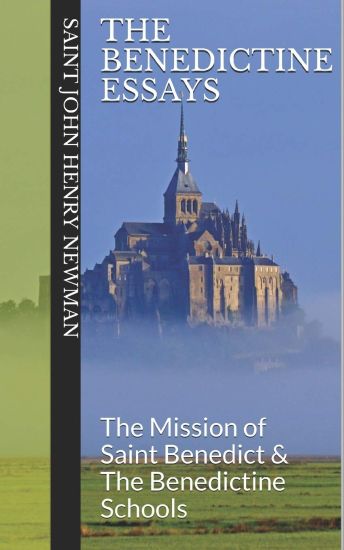
The Benedictine Essays: The Mission of Saint Benedict & The Benedictine Schools
St. Benedict was the "Father of many nations." He has been styled "the Patriarch of the West," a title which there are many reasons for ascribing to him. Not only was he the first to establish a perpetual monastic order in Western Christendom; but his Rule is the monastic norm of the first thousand years of the Church, and gave foundational shape to the whole of Western Christianity. Newly published as a standalone volume, the Benedictine Essays of St. John Henry Newman was previously only available as part of the Historical Sketches appended to The Rise and Progress of Universities. Now for the first time ever, these two scholarly essays are brought together to highlight the powerful impact that St. Benedict and the Benedictine monastic way of life had in shaping the history of Western Civilization, expounded upon through the brilliant genius of the Catholic Church's most recently canonized saint: John Henry Cardinal Newman.Benedictine monasticism has been poured out over the earth, rather than been sent, with a silent mysterious operation, while men slept, and through the romantic adventures of individuals, which are well nigh without record; and thus it has come down to us, not risen up among us, and is found rather than established. Its separate and scattered monasteries occupy the land, each in its place, with a majesty parallel, but superior, to that of old aristocratic houses.This volume has been properly edited and formatted for modern readers (not merely photopied images of old print), complete with original footnotes, for use both in scholarly/academic settings, and also for personal enrichment. Newman's mastery of English language is in full force in this pair of essays dedicated to the history and spirit of Benedictine Monasticism and the original meaning of the idea of the "Benedict Option".About the Author John Henry Newman (1801-1890) was an Anglican clergyman and leader of the Oxford Movement who eventually undertook the long and arduous journey that led to his conversion to the Roman Catholic Church. He was ordained a Catholic priest and became founder of the English Oratory of St. Philip Neri. Cardinal Newman is one of the preeminent masters of the English language, and his life and spiritual writings have led countless people into the Church. St. John Henry Newman has been acclaimed by the highest authorities as the consummate exemplar of a Saint for modern times.
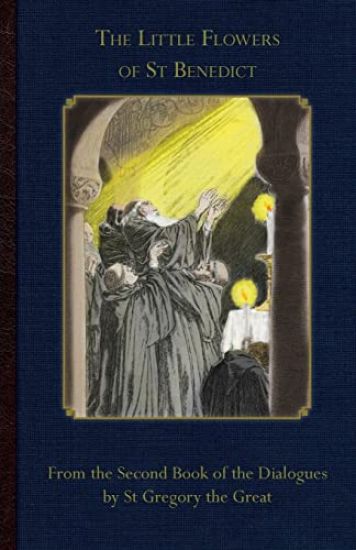
The Little Flowers of St Benedict

The Little Flowers of St Benedict

St Gregory The Great

The Cenacle Press at Silverstream Priory
2023
pokkari
While the figure of St Benedict looms large in the landscape of saints, it is more on account of his Rule and his order than his person. Yet the life of St Benedict stands second only to the Rule itself in guiding the order throughout the course of history, "for the holy man could not otherwise teach than he himself lived." Therefore, the Little Flowers sets forth the true spirit of the order for all. Filled with stories reminiscent of the great Patriarchs and Apostles, the Little Flowers of St Benedict unveils the heart of one "filled with the spirit of all the just," the heart of one entirely devoted to God. May the present volume stand alongside all other great spiritual biographies in lighting a sure path to holiness.