Kirjojen hintavertailu. Mukana 11 699 587 kirjaa ja 12 kauppaa.

Kirjahaku

Etsi kirjoja tekijän nimen, kirjan nimen tai ISBN:n perusteella.

1000 tulosta hakusanalla C-Rene Dominique

C. Stacey Woods and the Evangelical Rediscovery of the University
C. Stacey Woods was a moving force in mid-century American evangelicalism. The Australian-born, Brethren-bred Woods came to Canada to head InterVarsity Christian Fellowship at the age of 24. He went on to become as well the first general secretary of InterVarsity Christian Fellowship in the United States. He started the influential student magazine HIS in the early 1940s and was instrumental in the founding of the worldwide umbrella organization of indigenous student movements--the International Fellowship of Evangelical Students. His global vision inspired many of the most outstanding Christian leaders of the 1960s and 1970s from around the world. He was a brusque, outspoken entrepreneur whose whirlwind style achieved much but was not always suited to administration. A man of great strengths and weaknesses, perhaps his most striking achievement was challenging the anti-intellectualism of conservative American Christianity, encouraging an active engagement with the university. He confronted a fundamentalism that had abandoned to liberalism the very educational institutions its forebears had founded. Woods turned this approach on its head, encouraging active engagement with the students and faculty of the university as well as with the institution itself. This story is an important chapter in understanding the ways evangelicalism has interacted with culture in North America and around the world.
C-Glycoside Synthesis

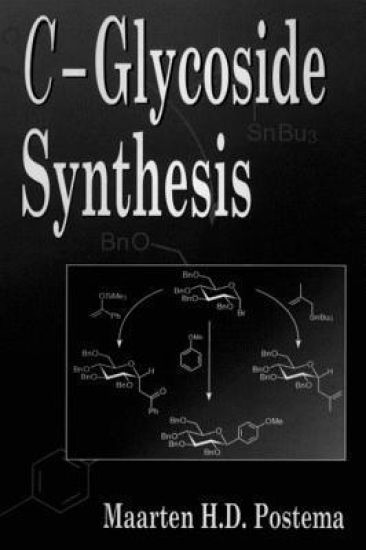
C-Glycoside Synthesis

Maarten Postema

CRC Press Inc
1995
sidottu
This book examines methods particularly well suited for either a- or b-C-glycoside formation. It helps field workers quickly select the best method for synthesizing a particular type of C-glycoside. The use of C-glycosides as synthons in natural product synthesis is also addressed.
C.L.R. James

C.L.R. James

Paul Buhle

Verso Books
1989
nidottu
C.L.R. James is one of the twentieth century's most remarkable individuals. As the author of the influential book The Black Jacobins, he is widely recognized as the premier scholar of slave revolt; the publication of his acute and sensitive volume Beyond a Boundary established an equal reputation as a historian of sport; and his tireless political and intellectual interventions have become the hallmark of a highly creative Marxist thinker, a brilliant dialectician and the last surviving pioneer of Pan-African liberation.James's work has never previously been studied in its entirety. Now Paul Buhle, a longtime editorial collaborator with James, has produced a rich and informed analysis of his accomplishments. Drawing upon extensive interviews with James, his critics and his erstwhile supporters, together with many previously unpublished documents, Buhle's book offers an appreciative and enlightening portrait of the man and his times. The author also sheds new light on subjects ranging across Pan-Africanism, West Indian literature, British and American Marxism and the rise of third world nationalism.
C.L.R.James

C.L.R.James

University of Massachusetts Press
1995
nidottu
C.L.R. James (1901-1989) made important contributions in a range of fields - literature, criticism, cultural studies, political theory, history and philosophy, serving as a mentor to two generations of international intellectuals. These essays offer a fresh perspective on his life and writings.
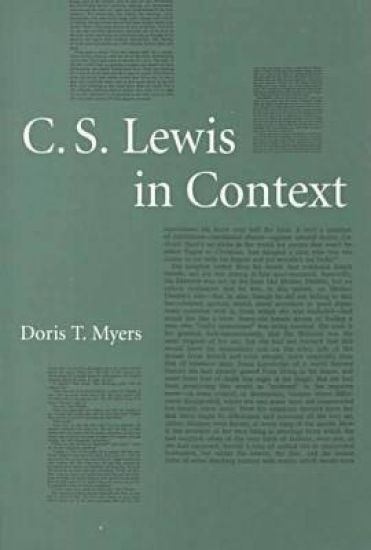
C.S.Lewis in Context

C.S.Lewis in Context

Doris T. Myers

Kent State University Press
1998
nidottu
Although C. S. Lewis (1898-1963) achieved a level of popularity as a fiction writer, literary scholars have tended to view him as a minor figure working in an insignificant genre-science fiction-or have pigeonholed him as a Christian apologist and moralist. In C. S. Lewis in Context, Doris T. Myers places his work in the literary milieu of his times and the public context of language rather than in the private realm of personal habits or relationships. A central debate early in the 20th century concerned the nature of language: was it primarily objective and empirical, as Charles K. Ogden and Ivor A. Richards argued in The Meaning of Meaning, or essentially metaphorical and impressionistic, the approach of Owen Garfield in Poetic Diction? Lewis espoused the latter theory and integrated it into the purpose and style of his fiction. Myers therefore argues that he was not “out of touch with his time" as some critics claim, but a 20th-century literary figure engaged in the issues of his day. New readings of many of Lewis’s best known works reflect this linguistic approach. For example, Myers analyzes The Pilgrim’s Regress (1933) in terms of a distinction between archetypal and individual metaphor to highlight the work’s strengths and weaknesses. Instead of interpreting That Hideous Strength (1945) conventionally as a defense of Christianity, she reformulates the debate as that of language the facilitator of rule versus language the instrument of tyranny. She also draws a new parallel between the Chronicles of Narnia and Spenser’s Faerie Queen, showing that they are modeled on similar heroic ideals and narrative technique. Out of the Silent Planet (1938), Perelandra (1943), and Till We Have Faces (1956) are discussed in a new light as well. By approaching Lewis’s fiction through the linguistic controversies of his day, Myers not only develops a new framework within which to evaluate his works, but also clarifies his literary contributions. This valuable study will appeal to literary and linguistic scholars as well as to general enthusiasts of Lewis’s fiction.
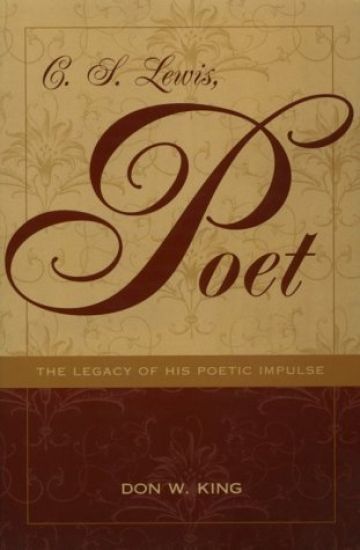
C.S. Lewis, Poet

C.S. Lewis, Poet

Don W. King

Kent State University Press
2001
nidottu
C. S. Lewis is best known as the creator of the fanciful world of Narnia and as a masterful writer of literary criticism and Christian apologetics. But he began his literary career as a poet, under the pseudonym of Clive Hamilton, and only later did he turn to prose writing and find fame. In C. S. Lewis, Poet: The Legacy of His Poetic Impulse Don W. King contends that Lewis's poetic aspirations enhanced his prose and helped make him the master stylist so revered by the literary world. With its careful examination of early diaries and letters, and the inclusion of four of Lewis's previously unpublished narrative poems and eleven of his previously unpublished short poems, this important book explains the man through his writing and considers how Lewis's lifelong devotion to poetry is best realized in his works of prose. Readers and admirers of Lewis will certainly find their understanding of his writing greatly enhanced by this perceptive book.
C. Elegans Atlas

C. Elegans Atlas

Hall David; Altun Zeynep

Cold Spring Harbor Laboratory Press,U.S.
2008
kierre
Derived from the acclaimed online WormAtlas, C. elegans Atlas is a large-format, full-color atlas of the hermaphroditic form of the model organism C. elegans, known affectionately as the worm by workers in the field. Prepared by the editors of the WormAtlas Consortium, David H. Hall and Zeynep F. Altun, this book combines explanatory text with copious, labeled, color illustrations and electron micrographs of the major body systems of C. elegans. Also included are electron microscopy cross sections of the worm. This laboratory reference is essential for the working worm biologist, at the bench and at the microscope, and provides a superb companion to the C. elegans II monograph. It is also a valuable tool for investigators in the fields of developmental biology, neurobiology, reproductive biology, gene expression, and molecular biology.
C. Fred Bergsten and the World Economy

C. Fred Bergsten and the World Economy

Michael Mussa

The Peterson Institute for International Economics
2006
nidottu
This engaging and informative book covers the range of issues on which C. Fred Bergsten and the Peterson Institute have distinguished themselves over the last 25 years, including trade liberalization, exchange rate regimes, international financial architecture, debt, economic sanctions and the impact of technology and globalization. Most of the Institute's senior research staff have contributed chapters, which are both retrospective and prescriptive.
C.R Mackintosh

C.R Mackintosh

Brett David

Reaktion Books
1992
nidottu
Between 1896 and 1906, Charles Rennie Mackintosh (1868 - 1928) produced a series of buildings and interiors in and around Glasgow of such startling invention that he immediately established himself as one of the truly great figures in early twentieth-century architecture and design.
Home Front by C. D. Peterson

Home Front by C. D. Peterson

C D Peterson

Self Reliance Press
2018
pokkari
In You Can't Go Home Again, Thomas Wolfe says, "Some things will never change. Some things will always be the same. Lean down your ear upon the earth and listen." C. D. Peterson's Homefront: A Memoir from WWII permits all of us to lean down and listen as daily life unfolds for ordinary people on a New England dairy farm during the 40's. We are introduced to the Peterson family: Douglas, the youngest--about 8 when the story starts and the voice of the author--his mother, Edie, his father, Harry, Uncle Carl, (every inch a Swede), his grandfather Enoch, known as Pop, and his grandmother always called "The Boss" because nothing on the farm escaped her eye. C. D. Peterson offers his reason for capturing the gentle nostalgia of this particular time and place: ..". I am among the 'last ones." Born in the 30s, we are the last ones who personally experienced the scarcity of the Depression, the fear and patriotism during World War II, and the exuberance in the brief pretelevision, postwar period when we felt safe and when the middle class was born."Home Front moves through a tenuous connection of episodes with slender threads of the author's memory--sentimental without being maudlin. Men are joining the Navy, including his own father. Japanese Americans on the west coast are being placed into internment camps. A school classmate claims that a German sub was seen off Cape Cod, and another classmate is absent for days because her father isn't coming home. Douglas hardly notices the slow changes as he matures. What seems to be constant is Hillcrest Farm - his farm. Crops need planting, hay needs cutting, cows need milking; milk needs pasteurizing; bottles need filling, customers need deliveries, and milk men need the kids who run from the truck to doorsteps with the wire baskets holding the clanking bottles.Such is the daily cycle of a dairy farm. However, the lateral events, the eclectic marginalia of life, are what living is all about: visiting a boy in an iron lung, listening to Edward R. Murrow "on the brown radio with the green tuning eye," finding a better place to fish, awkwardly kissing a girl for the first time, and riding down the river with her on a steel drum raft. It's hard to understand life while you are living it. The sounds of the traffic on the State highway grew louder--a subtle foreboding--as industry and modernization started moving away from Boston toward Hillcrest Farm. Shoppers' World, one of the first malls in America, was being built down the street and General Motors opened a huge assembly plant in town. More people now owned refrigerators and fewer customers of their dairy needed bottles of milk delivered every day. The converse of Wolfe's quote is also true: Some things will change.Home Front is a blend of two stories. On one hand it is a coming of age account of growing up in a tight knit family on a small farm in a small New England town, with flavors of Tom Sawyer, and on the other hand it is a narrative of how World War II and the post war years impacted the family. It brings home to the reader how like in a small rural town was irrevocably changes by the "progress" in the post war period. Homefront is unforgettable.C.D. Peterson's writing is commanding without idealizing the essence of the story; he is the master of the mot juste. The book has a complement of family photos and appealing illustrations that capture this time and place. The image of a lone barn cat in the final beat of the story is a masterful literary crescendo. Home Front concludes with an Addendum of Voices from The Home Front WWII. Thirty-eight people share their remembrances of this era in their own words and pictures.
C Street

C Street

Claudette Walker

Abacus Books, Incorporated
2011
nidottu
A Solomon Rose Novels - The searing sensual nature of Jacqueline is the yin/yang of a life...in a foreign world where power, wealth and corruption reign supreme. The secret of C Street is secrecy. When Solomon Rosenberg, a twenty year veteran of C Street, government lawyer and bi-polar CIA assassin breaks the silence by recording his missions, Jacqueline is left holding the evidence of the treasonous acts. The CIA, the men of C Street, are one step behind, on a mountain top, in London and all the way to Costa Rica. Palestine is willing to pay, and Israel's is offering to help. With the evidence of espionage, murder, and the computer hijacking of America, the game is on...
C. S. Lewis & Philosophy as a Way of Life

C. S. Lewis & Philosophy as a Way of Life

Adam Barkman

Winged Lion Press, LLC
2009
sidottu
C. S. Lewis, renowned Christian apologist and beloved author of children's novels, is rarely thought of as a "philosopher" per se despite having both studied and taught philosophy for several years at Oxford. Moreover, Lewis's long journey to Christianity was essentially philosophical -- passing through seven different stages. This journey, as well as every philosophical topic Lewis discussed, including metaphysics, natural theology, epistemology, logic, psychology, ethics, socio-political philosophy, and aesthetics are explained here in detail. Barkman incorporates previously unexplored treasures from Lewis's unpublished philosophy lecture notes, lost philosophical essays, and hand-written annotations from copies of his philosophical books, such as Aristotle's Ethics and Augustine's City of God. _._._._._ "Indispensable" Dr. James Como, author of "Remembering C.S. Lewis."_._._._._ "A magisterial work, chock full of fresh historical tidbits and penetrating analysis." Dr. David Bagget, author of "C.S. Lewis as Philosopher."