
Kirjahaku
Etsi kirjoja tekijän nimen, kirjan nimen tai ISBN:n perusteella.
1000 tulosta hakusanalla Caleb Perry Patterson

Polls indicate that many, if not most, Americans think that their religion should play some sort of role in the political arena. But are they misguided? When citizens allow their religious convictions to filter into the political sphere, are they acting as bad citizens? In a pluralistic democracy such as ours, what is the proper relationship between religion and politics? Religion and Democratic Citizenship critically examines a variety of proposals to address the question of whether and how religion should influence the activities of the American public square, from public deliberation to voting. These proposals commonly fall into two broad types of familiar strategies. On the one hand, mainstream liberal political theorists like John Rawls and others seek to keep religion and politics largely separate. On the other hand, pragmatists like William James, John Dewey, and Cornel West seek to reinterpret the meaning of religion itself so that it can be rendered compatible with democracy. Religion and Democratic Citizenship outlines the shortcomings of both of these strategies and aims to reframe the nature of the debate concerning the proper relationship between religion and politics by offering a useful framework for further discussion. Drawing influence from both Socrates and C. S. Peirce, the author proposes a model of the deliberative democracy designed to accommodate as many democratically predisposed citizens as possible, whether they are religious or not. In so doing, this book ultimately offers a strategy to accommodate religious participation in the activities of the democratic public square — a strategy that enables citizens to employ religious reasoning and meet the epistemic obligations of good deliberative democratic citizenship. Readers of this book will include researchers interested in Philosophy, Political Science, Law, Sociology, and Theology, as well as teachers, students, politicians, clergy, and concerned citizens.
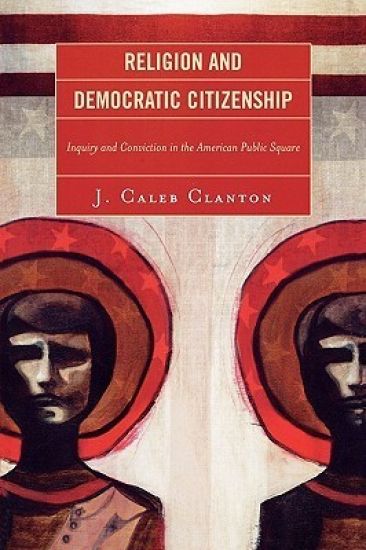
Polls indicate that many, if not most, Americans think that their religion should play some sort of role in the political arena. But are they misguided? When citizens allow their religious convictions to filter into the political sphere, are they acting as bad citizens? In a pluralistic democracy such as ours, what is the proper relationship between religion and politics? Religion and Democratic Citizenship critically examines a variety of proposals to address the question of whether and how religion should influence the activities of the American public square, from public deliberation to voting. These proposals commonly fall into two broad types of familiar strategies. On the one hand, mainstream liberal political theorists like John Rawls and others seek to keep religion and politics largely separate. On the other hand, pragmatists like William James, John Dewey, and Cornel West seek to reinterpret the meaning of religion itself so that it can be rendered compatible with democracy. Religion and Democratic Citizenship outlines the shortcomings of both of these strategies and aims to reframe the nature of the debate concerning the proper relationship between religion and politics by offering a useful framework for further discussion. Drawing influence from both Socrates and C. S. Peirce, the author proposes a model of the deliberative democracy designed to accommodate as many democratically predisposed citizens as possible, whether they are religious or not. In so doing, this book ultimately offers a strategy to accommodate religious participation in the activities of the democratic public square — a strategy that enables citizens to employ religious reasoning and meet the epistemic obligations of good deliberative democratic citizenship. Readers of this book will include researchers interested in Philosophy, Political Science, Law, Sociology, and Theology, as well as teachers, students, politicians, clergy, and concerned citizens.
Greening Auto Jobs: A Critical Analysis of the Green Job Solution details current and problematic understandings of what constitutes a "green job." Adopting an approach grounded in critical political economy, this book presents a framework to scrutinize the green job solution and the theoretical framework which overwhelmingly informs contemporary green job creation efforts and ecological modernization. The text also explores the tensions that encircle the world of work and environmental action, often referred to as "jobs versus the environment," by detailing the conflicting commitments of political-economic actors to the idea of green job creation. These conflicts are outlined through an examination of the political-economic debate that has surrounded the Australian Government’s environmental plans from 2008 to 2012 and the conflicting positions of Australian trade unions on environmentally transitioning the world of work. Interviews with key political-economic actors provide in-depth and nuanced understandings of the varied perspectives of political and union leaders in Australia. The second part of the book presents a detailed case study of the posited green job solution within the specific context of the Australian automotive manufacturing industry. The case study is also informed by interviews with key industry, union, and policymakers. The automotive industry is scrutinized not only because it has expressed going green as important to its long-term economic future, but because the Australian Government declared that its $6.2 billion "New Car Plan for a Greener Future" policy would create green jobs. Therefore, the book engages with the task of examining the three multinational vehicle producers operating in Australia—Ford, GM Holden, and Toyota—and how they have responded and engaged with the idea of green jobs, greening the manufacturing process, and the vehicles they produce in Australia.
Greening Auto Jobs: A Critical Analysis of the Green Job Solution details current and problematic understandings of what constitutes a "green job." Adopting an approach grounded in critical political economy, this book presents a framework to scrutinize the green job solution and the theoretical framework which overwhelmingly informs contemporary green job creation efforts and ecological modernization. The text also explores the tensions that encircle the world of work and environmental action, often referred to as "jobs versus the environment," by detailing the conflicting commitments of political-economic actors to the idea of green job creation. These conflicts are outlined through an examination of the political-economic debate that has surrounded the Australian Government’s environmental plans from 2008 to 2012 and the conflicting positions of Australian trade unions on environmentally transitioning the world of work. Interviews with key political-economic actors provide in-depth and nuanced understandings of the varied perspectives of political and union leaders in Australia. The second part of the book presents a detailed case study of the posited green job solution within the specific context of the Australian automotive manufacturing industry. The case study is also informed by interviews with key industry, union, and policymakers. The automotive industry is scrutinized not only because it has expressed going green as important to its long-term economic future, but because the Australian Government declared that its $6.2 billion "New Car Plan for a Greener Future" policy would create green jobs. Therefore, the book engages with the task of examining the three multinational vehicle producers operating in Australia—Ford, GM Holden, and Toyota—and how they have responded and engaged with the idea of green jobs, greening the manufacturing process, and the vehicles they produce in Australia.
Mycroft Holmes, charged with ensuring the personal safety of Queen Victoria, calls on his brother for help when a number of attempts have been made on her life and when two unexplained deaths occur amongst the staff at her Scottish residencies. Accompanied by Dr Watson, Sherlock Holmes goes north by train, examining the few facts Mycroft has been able to cryptically supply. To Watson's bafflement he is sure there is a link between these deaths and the murder in the old royal apartments at Holyrood of the secretary to Mary, Queen of Scots: a killing which left a bloodstain that daily refreshes itself and in a room where voices can be heard in the darkest hours of the night. Can Holmes's extraordinary deductive powers solve the historical crime as well as the contemporary one? An original, beautifully crafted mystery story which is also a respectful homage to the master of the whodunnit.

Reissue of this ground-breaking historical whodunnit, in which 1890s New York is as much a character as the investigators
Reissue of the sequel to the bestselling The Alienist
The bestselling author of The Alienist and Angel of Darkness puts a very special spin on a mystery thriller set in the near future.

Reissue of this ground-breaking historical whodunnit, in which 1890s New York is as much a character as the investigators
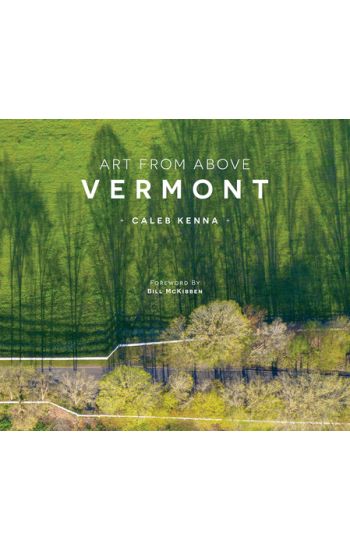
A look at Vermont's wonders from an abstract, aerial perspective, combining striking drone images with journalistic observations, from New York Times contributor Caleb Kenna. Caleb Kenna's vertiginous views of Vermont invite a new way of looking at the Green Mountain State. These stunningly abstract drone images reveal hidden patterns and are rich with detail, color, shadow, and mood. Tractor tracks on a field in Weybridge; fresh snowfall on an apple orchard in Cornwall; the swirling Nulhegan River in Brunswick. The 130 color photographs, most of them taken around the Champlain Valley, were inspired by Alfred Stieglitz's Equivalent series and the work of his protege, Minor White. They invite us on a journey of excitement and discovery, one that Kenna has described as a daily practice and a form of meditation.


Welcome to the string, a game of impossible decisions and deadly consequences. Let's go over the ground rules.Rule #1: Participation is mandatory.Rule #2: If anyone refuses to play, all threats will come to pass.Game on.Get ready for a deadly social experiment as a sociopath known as The Conductor delivers disturbing threats and twisted moral dilemmas to unsuspecting students and staff. As a powerful instinct for self-preservation sweeps through the campus, one man has a grave decision to make. Will university cop Markus Haas play the game to protect those he loves? Or will he break the string and incite massive chaos--and even death?In the great suspense tradition of Ted Dekker and Steven James, Caleb Breakey's explosive debut novel will have you turning pages into the night.