Kirjojen hintavertailu. Mukana 11 699 587 kirjaa ja 12 kauppaa.

Kirjahaku

Etsi kirjoja tekijän nimen, kirjan nimen tai ISBN:n perusteella.

1000 tulosta hakusanalla Charles Capper

Charles Evans' Watercolours in a Weekend

Charles Evans' Watercolours in a Weekend

Charles Evans

David Charles
2008
nidottu
This is a unique guide from well-known artist Charles Evans that will show beginners how to paint a complete watercolour in just one weekend. Each course starts with practice exercises to be completed on the Saturday - readers are then ready to complete the full watercolour painting on the Sunday. After introducing essential materials and the workspace, Charles guides you through eight popular watercolour subjects with step-by-step illustrations. Written in a clear and approachable no-nonsense style, the reader will learn how to create vibrant finished paintings in the quickest possible time.
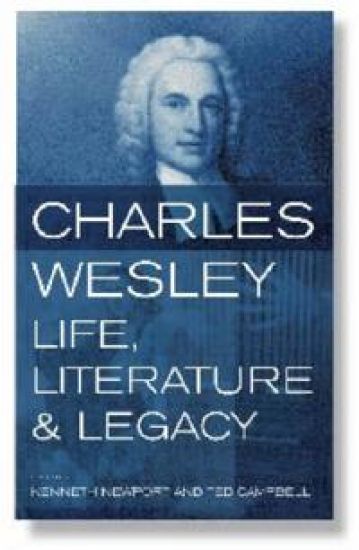
Charles Wesley

Charles Wesley

Epworth Press
2007
nidottu
For the first time in history, this timely landmark volume brings together contributions from the leading scholars working on the life and work of Charles Wesley. Published in time for the 2007 tercentenary of Charles Wesley's birth, this volume celebrates the continuing importance of Charles Wesley as one of the major figures of 18th century Christian history, one of the most prominent hymn writers of the English speaking world and one of the founders of the worldwide Methodist movement. The contributors include: Jeremy Gregory, Geoffrey Wainwright, Henry Rack, Paul Chilcote, Anna Lawrence and Susan White.
Charles Wesley in America

Charles Wesley in America

S.T. Kimbrough

JAMES CLARKE CO LTD
2023
nidottu
In 1736, a century into Britain's expansion in North America, Charles Wesley arrived, and departed, the American colonies. His time in Georgia, where he was a missionary of the Church of England, Colonel Oglethorpe's personal aide, and secretary of Indian Affairs, was filled with discord and difficulty. Despite being treated warmly by the Anglican clergy of Boston, he struggled as a newly ordained Anglican priest, and was enveloped by scandal when two women accused him and Oglethorpe of moral impropriety. Charles Wesley in America is the first comprehensive treatment of this period in Wesley's ministry. Kimbrough provides the first explanation of Wesley's silence following the Oglethorpe affair, and also examines his negative attitudes towards the Revolutionary War and nascent opposition to slavery. Drawing on primary sources such as Wesley's poetry and a rare letter exchange between two former slaves whom Wesley befriended in Bristol, Kimbrough gives fresh insight into this formative period and the impact it had on Wesley's later career.
Charles Darwin's the Origin of Species

Charles Darwin's the Origin of Species

Manchester University Press
2013
nidottu
This volume marks a new approach to a seminal work of the modern scientific imagination: Charles Darwin's The Origin of Species (1859). Darwin's central theory of natural selection neither originated nor could be contained, with the parameters of the natural sciences, but continues to shape and challenge our most basic assumptions about human social and political life.Several new readings, crossing the fields of history, literature, sociology, anthropology and history of science, demonstrate the complex position of the text within cultural debates past and present. Contributors examine the reception and rhetoric of the Origin and its influence on systems of classification, the nineteenth-century women's movement, literary culture (criticism and practice) and Hinduism in India. At the same time, a re-reading of Darwin and Malthus offers a constructive critique of our attempts to map the hybrid origins and influences of the text.This volume will be the ideal companion to Darwin's work for all students of literature, social and cultural history and history of science.
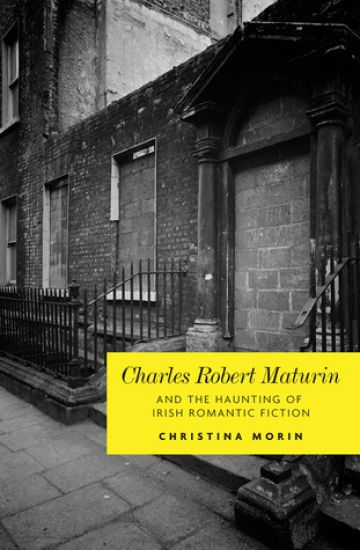
Charles Robert Maturin and the Haunting of Irish Romantic Fiction
A self-described “disappointed Author”, Charles Robert Maturin (1780-1824) has been largely relegated to the margins of literary history since his death in 1824. Yet, as this study demonstrates, he exerted a fundamental influence on the development of Irish fiction in the early nineteenth century. In particular, his novels dramatically underscore the continuing presence and deployment of the Gothic mode in Romantic Ireland – an influence now frequently overlooked in critical attention to the national and regional forms popularized in Ireland in the wake of Anglo-Irish Union (1801). Working from Jacques Derrida’s influential theory on ghosts, this study positions Maturin as the cornerstone on which to build a new paradigm of Irish Romantic fiction, one which accounts for the spectral traces of the past – cultural, social, and political – evident in early-nineteenth century Irish fiction. As it does so, it calls for renewed critical and popular attention to an author who himself continues spectrally to emerge in the works of his literary successors.
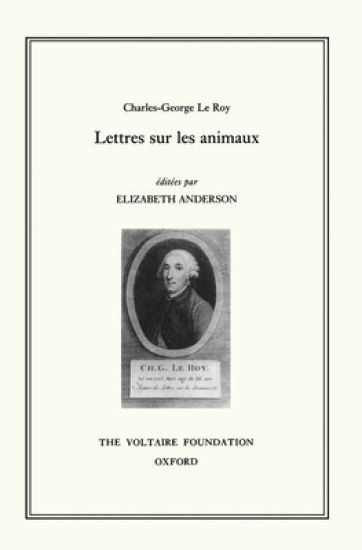
Charles-George le Roy, Lettres sur les Animaux

Charles-George le Roy, Lettres sur les Animaux

Charles-Georges Le Roy

Voltaire Foundation
1994
sidottu
La dernière édition des Lettres sur les animaux, ouvrage de l’encyclopédiste mineur Charles-George Le Roy, date de 1896. Cette nouvelle édition propose une présentation très respecteuse de la pensée originale de l’auteur, elle précise dans quelles circonstances les divers éléments du livre furent successivement publiés et retrace son évolution depuis les articles HOMME (Morale) et INSTINCT de l’Encyclopédie jusqu’à l’édition complète de 1802. L’introduction situe les Lettresdans l’œuvre de Le Roy qui, comptant l’écriture parmi ses activités, fut d’autant plus mêlé aux conflits d’idées de l’époque. Des documents inédits permettent d’établir avec exactitude combien Le Roy a su mettre à profit ses fonctions de lieutenant des chasses des Parcs de Versailles pour exercer ses talents d’auteur. A la lumière de divers autres documents, et parmi eux des inédits, il apparaît que Le Roy fréquentait quelques-uns des penseurs les plus connus de l’époque (Condillac, Buffon, Diderot, Helvétius, d’Holbach), ainsi que des personnalités de la haute société (en particulier Mme de Marchais), deux mondes don’t l’influence est perceptible dans les Lettres sur les animaux. Celles-ci font écho non seulement aux écrivains que leur auteur connaissit personnellement, mais aussi aux nombreux autres qu’il avait lus, notamment Montesquieu, Voltaire, Rousseau. Inspiré et nourri de ces contacts scientifiques, littéraires et philosophiques, Le Roy a su s’en dégager pour développer sa propre pensée et, à l’image de l’excellent accueil que les contemporains et la postérité ont réservé à l’ouvrage, ses idées ne peuvent qu’éveiller un vif intérêt.
Charles-François Pannard et l'esthétique du 'petit'

Charles-François Pannard et l'esthétique du 'petit'

Nathalie Rizzoni

Voltaire Foundation
2000
nidottu
Cet ouvrage a trouvé son origine dans le désir d’interroger du côté de la peinture et de la littérature l’esthétique de la première moitié du XVIIIe siècle, de cet âge rococo qui se méfie de la grandeur. L’interrogation sur les ‘petits genres’ a conduit à faire ressurgir un véritable écrivain, Pannard, un des fondateurs de l’opéra-comique, ‘père du vaudeville moral’, homme du théâtre de la Foire et poète , dont la tradition critique ne gardait qu’une image pittoresque sans doute, mais fort réductrice. A vrai dire, ce partisan d’une écriture du rire se moquait assez de la postérité. Ce n’est pas une raison pour ignorer en quoi il est aussi un héritier de La Fontaine et de Rabelais, et entretient avec Marivaux des rapports subtilement ludiques. Eminemment conscient de l’artifice du théâtre autant qu’il se veut, en morale, fidèle à la nature, Pannard est aussi le poète ‘ivre de mots’, amoureux des expériences sur le langage, où passe parfois l’ange du bizarre, le spectre d’un carnavalesque aux raffinements innatendus, où le rire et la critique n’exclue pas l’émotion.Avant de sombrer dans les tristesses néoclacissantes, le siècle sur reconnaître un de ses représentants en cet écrivain qui mariait si joyeusement l’art d’écrire et l’art de vivre.
Charles-Joseph Natoire and the Académie de France in Rome
In 1752 Charles-Joseph Natoire, then a highly successful painter, assumed the directorship of the prestigious Académie de France in Rome. Twenty-three years later he was removed from office, criticised as being singularly inept. What was the basis for this condemnation that has been perpetuated by historians ever since? Reed Benhamou’s re-evaluation of Natoire’s life and work at the Académie is the first to weigh the prevailing opinion against the historical record.The accusations made against Charles-Joseph Natoire were many and varied: that his artistic work was increasingly unworthy of serious study; that he demeaned his students; that he was a religious bigot; that he was a fraudulent book-keeper. Benhamou evaluates these and other charges in the light of contemporary correspondences, critics’ assessment of his work, legal briefs, royal accounts and the parallel experiences of his precursors and successors at the Académie. The director’s role is shown to be multifaceted and no director succeeded in every area. What is arresting is why Natoire was singled out as being uniquely weak, uniquely bigoted, uniquely incompetent. The Charles-Joseph Natoire who emerges from this book differs in nearly every respect from the unflattering portrait promulgated by historians and popular media. His increasingly iconoclastic students rebelled against the traditional qualities valued by the French artistic elite; the Académie went underfunded because of the effects of war and a profligate king, and he was caught between two competing institutional regimes. In this book Reed Benhamou not only unravels the myth and reality surrounding Natoire, but also also sheds light on the workings of the institution he served for nearly a quarter of a century.
Charles Bean

Charles Bean

Ross Coulthart

HARPERCOLLINS PUBLISHERS (AUSTRALIA) PTY LTD
2015
nidottu
Joint winner: Prize for Australian History, 2015 Prime Minister's Literary Awards This award-winning biography is a long overdue reassessment of the iconic Australian war correspondent 'The book I have enjoyed most in recent times has been Ross Coulthart's on the great war correspondent Charles Bean' - Peter FitzSimons, Sun Herald 'Fascinating biography ...strongly recommend it' Hon. Malcolm Turnbull via Twitter Charles Bean's wartime reports and photographs mythologised the Australian soldier and helped spawn the notion that the Anzacs achieved something nation-defining on the shores of Gallipoli and the battlefields of western Europe. In his quest to get the truth, Bean often faced death beside the Diggers in the trenches of Gallipoli and the Western Front - and saw more combat than many. But did Bean tell Australia the whole story of what he knew? In this timely new biography, Ross Coulthart investigates the untold story behind Bean's jouralistic dilemma - his struggle to tell Australia the truth but also the pressure he felt to support the war and boost morale at home by suppressing what he'd seen. '[Bean] had an obsession with recording the truth and Coulthart has lived up to his legacy in this superb biography' - Tim Hilferty, Adelaide Advertiser 'This is among the best biographies of an Australian historian available, fittingly released during the 100th anniversary of the outbreak of the events Bean meticulously recorded.' - Justin Cahill, Booktopiablog
Charles Dickens's American Audience

Charles Dickens's American Audience

Robert McParland

Lexington Books
2010
sidottu
From 1837 to 1912, Charles Dickens was by far the most popular writer for American readers. Through several sources including statistics, literary biography, newspapers, memoirs, diaries, letters, and interviews, Robert McParland examines a historical time and an emerging national consciousness that defined the American identity before and after the Civil War. American voices present their views, tastes, emotional reactions and identifications, and deep attachment and love for Dickens's characters, stories, themes, and sensibilities as well as for the man himself. Bringing together contemporary reactions to Dickens and his works, this book paints a portrait of the American people and of American society and culture from 1837 to the turn of the twentieth century. It is in this view of nineteenth-century America—its people and their values, their reading habits and cultural views, the scenarios of their everyday lives even in the face of the drastic changes of the emerging nation—that Charles Dickens's American Audience makes its greatest impact.
Charles Dickens's American Audience

Charles Dickens's American Audience

Robert McParland

Lexington Books
2011
nidottu
From 1837 to 1912, Charles Dickens was by far the most popular writer for American readers. Through several sources including statistics, literary biography, newspapers, memoirs, diaries, letters, and interviews, Robert McParland examines a historical time and an emerging national consciousness that defined the American identity before and after the Civil War. American voices present their views, tastes, emotional reactions and identifications, and deep attachment and love for Dickens's characters, stories, themes, and sensibilities as well as for the man himself. Bringing together contemporary reactions to Dickens and his works, this book paints a portrait of the American people and of American society and culture from 1837 to the turn of the twentieth century. It is in this view of nineteenth-century America—its people and their values, their reading habits and cultural views, the scenarios of their everyday lives even in the face of the drastic changes of the emerging nation—that Charles Dickens's American Audience makes its greatest impact.
Charles Testut's Le Vieux Salomon

Charles Testut's Le Vieux Salomon

Sheri Abel

Lexington Books
2009
sidottu
Through the study of Charles Testut's Le Vieux Salomon, a nineteenth-century southern Francophone antislavery novel, this book encourages a reassessment of the southern experience and of the canon of southern literature. Abel argues that Testut's distinctiveness lies in his French intellectual heritage and in his awareness of the rich historical and cultural links between the ethnic legacies of Louisiana and the French Caribbean. Le Vieux Salomon is marked by a sense of place through the author's identification with two regions colonized by the French and which are symbolically represented in the bodies of his black protagonists. In this mulatto couple converge the history and memory of French colonization in the Antilles and Louisiana. Exploring Testut's influences, from Masonic symbolism and principles through nineteenth-century French socialist thought, the book shows how Testut endeavors, through his construction of raced and gendered identity in his protagonists, to eradicate the association of blackness with inferiority. It finishes with a comparative study between Le Vieux Salomon and Harriett Beecher Stowe's Uncle Tom's Cabin to demonstrate how Testut's perspective as a French southern local writer sets him apart from Stowe's Northern view, further emphasizing Testut's contribution to the formulation of a southern cultural and literary identity.
Charles Sanders Peirce and a Religious Metaphysics of Nature
In this enlightening and original study on the cultivation of a religious understanding of nature, Leon Niemoczynski applies Charles Sanders Peirce's thought on metaphysics to 'ecstatic naturalism,' the philosophical perspective developed by Robert Corrington. Niemoczynski points to Peirce's phenomenological and metaphysical understanding of possibility-the concept of 'Firstness'-as especially critical to understanding how the divine might be meaningfully encountered in religious experience. He goes on to define his own concept of speculative naturalism, offering a new approach to thinking about nature that joins the essence of pragmatism with the heretical boldness of speculative thought.
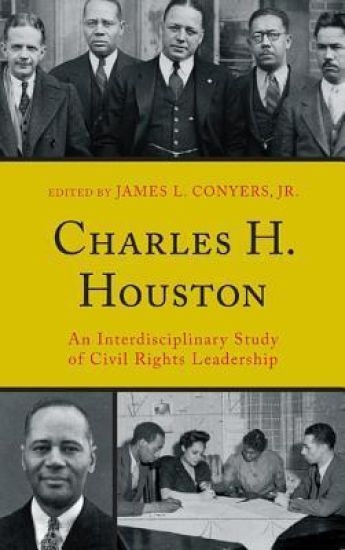
Charles H. Houston

Charles H. Houston

Lexington Books
2012
sidottu
This study seeks to examine the life and work of Charles Hamilton Houston and the scope of this project will focus on the implementation and organization of the proposed plan in three ways: philosophical ideas, constructive engagement, and lasting contributions of this legal scholar activist. When compiling scholarly articles for this volume, the challenge was examining not just legal precedents of Houston, but his contributions to the study of civic engagement, with emphasis on privilege, racism, disparity, and educational philosophy.
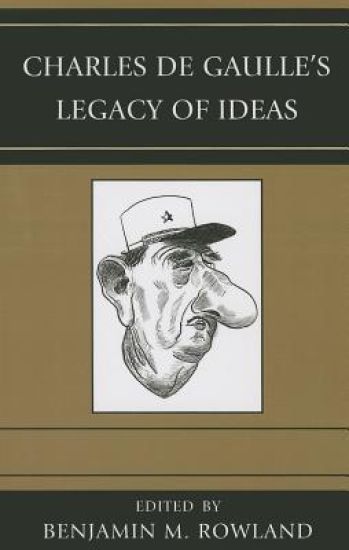
Charles de Gaulle's Legacy of Ideas
The essays in this volume examine selected national, regional European, and international policies of Charles de Gaulle, giving consideration to their significance in his own time, and today. Not everything de Gaulle did withstands the test of time. Nor, obviously, was everything beyond criticism in his own time. Nonetheless, a main finding, in the words of one essayist, is that de Gaulle had an 'uncanny sense of where history was going' and the skill to position his country accordingly. De Gaulle also stands as a testament to the power of individuals in history, a somewhat unfashionable viewpoint in modern university curriculums. Today, when France's destiny appears increasingly to depend on structures and institutions beyond its national control, including a Europe weakened by the sovereign debt crisis, and a global economic system accountable to no one, it seems timely to reconsider the record of the twentieth century's greatest Frenchman, whose skill at dealing with the problems of his time can inspire today's generation of politicians and statesmen.
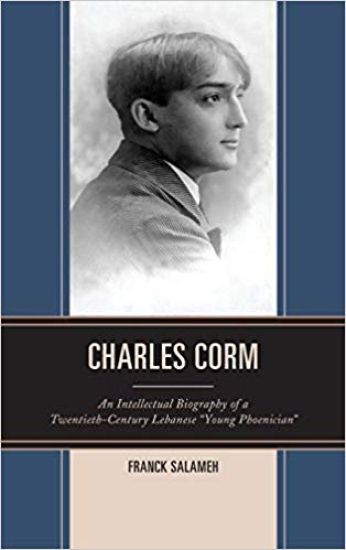
Charles Corm

Charles Corm

Franck Salameh

Lexington Books
2015
sidottu
Charles Corm: An Intellectual Biography of a Twentieth-Century Lebanese “Young Phoenician” delves into the history of the modern Middle East and an inquiry into Lebanese intellectual, cultural, and political life as incarnated in the ideas, and as illustrated by the times, works, and activities of Charles Corm (1894–1963). Charles Corm was a guiding spirit behind modern Lebanese nationalism, a leading figure in the “Young Phoenicians” movement, and an advocate for identity narratives that are often dismissed in the prevalent Arab nationalist paradigms that have come to define the canon of Middle East history, political thought, and scholarship of the past century. But Charles Corm was much more than a man of letters upholding a specific patriotic mission. As a poet and entrepreneur, socialite and orator, philanthropist and patron of the arts, and as a leading businessman, Charles Corm commanded immense influence on modern Lebanese political and social life, popular culture, and intellectual production during the interwar period and beyond. In many respects, Charles Corm has also been “the conscience” of Lebanese society at a crucial juncture in its modern history, as the autonomous sanjak/Mutasarrifiyya (or Province) of Mount-Lebanon and the Vilayet (State) of Beirut of the late nineteenth century were navigating their way out of Ottoman domination and into a French Mandatory period (ca. 1918), before culminating with the independence of the Republic of Lebanon in 1943.
Charles de Gaulle's Legacy of Ideas
The essays in this volume examine selected national, regional European, and international policies of Charles de Gaulle, giving consideration to their significance in his own time, and today. Not everything de Gaulle did withstands the test of time. Nor, obviously, was everything beyond criticism in his own time. Nonetheless, a main finding, in the words of one essayist, is that de Gaulle had an 'uncanny sense of where history was going' and the skill to position his country accordingly. De Gaulle also stands as a testament to the power of individuals in history, a somewhat unfashionable viewpoint in modern university curriculums. Today, when France's destiny appears increasingly to depend on structures and institutions beyond its national control, including a Europe weakened by the sovereign debt crisis, and a global economic system accountable to no one, it seems timely to reconsider the record of the twentieth century's greatest Frenchman, whose skill at dealing with the problems of his time can inspire today's generation of politicians and statesmen.
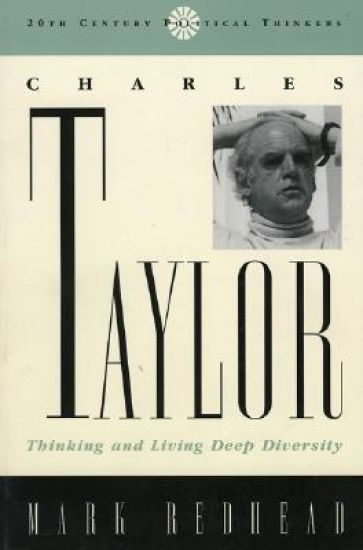
Charles Taylor

Charles Taylor

Mark Redhead

Rowman Littlefield Publishers
2002
nidottu
Over the past four decades, Charles Taylor's work as an intellectual historian, epistemologist, and normative political theorist has made him a leading figure in contemporary social philosophy. In Charles Taylor: Thinking and Living Deep Diversity, Mark Redhead examines the problem of political fragmentation, the problem of how to accommodate narrowly defined groups while promoting allegiance to a larger polity, through an analysis of Taylor's thought and politics. Redhead argues that Taylor's work evinces a gallant, though unsucessful confrontation with fragmentation that dramatically illuminates the politcal, moral and epistemological tensions at play in a problem of political fragmentation. Charles Taylor is both a major contribution to contemporary debates about liberalism, group rights, and multiculturalism as well as a path breaking study of the politics, life, and thought of Charles Taylor.
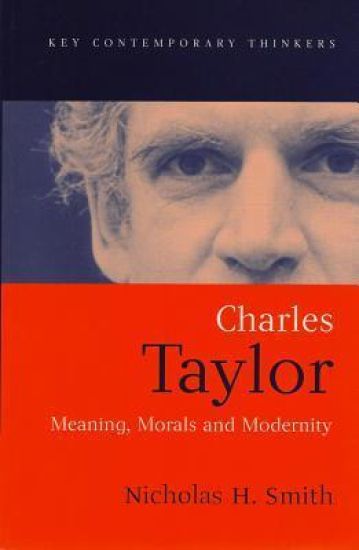
Charles Taylor

Charles Taylor

Nicholas H. Smith

Polity Press
2001
sidottu
The Canadian philosopher Charles Taylor is a key figure in contemporary debates about the self and the problems of modernity. This book provides a comprehensive, critical account of Taylor's work. It succinctly reconstructs the ambitious philosophical project that unifies Taylor's diverse writings. And it examines in detail Taylor's specific claims about the structure of the human sciences; the link between identity, language, and moral values; democracy and multiculturalism; and the conflict between secular and non-secular spirituality. The book also includes the first sustained account of Taylor's career as a social critic and political activist. Clearly written and authoritative, this book will be welcomed by students and researchers in a wide range of disciplines, including philosophy, psychology, politics, sociology, anthropology, cultural studies and theology.