

Kirjahaku
Etsi kirjoja tekijän nimen, kirjan nimen tai ISBN:n perusteella.
1000 tulosta hakusanalla Chasity Conley

Flame-haired Charity Delafield has grown up in a vast, isolated house - most of which she is forbidden to explore - by her strict, cold father. All her life, she has had the same strange dream - a dream of a dark corridor, hidden somewhere in the house.

The poor guy doesn't understand why he is punished constantly and forbidden to cum by his Mistress
Are charity shops really there to help the Developing World or are they just a sop to the consciences of the middle-class people who run them? Easy to stage, thought-provoking and full of "characters" this is a very amusing play about the nature of charity.4 women, 1 man




The Sister of Charity; The Magic Lantern; A Tribute to the Memory of Lafayette; With Minor Poems and Translations
Edward Farhill
Trieste Publishing
2018
nidottu

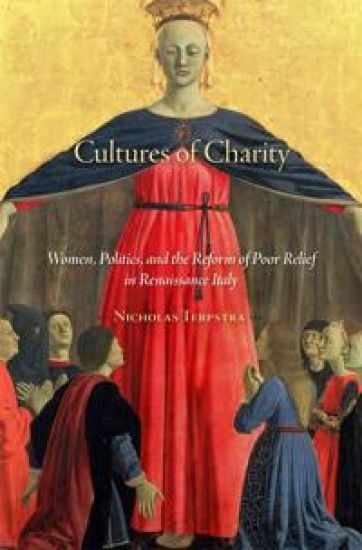
Renaissance Italians pioneered radical changes in ways of helping the poor, including orphanages, workhouses, pawnshops, and women’s shelters. Nicholas Terpstra shows that gender was the key factor driving innovation. Most of the recipients of charity were women. The most creative new plans focused on features of women’s poverty like illegitimate births, hunger, unemployment, and domestic violence. Signal features of the reforms, from forced labor to new instruments of saving and lending, were devised specifically to help young women get a start in life.Cultures of Charity is the first book to see women’s poverty as the key factor driving changes to poor relief. These changes generated intense political debates as proponents of republican democracy challenged more elitist and authoritarian forms of government emerging at the time. Should taxes fund poor relief? Could forced labor help build local industry? Focusing on Bologna, Terpstra looks at how these fights around politics and gender generated pioneering forms of poor relief, including early examples of maternity benefits, unemployment insurance, food stamps, and credit union savings plans.
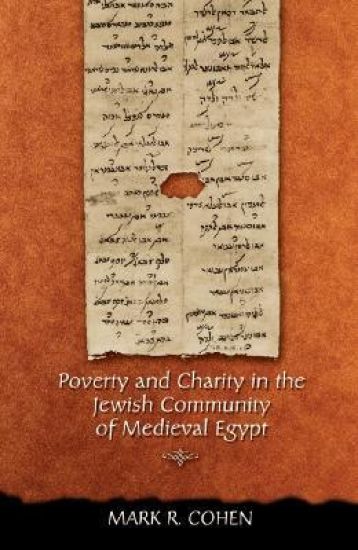
Poverty and Charity in the Jewish Community of Medieval Egypt
Mark R. Cohen
Princeton University Press
2005
sidottu
What was it like to be poor in the Middle Ages? In the past, the answer to this question came only from institutions and individuals who gave relief to the less fortunate. This book, by one of the top scholars in the field, is the first comprehensive book to study poverty in a premodern Jewish community--from the viewpoint of both the poor and those who provided for them. Mark Cohen mines the richest body of documents available on the matter: the papers of the Cairo Geniza. These documents, located in the Geniza, a hidden chamber for discarded papers situated in a medieval synagogue in Old Cairo, were preserved largely unharmed for more than nine centuries due to an ancient custom in Judaism that prohibited the destruction of pages of sacred writing. Based on these papers, the book provides abundant testimony about how one large and important medieval Jewish community dealt with the constant presence of poverty in its midst. Building on S. D. Goitein's Mediterranean Society and inspired also by research on poverty and charity in medieval and early modern Europe, it provides a clear window onto the daily lives of the poor. It also illuminates private charity, a subject that has long been elusive to the medieval historian. In addition, Cohen's work functions as a detailed case study of an important phenomenon in human history. Cohen concludes that the relatively narrow gap between the poor and rich, and the precariousness of wealth in general, combined to make charity "one of the major agglutinates of Jewish associational life" during the medieval period.

The late twentieth century saw charities grow from timid service deliverers into major providers with campaigning teeth. What caused this? How did they gain confidence and strength? In this fascinating history, examined through the eyes of RNIB from 1970 to 2010, Ian Bruce examines the internal drivers and the external socio-political environment that allowed and encouraged this explosion. Bruce's experience of leading a charity at the forefront of this change, and his participation in the wider charity sector for fifty years as both activist and academic, gives him an unsurpassed understanding of what happened and why. His first-hand knowledge will speak to charity workers as well as academics, covering themes such as the rise of beneficiary power against patronising providers; the change from welfare to rights; the shift from the medical to the social model of disability; and the adoption of social welfare and business professionalisms such as Strategic Planning and Charity Marketing. Today's charities have much to learn from the successes and mistakes of this dynamic period.
Faith and Charity
Pluto Press
2016
sidottu
Since the 1990s, most African economies and public spheres have been liberalised, and new civil society actors have emerged. As mapped out by Marie Nathalie LeBlanc and Louis Audet Gosselin, in West Africa Christian and Muslim organisations have come to dominate the field of humanitarian assistance. Moving beyond mainstream development theory, Faith and Charity brings out the crucial role of religion in the development process and the interplay of moral and political ideologies. From faith-based NGOs to individual local activists, the authors explore how each group makes sense of, and contributes to, the wider process of social development in the neoliberal era. Based on extensive research and deploying a sophisticated and original frame of analysis, Faith and Charity will make an important contribution to the existing literature on development anthropology and the anthropology of religion in Africa.
In twenty-six short topical chapters, teens and young adults share their questions and real-life experiences about sexual relationships. Their questions range from "How far is too far?" to "What's wrong with cohabitation?" Two questions posed by many people of all ages both within and outside the Church are also treated: "Chastity sounds nice, but is it practical?" and "What do the Bible and celibate men know about sex anyway?" Teens will find "A Case for Chastity" a readable and informative book, and their parents and teachers, particularly catechists and DREs, will find it an invaluable resource.
Poverty and Charity in Middle Eastern Contexts
State University of New York Press
2003
pokkari
Addresses the ideals and institutions through which Middle Eastern societies have confronted poverty and the poor.Offering insights and analysis in a field that has only recently come into existence, this book explores the ideals and institutions through which Middle Eastern societies-from the rise of Islam in the seventh century C.E. to the present day-have confronted poverty and the poor. By introducing new sources and presenting familiar ones with new questions, the contributors examine ideas about poverty and the poor, ideals and practices of charity, and state and private initiatives of poor relief over this extensive time span. They avoid easy generalizations about Islam and the Middle East as they seek to set the ideals and practices in comparative perspective.Contributors include Beth Baron, Michael Bonner, Mark R. Cohen, Juan R.I. Cole, Natalie Zemon Davis, Mine Ener, Eyal Ginio, Miriam Hoexter, Timur Kuran, Kathryn Libal, Ingrid Mattson, Nadir Oèzbek, Adam Sabra, Miriam Shefer, Amy Singer, and Yasser Tabbaa.
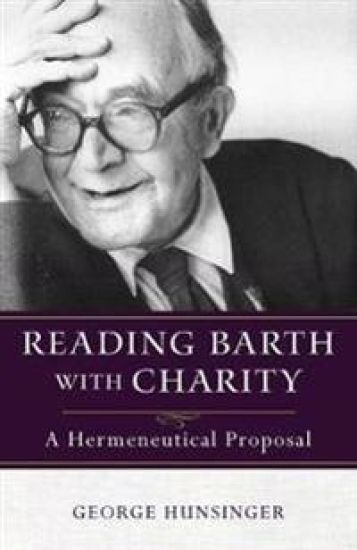
Reading Barth with Charity
George Hunsinger
Baker Academic, Div of Baker Publishing Group
2015
nidottu
Karl Barth and his legacy have dominated theology circles for over a decade. In this volume George Hunsinger, a world-renowned expert on Barth's theology, makes an authoritative contribution to the debate concerning Barth's trinitarian theology and doctrine of election. Hunsinger challenges a popular form of Barth interpretation pertaining to the Trinity, demonstrating that there is no major break in Barth's thought between the earlier and the later Barth of the Church Dogmatics. Hunsinger also discusses important issues in trinitarian theology and Christology that extend beyond the contemporary Barth debates. This major statement will be valued by professors and students of systematic theology, scholars, and readers of Barth.

For more than 250 years New Orleans' Charity Hospital has struggled to serve the city's indigent ill, and in so doing has become an institution steeped in Louisiana history and politics. In this fascinating new book John Salvaggio traces the colourful history of Charity Hospital from the early days of French colonial medicine through the Spanish period, the early American years, the volatile Huey Long and World War II eras, and the modern postwar period.Established in 1736, with the legacy of a compassionate French ship builder, Charity Hospital has weathered many storms to maintain its status as the oldest continually operating hospital in the United States. It has withstood the transfer of Louisiana territory from the French to the Spanish and survived devastating hurricanes and a fire. The institution has also endured the stormy beginnings of Louisiana statehood, the hardships of the Civil War, and more recently, the stresses of caring for an ever-expanding patient load. Throughout much of its history, Charity Hospital has encountered political squabbles, patronage problems, and financial woes. As a new century approaches, the hospital finds its future threatened by inadequate funding and the crumbling of its physical facilities. Despite many setbacks, Charity Hospital has accomplished much in its history. Salvaggio presents a summary of the many medical procedures, diagnostic techniques, and therapeutic innovations that have been introduced at the ""Big Free,"" as the hospital is popularly known. He also provides previously unchronicled information on the hospital's history during the twentieth century, writing about political infighting during the governorship of Huey P. Long, construction of a new hospital building in the 1930s, integration of the hospital in the 1960s, its relationships with the medical schools of Louisiana State University and Tulane University, and the current frustrating attempts to adequately staff the institution. Interviews with many of Charity's past directors and others associated with the hospital, as well as lively anecdotes from the author's own experience, bring the hospital's history to life and provide valuable insight into the institution's inner workings. These reminiscences, coupled with Salvaggio's depiction of Charity's past, present, and now questionable future, make this a fascinating and informative work on an important hospital of the South.
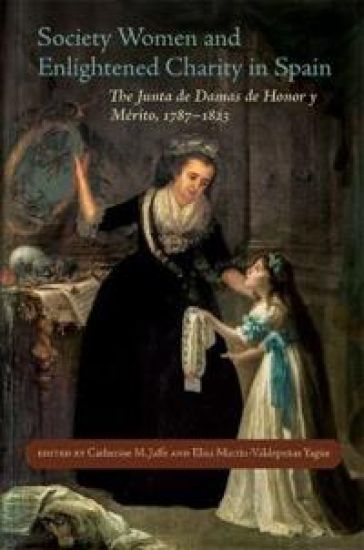
Society Women and Enlightened Charity in Spain
LOUISIANA STATE UNIVERSITY PRESS
2022
sidottu
In original essays drawn from a myriad of archival materials, Society Women and Enlightened Charity in Spain reveals how the members of the Junta de Damas de Honor y Mérito, founded in 1787 to administer charities and schools for impoverished women and children, claimed a role in the public sphere through their self-representation as civic mothers and created an enlightened legacy for modern feminism in Spain.