Too often today it seems we find ourselves communicating from radically different perspectives on the world and we often despair of communication even being possible. Peter Ludlow argues that perspectival content, or what some call indexical content, is ineliminable and ubiquitous, running through our accounts of human action and emotions, perception, normative behaviour, and even our theories of computation and information. While such content may be ineliminable, it also gives rise to philosophical puzzles - particularly those involving reporting these contents from different perspectival positions. Such puzzles have led some to try and abandon perspectival content, and others to despair of communication across diverse perspectival positions. Ludlow argues that communication across diverse perspectival positions is not only possible, but routine, and develops a theory of interperspectival content and cognitive dynamics to explain how it is accomplished.
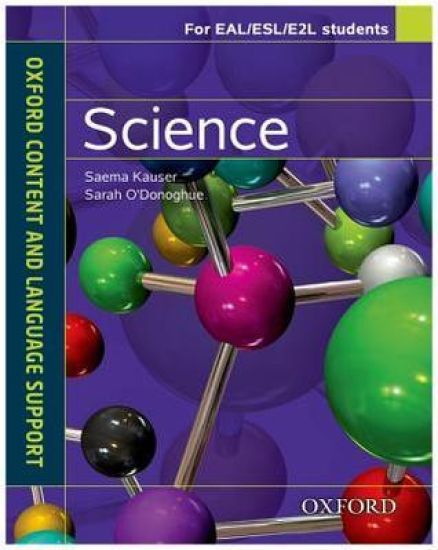
Written by a content subject teacher and an EFL teacher this unique title is aimed at students studying in English. The clearly written content and integrated language work will make it perfect as a companion guide for any secondary students with English as an additional language.
This volume brings together two series of papers: one began with Herman Cappelen and Ernie Lepore's 1997 paper 'On an Alleged Connection Between the Theory of Meaning and Indirect Speech'. The other series started with their 1997 paper 'Varieties of Quotation'. The central theme throughout is that only when communicative content is liberated from semantic content will we make progress in understanding language, communication, contexts, and their interconnection. These are the papers in which Cappelen and Lepore introduced speech act pluralism and semantic minimalism, and they provide the foundation for one of the most powerful attacks on contextualism in contemporary philosophy.
Peter Hanks defends a new theory about the nature of propositional content. According to this theory, the basic bearers of representational properties are particular mental or spoken actions. Propositions are types of these actions, which we use to classify and individuate our attitudes and speech acts. Hanks abandons several key features of the traditional Fregean conception of propositional content, including the idea that propositions are the primary bearers of truth-conditions, the distinction between content and force, and the concept of entertainment. The main difficulty for this traditional conception is the problem of the unity of the proposition, the problem of explaining how propositions have truth conditions and other representational properties. The new theory developed here, in its place,explains the unity of propositions and provides new solutions to a long list of puzzles and problems in philosophy of language.
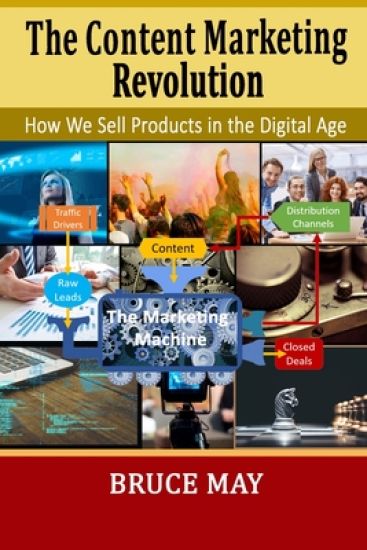
A comprehensive explanation of how marketing works today. Learn how the pieces fit together and support each other, from online ad platforms, to the content that fuels the systems. It's not just about producing the best content. It's about using that content in a more complex system... a content marketing system. The sum is greater than the parts. That sum-total means that we can engage with niche audiences, automate conversations, build detailed profile records, drive prospects to do business with our companies on their own terms and provide meaningful content that educates and even entertains our target markets in ways that have never been possible before. Accept the challenge of building a marketing system using the best practices described in this book and you will help fulfill the promise of digital technology which continues to change how we build customer relationships and sell products in the digital age.
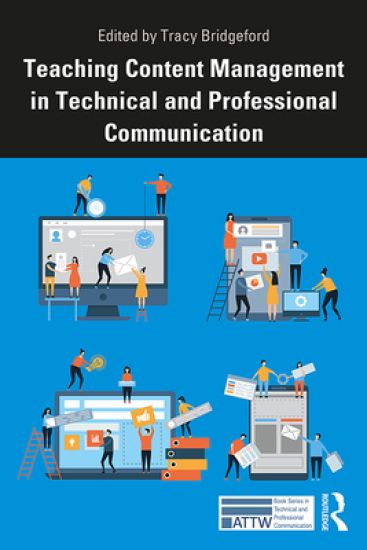
This collection offers a comprehensive overview of approaches to teaching the complex subject of content management.The 12 chapters define and explain content management and its accompanying competencies, providing teaching examples in areas including content strategy, topic-based writing, usability studies, and social media. The book covers tasks associated with content management such as analyzing audiences and using information architecture languages including XML and DITA. It highlights the communal aspects of content management, focusing on the work of writing stewardship and project management, and the characteristics of content management in global contexts. It concludes with a look to the future and the forces that shape content management today. The editor situates the collection within a pedagogical exigency, providing sound instructional approaches to teaching content management from a rhetorical perspective. The book is an essential resource for both instructors new to teaching technical and professional communication, and experienced instructors who are interested in upgrading their pedagogies to include content management.
This collection offers a comprehensive overview of approaches to teaching the complex subject of content management.The 12 chapters define and explain content management and its accompanying competencies, providing teaching examples in areas including content strategy, topic-based writing, usability studies, and social media. The book covers tasks associated with content management such as analyzing audiences and using information architecture languages including XML and DITA. It highlights the communal aspects of content management, focusing on the work of writing stewardship and project management, and the characteristics of content management in global contexts. It concludes with a look to the future and the forces that shape content management today. The editor situates the collection within a pedagogical exigency, providing sound instructional approaches to teaching content management from a rhetorical perspective. The book is an essential resource for both instructors new to teaching technical and professional communication, and experienced instructors who are interested in upgrading their pedagogies to include content management.
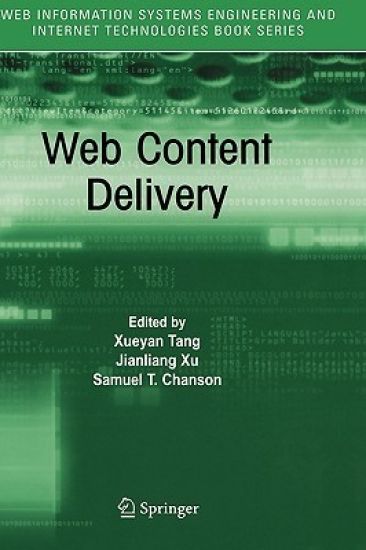
The concept of content delivery (also known as content distribution) is be coming increasingly important due to rapidly growing demands for efficient distribution and fast access of information in the Internet. Content delivery is very broad and comprehensive in that the contents for distribution cover a wide range of types with significantly different characteristics and performance concerns, including HTML documents, images, multimedia streams, database tables, and dynamically generated contents. Moreover, to facilitate ubiqui tous information access, the network architectures and hardware devices also vary widely. They range from broadband wired/fixed networks to bandwid- constrained wireless/mobile networks, and from powerful workstations/PCs to personal digital assistants (PDAs) and cellular phones with limited processing and display capabilities. All these levels of diversity are introducing numerous challenges on content delivery technologies. It is desirable to deliver contents in their best quality based on the nature of the contents, network connections and client devices. This book aims at providing a snapshot of the state-of-the-art research and development activities on web content delivery and laying the foundations for future web applications. The book focuses on four main areas: (1) web con tent delivery; (2) dynamic web content; (3) streaming media delivery; and (4) ubiquitous web access. It consists of 17 chapters written by leading experts in the field. The book is designed for a professional audience including academic researchers and industrial practitioners who are interested in the most recent research and development activities on web content delivery.
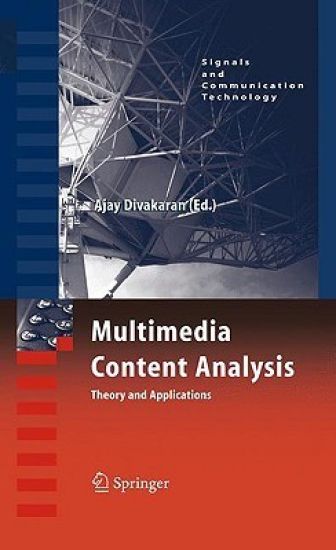
Multimedia Content Analysis: Theory and Applications covers the latest in multimedia content analysis and applications based on such analysis. As research has progressed, it has become clear that this field has to appeal to other disciplines such as psycho-physics, media production, etc. This book consists of invited chapters that cover the entire range of the field. Some of the topics covered include low-level audio-visual analysis based retrieval and indexing techniques, the TRECVID effort, video browsing interfaces, content creation and content analysis, and multimedia analysis-based applications, among others. The chapters are written by leading researchers in the multimedia field.
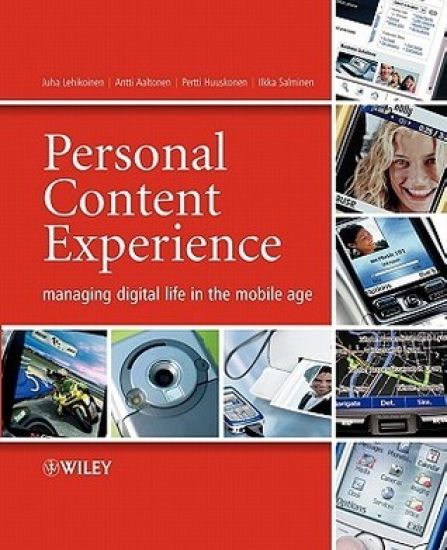
"The new era of powerful, mobile computing and sensing devices having ever larger memories and personal databases brings to light a number of difficult problems in software, interface design, search, organization of information, and methods for inferring context and for sharing personal content… The authors have done an admirable job at describing the problems and opportunities and, as such, this book should be on the shelves of researchers struggling to make these mobile devices truly valuable to the ever expanding number of their users." —David G. Stork, Chief Scientist, Ricoh Innovations Personal Content Experience is a comprehensive introduction to mobile personal content. The book introduces and explores issues such as context capture, user interfaces for continuous mobile use, UI design for mobile media applications, metadata magic, virtual communities, and ontologies. User interactions and behavioural patterns with personal content are also covered, resulting in a ‘GEMS’ lifecycle model for analysing media devices, services, applications, and user interfaces. In addition, the book describes an extensible software architecture targeted at content management in mobile devices, pointing out the essential topics that will benefit anyone developing mobile content-intensive applications and services. Personal Content Experience: Establishes a foundation for analyzing applications, services and user interfaces targeted at personal content.Provides a strong industrial insight, combining hands-on examples, application concepts and software architecture descriptions with theoretical frameworks and models.Offers a multi-disciplinary approach, considering both user perspective and technology aspects. This book is a clear and practical guide to the field of personal content and will be invaluable to practitioners in mobile industry and digital content management, media-intensive application developers, content creators and distributors, academic researchers, and lecturers in computer science and multimedia.
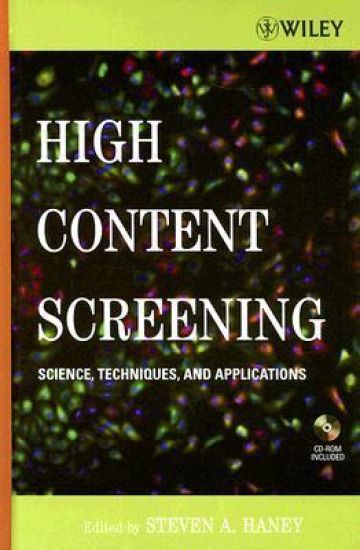
The authoritative reference on High Content Screening (HCS) in biological and pharmaceutical research, this guide covers: the basics of HCS: examples of HCS used in biological applications and early drug discovery, emphasizing oncology and neuroscience; the use of HCS across the drug development pipeline; and data management, data analysis, and systems biology, with guidelines for using large datasets. With an accompanying CD-ROM, this is the premier reference on HCS for researchers, lab managers, and graduate students.
The text highlights issues of comprehension, vocabulary development, assessment, and second language. In addition, it addresses issues of diversity and ELL students, approaches for sheltered instruction, and the integration of technology into secondary learning and teaching, as well as lifelong reading/writing, using literature in content learning, and teacher professional development. For video clips of teachers using the strategies discussed in this text in actual classroom situations please click on the following url: http://www3.interscience.wiley.com:8100/legacy/college/ruddell/0470084049/comp_videos/index.html
A powerful instructional method for "hooking" students on academic learning Drawing from a teaching model designed to banish boredom and student apathy, this book explains how dramatic practices can serve as powerful tools for enlivening lessons and captivating students, even the most resistant learners. Filled with intriguing classroom examples, Pogrow shows how any teacher can make use of dramatic techniques, such as surprise, humor, fantasy, role plays, games, and simulations to create standards-based content lessons that are riveting, effective, and meaningful. The author explains how to design such lessons into any content area. Stanley Pogrow (San Francisco, CA), a noted authority on teaching practices for disadvantaged students, is professor of educational leadership at San Francisco State University, where he coordinates the Educational Leadership for Equity Program.
From the cutting-edge of technology comes this book on Building Information Modeling (BIM), the newest technology in the AEC industry that allows the professional to create 3D models of a building that includes much more data than a traditional 2D CAD file. Developing BIM Content explains the type of information that can go into a BIM model from a vendor-neutral perspective and explores different methods for organizing content. For anyone interested in creating feature-rich BIM object and models that work on any platform, this is a must-have reference.
Content and Content Management are core topics in the IT and broadcast industry. However these terms have not been clearly defined for those learning the field. The topic is complex and users from different industries have different backgrounds and a varied understanding of content issues. Multimedia Content Management helps to clarify the subject area, define problematic issues and establish a universal understanding of content and its management. Provides clarity in the subject area Defines potential problems and establishes a universal understanding Builds an architectural framework upon this account and different aspects of the industry and solutions are reviewed Comprehensively describes the different users working and accessing content, the applications and workflows Essential reading for students, engineers and technical managers, in the area of data, storage management and multimedia, requiring an overview of this complex topic. The topics discussed will also prove highly insightful for executive managers and media professionals with a technical understanding and broadcast executives in the field.
Multimedia Content and Semantic Web - Methods, Standards and Tools is the first book of its kind to bring together the technologies and tools used for the description and processing of multimedia content with the standards and the emerging ideas of the shared knowledge representation, provided by the Semantic Web. This book provides a “common language” and a “common understanding” of the main problems that arise in this synergism. This common language is built by the contributors of the book who are leaders in the research and development of tools in multimedia content analysis, MPEG-7, MPEG-21 and Semantic Web. The book provides three case studies which give examples of the real benefits to be derived from the adoption of semantic-web based ontologies in “real world” situations. As such, the book is an excellent mixture of theory, tools and applications in an important area of WWW research and will be an essential title for postgraduate computer science students and researchers alike.
The long-awaited new edition of the classic 1997 text by Snow and Brinton is now a complete revision that includes international settings and new models like CLIL and EMI. Three chapters are updates of the original, while the remaining 22 chapters are new. Chapters 3-25 are structured to include a glimpse into a CBI classroom through a scenario that brings the focus of the chapter to life. Each scenario is followed by a definition of the topic, a literature review, a discussion of key issues and challenges, and observations/activities and principles that underlie each topic. This edition also features a research agenda in each chapter to help encourage CBI research for coming decades. The volume has six parts. Part I traces the history of CBI, proposes a classification of models and varieties, discusses ongoing challenges, and provides research support for CBI. Part II focuses on programs, curriculum, and lesson designs, featuring chapters on the Six Ts approach, strategic planning, and scaffolding strategies. Part III takes up innovative applications of CBI and includes a variety of models in diverse CBI settings. Part IV establishes connections between CBI and other approaches like ESP, EAP, and corpus linguistics. Part V discusses assessment in CBI, and Part VI explores ongoing challenges.
This is a study of the central questions of explanation in the social sciences, and a defence of 'holism' against 'individualism'. In the first half of the book Susan James sets out very clearly the philosophical background to this controversy. She locates its source not at the analytical level at which most of the debate is usually conducted but at a more fundamental, moral level, in different conceptions of the human individual. In the second half of the book she examines critically three case studies of holistic approaches - Althusser, Poulantzas and the Annales historians - and progressively refines our sense of the strengths and deficiencies of their programmes. She ends by arguing for a form of concessive holism, which offers some accommodation to liberal conceptions of individual autonomy but continues to emphasise the explanatory importance of social regularities and environments.
The contributors to this volume consider whether it is possible to establish carefully tailored hate speech policies that are cognizant of the varying traditions, histories and values of different countries. Throughout, there is a strong comparative emphasis, with examples (and authors) drawn from around the world. All the authors explore whether or when different cultural and historical settings justify different substantive rules given that such cultural relativism can be used to justify content-based restrictions and so endanger freedom of expression. Essays address the following questions, among others: is hate speech in fact so dangerous or harmful to vulnerable minorities or communities as to justify a lower standard of constitutional protection? What harms and benefits accrue from laws that criminalize hate speech in particular contexts? Are there circumstances in which everyone would agree that hate speech should be criminally punished? What lessons can be learned from international case law?
The contributors to this volume consider whether it is possible to establish carefully tailored hate speech policies that are cognizant of the varying traditions, histories and values of different countries. Throughout, there is a strong comparative emphasis, with examples (and authors) drawn from around the world. All the authors explore whether or when different cultural and historical settings justify different substantive rules given that such cultural relativism can be used to justify content-based restrictions and so endanger freedom of expression. Essays address the following questions, among others: is hate speech in fact so dangerous or harmful to vulnerable minorities or communities as to justify a lower standard of constitutional protection? What harms and benefits accrue from laws that criminalize hate speech in particular contexts? Are there circumstances in which everyone would agree that hate speech should be criminally punished? What lessons can be learned from international case law?