Kirjojen hintavertailu. Mukana 12 390 323 kirjaa ja 12 kauppaa.

Kirjahaku

Etsi kirjoja tekijän nimen, kirjan nimen tai ISBN:n perusteella.

1000 tulosta hakusanalla David B. Chesebrough

Matthew's Inclusive Story

Matthew's Inclusive Story

David B. Howell

Bloomsbury Academic
2015
sidottu
Matthew has been described as an 'inclusive story', in which the experiences of the evangelist's post-Easter church are inscribed in the story of Jesus's earthly ministry. This book explores the inclusive nature of the Gospel by means of reader-response literary criticism. Some recent redaction studies of Matthew are reviewed from the perspective of reader-response criticism. Then, in an attempt to understand the interpretative moves readers make, Matthew's story, story-teller and audience are examined.
Classified

Classified

David B. Frost

McFarland Co Inc
2017
pokkari
When the framers of the Constitution gathered in the summer of 1787, their deliberations were shrouded in secrecy. The Pennsylvania State House was locked, armed guards were posted and the 55 delegates of the Constitutional Convention were sworn to secrecy by presiding officer George Washington. Ordinary Americans were allowed no role in shaping the country's national charter. Its principle architect, James Madison, believed secrecy was necessary to prevent "a thousand of erroneous and perhaps mischievous reports," and directed that his personal notes from the Convention not be published until after his death. Secrecy has always played a role in American governance, from the First Continental Congress to the Manhattan Project to today's controversial procedures for protecting national security. The author examines the balance between the ideal of openness in government and the real world need for secrecy, and the political accommodations that have been made for each.
The Lucky Years: How to Thrive in the Brave New World of Health
"If you buy just one health book this year, then get The Lucky Years" (Howard Stern). In this groundbreaking guide, bestselling author David Agus shows how we can take control of our health like never before in the brave new world of medicine. In his first bestseller, The End of Illness, David Agus revealed how to add vibrant years to your life by knowing the real facts of health. In The Lucky Years, he builds on that theme by showing why this is the luckiest time yet to be alive, giving you the keys to a new kingdom of wellness. In this new golden age, you'll be able to take full advantage of the latest science and technologies to customize your care. Imagine being able to: edit your DNA to increase a healthy lifespan; use simple technologies to avoid or control chronic conditions like pain, depression, high blood pressure, and diabetes; prolong natural fertility and have children in your forties; lose weight effortlessly without a trendy diet; reverse aging to look, feel, and physically be ten years younger; and turn cancer into a manageable condition you can live with indefinitely. That's the picture of the future that you can enter--starting today. With "practical health information fortified with exciting news from the forefront of modern medical technology" (Kirkus Reviews), this is an essential, important read. "If you have made a new year's resolution to get healthier, you'll find a buddy in David B. Agus's new book" (The Boston Globe). Welcome to the Lucky Years.
A Short Guide to a Long Life

A Short Guide to a Long Life

David B. Agus

SIMON SCHUSTER
2014
nidottu
The New York Times bestselling book of simple rules everyone should follow in order to live a long, healthy life, featuring illustrations throughout, from the author of The End of Illness. In his international bestseller, The End of Illness, Dr. David B. Agus shared what he has learned from his work as a pioneering cancer doctor, revealing the innovative steps he takes to prolong the lives of not only cancer patients, but those who want to enjoy a vigorous, lengthy life. Now Dr. Agus has turned his research into a practical and concise illustrated handbook for everyday living. He believes optimal health begins with our daily routines. A Short Guide to a Long Life is divided into three sections (What to Do, What to Avoid, and Doctor's Orders) that provide the definitive answers to many common and not-so-common questions: Who should take a baby aspirin daily? Are flu shots safe? What constitutes "healthy" foods? Why is it important to protect your senses? Are airport scanners hazardous? Dr. Agus will help you develop new patterns of personal health care, using inexpensive and widely available tools that are based on the latest and most reliable science. An accessible and essential handbook for preparing for visits to the doctor and maintaining control of your future, "A Short Guide to a Long Life explores the simple idea that a healthy tomorrow starts with good habits today" (Fortune).
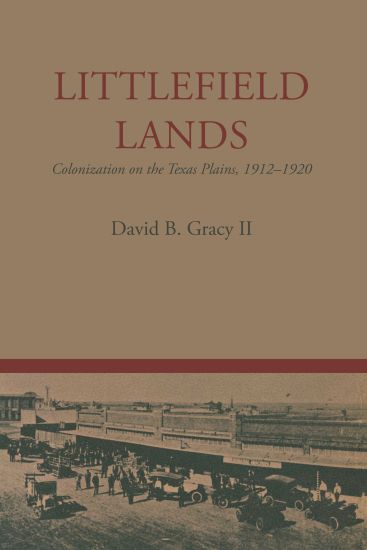
Littlefield Lands

Littlefield Lands

David B. Gracy

University of Texas Press
1968
nidottu
The phenomenon of colonization by big land companies, common throughout the history of the United States, came late to the Panhandle-Plains of West Texas. Ranchers held sway there up into the 20th century. Then, realizing that the future followed the plow, they, joined by business owners and speculators, founded towns on their land, competed for railroad connections, provided irrigation wells and other improvements, and engaged in a variety of advertising activities to interest prospective settlers and to sell the land to farmers at a profit. Trainloads of such "prospectors" were brought in to tour the land; and salesmen of all kinds roamed all the more settled states painting enticing pictures of the fertile lands which their employers offered for sale. Major George W. Littlefield created the Littlefield Lands Company and founded the town of Littlefield, Texas, in 1912, in order to sell as farmland a part of his Yellow House Ranch. His sales manager, Arthur P. Duggan (his nephew by marriage, and grandfather of the author of this study), used many of the techniques then current to attract buyers for the Lamb County land in and around Littlefield. He dug wells and operated a demonstration farm; he planted trees, planned a park, and otherwise beautified the town; he helped to create and maintain a school, a bank, and a number of businesses; and he negotiated contracts and coordinated the activities of innumerable independent land agents. Because the role of the big land company in the settlement of the United States has not, on the whole, received the attention which it deserves, this detailed examination of the operations of one such company is of particular significance. Most of the book is devoted to the creation of the company, the steps taken to make the area attractive to potential settlers, and the problems which beset the building of the community. One chapter discusses the techniques and the difficulties of selling land through independent agents. The final chapter considers the people who moved onto the Littlefield tracts-where they came from, why they came, what their reactions were to the plains country, and how they learned to cope with their new environment. An appendix gives pertinent information about all land transactions conducted by the company between 1912 and 1920, and about each buyer. For this study the author made use of previously unknown records discovered while he was gathering information for a biography of Major Littlefield.
Old Testament Yahweh Texts in Paul's Christology

Old Testament Yahweh Texts in Paul's Christology

David B. Capes

Baylor University Press
2017
nidottu
The earliest Christian communities engaged in bold and imaginative rereadings of their Scriptures - none more astounding and potentially inflammatory than of the passages that focus upon the name and nature of Israel's God. In this volume, David B. Capes tracks the Apostle Paul's use of Old Testament texts that directly invoke God's name, Yahweh, for what they can disclose about the earliest Christian beliefs and practices. Since Paul writes to his churches in Greek and quotes the Old Testament extensively from the Septuagint, Capes focuses upon Old Testament quotations and allusions in which kyrios translates the divine name. He discovers that Paul applies a majority of his quotations of and allusions to Yahweh texts to the Lord Jesus Christ, thus offering to him designations originally reserved for Israel's God. Given the high regard that Judaism placed upon both Scripture and the divine name in the first century, the application of Yahweh texts to Jesus bears significant christological weight. These texts reveal that Paul considered Jesus to be more than a man or a divine agent - Paul believed that Christ was in some sense Yahweh Himself. Capes thus unveils Paul's strategy for the reading of Scripture, which provides a basis for properly interpreting early Christianity's veneration of Jesus, including prayers and hymns to Christ, the authoritative status attributed to Jesus' words, and the notions of Christ's pre-existence, role in creation, and authority as coming eschatological Savior and Judge. How Paul reread his Bible goes hand-in-glove with the differences that developed between Christianity and Judaism.