Kirjojen hintavertailu. Mukana 12 081 146 kirjaa ja 12 kauppaa.

Kirjahaku

Etsi kirjoja tekijän nimen, kirjan nimen tai ISBN:n perusteella.

1000 tulosta hakusanalla David a McIntee

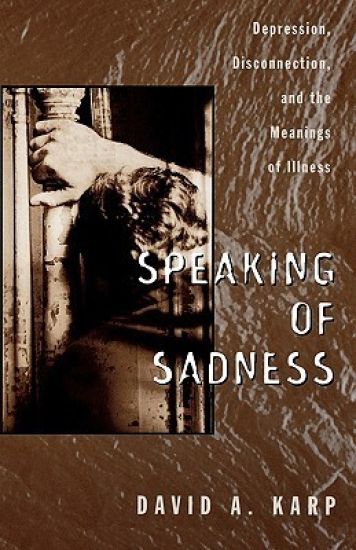
Speaking of Sadness

Speaking of Sadness

David A. Karp

Oxford University Press Inc
2016
nidottu
Combining a scholar's care and thoroughness with searing personal insight, David A. Karp brings the private experience of depression into sharp relief, drawing on a remarkable series of intimate interviews with fifty depressed men and women. By turns poignant, disturbing, mordantly funny, and wise, Karp's interviews cause us to marvel at the courage of depressed people in dealing with extraordinary and debilitating pain. We hear what depression feels like, what it means to receive an "official" clinical diagnosis, and what depressed persons think of the battalion of mental health experts--doctors, nurses, social workers, sociologists, psychologists, and therapists--employed to help them. Ranging in age from their early twenties to their mid-sixties, the people Karp profiles reflect on their working lives, career aspirations, and intimate relationships, and confide strategies for overcoming paralyzing episodes of hopelessness. Throughout, Karp probes the myriad ways society contributes to widespread alienation and emotional exhaustion. In a new and extensive introduction since the original publication of Speaking of Sadness twenty years ago, Karp evaluates the state of and social movements for the depression experience. He traces his personal depression journey along with the reception of his readers since the book's original publication. In addition, he offers a clear perspective on the consequences of wholesale medicalization permeating cultural treatment of depression, and calls towards a movement to listen to and to voice the experiences of the marginalized. Speaking of Sadness remains distinctive in its dedication to recounting stories and discovering clear patterns in them. Karp pierces through the terrifying isolation of depression to uncover the connections linking the depressed as they undertake their personal journeys through this very private hell. This book will bring new understanding to professionals seeking to see the world as their clients do, and provide vivid insights and renewed empathy to anyone who cares for someone living with the cruel unpredictability of depression.

Shadows of Revolution

Shadows of Revolution

David A. Bell

Oxford University Press Inc
2016
sidottu
David Bell wrote the essays in this collection over the course of more than fifteen years, each in response to a new book or political event and published in the New Republic, New York Review of Books, or London Review of Books. Their common thread is France and French history, of which Bell is one of the world's acknowledged experts. Shadows of Revolution is divided into seven sections: The "Longue Durée"; From the Old Regime to the Revolution; The Revolution; Napoleon Bonaparte; The Nineteenth Century; Vichy; and Parallels: Past and Present. Bell argues that so much of French (and European) history revolves around and returns to the French Revolution of 1789 to 1799. So much happened in so short a time that Chateaubriand later claimed that many centuries had crammed themselves into a single quarter-century. Bell's other main focus is World War Two and the French Vichy regime. He has followed the long and painful process by which the French have come to terms with their collaboration with Nazi Germany, including the creation of monuments to the Holocaust, exhibitions devoted to Vichy and the fate of the French Jews, and the speech that President Jacques Chirac gave in 1995, finally recognizing French responsibility for the deportation of Jews to the death camps. In its way, each of the essays in this collection-Bell's first book of the kind-reflects upon the ways that political and cultural patterns first set in the age of the Revolution continue to resonate, not just in France, but throughout the world.
Judea under Greek and Roman Rule

Judea under Greek and Roman Rule

David A. deSilva

OXFORD UNIVERSITY PRESS INC
2024
nidottu
This volume provides a reconstruction of the history of Judea and its neighboring regions from 334 BCE, when Alexander's eastward conquests brought Judea into the Greek empire, through 135 CE, when Hadrian re-founded Jerusalem as Aelia Capitolina and banished Jews from the city limits -- a formative period both for early Judaism and the Christian movement. This history unfolds against a backdrop of international politics that constrained developments within Judea, including wars between the Seleucid and Ptolemaic empires for control of Palestine, internal wars that led to the decline of the Seleucid empire, and the eastward expansion and consolidation of Roman rule. Judea under Greek and Roman Rule focuses on the Hellenizing Reform that precipitated the Maccabean Revolt, the establishment of an independent kingdom under the Hasmonean Dynasty, the rule of Herod and transition to Roman rule, the circumstances that precipitated two devastating revolts against Roman domination, and constructive responses (both literary and practical) within Judaism to both revolts and the consequences.
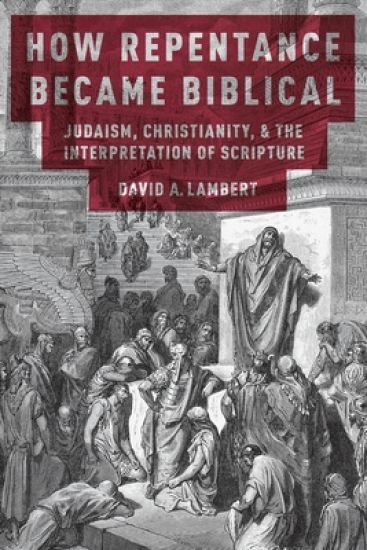
How Repentance Became Biblical

How Repentance Became Biblical

David A. Lambert

Oxford University Press Inc
2017
nidottu
Winner of the AAR's 2016 Award for Excellence in the Study of Religion: Textual Studies How Repentance Became Biblical tells the story of repentance as a concept. Many today, in both secular and religious contexts, assume it to be a natural and inevitable component of our lives. But, where did it originate? How did it become so prominent within Western religious traditions and, by extension, contemporary culture? What purposes does it serve? The book identifies repentance as a product of the Hellenistic period, where it was taken up within emerging forms of Judaism and Christianity as a mode of subjective control. It argues that, along with the rise of repentance, a series of interpretive practices, many of which remain in effect to this day, was put into place whereby repentance is read into the Bible and the Bible, especially the Hebrew Bible, or Old Testament, comes to be seen as repentance's source. Ancient Israelite rituals, such as fasting, prayer, and confession, all of which are incorporated later on within various religious communities as forms of penitential discipline, are understood as external signs of internal remorse. Hebrew terms and phrases, such as the prophetic injunction to "return to YHWH," are read as ancient representations of the concept, repentance. Prophetic literature as a whole is seen as serving a pedagogical purpose, as aiming at the reformation of Israel as a nation. Furthermore, it is assumed that, on the basis of the Bible, sectarians living in the late Second Temple period, from the Dead Sea sect to the early Jesus movement, believed that their redemption depended upon their repentance. In fact, the penitential framework within which the Bible is interpreted tells us the most about our own interpretive tendencies, about how we privilege notions of interiority, autonomy, and virtue. The book develops other frameworks for explaining the biblical phenomena in their ancient contexts, based on alternative views of the body, power, speech, and the divine, and, thereby, offers a new account of repentance's origins.
We Are The Voice of the Grass

We Are The Voice of the Grass

David A. Hoekema

Oxford University Press Inc
2019
sidottu
In the international press, East Africa is depicted as a region mired in civil war, child abduction, rebel militias, Muslim-Christian violence, and grinding poverty. Joseph Kony's Lord's Resistance Army (LRA) of northern Uganda has become a symbol for the troubles of contemporary Africa. Seen from within, however, an altogether different reality is visible-one in which local communities and their leaders work together to resolve conflict and rebuild their communities. Little known beyond northern Uganda, The Acholi Religious Leaders' Peace Initiative (ARLPI) is an inspiring example of one such community organization. The story of ARLPI, examined in this book by philosopher David Hoekema, demonstrates just how much can be accomplished by a small group of dedicated community leaders in a situation where a decade of military force and international pressure have had little discernible effect. Drawing on published sources and interviews with organization leaders and LRA survivors, Hoekema illuminates how both the depredations of the LRA and the healing work of ARLPI are rooted in modern East African history. He documents the courageous work of the Catholic, Protestant, and Muslim leaders who constitute the ARLPI to overcome centuries of mistrust and help bring an end to one of the most horrific conflicts in recent history. Their work, he argues, puts philosophical and theological ideas into practice and in so doing sheds new light on how religion relates to politics, how brutal conflicts can be resolved, and how a community can reclaim its future through locally-initiated initiatives against overwhelming obstacles.
Aspirations and Anxieties

Aspirations and Anxieties

David A. Zonderman

Oxford University Press Inc
1992
sidottu
Aspirations and Anxieties presents the thoughts and actions of the first generation of factory workers in New England. It shows the various ways in which different kinds of factory workers handled their new experiences in numerous settings - in the factories themselves, in the surrounding factory towns, in strikes and political campaigns. The diversity of these workers' thoughts is related by Zonderman to the larger changes in American culture occurring in the decades before the Civil War.
Foundations of American Constitutionalism

Foundations of American Constitutionalism

David A. J. Richards

Oxford University Press Inc
1990
sidottu
David Richards here argues the position that understanding the intent of the Founders is essential to the legal interpretation of the United States Constitution. To this extent he makes common cause with conservative constitutional theorists, but he arrives at conclusions that differ radically from theirs. Indeed, his stated project here is to `reclaim' the Founders intent on behalf of the liberal humanist tradition they embodied. Richards examines the role of the Founders' understanding of history, philosophy, political theory, and political science in the evolution of their constitutional design. In his reconstruction, the Constitution emerges as a brilliant expression of European humanist and critical thought, shaped by such influences as the political ideas of Machiavelli, Harrington, Montesquieu, and Hume, the Lockean theory of legitimate government, and the common law model of interpretive practice. Armed with this new understanding of the Founders' intent, Richards is able to fully develop the methodology of constitutional interpretation sketched in his earlier book, TOLERATION AND THE CONSTITUTION (OUP 1986), and uses it effectively to defend a liberal reading of constitutional guarantees of individual rights.
Toleration and the Constitution

Toleration and the Constitution

David A. J. Richards

Oxford University Press Inc
1989
nidottu
The author argues the relevance of philosophical and political theory for the interpretation of law, and especially for constitutional interpretation. He surveys all of the major contemporary theories of constitutional interpretation, and concludes that 'interpretivism', the view that interpretation should concern itself only with the text of the American Constitution and the intentions of its framers, is invalid. He presents both historical and theoretical arguments in support of a contractarian theory of interpretation - a theory that affirms the moral sovereignty of the people, and maintains that toleration, or respect for conscience and individual freedom, is the central constitutional ideal. The book goes on to examine some of the implications of this theory through important issues in constitutional law: freedom of religion, speech, and privacy.
Lawyers and Citizens

Lawyers and Citizens

David A. Bell

Oxford University Press Inc
1994
sidottu
Not only were lawyers heavily represented among the men who rose to power in France in 1789, to a large extent, they also shapted the evolution of French political culture under the ancien régime. David Bell's new book traces the development of the French legal profession between the reign of Louis XIV and the French Revolution, showing how lawyers influenced, and were influenced by, the period's passionate political and religious conflicts. Bell analyses how these key "middling" figures in French society were transformed from the institutional technicians of absolute monarchy into the self-appointed "voices of public opinion," and leaders of opposition political journalism. He describes the birth of an independent legal profession in the late seventeenth century, its alientation from the monarchy under the pressure of religious disputes in the early eighteenth, and its transformation into a standard-bearer of "enlightened" opinion in the decades before the Revolution. His work illuminates the workings of politics under a theoretically absolute monarchy, and the importance of long-standing constitutional debates for the ideological origins of the Revolution. It also sheds new light on the development of the modern professions, and of the middle classes in France.
Speaking of Sadness

Speaking of Sadness

David A. Karp

Oxford University Press Inc
1996
sidottu
Speaking of Sadness explores depression as a human experience, not just as a disease. Each of the pieces of the depression puzzle is examined, including interactions with family and friends, experiences with anti-depressant drugs, and the interplay of biology, family and society in depression's definition and treatment. The book includes extensive interviews with depressed individuals and the author's own experiences with depression.
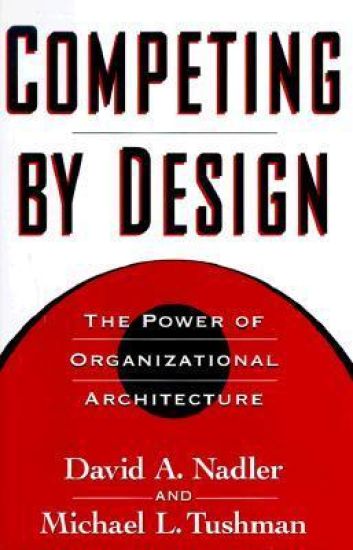
Competing by Design

Competing by Design

David A. Nadler; Michael L. Tushman

Oxford University Press Inc
1997
sidottu
If the defining goal of modern-day business can be isolated to just one item, it would be the search for competitive advantage. And, as everyone in business knows, it's a lot harder than it used to be. On the one hand, competition is more intense than ever--technological innovation, consumer expectations, government deregulation, all combine to create more opportunities for new competitors to change the basic rules of the game. On the other hand, most of the old reliable sources of competitive advantage are drying up: the hallowed strategies employed by GM, IBM, and AT&T to maintain their seemingly unassailable positions of dominance in the 1960s and 70s are as obsolete as the calvary charge. So in this volatile, unstable environment, where can competitive advantage be found? As David Nadler and Michael Tushman show, the last remaining source of truly sustainable competitive advantage lies in `organizational capabilities': the unique ways each organization structures its work and motivates its people to achieve clearly articulated strategic objectives. For too long, too many managers have thought about "organization" merely in terms of rearranging the boxes and lines on an organizational chart--but as Competing by Design clearly illustrates, organizational strength is found far beyond one-dimensional diagrams. Managers must, argue Nadler and Tushman, understand the concepts and learn the skills involved in designing their organization to exploit their inherent strengths. All the reengineering, restructuring, and downsizing in the world will merely destabilize a company if the change doesn't address the fundamental patterns of performance--and if the change doesn't recognize the unique core competencies of that company. In this landmark volume, the authors draw upon specific cases to illustrate the design process in practice as they provide a set of powerful, yet simple tools, for using strategic organization design to gain competitive advantage. They present a design process, explore key decisions managers face, and list the guiding principles for incorporating the design function as a continuing and integral process in organizations that are looking to the future. In 1918, Henry Ford's Dearborn assembly plant was the model of the new assembly-line technology. Today, the assembly plant is an aging relic, but, incredibly, the organizational architecture it spawned lives on in steep hierarchies, centralized bureaucracies, and narrowly defined jobs. As companies are coming to realize they can't compete successfully in the 21st century with organizations based on 19th century ideas, Competing by Design shows clearly and persuasively why--and, most importantly how--to harness the power of organizational architecture to unleash the competitive strengths embedded in each organization.
Speaking of Sadness

Speaking of Sadness

David A. Karp

Oxford University Press Inc
1997
nidottu
"Even though depression has periodically made me feel that my life was not worth living, has created havoc in my family, and sometimes made the work of teaching and writing seem impossible," writes David Karp, "by some standards, I have been fortunate." Indeed, depression can be devastating, leading to family breakups, loss of employment, even suicide. And it is a national problem, with some ten to fifteen million Americans suffering from it, and the number is growing. In Speaking of Sadness, Karp captures the human face of this widespread affliction, as he illuminates his experience and that of others in a candid, searching work. Combining a scholar's care and thoroughness with searing personal insight, Karp brings the private experience of depression into sharp relief, drawing on a remarkable series of intimate interviews with fifty depressed men and women. By turns poignant, disturbing, mordantly funny, and wise, Karp's interviews cause us to marvel at the courage of depressed people in dealing with extraordinary and debilitating pain. We hear what depression feels like, what it means to receive an "official" clinical diagnosis, and what depressed persons think of the battalion of mental health experts--doctors, nurses, social workers, sociologists, psychologists, and therapists--employed to help them. We learn the personal significance that patients attach to beginning a prescribed daily drug regimen, and their ongoing struggle to make sense of biochemical explanations and metaphors of depression as a disease. Ranging in age from their early twenties to their mid-sixties, the people Karp profiles reflect on their working lives and career aspirations, and confide strategies for overcoming paralyzing episodes of hopelessness. They reveal how depression affects their intimate relationships, and, in a separate chapter, spouses, children, parents, and friends provide their own often overlooked point of view. Throughout, Karp probes the myriad ways society contributes to widespread alienation and emotional exhaustion. Speaking of Sadness is an important book that pierces through the terrifying isolation of depression to uncover the connections linking the depressed as they undertake their personal journeys through this very private hell. It will bring new understanding to professionals seeking to see the world as their clients do, and provide vivid insights and renewed empathy to anyone who cares for someone living with the cruel unpredictability of depression.

Satellites of the Outer Planets

Satellites of the Outer Planets

David A. Rothery

Oxford University Press Inc
2000
nidottu
Extensively revised and updated, this new edition of David A. Rothery's acclaimed geological guide to the outer solar system includes results and close-up color and black and white images from the 1995-1999 Galileo mission to Jupiter and from the Voyager space probe. Rothery, a noted planetary scientist, explains the geological aspects of the major satellites of the outer bodies, from Jupiter to Neptune to the Pluto-Charon system. In particular he shows how tectonic and volcanic processes, driven by heat from within, have shaped the rigid outer layers of these bodies. Rothery also discusses the similarities and differences among these planets, and reveals how they resemble Earth-like planets. This fascinating book is written in an introductory style ideal for first- or second-year college courses. Amateur geologists and astronomers will also find its insights rewarding.
Streptomyces in Nature and Medicine

Streptomyces in Nature and Medicine

David A. Hopwood

Oxford University Press Inc
2007
sidottu
This is an insider's account of 50 years of genetic studies of the soil-inhabiting microbes that produce most of the antibiotics used to treat infections, as well as anti-cancer, anti-parasitic and immunosuppressant drugs. The book begins by describing how these microbes - the actinomycetes - were discovered in the latter part of the nineteenth century, but remained a 'Cinderella' group until, in the 1940s, they shot to prominence with the discovery of streptomycin, the first effective treatment for tuberculosis and only the second antibiotic after penicillin to become a medical marvel. There followed a massive effort over several decades to find further treatments for infectious diseases and cancer, tempered by the rise of antibiotic resistance consequent on antibiotic misuse and over-use. The book goes on to describe the discovery of gene exchange in the actinomycetes in the context of the rise of microbial genetics in the mid-20th century, leading to determination of the complete DNA sequence of a model member of the group at the turn of the millennium. There follow chapters in which the intricate molecular machinery that adapts the organisms' metabolism and development to life in the soil, including antibiotic production, is illuminated by the DNA blueprint. Then comes an up-to-the minute account of the use of genetic engineering to make novel, hybrid antibiotics and a topical description of techniques to learn the roles of the thousands of genes in a genome sequence, throwing a powerful light on the biology of the organisms and their harnessing for increasing antibiotic prductivity. In the final chapter we return to the mycobacteria that cause tuberculosis and leprosy, the first actinomycetes to be discovered, and how methodology, in part derived from the study of the streptomycetes, is being applied to understand and control these still deadly pathogens.
Learning to Live Together

Learning to Live Together

David A. Hamburg; Beatrix A. Hamburg

Oxford University Press Inc
2004
sidottu
The aim of the book is to enhance understanding of the great danger and some sources of animosity between human groups and to focus on developmental processes by which it should be possible to diminish orientations of ethnocentrism, prejudice and hatred. Teaching prejudice and ethnocentrism to children has, all too often in so many places, been virtually automatic and has been conducive to terrible harm in the past. The dangers of hateful outlooks are likely to be much greater as the twenty-first century unfolds. Scholarship and practice in international relations, including war and peace issues, have gravely neglected the crucial psychological aspects of these terrible problems and the educational opportunities. There is a fruitful conjunction of developmental and social psychology in understanding such vital issues and in working toward a more humane, democratic and safe course of adolescent and child development than can in turn affect the safety of humanity in the long run. There are many intriguing examples of research, educational innovations, and visionary leadership in several countries. Most of the book is devoted to promising lines of inquiry and innovation that foster a more humane and less violent development in childhood and adolescence. It should be of interest to scholars, to the education community, and to a well-educated and socially concerned segment of the community.
High Stakes

High Stakes

David A. Shore; Eric D. Kupferberg

Oxford University Press Inc
2011
sidottu
The United States health care system is broken. Critics and commentators point to the staggering costs of health care, the shrinking insurance coverage, and the diminishing access that many U.S. citizens have to essential services and treatments. These problems are compounded by a growing realization that the quality of care across the country is uneven at best, with the goal of finding the appropriate kind and level of care proving elusive. High Stakes enters into the health care debates at a critical time, offering an analysis that homes in on factors that account for many of the inefficiencies and shortcomings of our unsystematic system, and putting forth recommendations that are ideologically blind. Using real-world examples to illustrate the fragile state of health care today, Drs. Shore and Kupferberg enlist a powerful analytic frame to bear on these conflicts: stakeholder management. That involves addressing the present system of conflicts, in which key groups in the field pursue their own interests at the risk of the system at large. Insurance providers want to reduce their payments, hospitals want higher reimbursements, patients want access to unlimited services, and no one wants to work together. The fights are constant and financially disastrous, for every dollar earned by one group is one less dollar earned by another. For health care to succeed as an enterprise, key stakeholder groups must come to appreciate their dependence on other groups. More importantly, they must find ways to align their interests and move beyond entrenched behaviors. As the authors point out, all constituency groups must begin by acknowledging that where people stand on an issue depends on where they sit, and that greater stakeholder alignment and engagement are prerequisites for more effective and efficient health care. Drawing equally from both scholarly studies and real world examples, High Stakes offers health care leaders the necessary tools to both map their current stakeholder relationships and fashion concrete steps to produce greater stakeholder engagement, collaboration, and cooperative competition.
The Jewish Teachers of Jesus, James, and Jude

The Jewish Teachers of Jesus, James, and Jude

David A. DeSilva

Oxford University Press Inc
2012
sidottu
Jews have sometimes been reluctant to claim Jesus as one of their own; Christians have often been reluctant to acknowledge the degree to which Jesus' message and mission were at home amidst, and shaped by, the Judaism(s) of the Second Temple Period. In The Jewish Teachers of Jesus, James, and Jude David deSilva introduces readers to the ancient Jewish writings known as the Apocrypha and Pseudepigrapha and examines their formative impact on the teachings and mission of Jesus and his half-brothers, James and Jude. Knowledge of this literature, deSilva argues, helps to bridge the perceived gap between Jesus and Judaism when Judaism is understood only in terms of the Hebrew Bible (or ''Old Testament''), and not as a living, growing body of faith and practice. Where our understanding of early Judaism is limited to the religion reflected in the Hebrew Bible, Jesus will appear more as an outsider speaking ''against'' Judaism and introducing more that is novel. Where our understanding of early Judaism is also informed by the Apocrypha and Pseudepigrapha, Jesus and his half-brothers appear more fully at home within Judaism, and giving us a more precise understanding of what is essential, as well as distinctive, in their proclamation. This comparative study engages several critical issues. How can we recover the voices of Jesus, James, and Jude from the material purporting to preserve their speech? How can we assess a particular text's influence on Jews in early first-century Palestine? How can we be sufficiently sensitive to the meanings and nuances in both the text presumed to influence and the text presumed to be influenced so as not to distort the meaning of either? The result is a portrait of Jesus that is fully at home in Roman Judea and Galilee, and perhaps an explanation for why these extra-biblical Jewish texts continued to be preserved in Christian circles.
The Living Constitution

The Living Constitution

David A. Strauss

Oxford University Press Inc
2010
sidottu
Supreme Court Justice Antonin Scalia once remarked that the theory of an evolving, "living" Constitution effectively "rendered the Constitution useless." He wanted a "dead Constitution," he joked, arguing it must be interpreted as the framers originally understood it. In The Living Constitution, leading constitutional scholar David Strauss forcefully argues against the claims of Scalia, Clarence Thomas, Robert Bork, and other "originalists," explaining in clear, jargon-free English how the Constitution can sensibly evolve, without falling into the anything-goes flexibility caricatured by opponents. The living Constitution is not an out-of-touch liberal theory, Strauss further shows, but a mainstream tradition of American jurisprudence--a common-law approach to the Constitution, rooted in the written document but also based on precedent. Each generation has contributed precedents that guide and confine judicial rulings, yet allow us to meet the demands of today, not force us to follow the commands of the long-dead Founders. Strauss explores how judicial decisions adapted the Constitution's text (and contradicted original intent) to produce some of our most profound accomplishments: the end of racial segregation, the expansion of women's rights, and the freedom of speech. By contrast, originalism suffers from fatal flaws: the impossibility of truly divining original intent, the difficulty of adapting eighteenth-century understandings to the modern world, and the pointlessness of chaining ourselves to decisions made centuries ago. David Strauss is one of our leading authorities on Constitutional law--one with practical knowledge as well, having served as Assistant Solicitor General of the United States and argued eighteen cases before the United States Supreme Court. Now he offers a profound new understanding of how the Constitution can remain vital to life in the twenty-first century.
Community Practice

Community Practice

David A. Hardcastle; Patricia R. Powers; Stanley Wenocur

Oxford University Press Inc
2011
nidottu
For almost two decades, Community Practice has been a definitive text for social workers, community practitioners, and students eager to help individuals contribute to and use community resources or work to change oppressive community structures. In this third edition, a wealth of new charts and cases spotlight the linkages between theoretical orientations and practical skills, with an enhanced emphasis on the inherently political nature of social work and community practice. Boxes, examples, and exercises illustrate the range of skills and strategies available to savvy community practitioners in the 21st century, including networking, marketing and staging, political advocacy, and leveraging information and communication technologies. Other features include: - New material on community practice ethics, critical practice skills, community assessment and assets inventory and mapping, social problem analysis, and applying community practice skills to casework practice - Consideration of post-9/11 community challenges - Discussion on the changing ethnic composition of America and what this means for practitioners - An exploration of a vastly changed political landscape following the election of President Obama, the Great Recession, the rise of the Tea Party, and the increasing political and corporate use of pseudo-grassroots endeavors - A completely revamped instructor's manual available online at www.oup.com/us/companion.websites/communitypractice This fully revised classic text provides a comprehensive and integrated overview of the community theory and skills fundamental to all areas of social work practice. Broad in scope and intensive in analysis, it is suitable for undergraduate as well as graduate study. Community Practice offers students and practitioners the tools necessary to promote the welfare of individuals and communities by tapping into the ecological foundations of community and social work practice.
Fundamentals of Electric Circuits

Fundamentals of Electric Circuits

David A. Bell

Oxford University Press, Canada
2009
kierre
The laboratory investigations in this manual are designed to demonstrate the theoretical principles set out in the book Fundamentals of Electric Circuits, 7th edition. A total of 27 laboratory investigations are offered, demonstrating the circuits and theories discussed in the textbook. Each investigation can normally be completed within a two-hour period. The procedures contain some references to the textbook; however, all necessary circuit and connection diagrams are provided in the manual so that investigations can also be preformed without the textbook.