Kirjojen hintavertailu. Mukana 12 291 077 kirjaa ja 12 kauppaa.

Kirjahaku

Etsi kirjoja tekijän nimen, kirjan nimen tai ISBN:n perusteella.

1000 tulosta hakusanalla ELDRIDGE JIM

Industrial Waste Treatment Practice

Industrial Waste Treatment Practice

E. F. Eldridge

Hassell Street Press
2021
nidottu
This work has been selected by scholars as being culturally important and is part of the knowledge base of civilization as we know it.This work is in the public domain in the United States of America, and possibly other nations. Within the United States, you may freely copy and distribute this work, as no entity (individual or corporate) has a copyright on the body of the work.Scholars believe, and we concur, that this work is important enough to be preserved, reproduced, and made generally available to the public. To ensure a quality reading experience, this work has been proofread and republished using a format that seamlessly blends the original graphical elements with text in an easy-to-read typeface.We appreciate your support of the preservation process, and thank you for being an important part of keeping this knowledge alive and relevant.
The Chronicles of A Virtuous Woman: Her Thoughts
Are you ready to go deep inside the mind and heart of a woman? How about a Christian woman? One who has had some interesting trails in her young thirty three years. Well The Chronicles of a Virtuous Woman: Her Thoughts is the book for you. These are my thoughts, my experiences, and my emotions. This is the stuff you may not hear on Sunday morning.
The Last Knights: Rays of Ruin

The Last Knights: Rays of Ruin

K. J. Eldridge

Createspace Independent Publishing Platform
2012
nidottu
The Last Knights is a dark epic fantasy novel written by K.J. Eldridge.An ancient darkness falls upon a nearly forgotten kingdom on the edge of the frontier. Its once legendary defenders, the Knights of Gletharr, strike out to face the undead legion before they can destroy the last stronghold of hope in a world on the brink of annihilation. In the wake of destruction to follow, a small group of heroes venture out into the unknown to save their existence. Meet DREJ, a young man believed to be the last of his people, as he undertakes a quest to find the mysterious crown of a fallen god. DAREKA, an orphan of the Imperial Wars as she Embarks on a path of magical discovery with the a strange old wizard as her guide. MORRISON, last Captain of the Knights of Gletharr, as he leads a weary band of warriors into the teeth of the enemy lands. PIRANA, a peculiar Goblin from a savage mining clan in the darkest depths of the mountains, who finds himself in the middle of a struggle for the survival of all mankind. WRECKLIN, the calculating senator pulling all of the strings in the Free Lands, but that might not necessarily be a good thing.And so many more...An adventure unlike any other awaits you in a world where everything is connected but nothing is as it seems.
Genetic Management of Fragmented Animal and Plant Populations

Genetic Management of Fragmented Animal and Plant Populations

Richard Frankham; Jonathan D. Ballou; Katherine Ralls; Mark Eldridge; Michele R. Dubash; Charles B. Fenster; Robert C. Lacy; Paul Sunnucks

Oxford University Press
2017
sidottu
One of the greatest unmet challenges in conservation biology is the genetic management of fragmented populations of threatened animal and plant species. More than a million small, isolated, population fragments of threatened species are likely suffering inbreeding depression and loss of evolutionary potential, resulting in elevated extinction risks. Although these effects can often be reversed by re-establishing gene flow between population fragments, managers very rarely do this. On the contrary, genetic methods are used mainly to document genetic differentiation among populations, with most studies concluding that genetically differentiated populations should be managed separately, thereby isolating them yet further and dooming many to eventual extinction! Many small population fragments are going extinct principally for genetic reasons. Although the rapidly advancing field of molecular genetics is continually providing new tools to measure the extent of population fragmentation and its genetic consequences, adequate guidance on how to use these data for effective conservation is still lacking. This accessible, authoritative text is aimed at senior undergraduate and graduate students interested in conservation biology, conservation genetics, and wildlife management. It will also be of particular relevance to conservation practitioners and natural resource managers, as well as a broader academic audience of conservation biologists and evolutionary ecologists.
Genetic Management of Fragmented Animal and Plant Populations

Genetic Management of Fragmented Animal and Plant Populations

Richard Frankham; Jonathan D. Ballou; Katherine Ralls; Mark Eldridge; Michele R. Dubash; Charles B. Fenster; Robert C. Lacy; Paul Sunnucks

Oxford University Press
2017
nidottu
One of the greatest unmet challenges in conservation biology is the genetic management of fragmented populations of threatened animal and plant species. More than a million small, isolated, population fragments of threatened species are likely suffering inbreeding depression and loss of evolutionary potential, resulting in elevated extinction risks. Although these effects can often be reversed by re-establishing gene flow between population fragments, managers very rarely do this. On the contrary, genetic methods are used mainly to document genetic differentiation among populations, with most studies concluding that genetically differentiated populations should be managed separately, thereby isolating them yet further and dooming many to eventual extinction! Many small population fragments are going extinct principally for genetic reasons. Although the rapidly advancing field of molecular genetics is continually providing new tools to measure the extent of population fragmentation and its genetic consequences, adequate guidance on how to use these data for effective conservation is still lacking. This accessible, authoritative text is aimed at senior undergraduate and graduate students interested in conservation biology, conservation genetics, and wildlife management. It will also be of particular relevance to conservation practitioners and natural resource managers, as well as a broader academic audience of conservation biologists and evolutionary ecologists.
A Practical Guide for Genetic Management of Fragmented Animal and Plant Populations

A Practical Guide for Genetic Management of Fragmented Animal and Plant Populations

Richard Frankham; Jonathan D. Ballou; Katherine Ralls; Mark Eldridge; Michele R. Dudash; Charles B. Fenster; Robert C. Lacy; Paul Sunnucks

Oxford University Press
2019
sidottu
The habitats of most species have been fragmented by human actions, isolating small populations that consequently develop genetic problems. Millions of small, isolated, fragmented populations are likely suffering from inbreeding depression and loss of genetic diversity, greatly increasing their risk of extinction. Crossing between populations is required to reverse these effects, but managers rarely do so. A key reason for such inaction is that managers are often advised to manage populations in isolation whenever molecular genetic methods indicate genetic differences among them. Following this advice will often doom small populations to extinction when the habitat fragmentation and genetic differences were caused by human activities. A paradigm shift is required whereby evidence of genetic differentiation among populations is a trigger to ask whether any populations are suffering genetic problems, and if so, whether they can be rescued by augmenting gene flow. Consequently, there is now an urgent need for an authoritative practical guide to facilitate this paradigm shift in genetic management of fragmented populations.
A Practical Guide for Genetic Management of Fragmented Animal and Plant Populations

A Practical Guide for Genetic Management of Fragmented Animal and Plant Populations

Richard Frankham; Jonathan D. Ballou; Katherine Ralls; Mark Eldridge; Michele R. Dudash; Charles B. Fenster; Robert C. Lacy; Paul Sunnucks

Oxford University Press
2019
nidottu
The habitats of most species have been fragmented by human actions, isolating small populations that consequently develop genetic problems. Millions of small, isolated, fragmented populations are likely suffering from inbreeding depression and loss of genetic diversity, greatly increasing their risk of extinction. Crossing between populations is required to reverse these effects, but managers rarely do so. A key reason for such inaction is that managers are often advised to manage populations in isolation whenever molecular genetic methods indicate genetic differences among them. Following this advice will often doom small populations to extinction when the habitat fragmentation and genetic differences were caused by human activities. A paradigm shift is required whereby evidence of genetic differentiation among populations is a trigger to ask whether any populations are suffering genetic problems, and if so, whether they can be rescued by augmenting gene flow. Consequently, there is now an urgent need for an authoritative practical guide to facilitate this paradigm shift in genetic management of fragmented populations.
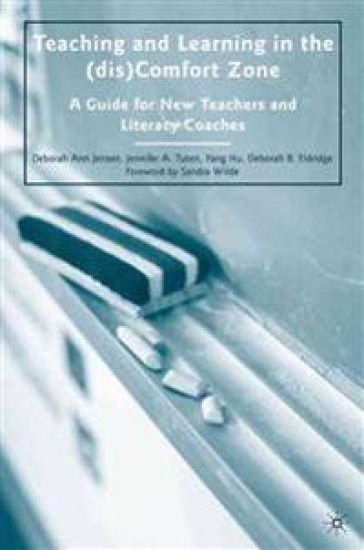
Teaching and Learning in the (dis)Comfort Zone

Teaching and Learning in the (dis)Comfort Zone

D. Jensen; D. Eldridge; Y. Hu; J. Tuten

Palgrave Macmillan
2010
sidottu
The novice teacher and literacy coach need to form a team to share their expertise and continually evolve, to have opportunity for guided reflection and self-assessment of practice. This book shares these professional experiences which delineates and describes the (dis)comfort of teaching and learning at the edge of the teachers' comfort zone.
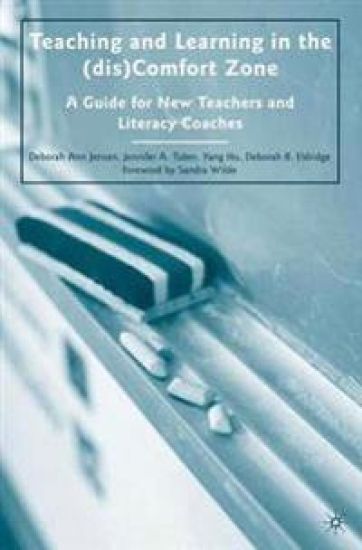
Teaching and Learning in the (dis)Comfort Zone

Teaching and Learning in the (dis)Comfort Zone

D. Jensen; D. Eldridge; Y. Hu; J. Tuten

Palgrave Macmillan
2010
nidottu
The novice teacher and literacy coach need to form a team to share their expertise and continually evolve, to have opportunity for guided reflection and self-assessment of practice. This book shares these professional experiences which delineates and describes the (dis)comfort of teaching and learning at the edge of the teachers' comfort zone.
Industrial Disputes Ils 151

Industrial Disputes Ils 151

J. E. T. Eldridge

Routledge
1998
sidottu
This is Volume II of eighteen in a series on the Sociology of Work and Organisation. First published in 1968, this is a collection of essays in the sociology of industrial relations which in Britain since the Second World War, and more particularly in the 1960s, have come to be socially defined as a 'problem'.
Industrial Disputes Ils 151

Industrial Disputes Ils 151

J. E. T. Eldridge

Routledge
2013
nidottu
This is Volume II of eighteen in a series on the Sociology of Work and Organisation. First published in 1968, this is a collection of essays in the sociology of industrial relations which in Britain since the Second World War, and more particularly in the 1960s, have come to be socially defined as a 'problem'.
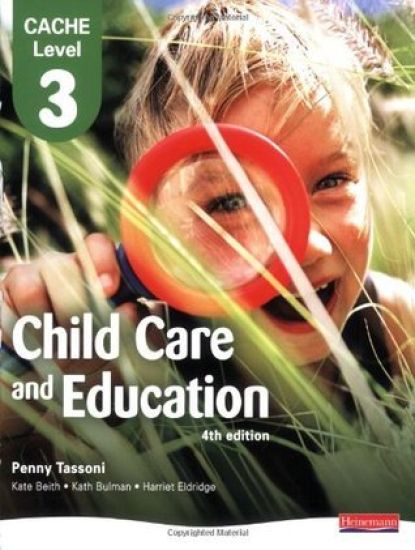
CACHE Level 3 in Child Care and Education Student Book

CACHE Level 3 in Child Care and Education Student Book

Penny Tassoni; Kate Beith; Kath Bulman; Harriet Eldridge

pearson education limited
2007
nidottu
Written to match the specifications of all mandatory and a range of popular optional units at Level 3, this Student Book provides complete support for students studying for the new CACHE Level 3 Child Care and Education qualification. It is presented with an eye-catching page layout designed for maximum ease of use, including an extensive and user-friendly index to help students find just what they're looking for. It includes case studies, activities and photos that encourage the practical application of knowledge and help students to apply their learning, develop professional skills and reflect on their practice. It is supported by a free interactive website with practice multiple choice questions to help students prepare for external assessment.