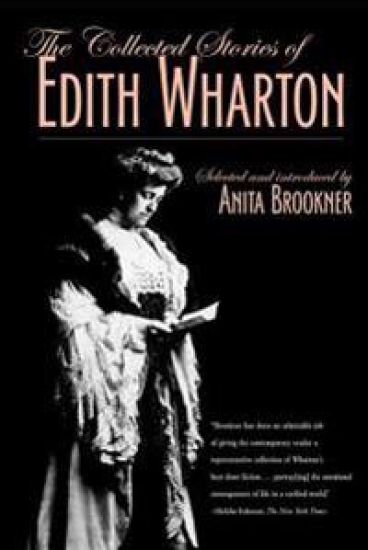
Combining two volumes of Wharton's short stories in a brand new edition, this outstanding selection is the most comprehensive available. Although Edith Wharton is best known for her novels The Age of Innocence and The House of Mirth, this extensive collection of her short fiction shows her to be a master of all its varieties. Wharton's stories ...owe their enduring power to portray the emotional consequences of life in a rarefied world."--The New York Times
Establishing Edith Sitwell at the center of British modernism, this volume showcases her many achievements in poetry, autobiography, novel writing, criticism, art, and performance. Forgoing the gossip about her eccentric appearance and self-fashioned persona that has too often overshadowed serious writing about her work, the contributors explore how Sitwell combined persona and poetry to foster an outpouring of iconoclastic creativity.The Many Facades of Edith Sitwell argues that Sitwell was crucial to the development of a British avant-garde that operated alongside the conventionally accepted transatlantic modernism of Ezra Pound and T. S. Eliot. With Sitwell as an influential literary player and social architect, the British interwar arts scene was not an ascetic escape from personality?as the modernism of Pound and Eliot has often been characterized?but an alternative space of flamboyant, extravagant, and ornate performance.
Edith Stein's life and thought intersect with many important movements of life and thought in the twentieth century. Through her life and eventual martyrdom, she gave witness to the primacy of truth and faith in the face of political totalitarianism, and in her philosophical works, she contributed to a synthesis of phenomenological thought with the thought of Aquinas, while also progressively advancing a compelling form of philosophical personalism. As a result, Stein represents one of the most important Catholic thinkers of the twentieth century and is a figure of growing fascination and devotion among believers and nonbelievers alike.The Personalism of Edith Stein is an investigation of Stein's mature philosophical anthropology, exploring her engagement with the thought of Aquinas and Thomism while maintaining the phenomenological mode of investigation. Through a careful examination of Stein's later works under the themes of human nature, the human individual, and the human being's relation to God, McNamara shows that Stein's mature personalism is considerably expanded and substantiated by her assimilation of key anthropological and metaphysical teachings of Aquinas and Thomism, and, conversely, that Stein significantly develops and deepens these same teachings through a phenomenological reconsideration of each from a personalist perspective.As a whole, the study reveals the profound accord between Stein's mature thought and the received teachings of Aquinas, while yet carefully attending to the remaining differences between them. Ultimately, the author proposes that Stein imbues the teachings of Aquinas with a fundamental personalization such that her mature anthropology can be understood as a Thomistically informed personalism that represents a significant, original contribution to the anthropological dimension of the philosophia perennis.
Edith Stein's murder at Auschwitz is a topic of intense controversy among members of the Jewish and Catholic faiths. Some observers, both Jews and Christians, insist that Stein was sent to the gas chambers because of her Jewish heritage and faith, and that it would be inappropriate to declare her a saint in the Christian religious tradition. Yet, others of both faiths find in Stein a healing symbol for our time of the atrocities committed against Jews in Christian nations during World War II. In this volume, members of the Jewish and Christian religious traditions speak to this deeply divided debate.
This work has been selected by scholars as being culturally important and is part of the knowledge base of civilization as we know it.This work is in the public domain in the United States of America, and possibly other nations. Within the United States, you may freely copy and distribute this work, as no entity (individual or corporate) has a copyright on the body of the work.Scholars believe, and we concur, that this work is important enough to be preserved, reproduced, and made generally available to the public. To ensure a quality reading experience, this work has been proofread and republished using a format that seamlessly blends the original graphical elements with text in an easy-to-read typeface.We appreciate your support of the preservation process, and thank you for being an important part of keeping this knowledge alive and relevant.
This work has been selected by scholars as being culturally important and is part of the knowledge base of civilization as we know it.This work is in the public domain in the United States of America, and possibly other nations. Within the United States, you may freely copy and distribute this work, as no entity (individual or corporate) has a copyright on the body of the work.Scholars believe, and we concur, that this work is important enough to be preserved, reproduced, and made generally available to the public. To ensure a quality reading experience, this work has been proofread and republished using a format that seamlessly blends the original graphical elements with text in an easy-to-read typeface.We appreciate your support of the preservation process, and thank you for being an important part of keeping this knowledge alive and relevant.
This work has been selected by scholars as being culturally important and is part of the knowledge base of civilization as we know it.This work is in the public domain in the United States of America, and possibly other nations. Within the United States, you may freely copy and distribute this work, as no entity (individual or corporate) has a copyright on the body of the work.Scholars believe, and we concur, that this work is important enough to be preserved, reproduced, and made generally available to the public. To ensure a quality reading experience, this work has been proofread and republished using a format that seamlessly blends the original graphical elements with text in an easy-to-read typeface.We appreciate your support of the preservation process, and thank you for being an important part of keeping this knowledge alive and relevant.
This work has been selected by scholars as being culturally important and is part of the knowledge base of civilization as we know it.This work is in the public domain in the United States of America, and possibly other nations. Within the United States, you may freely copy and distribute this work, as no entity (individual or corporate) has a copyright on the body of the work.Scholars believe, and we concur, that this work is important enough to be preserved, reproduced, and made generally available to the public. To ensure a quality reading experience, this work has been proofread and republished using a format that seamlessly blends the original graphical elements with text in an easy-to-read typeface.We appreciate your support of the preservation process, and thank you for being an important part of keeping this knowledge alive and relevant.
This work has been selected by scholars as being culturally important and is part of the knowledge base of civilization as we know it.This work is in the public domain in the United States of America, and possibly other nations. Within the United States, you may freely copy and distribute this work, as no entity (individual or corporate) has a copyright on the body of the work.Scholars believe, and we concur, that this work is important enough to be preserved, reproduced, and made generally available to the public. To ensure a quality reading experience, this work has been proofread and republished using a format that seamlessly blends the original graphical elements with text in an easy-to-read typeface.We appreciate your support of the preservation process, and thank you for being an important part of keeping this knowledge alive and relevant.
"The Case of Edith Cavell: A Study of the Rights of Non-Combatants" by James M. Beck delves into the compelling story of Edith Cavell, a British nurse executed in German-occupied Belgium during World War I. This historical account examines the circumstances surrounding her arrest and trial, raising critical questions about the treatment of non-combatants during wartime. Beck meticulously explores the legal and ethical complexities of Cavell's case, offering a detailed perspective on a pivotal moment in World War I history. The book sheds light on the impact of her execution, both on the morale of the Allied forces and on the broader understanding of international law. A significant contribution to the study of World War I and European history, this book serves as a powerful reminder of the human cost of conflict and the enduring importance of upholding humanitarian principles, even in times of war. It remains a relevant study for anyone interested in the history of wartime ethics and the impact of individual actions on the course of history.This work has been selected by scholars as being culturally important, and is part of the knowledge base of civilization as we know it.This work is in the public domain in the United States of America, and possibly other nations. Within the United States, you may freely copy and distribute this work, as no entity (individual or corporate) has a copyright on the body of the work.Scholars believe, and we concur, that this work is important enough to be preserved, reproduced, and made generally available to the public. We appreciate your support of the preservation process, and thank you for being an important part of keeping this knowledge alive and relevant.
Said before but this is my last book l will write fans been good writing books for you all love you all been an artist and police officer and in a Elite military unit but l have had a good life and happy care free life
The New Edith Wharton Studies uncovers new evidence and presents new ideas that invite us to reconsider our understanding of one of America's most highly acclaimed, versatile, and prolific writers. The volume addresses themes that have previously been missed or underdeveloped, and examines areas where previous scholarship does not take account of key, contemporary issues: Wharton and ecocriticism, Wharton and queer studies, Wharton and animal studies, Wharton and whiteness, and Wharton and contemporary psychology. Essays explore Wharton's treatment of the poor in her emerging career, the ways in which French thinkers helped her envision community, the importance of Greece to Wharton, her transnationalism, the ongoing revelations of the author's archives, and new perspectives on her agency in the literary marketplace. It addresses key themes and examines contemporary issues, while reassessing Edith Wharton's life and career.
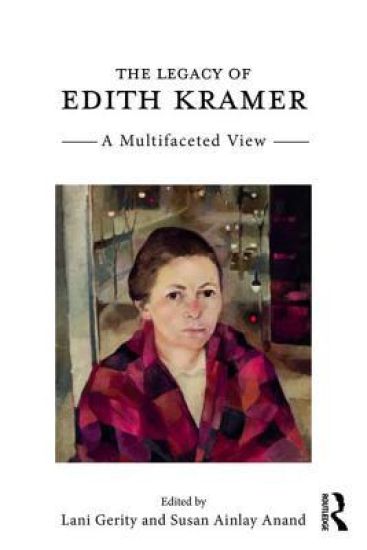
The Legacy of Edith Kramer presents a unique exploration into the life and work of the groundbreaking artist and art therapist. This edited volume examines the artist’s personal and cultural history prior to relocating to the United States as well as the later years when she worked as an artist, art therapist, and teacher as she developed her theoretical understanding of art therapy. Kramer’s solutions to creating a meaningful artist’s life run throughout the chapters within this book, and provide the reader with a sense of what is possible. Written by an international group of contributors, this informative new text offers a multifaceted view of Edith Kramer that will be appreciated by current and future art therapists looking to better understand Kramer’s exceptional mind and contributions to the field.
The Legacy of Edith Kramer presents a unique exploration into the life and work of the groundbreaking artist and art therapist. This edited volume examines the artist’s personal and cultural history prior to relocating to the United States as well as the later years when she worked as an artist, art therapist, and teacher as she developed her theoretical understanding of art therapy. Kramer’s solutions to creating a meaningful artist’s life run throughout the chapters within this book, and provide the reader with a sense of what is possible. Written by an international group of contributors, this informative new text offers a multifaceted view of Edith Kramer that will be appreciated by current and future art therapists looking to better understand Kramer’s exceptional mind and contributions to the field.
During her lifetime, Edith Wharton was America's most popular and prolific writer. This book presents the unpublished writings of a canonical author, along with three stage-plays that open up a different field of Wharton studies. It also includes a general introduction, volume introductions, textual variants, headnotes and endnotes.
During her lifetime, Edith Wharton was America's most popular and prolific writer. This book presents the unpublished writings of a canonical author, along with three stage-plays that open up a different field of Wharton studies. It also includes a general introduction, volume introductions, textual variants, headnotes and endnotes.