Kirjojen hintavertailu. Mukana 12 016 292 kirjaa ja 12 kauppaa.

Kirjahaku

Etsi kirjoja tekijän nimen, kirjan nimen tai ISBN:n perusteella.

1000 tulosta hakusanalla Engin Colak

Modeling Engine Spray and Combustion Processes

Modeling Engine Spray and Combustion Processes

Gunnar Stiesch

Springer-Verlag Berlin and Heidelberg GmbH Co. K
2003
sidottu
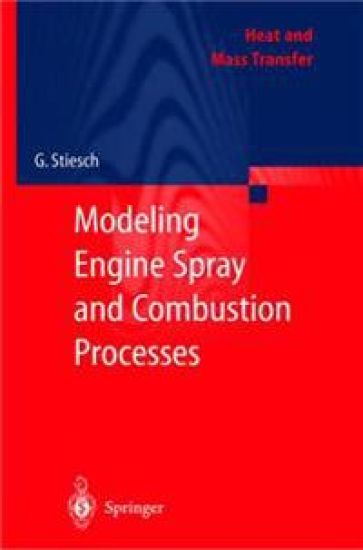
The utilization of mathematical models to numerically describe the performance of internal combustion engines is of great significance in the development of new and improved engines. Today, such simulation models can already be viewed as standard tools, and their importance is likely to increase further as available com­ puter power is expected to increase and the predictive quality of the models is constantly enhanced. This book describes and discusses the most widely used mathematical models for in-cylinder spray and combustion processes, which are the most important subprocesses affecting engine fuel consumption and pollutant emissions. The relevant thermodynamic, fluid dynamic and chemical principles are summarized, and then the application of these principles to the in-cylinder processes is ex­ plained. Different modeling approaches for the each subprocesses are compared and discussed with respect to the governing model assumptions and simplifica­ tions. Conclusions are drawn as to which model approach is appropriate for a specific type of problem in the development process of an engine. Hence, this book may serve both as a graduate level textbook for combustion engineering stu­ dents and as a reference for professionals employed in the field of combustion en­ gine modeling. The research necessary for this book was carried out during my employment as a postdoctoral scientist at the Institute of Technical Combustion (ITV) at the Uni­ versity of Hannover, Germany and at the Engine Research Center (ERC) at the University of Wisconsin-Madison, USA.
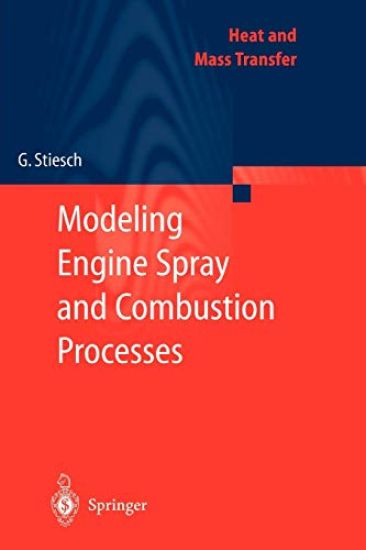
Modeling Engine Spray and Combustion Processes

Modeling Engine Spray and Combustion Processes

Gunnar Stiesch

Springer-Verlag Berlin and Heidelberg GmbH Co. K
2010
nidottu
The utilization of mathematical models to numerically describe the performance of internal combustion engines is of great significance in the development of new and improved engines. Today, such simulation models can already be viewed as standard tools, and their importance is likely to increase further as available com­ puter power is expected to increase and the predictive quality of the models is constantly enhanced. This book describes and discusses the most widely used mathematical models for in-cylinder spray and combustion processes, which are the most important subprocesses affecting engine fuel consumption and pollutant emissions. The relevant thermodynamic, fluid dynamic and chemical principles are summarized, and then the application of these principles to the in-cylinder processes is ex­ plained. Different modeling approaches for the each subprocesses are compared and discussed with respect to the governing model assumptions and simplifica­ tions. Conclusions are drawn as to which model approach is appropriate for a specific type of problem in the development process of an engine. Hence, this book may serve both as a graduate level textbook for combustion engineering stu­ dents and as a reference for professionals employed in the field of combustion en­ gine modeling. The research necessary for this book was carried out during my employment as a postdoctoral scientist at the Institute of Technical Combustion (ITV) at the Uni­ versity of Hannover, Germany and at the Engine Research Center (ERC) at the University of Wisconsin-Madison, USA.
Gasoline Engine Management
The call for environmentally compatible and economical vehicles necessitates immense efforts to develop innovative engine concepts. Technical concepts such as gasoline direct injection helped to save fuel up to 20 % and reduce CO2-emissions. Descriptions of the cylinder-charge control, fuel injection, ignition and catalytic emission-control systems provides comprehensive overview of today´s gasoline engines. This book also describes emission-control systems and explains the diagnostic systems. The publication provides information on engine-management-systems and emission-control regulations.
Diesel Engine Management
This reference book provides a comprehensive insight into todays diesel injection systems and electronic control. It focusses on minimizing emissions and exhaust-gas treatment. Innovations by Bosch in the field of diesel-injection technology have made a significant contribution to the diesel boom. Calls for lower fuel consumption, reduced exhaust-gas emissions and quiet engines are making greater demands on the engine and fuel-injection systems.
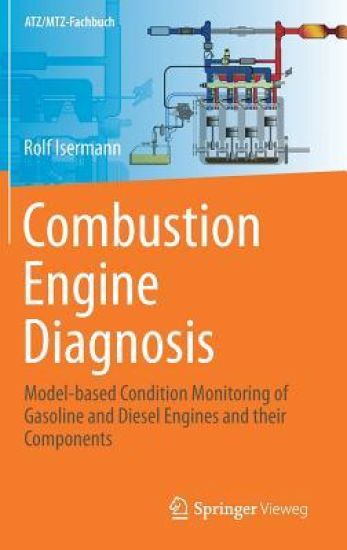
Combustion Engine Diagnosis

Combustion Engine Diagnosis

Rolf Isermann

Springer Vieweg
2017
sidottu
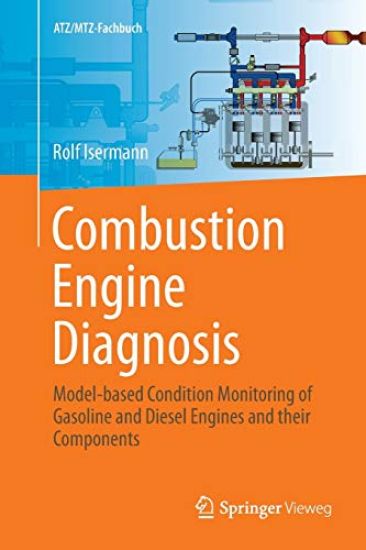
This book offers first a short introduction to advanced supervision, fault detection and diagnosis methods. It then describes model-based methods of fault detection and diagnosis for the main components of gasoline and diesel engines, such as the intake system, fuel supply, fuel injection, combustion process, turbocharger, exhaust system and exhaust gas aftertreatment. Additionally, model-based fault diagnosis of electrical motors, electric, pneumatic and hydraulic actuators and fault-tolerant systems is treated. In general series production sensors are used. It includes abundant experimental results showing the detection and diagnosis quality of implemented faults.Written for automotive engineers in practice, it is also of interest to graduate students of mechanical and electrical engineering and computer science.
Combustion Engine Diagnosis

Combustion Engine Diagnosis

Rolf Isermann

Springer Vieweg
2018
nidottu
This book offers first a short introduction to advanced supervision, fault detection and diagnosis methods. It then describes model-based methods of fault detection and diagnosis for the main components of gasoline and diesel engines, such as the intake system, fuel supply, fuel injection, combustion process, turbocharger, exhaust system and exhaust gas aftertreatment. Additionally, model-based fault diagnosis of electrical motors, electric, pneumatic and hydraulic actuators and fault-tolerant systems is treated. In general series production sensors are used. It includes abundant experimental results showing the detection and diagnosis quality of implemented faults.Written for automotive engineers in practice, it is also of interest to graduate students of mechanical and electrical engineering and computer science.