Kirjojen hintavertailu. Mukana 12 390 323 kirjaa ja 12 kauppaa.

Kirjahaku

Etsi kirjoja tekijän nimen, kirjan nimen tai ISBN:n perusteella.

728 tulosta hakusanalla Fogeli

Jag ångrar ingenting - berättelsen om Conny Andersson
Det var den 25 april 1940. För drygt två veckor sedan hade Tyskland invaderat Norge. Tolv svenskar åkte skidor nedför de bländande vita fjällsluttningarna väster om Brekken i norska Tröndelagen. Svenskarna leddes av en man vid namn Conny Andersson – 26 år gammal och på väg till sitt tredje krig. Tidigare hade han slagits på den republikanska sidan i Spanien och för Finland mot Sovjetunionen. Under en rekognosceringstur i Norge kom Conny i skottväxling med tyska soldater. Han blev sårad och undkom genom att dras på kälke över fjällen tillbaka till Sverige. Minnena förföljde honom livet ut och han ställde sig aldrig mer på ett par skidor. Det här är berättelsen om vägen som förde Conny Andersson till Norge och om vad som hände sedan. Men det är också berättelsen om den tid han levde i, om att stå upp mot fascismen och försvara demokratin. Vi som lever i Europa idag vet att den historien inte är färdigskriven. Conny Andersson (1914–1978) engagerade sig i SSU och arbetade efter kriget bland annat som ombudsman för Konsum. Jonas Fogelqvist, född 1955, är journalist och författare.
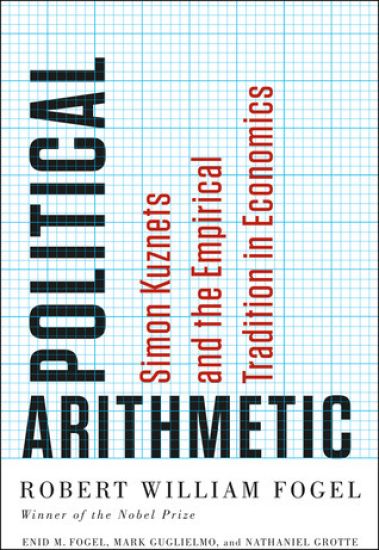
Political Arithmetic

Political Arithmetic

Robert William Fogel; Enid M. Fogel; Mark Guglielmo; Nathaniel Grotte

University of Chicago Press
2013
sidottu
We take for granted today that the assessments, measurements, and forecasts of economists are crucial to the decision-making of governments and businesses alike. But less than a century ago that wasn't the case - economists simply didn't have the necessary information or statistical tools to understand the ever more complicated modern economy. With "Political Arithmetic", Nobel Prize - winning economist Robert William Fogel and his collaborators tell the story of economist Simon Kuznets, the founding of the National Bureau of Economic Research, and the creation of the concept of GNP, which for the first time enabled us to measure the performance of entire economies. The book weaves together the many strands of political and economic thought and historical pressures that together created the demand for more detailed economic thinking - Progressive-era hopes for activist government, the production demands of World War I, Herbert Hoover's interest in business cycles as President Harding's commerce secretary, and the catastrophic economic failures of the Great Depression - and shows how, through trial and error, measurements, and analysis, economists such as Kuznets rose to the occasion and in the process built a discipline whose knowledge could be put to practical use in everyday decision-making. The product of a lifetime of studying the workings of economies and skillfully employing the tools of economics, "Political Arithmetic" is simultaneously a history of a key period of economic thought and a testament to the power of applied ideas.
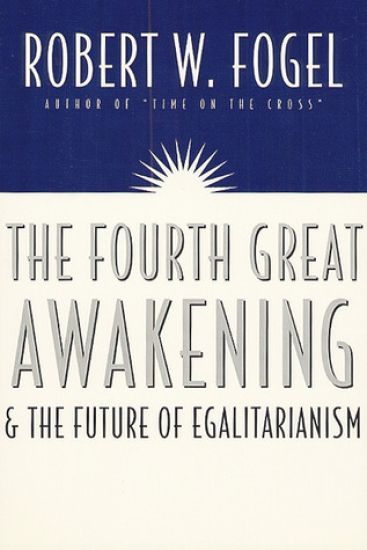
The Fourth Great Awakening and the Future of Egalitarianism

The Fourth Great Awakening and the Future of Egalitarianism

Robert William Fogel

University of Chicago Press
2000
sidottu
Surveying the growing conservatism and religious revivalism of today's United States, Nobel Prize-winning economist Robert W. Fogel sees America in the midst of its "Fourth Great Awakening". In his long-awaited and most ambitious book since "Time on the Cross", Fogel looks to the nation's past to discover the strong link between technologically induced cycles of religiousness - or "awakenings" - in American history and attitudes towards poverty, education and social equality. The United States' "Fourth Great Awakening" is propelled by the tendency of technological advances to outpace ethical norms. The First Great Awakening, which began in 1730, laid the ideological foundation for the American Revolution. The second, starting in 1800, introduced many daring reforms, including the abolition of slavery. The Third Great Awakening, from 1890 to 1930, emphasized social injustice and launched the welfare state. America's new awakening, which began in the late 1950s, promotes a zealous new movement focused on spiritual rather than material reforms. Liberals, argues Fogel, have misunderstood the appeal of the religious right. The intractable forms of inequality today are not in the distribution of food, clothing and shelter, as they were a century ago, but in the distribution of immaterial or "spiritual" assets, which economists call "knowledge capital". Fogel's optimistic study describes 15 of these assets, vital to both economic success and the good life, and presents a new programme of egalitarian reforms based on shared values of liberals and conservatives and on the distribution of these assets. "The Fourth Great Awakening and the Future of Egalitarianism" is a major new work of intellectual history and offers nothing less than a blueprint for our future.
The Fourth Great Awakening and the Future of Egalitarianism

The Fourth Great Awakening and the Future of Egalitarianism

Robert William Fogel

University of Chicago Press
2002
nidottu
In this broad-thinking and profound piece of history, Robert William Fogel synthesizes an amazing range of data into a bold and intriguing view of America's past and future - one in which the periodic Great Awakenings of religion bring about waves of social reform, the material lives of even the poorest Americans improve steadily, and the nation now stands poised for a renewed burst of egalitarian progress.
Proverbs of the Pennsylvania Germans

Proverbs of the Pennsylvania Germans

Edwin Miller Fogel

Metalmark Books
2009
pokkari
Proverbs of the Pennsylvania Germans is a follow-up and companion volume to Edwin Miller Fogel’s 1915 publication Beliefs and Superstitions of the Pennsylvania Germans. This volume focuses on the proverb in its broadest sense, including adages, aphorisms, and some appropriate idiomatic expressions. This “spontaneous expression of experience,” so widely used in the Germanic linguistic tradition, is in Fogel’s words “the very bone and sinew of the [Pennsylvania German] dialect.” This collection is the result of the author’s years of field research in Pennsylvania and comprises over two thousand proverbs dealing with all facets of folklife. Each entry is accompanied by an English translation and often, where applicable, a High German translation. Citations also note instances in which a parallel proverb had been documented in either a British or High German collection. The proverbs are arranged alphabetically by keyword, in the conventional style for a collection such as this one. Nearly one hundred proverbs deemed “vulgar,” which were originally published separately with only High German translations, have been reproduced as an appendix in this Metalmark edition.
Managing In Emerging Market Economies
Since 1989, east-central Europe has plunged headlong into reform efforts, and firms large and small have been forced almost overnight to adapt to the demands of a market economy. This book of case studies on business development in the Czech and Slovak Republics illustrates how various industries and specific companies are responding to the challen
The Escape from Hunger and Premature Death, 1700–2100

The Escape from Hunger and Premature Death, 1700–2100

Robert William Fogel

Cambridge University Press
2004
sidottu
Nobel laureate Robert Fogel’s compelling new study examines health, nutrition and technology over the last three centuries and beyond. Throughout most of human history, chronic malnutrition has been the norm. During the past three centuries, however, a synergy between improvements in productive technology and in human physiology has enabled humans to more than double their average longevity and to increase their average body size by over 50 per cent. Larger, healthier humans have contributed to the acceleration of economic growth and technological change, resulting in reduced economic inequality, declining hours of work and a corresponding increase in leisure time. Increased longevity has also brought increased demand for health care. Professor Fogel argues that health care should be viewed as the growth industry of the twenty-first century and systems of financing it should be reformed. His book will be essential reading for all those interested in economics, demography, history and health care policy.
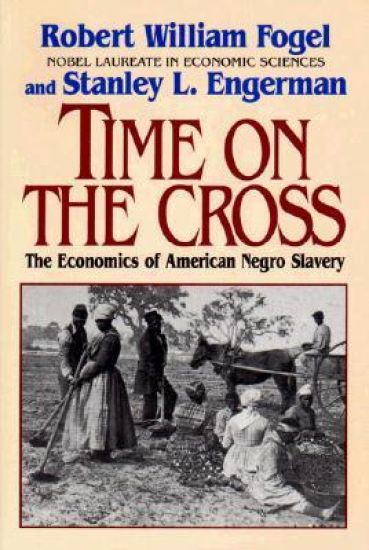
Time on the Cross

Time on the Cross

Robert William Fogel; Stanley L. Engerman

University Press of America
1986
nidottu
This book, originally published in 1974 by Little, Brown and Company, is a sweeping reexamination of the economic foundations of American Negro slavery. Based upon a vast research effort, this volume constitutes an entirely new portrayal of slavery's past. It challenges traditional assumptions about the material condition and management of slaves, their work habits, domestic welfare, and the economy of the antebellum South in general.
God II: Book 1 Featuring a Complete Set of Jesus's Parables (ASV & ERV Bible Versions)
You are invited to join the author to explore our ancient religious beliefs and reconcile them with current scientific knowledge. Is it readily apparent that God, by God's original intent, is not eternal, infinite, and all-knowing? This breakthrough in thinking makes it abundantly clear that we are, indeed, created in God's vulnerable image. God is vulnerable in the sense that by designing humankind with free will, God suffers when humanity suffers. Is it reasonable that our soul is judged not at the end of life but on a real-time basis through a concept called spiritual entanglement? As surely as gravity provides a constant universal attractive force, God's spiritual strength is continually and equally present in all humans, providing the basis for radically improving our lives and our human relationships. We communicate with God by Spiritual Entanglement in the sense that it is the Alpha spirit that unites humankind and has received many names by many religions. If we can acknowledge this core belief which has existed from the Alpha and will exist through the Omega, we can celebrate in a thousand diverse ways. Once we accept that God exists and is equally present in every human life, we can begin to bridge the divide which exists between nations and religions. This book is a beginning step, from a Christian perspective, which explores God's desires as articulated in the parables taught by Jesus. The parables represent a handbook outlining a partial list of qualities that God loves and endorses in individual human relationships. God directs the Word at individuals in the parables, and not organizations, governments, or world leaders. The advice offered two thousand years ago is valid to this day and is readily available to those who experience "missingness" and wish to move closer to God. God II represents an initial attempt to rethink our miraculous humanity and open channels of communication with all our brothers and sisters. God II becomes our partner and is there to help us enhance our own lives and guide us in ways to mend our planet. A perfect book for a lively religious discussion group, a study guide of the parables of Jesus, or as a confidence builder that God exists, your life will be enhanced by embracing new possibilities. In studying the parables of Jesus, we have elected to utilize the older public domain version to capture the "vintage" reading of the Bible and the older but clearer ERV version for newcomers to the Bible. There are sixty or seventy other versions which you might own in your home, but none matches the clarity of the ERV version.
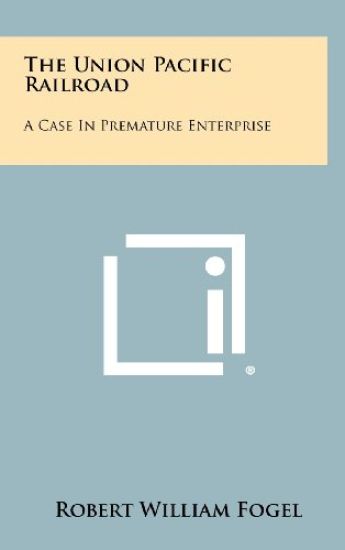
The Union Pacific Railroad: A Case in Premature Enterprise

The Union Pacific Railroad: A Case in Premature Enterprise

Robert William Fogel

Literary Licensing, LLC
2012
sidottu
""The Union Pacific Railroad: A Case in Premature Enterprise"" by Robert William Fogel is a historical account of the Union Pacific Railroad, one of the most significant transportation projects in American history. The book explores the origins of the railroad, its construction, and the challenges it faced in its early years.Fogel argues that the Union Pacific was a case of premature enterprise, meaning that it was built before the market demand for transportation was sufficient to support it. He examines the factors that led to the decision to build the railroad, including the political and economic climate of the time, and the technological innovations that made it possible.The book also delves into the social and economic impact of the Union Pacific on the American West, including the displacement of Native American communities and the growth of towns and cities along the railroad's route.Overall, ""The Union Pacific Railroad: A Case in Premature Enterprise"" provides a comprehensive and detailed account of one of America's most important transportation projects, offering insights into the complex factors that shaped its development and impact on American history.Johns Hopkins University Studies In Historical And Political Science, V78, No. 2.This scarce antiquarian book is a facsimile reprint of the old original and may contain some imperfections such as library marks and notations. Because we believe this work is culturally important, we have made it available as part of our commitment for protecting, preserving, and promoting the world's literature in affordable, high quality, modern editions, that are true to their original work.