Kirjojen hintavertailu. Mukana 11 699 587 kirjaa ja 12 kauppaa.

Kirjahaku

Etsi kirjoja tekijän nimen, kirjan nimen tai ISBN:n perusteella.

1000 tulosta hakusanalla Geoffrey H. Block

The Wife of Bath's Prologue and Tale by Geoffrey Chaucer: Text & Critical Introduction

The Wife of Bath's Prologue and Tale by Geoffrey Chaucer: Text & Critical Introduction

Ray Moore M. a.

Createspace Independent Publishing Platform
2014
nidottu
This book uniquely offers everything a reader needs to appreciate the text.It gives the reader a newly edited Middle English text with side-by-side modernization and a commentary. Also included are chapters on the General Prologue, the Structure of the Wife's Prologue and Tale, the Teller and the Tale, and a comparison with three other tales of the Knight and the Loathly Lady.
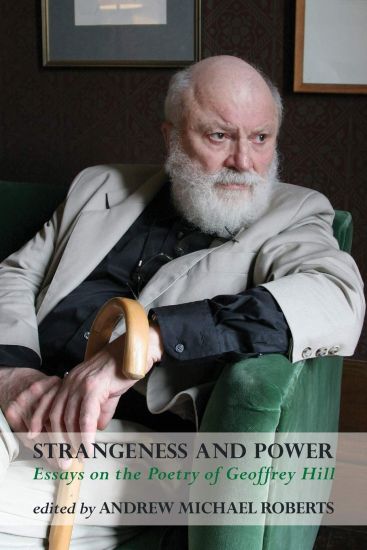
Strangeness and Power: Essays on the Poetry of Geoffrey Hill
"In one of his final publications, Geoffrey Hill asserts his commitment to 'the strangeness and the power of poetry'. The words accord with many readers' responses to Hill's own poetry. It is generally seen as 'powerful', in rhetorical, formal, intellectual and emotional terms, and is much concerned with issues of political and aesthetic power. ... 'Strangeness' may here stand for the remarkable distinctiveness of his poetry, which over more than sixty years, from the mid-1950s to his death in 2016, followed a trajectory of development and innovation which engaged in unique ways with many of the crucial questions in late twentieth century and early twenty-first century poetics: the lyrical and the anti-lyrical, Romantic, Modernist and earlier inheritances; form and formal innovation; the personal and the impersonal; history and ethics. But more than that, the word suggests the way in which that poetry is somehow 'strange' and much concerned with strangeness, in both negative and positive terms: estrangement, peculiarity, revelation. Hill's writing fulfils to a high degree the Russian Futurist aim of 'making strange' the familiar, as well as bringing to the reader's attention, through its learning and allusion, aspects of history and culture which are likely to be unfamiliar to many. For some readers, Hill's late work in particular is simply too 'strange' too resistant to reading and understanding. Both his admirers and his detractors, and those who come somewhere between, might acknowledge qualities of strangeness, even that if judgment would carry different implications and values in each case. A number of essays in this volume pair Hill with another poet, or poets, to consider his 'strange likeness' with contemporaries and predecessors." --from the editor's Introduction to this volume
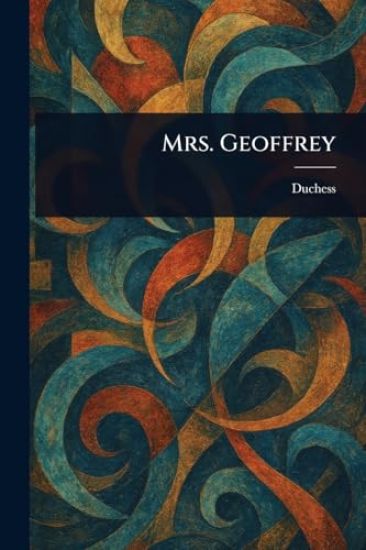
Mrs. Geoffrey

Mrs. Geoffrey

Anonymous

Hansebooks
2017
pokkari
Mrs. Geoffrey - A Novel is an unchanged, high-quality reprint of the original edition of 1896. Hansebooks is editor of the literature on different topic areas such as research and science, travel and expeditions, cooking and nutrition, medicine, and other genres. As a publisher we focus on the preservation of historical literature. Many works of historical writers and scientists are available today as antiques only. Hansebooks newly publishes these books and contributes to the preservation of literature which has become rare and historical knowledge for the future.
Approaching possible reasons for the different endings in Geoffrey of Monmouths Historia Regum Britanniae and William Shakespeares King Lear
Seminar paper from the year 2011 in the subject English Language and Literature Studies - Literature, grade: 1,0, University of Tubingen, language: English, abstract: 1. Introduction: ... This is the basic plot of the legend of King Lear. Geoffrey of Monmouth, a magister and later bishop of Saint Asaph, used it for his Historia Regum Britanniae, also known as The History of the Kings of Britain, a work which pretends to be a history of the British rulers. It was written between 1135 and 1138 and served William Shakespeare as a source for his tragedy called King Lear, which was written between 1603 and 1606. It is no big secret that legends, plays and even traditions sometimes undergo massive changes in the course of time. By comparing the modern celebration of Halloween or St. Nicholas Day to their original meaning, we are able to detect various differences. These changes could be seen as a kind of defamiliarization of their ancient message. Can they simply be seen as a try to change old and established elements into modern and popular objects that are suitable for the longing and the desire of the mass? By having a closer look at today s commercial character of Halloween and Christmas, one would tend to agree. On the other side, it seems to be quite logical that different periods with different social and political circumstances can cause different interpretations and expectations of a piece of literature or an event. Although Shakespeare s and Geoffrey s works are dealing with the same background legend, their message and their intentions seem to be quite different. As it was Shakespeare who adapted the Lear story and provided it with several changes, the question arises why he did so. Did he make these changes for commercial reasons? Did he try to integrate the legend into a contemporary context in order to influence the masses to attend his play? Was he politically dependent and in some way forced to do it? Are contemporary values and ideas of his era t