
Kirjahaku
Etsi kirjoja tekijän nimen, kirjan nimen tai ISBN:n perusteella.
1000 tulosta hakusanalla Gerald Mortimer

This intriguing book explores why spectacular films involving Biblical figures or set in Biblical times have been a staple of filmmaking since talkies began. Forshey looks at these films, and suggests that the underlying purpose was to mediate between a monistic scientific world view and a dualistic religious world view, and between secular and religious ethics. Forshey discusses how filmic, political, religious, and cultural history influenced filmmakers of these spectaculars. The first chapter differentiates between religious spectaculars and biblical spectaculars. Following are chapters on early religious films and others on how the post-war and cold war led to a struggle to define the righteous nation. The chapters on biblical spectaculars examine films in which sex and social responsibility was a paramount concern (Samson and Delilah, David and Bathsheba). The 1960s were dominated by films about Jesus, searching for an ethical system for a world undergoing rapid social change. One entire chapter is devoted to Cecil B. DeMille's The Ten Commandments, the epitome of the form, followed by chapters on John Huston's The Bible as a culmination of the form, and a final one on how television rethought spectaculars and how Martin Scorsese's The Last Temptation of Christ drew the battle lines between humanistic Christians and evangelical Christians. American Religious and Biblical Spectaculars will appeal to scholars of film, religion, and popular culture.

In Peace Through Agreement, Gerald Rabow reveals how any dispute, including those that lead to serious confrontation between nations, can be resolved through the proper management of informed self interest. Rabow demonstrates how the utilizing of negotiation, mediation, and arbitration techniques, as well as a sound analytic understanding of non-zero-sum conflicts can achieve peace. He shows, through analogous non-zero-sum games, that cooperation between conflicting factions is much more successful than is generally believed. Through the playing of these games, the reader can experience conflict resolution in a controlled setting. Finally, the book presents a scheme for the arbitration of a major international dispute. Students and scholars of political science, peace studies, diplomacy, or anyone interested in new approaches to peace will find Peace Through Agreement a valuable resource.This book challenges generally accepted views with the following conclusions: Arbitration can be used in resolving all international disputes, particularly those involving the most vital national interests; cooperation, rather than defection is almost always the best strategy in non-zero sum games; negotiators and arbitrators should not base payoff division on threat capabilities; and, delaying negotiations is never justified. Peace Through Agreement, an important contribution to the ever widening field of peace studies, should be required reading for anyone interested in achieving peace in our time.
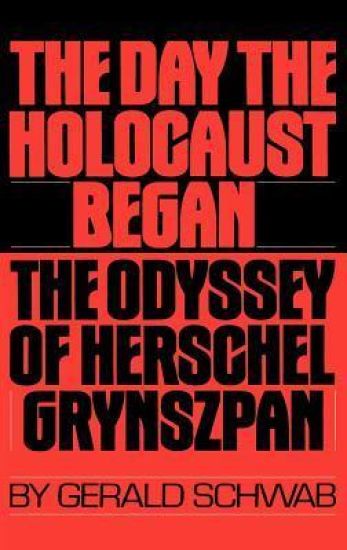
On November 7, 1938, Herschel Grynszpan, a 17-year old Polish-German Jew, walked into the German Embassy in Paris and shot Third Secretary, Ernst vom Rath, who died shortly after. Vom Rath's death triggered the destruction and mahem which became known as Kristallnacht, or The Night of Broken Glass, resulting in the death of hundreds, the razing of 265 synagogues and 200 houses, the demolition of 7,500 business establishments, and the incarceration of 30,000 Jews in concentration camps. Herschel Grynszpan was immediately arrested. France's foremost criminal lawyer took over his defense. On June 8, 1940, two days before the French Government evacuated Paris, the youth was indicted for murder. A month later he was in Nazi hands, being interrogated by the Gestapo in anticipation of a major show trial. Little has been known in the past about this extraordinary young man. Using German documents never before revealed, including a startling coded testament, Gerald Schwab examines his background and the events culminating in the shooting. The book describes, in considerable detail, Grynszpan's experiences in French and German hands and his trial which was to become Nazi Germany's justification of the Holocaust. It also challenges some commonly held ideas about the cause of the shooting and its aftermath. The Day the Holocaust Began describes the life of a mixed-up, emotionally immature youngster who developed into one of the most amazing and unlikely heroes of modern history, demonstrating the power of the human spirit against overwhelming odds. Anyone interested in modern European history, the Nazi Government, the persecution of the European Jews, as well as students of the Holocaust and its many ramifications, will find The Day the Holocaust Began invaluable reading.
This is a comprehensive examination of the contemporary movement against drunk driving. Written in an eminently readable style, the volume addresses all major substantive aspects of the anti-drunk driving effort including society's changing attitudes and response to the crime itself and the offenders, the role of grass roots groups such as MADD and RID, federal and state initiatives, actions and enabling legislation, and anti-drunk driving programs and projects. Gerald D. Robin takes a socio-legal approach throughout, emphasizing the rationales behind, controversies surrounding, and effectiveness of new strategies and developments to combat drunk driving.Following two introductory chapters, which outline the dimensions of and societal responses to the drunk driving problem, the chapters are arranged to reflect the chronological processing of suspects through the justice system from the point of stopping them on the road to the final disposition of cases in court. Thus, individual chapters treat issues such as sobriety checkpoints, administrative license suspension, prosecuting and defending drunk drivers, mandatory sentencing, third party liability, and deterring drunk driving. Numerous photographs and figures illustrate points discussed in the text. Ideal as a supplemental text for criminology courses, this book is also an important resource for professionals involved in treating drunk drivers and their victims.

The distinction between private and public realms of experience, of social activity, and of personal identity are fundamental for shaping everyday understanding and organization of social life, yet the distinction has not been paramount in sociological theorizing. Dividing Public and Private makes the public/private division central to social theory and social inquiry. Gerald Turkel demonstrates that by placing the public/private distinction at the center of social thought and by rethinking the writings of such classical theorists as Marx, Durkheim, Weber, and Parsons through the prism of the public/private division, new dimensions are raised for the analysis of authority, legitimacy, law, political participation, and the very meanings of freedom and necessity. Based on the joining of legal, social, and political theory, Turkel argues that the public/private division is crucial for mediating and overcoming social totalism and privatized oppression. Dividing Public and Private challenges such theoretical approaches as critical theory, feminism, neo-Marxism, and liberalism to affirm the public/private division in directions that support equality, active participation in politics and the formation of collective projects, and individual self-determination. It is particularly appropriate for theorists in law, political science, and sociology.

This book tells the history of one of the most successful OSS operations of World War II. Three OSS agents—two young immigrants, one from Germany, the other from Holland, and a former Austrian Wehrmacht officer—in the midst of winter make a night jump into the Austrian Alps, landing hip-deep in snow at 10,000 feet. William Casey—then an OSS official and later head of the CIA—called it by far the most successful of the operations mounted from the OSS base at Bari. Thanks to this intrepid threesome, rail and road communications between the Italian front and Germany were seriously hampered and the city of Innsbruck in the heart of the Nazi's vaunted stronghold called the National Redoubt, fell to American troops without a shot being fired.
Countless editorials have addressed the if, how, why, when, and who dimensions of NATO enlargement. These issues will continue to generate debate despite the Madrid summit decisions and will invariably influence legislators in discharging their historic responsibility to provide advice and consent to ratification of the protocols of accession before April 1999. Congressman Solomon's volume will help place these issues in perspective, answer the skeptics of enlargement, and provide the missing historical context for the profound geopolitical challenge of European security on the cusp of the 21st century.He begins by reviewing NATO's initial response, from 1989 to 1990, to the collapse of the Warsaw Pact. The early moves from outreach toward enlargement are then explored, and then he examines how NATO sought to combine the two strands of prospective enlargement while engaging nations not seeking NATO membership, especially Russia, to prepare for coalition operations and the spread of democratic security values. Next he analyzes how the Partnership for Peace concept eventually progressed toward the decisions to invite the Czech Republic, Hungary, and Poland to join the alliance by 1999. Important reading for scholars, policymakers, and citizens concerned with current strategic and international relations issues.
Countless editorials have addressed the if, how, why, when, and who dimensions of NATO enlargement. These issues will continue to generate debate despite the Madrid summit decisions and will invariably influence legislators in discharging their historic responsibility to provide advice and consent to ratification of the protocols of accession before April 1999. Congressman Solomon's volume will help place these issues in perspective, answer the skeptics of enlargement, and provide the missing historical context for the profound geopolitical challenge of European security on the cusp of the 21st century. He begins by reviewing NATO's initial response, from 1989 to 1990, to the collapse of the Warsaw Pact. The early moves from outreach toward enlargement are then explored, and then he examines how NATO sought to combine the two strands of prospective enlargement while engaging nations not seeking NATO membership, especially Russia, to prepare for coalition operations and the spread of democratic security values. Next he analyzes how the Partnership for Peace concept eventually progressed toward the decisions to invite the Czech Republic, Hungary, and Poland to join the alliance by 1999. Important reading for scholars, policymakers, and citizens concerned with current strategic and international relations issues.

During World War II, General Dwight D. Eisenhower became convinced that the era of separate land, sea, and air operations was over and that future military operations would involve all three elements acting in concert. He foresaw that, once peace had been restored, the waste and duplication of effort which characterized America's military operations during the war would not be tolerated by an economy-minded Congress. A fiscal conservative, Eisenhower saw national security as dependent upon maintaining a healthy economy and a strong military. His goal, therefore, was the achievement of an efficient, properly balanced military establishment within the context of a healthy economy through the unification of the services into a single Cabinet level department.As Army Chief of Staff, adviser to Secretaries of National Defense James Forrestal and Louis Johnson, and then as president, Eisenhower was a leader in the effort to achieve unification. The final result of these efforts, the Military Reorganization Act of 1958, did not encompass all of the changes that Eisenhower originally sought. However, he had been instrumental in transforming the unorganized military establishment of pre-war America into a highly centralized organization led by a powerful secretary of defense. This structure would remain unchanged for twenty-eight years.
Radicalism had a powerful but largely unacknowledged influence in the Italian-American community. This study brings together 16 selections that restore to Italian-American history the radical experience that has long remained suppressed, but that nevertheless helped shape both the Italian-American community and the American left. The detailed introduction by the volume editors interprets the overall history of Italian-American radicalism and offers extensive bibliographical references on the topic, which the volume editors organize into three sections: labor, politics, and culture. A concluding selection relates the radicalism of Italian Americans to that in other Italian immigrant communities. In the section on labor, Rudolph Vecoli, among others, traces the rise and decline of radicalism within the Italian-American working class, and Jennifer Guglielmo breaks new ground in uncovering the involvement of Italian American women in the radical movements. In politics, Paul Avrich unveils the violent reaction of anarchists in the United States to the execution of Sacco and Vanzetti, and Jackie DiSalvo identifies Father James Groppi as the most important white leader in the Civil Rights movement. On culture, Julia Lisella, Mary Jo Bono, and Edvige Guinta present pioneering interpretive studies on the work of Italian-American women in literature.
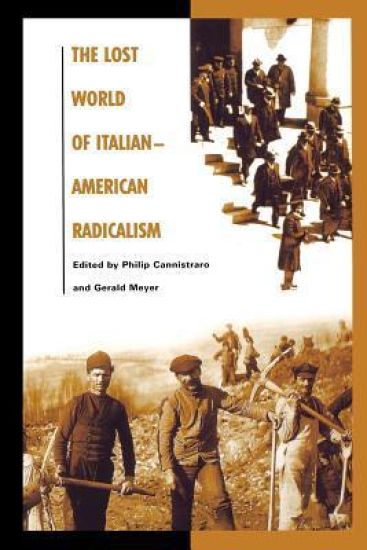
Radicalism had a powerful but largely unacknowledged influence in the Italian-American community. This study brings together 16 selections that restore to Italian-American history the radical experience that has long remained suppressed, but that nevertheless helped shape both the Italian-American community and the American left. The detailed introduction by the volume editors interprets the overall history of Italian-American radicalism and offers extensive bibliographical references on the topic, which the volume editors organize into three sections: labor, politics, and culture. A concluding selection relates the radicalism of Italian Americans to that in other Italian immigrant communities. In the section on labor, Rudolph Vecoli, among others, traces the rise and decline of radicalism within the Italian-American working class, and Jennifer Guglielmo breaks new ground in uncovering the involvement of Italian American women in the radical movements. In politics, Paul Avrich unveils the violent reaction of anarchists in the United States to the execution of Sacco and Vanzetti, and Jackie DiSalvo identifies Father James Groppi as the most important white leader in the Civil Rights movement. On culture, Julia Lisella, Mary Jo Bono, and Edvige Guinta present pioneering interpretive studies on the work of Italian-American women in literature.
Dozens of outstanding practitioners and scholars explain how quickly the career opportunities for graduates with psychology degrees are growing. Oster contacted dozens of working psychologists and asked them what advice they would offer today's aspiring psychologists. Their responses provide a glimpse into a changing and ever-expanding field. The book includes advice on making the right choice from among psychology careers in fields old and new, the ins and outs of graduate school, and the lessons seasoned professionals learned in their quests for meaningful careers. Web sites for more information on specialties are listed, as are suggested additional readings. This insightful work will interest high school students and college undergraduates, career-changers and psychologists seeking new directions, as well as guidance counselors and parents.Psychology is one of the most popular majors in college today, with the number of students enrolled in the discipline having surged some 200% in the last 10 years. In this book, dozens of outstanding practitioners and scholars explain how quickly the career opportunities for graduates with psychology degrees are growing—in talk therapy and clinical research, but also at agencies ranging from the CIA and Homeland Security to the Library of Congress and the Securities and Exchange Commission. In preparing his book, Oster contacted dozens of working psychologists and asked them what advice they would offer today's aspiring psychologists. Their responses provide a glimpse into a changing and ever-expanding field. Dozens of contributors recall their thoughts and actions as they plotted careers—or landed jobs by surprise. From one psychologist who put her research aside to become president of a university, to another who ended his work with children to become an author of psychological mystery books, the dozens of practitioners interviewed share the sometimes-humorous, often-difficult experiences and decisions they faced as they completed their college years and built successful careers.The book includes advice on making the right choice from among psychology careers in fields old and new, the ins and outs of graduate school, and the lessons seasoned professionals learned in their quests for meaningful careers. Web sites for more information on specialties are listed, as are suggested additional readings. The book also includes sections on making the most of undergraduate years, and on balancing the demands of career and family.
The 14 bible studies from the Gospel of John have been designed so that everyone can participate. Fundamental to the process is that the members of each group feel free to share their interpretations, their experiences and their contexts with others. Within the richness of the Gospel these studies follow the 'I am' sayings of Jesus, and John's theological use of them, and the 'Signs' in the Gospel of John.
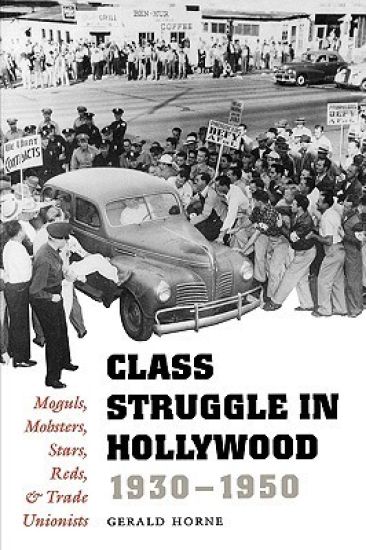
As World War II wound down in 1945 and the cold war heated up, the skilled trades that made up the Conference of Studio Unions (CSU) began a tumultuous strike at the major Hollywood studios. This turmoil escalated further when the studios retaliated by locking out CSU in 1946. This labor unrest unleashed a fury of Red-baiting that allowed studio moguls to crush the union and seize control of the production process, with far-reaching consequences.This engrossing book probes the motives and actions of all the players to reveal the full story of the CSU strike and the resulting lockout of 1946. Gerald Horne draws extensively on primary materials and oral histories to document how limited a "threat" the Communist party actually posed in Hollywood, even as studio moguls successfully used the Red scare to undermine union clout, prevent film stars from supporting labor, and prove the moguls' own patriotism.Horne also discloses that, unnoticed amid the turmoil, organized crime entrenched itself in management and labor, gaining considerable control over both the "product" and the profits of Hollywood. This research demonstrates that the CSU strike and lockout were a pivotal moment in Hollywood history, with consequences for everything from production values, to the kinds of stories told in films, to permanent shifts in the centers of power.
Faulkner's Revision of Absalom, Absalom! is a study of the creative process as exemplified in one of the major achievements in twentieth-century fiction. Portions of the original handwritten version of the story are collated, line by line, with corresponding sections of the published version. In an introductory discussion the major changes are analyzed and evaluated.It is particularly interesting to observe Faulkner revising not only his choice of words and the construction of his sentences but also the central design of the story. Most notably, he changed his mind about having it known from the beginning that Charles Bon was Sutpen's part-Negro son, and he developed Quentin Compson into the pivotal figure who finally supplies this missing piece of information.In the process of revision Absalom, Absalom! became a kind of detective story, and the reader is forced to join the quest and participate in the undertaking which is the basic subject of the book—the human attempt to comprehend and deal with the past.To trace the process of this revision is to experience a sharp focusing of theme and to witness a demonstration of how the meaning of a fictional work can shape its structure and, in turn, stand revealed by what has become the outward sign, or form, of that meaning.
Was Sanctuary really a "cheap idea," as Faulkner himself called it, a book "deliberately conceived to make money"? The question has teased the reading public since its publication. Many readers have had their worst suspicions about Faulkner's work confirmed by his statement, but most serious critics have discounted the disparagement, emphasizing instead Faulkner's further statement that when the galley proofs arrived from his publisher, "I saw that it was so terrible that there were two things to do: tear it up or rewrite it. I thought again, 'It might sell; maybe 10,000 of them will buy it.' So I tore the galleys down and rewrote the book."Now that two sets of the original galleys are available for inspection, one can see just how Faulkner reworked the novel. In the collation provided here by Gerald Langford, using Faulkner's own corrected galleys held by the University of Texas at Austin, the reader can reconstruct the first version for himself, noting the cancellations, the additions, and the rewritten passages. As Gerald Langford makes clear in his introductory analysis, neither of Faulkner's statements is to be trusted. Through revision, Sanctuary became theatrically more effective but thematically less interesting than the original version. Particularly noteworthy is the experimental narrative method of the original version, which foreshadows the method of Absalom, Absalom! as opposed to the straightforward, easily accessible method to which Faulkner turned in the revised Sanctuary and Light in August.

Oil, the black gold of Texas, has given rise to many a myth. Oil could turn a man overnight into a millionaire-and did, for some. But these myths have obscured what life was really like in the oil patch, a place that was neither the El Dorado of legend nor quite the unredeemed den of sin and iniquity that some feared.In Roughnecks, Drillers, and Tool Pushers, Gerald Lynch provides a much-needed insider's view of the oil industry, describing life in various oil fields in and around Texas. He also chronicles changes in drilling methods and oil-field technology and how these changes affected him and his fellow oil-field workers. No one else has written a working-class history of the oil fields as colorful and articulate as this one.
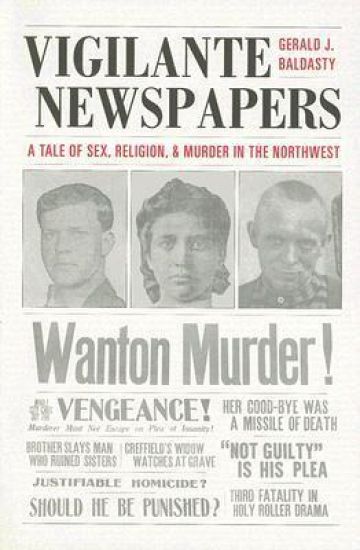
This riveting work of social history documents the role the news media played in spurring two murders revolving around Edmund Creffield, a charismatic "Holy Roller" evangelist who arrived in Corvallis, Oregon, in 1903 and quickly enraged the citizenry by defiantly challenging the religious and sexual mores of the time. When ardent female followers began refusing to speak to their nonbelieving husbands, vigilantes tarred and feathered Creffield, eventually forcing him to flee to Seattle.Once there, Creffield was murdered by George Mitchell, the brother of one of his followers. The news media in Seattle and Oregon applauded George's defense of his sister Esther's honor, influencing the jury. Citing temporary insanity, the jury quickly acquitted George, pleasing the cheering crowds and the approving media. As George prepared to return to Oregon, however, Esther shot him point-blank at Union Station and another moralizing media frenzy broke out. Esther was sent to Western State Hospital and committed suicide after her release. Her short life was among the most poignant of the dozens wrecked by the controversy.Gerald Baldasty's examination of Seattle and Oregon media coverage shows the tenacity with which frontier media protected traditional mores, particularly the notion that men are responsible for women's purity and have the right to take action if they feel another man has besmirched a woman's honor. Expertly crafted in a brisk, accessible style, Vigilante Newspapers illustrates through the tragic tale of Edmund Creffield, George Mitchell, and Esther Mitchell how the news media defined social deviance using vague concepts such as hysteria and temporary insanity, vigorously defending the established order of religious, class, and gender norms.