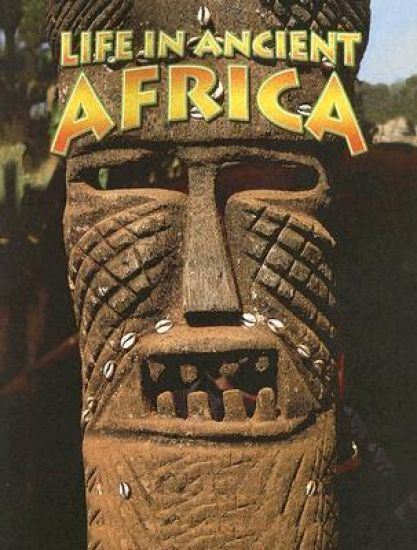
From the first hunting and gathering societies to the great Nubian kingdoms of Kush, Africa has for centuries been the center of great cultural activity across its mountains, deserts, and rainforests. Life in Ancient Africa portrays the major civilizations of the ancient African era using maps and beautiful full-color photographs and illustrations.
Accessible, trustworthy documentation is key to successful genealogy research and Hazle Boss Neet provides just such data. Extracted from data collected and certified as true and complete by W. W. Lamar, the local tax assessor, this valuable resource contains the names of all educable children in Pontotoc County, Mississippi, in 1894. The entries are arranged alphabetically by the name of the child's parent (or guardian) and include the following categories: range, township, sex, age, and color. The author also provides a helpful index for referencing children whose last names are different from the parent or guardian. Located in northeast Mississippi, Pontotoc County is part of the last territory in Mississippi, Alabama, and Tennessee that was ceded by the Chickasaw Indians in the 1832 Treaty of Pontotoc. Anyone searching for ancestors in these locales may find strong evidence of them among the thousands of names included in this text.
Accessible, trustworthy documentation is key to successful genealogy research and Hazel Boss Neet provides just such data in this publication. Extracted from data collected and certified as true and complete by W. W. Lamar, the local tax assessor, this valuable resource contains the names of all educable children in Pontotoc County, Mississippi, in 1892. The entries are arranged alphabetically by the name of the child's parent (or guardian) and include the following categories: range, township, sex, age, and color. The author also provides a helpful index for referencing children whose last names are different from the parent or guardian. Located in northeast Mississippi, Pontotoc County is part of the last territory in Mississippi, Alabama, and Tennessee that was ceded by the Chickasaw Indians in the 1832 Treaty of Pontotoc. Anyone searching for ancestors in these locales may find strong evidence of them among the thousands of names included in this text.
Since it was first published in 1959, this book has been generally acclaimed as "the most thorough and reliable exposition of the works of Sartre, Camus, and de Beauvoir to have appeared in this country" (Chicago Sun-Times).
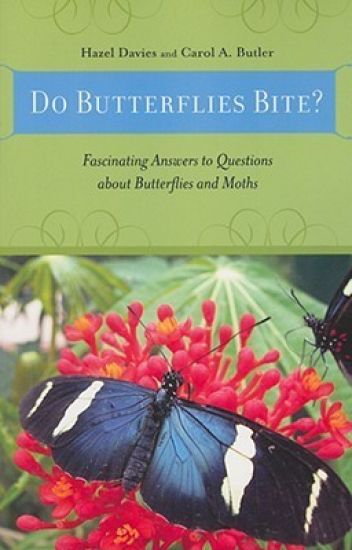
How fast do butterflies fly? Does a butterfly have ears? Do they sleep? Does a caterpillar have a skeleton? How does a moth get out of its cocoon? What is the difference between a butterfly and a moth? And just what is a skipper? Every year, thousands of people visit butterfly conservatories to stand in quiet awe of the simple beauty displayed by these magical creatures. Hazel Davies and Carol A. Butler capture the sense of wonderment and curiosity experienced by adults and children alike in this book about butterflies and their taxonomic cousins, the moths and the skippers. Beautifully illustrated with color and black and white photographs, and drawings by renowned artist William Howe, this book is an essential resource for parents, teachers, students, or anyone who has ever been entranced by these fascinating, fluttering creatures.Covering everything from their basic biology to their complex behaviors at every stage of life to issues in butterfly conservation, Davies and Butler explore wide-ranging topics and supply a trove of intriguing facts. You'll find tips on how to attract more butterflies to your garden, how to photograph them, and even how to raise them in your own home. Arranged in a question and answer format, the book provides detailed information written in an accessible style that brings to life the science and natural history of these insects. In addition, sidebars throughout the book detail an assortment of butterfly trivia, while extensive appendices direct you to organizations, web sites, and more than 200 indoor and outdoor public exhibits, where you can learn more or connect with other lepidopterophiles (butterfly lovers).
Originally published in 1982. This book charts the reading progress of ten children through their first three years at school, concentrating particularly on their problems and the ways they coped with them. The author uses these case studies to analyse the children's understanding, experience of behaviour associated with literacy, and developing knowledge of spelling in the early stages of learning to read. Her analysis of the children's difficulties and successes, against the background of their home experience, classroom activities and teachers' methods, calls in question any simplistic generalisations about the ways that background and teaching method can affect reading progress.
Originally published in 1982. This book charts the reading progress of ten children through their first three years at school, concentrating particularly on their problems and the ways they coped with them. The author uses these case studies to analyse the children's understanding, experience of behaviour associated with literacy, and developing knowledge of spelling in the early stages of learning to read. Her analysis of the children's difficulties and successes, against the background of their home experience, classroom activities and teachers' methods, calls in question any simplistic generalisations about the ways that background and teaching method can affect reading progress.
In virtually every aspect of human behavior, ritual, language, and art, perceptions are organized through the act of framing. In the writing of Benito Perez Galdós, Spain's most prolific and innovative nineteenth-century novelist, Hazel Gold finds this principle insistently at work. By exploring Galdós's methods of structuring and evaluating literary and historical experience, Gold illuminates the novelist's art and uncovers the far-reaching narratological, social, and epistemological implications of his framing strategies.A close look at Galdós's novels reveals the artist at pains to contain and interpret what he perceived to be the distinctive and often disheartening experience of bourgeois liberalism of his day. At the same time, he can be seen here undermining or negating the accepted conventions of realist fiction. Looking beyond text to context, Gold examines the ways in which Galdós's work itself has been framed by readers and critics in accordance with changing allegiances to contemporary literary theory and the canon. The highly ambiguous status of the frame in Galdós's fictions confirms the author's own signal position as a writer poised at the limits between realism and modernity. Gold's work will command the interest of students of Spanish and comparative literature, narrative theory, and the novel, as well as all those for whom realism and representation are at issue.
In virtually every aspect of human behavior, ritual, language, and art, perceptions are organized through the act of framing. In the writing of Benito Perez GaldÓs, Spain's most prolific and innovative nineteenth-century novelist, Hazel Gold finds this principle insistently at work. By exploring GaldÓs's methods of structuring and evaluating literary and historical experience, Gold illuminates the novelist's art and uncovers the far-reaching narratological, social, and epistemological implications of his framing strategies.A close look at GaldÓs's novels reveals the artist at pains to contain and interpret what he perceived to be the distinctive and often disheartening experience of bourgeois liberalism of his day. At the same time, he can be seen here undermining or negating the accepted conventions of realist fiction. Looking beyond text to context, Gold examines the ways in which GaldÓs's work itself has been framed by readers and critics in accordance with changing allegiances to contemporary literary theory and the canon. The highly ambiguous status of the frame in GaldÓs's fictions confirms the author's own signal position as a writer poised at the limits between realism and modernity. Gold's work will command the interest of students of Spanish and comparative literature, narrative theory, and the novel, as well as all those for whom realism and representation are at issue.
For ages 12 and up"At 15, Sally Gottesman, a Jewish girl growing up in Colorado in the 1880s, meets Daniel Rabinowitz, a poor Russian immigrant. He has arrived in Denver with his terminally ill mother, who is under the care of Sally's physician father. At the woman's deathbed with her father, Sally hears a surprising exchange between Daniel and his mother, in which he intimates that Sally, whom he scarcely knows, is his shayne maydel (Yiddish for beautiful girl). Although Sally is already involved with a wealthy young man considered a "good catch," she gradually comes to believe that Daniel is a true soul mate and eventually breaks off with the other man, declares her love to Daniel, and promises to wait for him to complete medical school while she finishes her own schooling. The cultural details of the romance add rich texture. . . . The novel's strength lies in its likable characters, especially Sally—a charming, intelligent girl."—Booklist
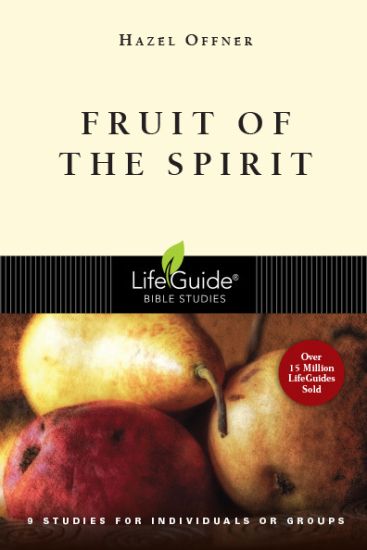
Love, joy, peace, patience, kindness, goodness, faithfulness, gentleness, self-control. To be spiritually mature is to show the fruit of the Spirit of Christ in our lives. These nine-session LifeGuide(R) Bible studies from Old and New Testament passages highlight each quality and inspire us to nurture the Spirit's fruit in our lives.For over three decades LifeGuide Bible Studies have provided solid biblical content and raised thought-provoking questions--making for a one-of-a-kind Bible study experience for individuals and groups. This series has more than 130 titles on Old and New Testament books, character studies, and topical studies.
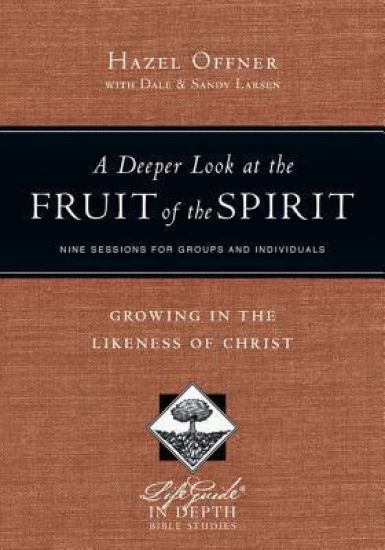
A deep look at Scripture—God's very words—is never wasted. In fact, not only is it never wasted; it's richly rewarded. The more deeply we dive into the riches of the Bible, the more deeply we can experience and serve God, the giver of all truth, wisdom, love and understanding. The new LifeGuide® in Depth Bible Studies help you do just that, taking you further into themes and books of Scripture than you might have gone before. As you see new connections between the Old and New Testament, gain an understanding of the historical and cultural background of passages, engage in creative exercises, and concretely apply what you've learned, you'll be amazed at the breadth of the knowledge and wisdom you gain and the transformation God can work in you as you meet him in his Word. Each session provides enough material for a week's worth of Scripture study along with a weekly group discussion guide that pulls all of the elements together. This guide is based on and includes the inductive Bible study Fruit of the Spirit from the bestselling LifeGuide® Bible Study Series--only now it has been expanded for a new kind of study experience. In A Deeper Look at the Fruit of the Spirit, specifically, you'll discover what your biggest barriers to joy might bewhat biblical writers meant by "peace" (hint: it's more than an absence of fighting)what to do when you realize you're not as nice a person as you thought you werewhat the Old Testament teaches us about God's gentleness and much more. If you're longing to go deeper in your understanding of God and his Word, LifeGuide® in Depth Bible Studies are for you. These new studies will meet your need for both rich, solidly researched content and personal application. They'll meet your need for Bible study that challenges your head and your heart. Most of all, we pray you'll meet God in them.
Indexes congressional and other government publications, books, pamphlets, reports, papers, and periodical materials that deal with aspects of the history of the Equal Rights Amendment.
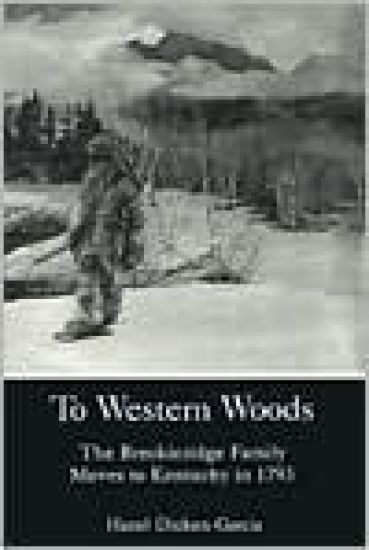
To Western Woods focuses on the John and Mary Cabell Breckinridge family's move across the Appalachian Mountains in the late eighteenth century through letters, diaries, and newspaper excerpts about events of the time.
Frank O’Hara’s poetry evokes a specific era and location: New York in the fifties and early sixties. This is a pre-computer age of typewritten manuscripts, small shops and lunch hours: it is also an age of gay repression, accelerating consumerism and race riots. Hazel Smith suggests that the location and dislocation of the cityscape creates ‘hyperscapes’ in the poetry of Frank O’Hara. The hyperscape is a postmodern site characterised by difference, breaking down unified concepts of text, city, subject and art, and remoulding them into new textual, subjective and political spaces. This book theorises the process of disruption and re-figuration which constitutes the hyperscape, and celebrates its radicality.
This book provides the answers to that all- important question: what are personal and professional development and why are they necessary for counsellors? This new edition explores: @! the importance of personal development and the core concepts that underpin it @! the aims, commonalities and differences of personal development in different settings and levels of training @! the key differences in theoretical approaches and their implications for personal development @! communication and relationships between counsellors and professional organizations, society, and the 'virtual' world, with all its demands on identity, privacy and congruence. @! the trainee and trainer and the challenges of personal development. Packed full of vivid accounts of personal experiences, questions and points for reflection, this book will prove an essential companion for anyone wishing to grow personally and professionally as a therapist. Hazel Johns is a Fellow of BACP, and has been for many years a trainer, supervisor and BACP-accredited counsellor.
This book provides the answers to that all- important question: what are personal and professional development and why are they necessary for counsellors? This new edition explores: @! the importance of personal development and the core concepts that underpin it @! the aims, commonalities and differences of personal development in different settings and levels of training @! the key differences in theoretical approaches and their implications for personal development @! communication and relationships between counsellors and professional organizations, society, and the 'virtual' world, with all its demands on identity, privacy and congruence. @! the trainee and trainer and the challenges of personal development. Packed full of vivid accounts of personal experiences, questions and points for reflection, this book will prove an essential companion for anyone wishing to grow personally and professionally as a therapist. Hazel Johns is a Fellow of BACP, and has been for many years a trainer, supervisor and BACP-accredited counsellor.