
Kirjahaku
Etsi kirjoja tekijän nimen, kirjan nimen tai ISBN:n perusteella.
1000 tulosta hakusanalla Hermann Bendix

Hermann Nitsch
SILVANA
2023
nidottu
Hermann Nitsch, one of the most paradigmatic artists of the legendary Wiener Aktionismus, author of performances and installations, paintings and drawings, through his artistic expressions creates a genuine 'total theatre' that unites myth and aesthetics, religious metaphors and everyday life, classicism and archaism, and even a barbaric element, all this in a monumental form that has no equals. In his project for the total work of art, the Orgien Mysterien Theater, Nitsch reveals the ethical and aesthetic reserves of meaning inherent in Wiener Aktionismus, a special form of performance art derived from the re-interpretation of myths and collective ritual praxis and forged by the artist-philosopher, which is manifested in the activity of the masses, who take part in the performance. “My actions drill into vivid being, wanting there to be being where there is nothing. I seek the vivid existence that lies deep in tragedy, where destruction and creation pervade each other. I seek intensity, I seek life.” — Hermann Nitsch
Hermann Günther Graßmann (1809-1877): Visionary Mathematician, Scientist and Neohumanist Scholar
Springer
2010
nidottu
In this volume specialists in mathematics, physics, and linguistics present the first comprehensive analysis of the ideas and influence of Hermann G. Grassmann (1809-1877), the remarkable universalist whose work recast the foundations of these disciplines and shaped the course of their modern development.
Hermann Cohen's Critical Idealism
Springer
2010
nidottu
Hermann Cohen (1842-1918) is an original systematic thinker and representative of the Marburg School of Critical Idealism. The Marburg School was a leading school in German academic philosophy and in German Jewish philosophy for a period of over thirty years preceding the First World War. Initially standing at the front of the ‘Return to Kant’ movement, Cohen subsequently went beyond Kant in developing a system of critical idealism in which he offered a critique of and alternative to absolute idealism, positivism, and materialism. A critical idealist in heart and soul, Cohen is also recognized as a man who embodied German Jewish culture. Publications on Cohen in the English language are small in number and this volume aims to fill the gap. It offers an analysis of Cohen’s System of Philosophy - the three-volume classic on logic, ethics, and aesthetics - and his writings on Judaism and religion. The book highlights Cohen’s contributions in these fields, including his discussions with Maimonides, Leibniz, Kant, and Hegel. It demonstrates the congeniality of Cohen’s critical idealism as expounded in the System and his writings on Judaism, and offers an overview of contemporary Cohen research.
Focusing on Hermann von Helmholtz, this study addresses one of the nineteenth century’s most important German natural scientists. Among his most well-known contributions to science are the invention of the ophthalmoscope and grou- breaking work towards formulating the law of the conservation of energy. The volume of his work, reaching from medicine to physiology to physics and epis- mology, his impact on the development of the sciences far beyond German borders, and the contribution he made to the organization and popularization of research, all established Helmholtz’s prominence both in the academic world and in public cultural life. Helmholtz was also one of the last representatives of a conception of nature that strove to reduce all phenomena to matter in motion. In reaction to the increasingly insurmountable difficulties that program had in fulfilling its own standards for s- entific explanation, he developed elements of a modern understanding of science that have remained of fundamental importance to this day.
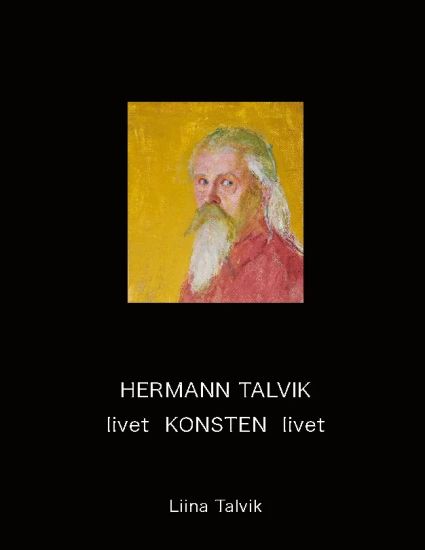
Hermann Talvik föddes i Estland och kom som flykting till Sverige 1944. Efter sin högre konstutbildning på Ateneum i Helsingfors, samt studier i Paris, behärskade han både måleriet och grafikens olika tekniker. Hela hans liv kretsade kring konsten. Ett liv, som han avskild från samhällets brus levde i anden och i symbios med naturen. Om honom har det skrivits att han är landskapsmålarens poet, som med sin andliga sensitivitet, kan höra en blommas hjärta slå och hans visionära grafiska blad har beskrivits som våra moderna ikoner. I sin kombination av högst personlig konstnärlig urladdning, och virtuos teknik, förblir Talviks konst tidlös aktuell. Biografin är skriven av hans dotter Liina Talvik. Boken är rikt illustrerad av konst och fotografier och erbjuder ett unikt tillfälle att komma nära, människan och konstnären, Hermann Talvik.
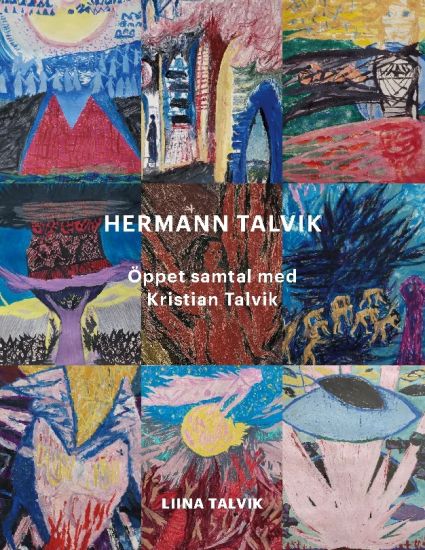
En stor del av hans konst har sitt ursprung i upplevelser från en värld bortom den fysiska. Kompositionerna är laddade med ett komplext symbolspråk, ibland en gestaltning av en våldsam händelse, ibland ett möte i bländande ljus, andra verk kan vara en illustration av en bibelberättelse. Vad ser du? frågade han. Ofta. Frågan var riktad mot vårt inre. För vad ser vi? Vad ser du och vad ser jag? Vilka är vi? Vet vi egentligen vilka vi är? Du och jag? I den här bokserien, Öppet samtal med, samtalar jag med människor som på olika sätt blivit berörda av Hermann Talviks starkt personliga och känsliga kompositioner. Min förhoppning är att du som läsare ska känna dig inbjuden att mentalt delta i detta samtal. Att du ska tillåta dig att reflektera, ifrågasätta och acceptera, såväl dina tankar som mina tankar och våra tankar. I denna bok möter jag min bror Kristian i ett långt samtal om vår far och hans konst. Hermann Talvik (1906-1984) var en mångsidig konstnär. Både vad gäller tekniker och motiv. Hans måleri sträcker sig från lyriska landskap till kompositioner av andlig karaktär. Grafiken spänner över hela fältet från träsnitt och linoleumsnitt till torrnålsgravyrer och etsningar. Han är också monotypiens mästare, en teknik där målningen från ett plant underlag trycks i ett enda exemplar.
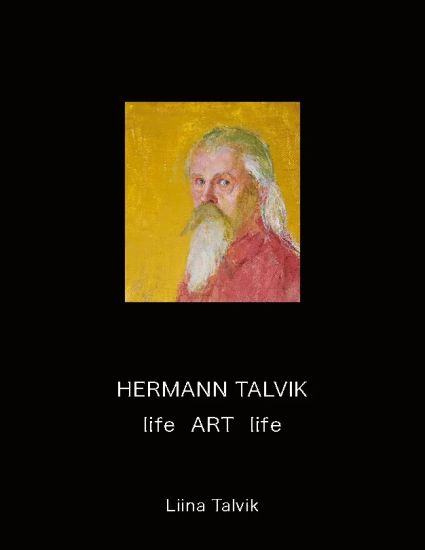
Hermann Talvik was born in Estonia and came to Sweden as a refugee in 1944. He studied fine art at the Ateneum in Helsinki and in Paris, developing great skill both in painting and in various printmaking techniques. His whole life revolved around art a life that he lived in the spirit, distant from the clamour of society, and in symbiosis with nature. It has been written about Talvik that he is the landscape painters poet, an artist who, with his spiritual sensitivity, can hear the heart of a flower beating. His visionary prints have been described as modern icons. In its combination of highly personal artistic expression and virtuoso technique, Talviks art remains timeless. The biography was written by his daughter Liina Talvik, who has previously published a number of books for children and young people. Through the authors intimate relationship with her father, and the large number of letters he wrote home from his travels, the reader gains an insight into Talviks innermost thoughts and reflections on life and art. This is a unique opportunity to discover Hermann Talvik both as a man and an artist.
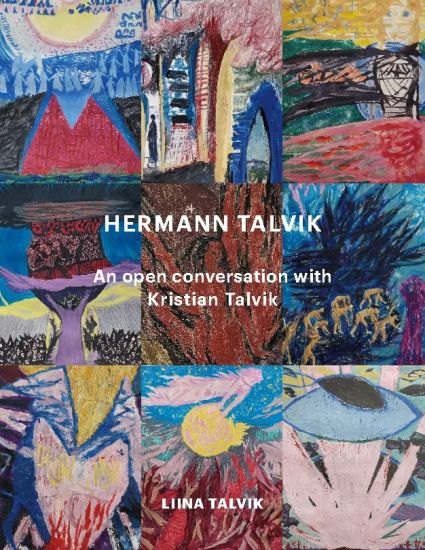
What do you see? he asked. Often. The question was directed at our innermost being. Because what do we see? What do you see, and what do I see? Who are we? Do we truly know who we are? You and I? In this series, An open conversation with ..., I talk to people who, in various ways, have been affected by Hermann Talviks highly personal and sensitive compositions. My hope is that, as a reader, you will feel invited to mentally take part in this conversation. That you will permit yourself to reflect, question and accept your own thoughts as well as my own and ours. In this book, I meet my brother Kristian for a long conversation about our father and his art. Hermann Talvik (19061984) was a versatile artist, both in terms of techniques and subject matter. His painting runs from lyrical landscapes to spiritual compositions. His prints span the range from woodcuts and linocuts to drypoints and etchings. He was also the master of the monotype a technique in which a single copy is made of the paint on a flat surface. Much of his art has its origins in experiences from a world beyond the physical one. The compositions are loaded with a complex symbolic language sometimes the depiction of a violent event, sometimes an encounter in dazzling light while others illustrate Biblical stories. He was reluctant to talk about his own vision and what lay behind his works. He preferred not even to name his artworks, as he felt this would get in the way of our personal interpretations. Interpretations that can be coloured by our unique experiences and which are linked to our own spiritual presence. What do you see?
A Phyllis of the Sierras, a classical book, has been considered essential throughout the human history, and so that this work is never forgotten we at Alpha Editions have made efforts in its preservation by republishing this book in a modern format for present and future generations. This whole book has been reformatted, retyped and designed. These books are not made of scanned copies of their original work and hence the text is clear and readable.
Phyllis of Philistia, a classical book, has been considered essential throughout the human history, and so that this work is never forgotten we at Alpha Editions have made efforts in its preservation by republishing this book in a modern format for present and future generations. This whole book has been reformatted, retyped and designed. These books are not made of scanned copies of their original work and hence the text is clear and readable.
Phyllis: A Twin, a classical book, has been considered essential throughout the human history, and so that this work is never forgotten we at Alpha Editions have made efforts in its preservation by republishing this book in a modern format for present and future generations. This whole book has been reformatted, retyped and designed. These books are not made of scanned copies of their original work and hence the text is clear and readable.
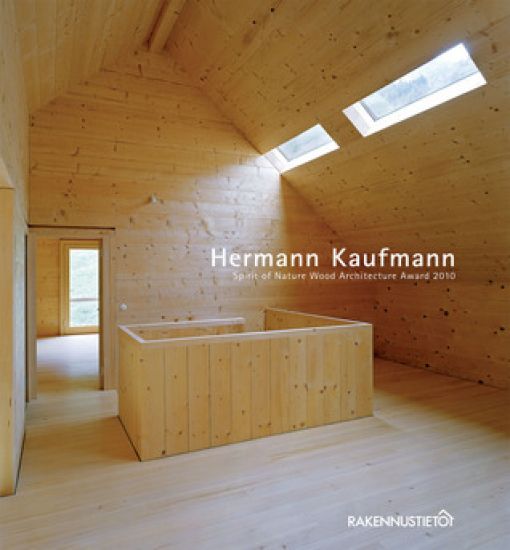
Hermann Kaufmann: Spirit of Nature Wood Architecture Award 2010
Otto Kapfinger
Rakennustieto Publishing
2010
nidottu
Austrian architect Hermann Kaufmann adapts in his architecture the well-renowned wood building tradition of his home region of the Vorarlberg mountains. He is simultaneously an innovator and upholder of tradition. The book presents 18 wooden buildings, ranging from farm buildings to industrial buildings, from community centres to the restoration of monasteries and inns, and from private houses to multi-storey apartment blocks. But what all these buildings have in common is a good energy economy, ecological sustainability, healthy structures connected with harmonious forms and fine workmanship. In his interesting accompanying essay, Otto Kapfinger describes the fundamental premises of Kaufmann's architecture, including his extensive work in developing the local wood building tradition to achieve modern, economical and ecological construction, by utilising, for instance, prefabricated building parts.
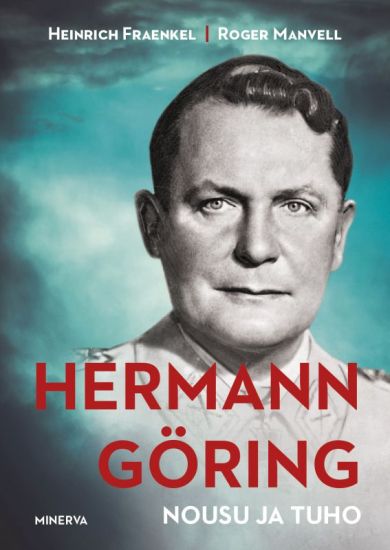
Kirja avaa ainutlaatuisen näkymän häikäilemättömän natsijohtajan kunnianhimoon, brutaaliin toimintaan ja ylelliseen yksityiselämään. Samalla se on vahva kuvaus Kolmannen valtakunnan noususta ja tuhosta.Kattava elämäkertateos perustuu amerikkalaisiin ja saksalaisiin arkistolähteisiin sekä Göringin perheenjäsenten, hänen alaisinaan palvelleiden ja muiden hänet tunteneiden haastatteluihin.Ensimmäisessä maailmansodassa ansioitunut taistelulentäjä Göring nousi nopeasti valta-asemaan Kolmannen valtakunnan poliittisella kartalla. Hänestä tuli Luftwaffen ylipäällikkö ja Hitlerin oikea käsi, yksi natsi-Saksan pelätyimmistä miehistä.Göringin aloitteesta perustettiin Gestapo ja laadittiin suunnitelmat juutalaiskysymyksen lopullisen ratkaisun läpiviemiseksi.Göring kokosi itselleen suuren omaisuuden ja rohmusi mm. sotasaaliiksi saatuja taideaarteita omiin kokoelmiinsa. Hänet tultiin tuntemaan mukavuudenhaluisena nautiskelijana.Lopulta Hitler sulki Göringin sisäpiirinsä ulkopuolelle, vaikka tästä oli aiemmin kaavailtu hänen seuraajaansa.Nürnbergissä Göring tuomittiin kuolemaan rikoksista ihmiskuntaa vastaan. Ennen kuin hirttotuomio ehdittiin panna täytäntöön, Göring teki itsemurhan vankilaan salakuljetetulla syanidikapselilla.
Hermann Hess
Global East-West (London)
2025
pokkari

Hermann Hesse
Global East-West (London)
2025
pokkari
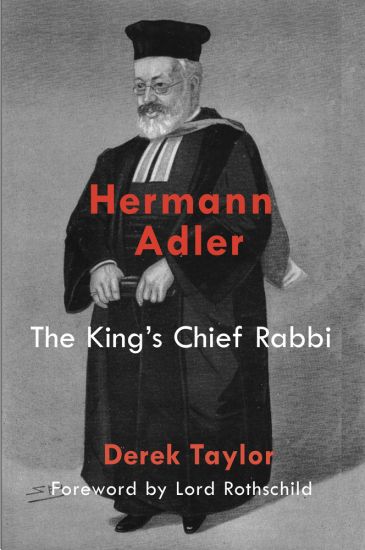
When Chief Rabbi Adler died in 1911, his friend, Sir Adolph Tuck wrote: ‘The fame of Dr. Hermann Adler will be handed down to posterity and the great place occupied by him, widely recognised as it is already in our generation, will loom still more vividly in the future, when a broader view of his achievements will be possible.’ Even King George V sent his condolences. Yet today Hermann Adler, called ‘My Chief Rabbi’ by Edward VII, is largely forgotten. The man who kept the community Orthodox, who helped the country absorb some 300,000 Jewish refugees from pogroms in Europe, who gave over 2,000 sermons and addresses in a 30-year career as Delegate Chief Rabbi and Chief Rabbi, is hardly known. In this new biography Derek Taylor has researched his life and proved that, far from the view of Adler as subject to the community’s lay leaders, he was, in fact, a Rothschild on his mother’s side and very much his own man. With a foreword by Lord Jacob Rothschild, a fascinating life unfolds of a man who fought his many opponents to a standstill, and tackled successfully the greatest challenges the community had faced since the Restoration.

Hermann Bahr - Oesterreichischer Kritiker Europaeischer Avantgarden
Peter Lang AG
2014
nidottu
Bereits zeitgenoessische Kritiker stehen irritiert vor der Breite des Werks des Schriftstellers und Journalisten Hermann Bahr (1863-1934) und monieren vor allem dessen Heterogenitat. Verwirrung stiftet seine Praxis, standig neue kunstlerische Stile und kulturelle Tendenzen zu erahnen, sie zu lancieren und bald wieder zu 'uberwinden'. Das lasst sich als Symptom fur die um 1900 drastisch zunehmende Geschwindigkeit der kulturellen und technischen Entwicklung begreifen. So untersucht dieser Band, wie sehr das 'UEbermorgen' des Trendsetters Bahr nicht sowieso bereits die Gegenwart seiner Zeitgenossen darstellt. Die in diesem Band dokumentierten Aufsatze eint, dass er nicht als Vorreiter, sondern als Zeiterscheinung gefasst werden soll. Ursprunglich Vortrage einer Tagung, die im Mai 2013 in Berlin stattfand, erweitern sie die Diskussion in Bahrs Arbeitsfeldern Wirtschaftswissenschaften, Kunst- und Literaturgeschichte, Philosophie und Theater. Ferner behandeln sie seine Publikationspraxis sowie die UEberlieferung seines Nachlasses.
Unver nderter Nachdruck der Originalausgabe von 1867. Der Verlag Antigonos spezialisiert sich auf die Herausgabe von Nachdrucken historischer B cher. Wir achten darauf, dass diese Werke der ffentlichkeit in einem guten Zustand zug nglich gemacht werden, um ihr kulturelles Erbe zu bewahren.
