Cognition, Communication, and Romantic Relationships focuses on the role of memory, communication, and social cognition in the development of romantic relationships. The authors review developmental models of communication and examine criticisms of these models. They also explore the stages through which relationships escalate and deteriorate, and consider the processes for such activities as meeting new people, dating, sexual intercourse, and terminating relationships. Differences between men and women are discussed throughout the text, in light of current research supporting systematic gender differences in how people think about romance and relationships. As an extended analysis and research review of how thinking about romance influences and is influenced by communicative processes, this text offers a deeper understanding of the cognitive and communicative factors involved in relationship processes. It is designed for use in courses on interpersonal relationships and intimate relations in social psychology, communication, counseling psychology, clinical psychology, and sociology.
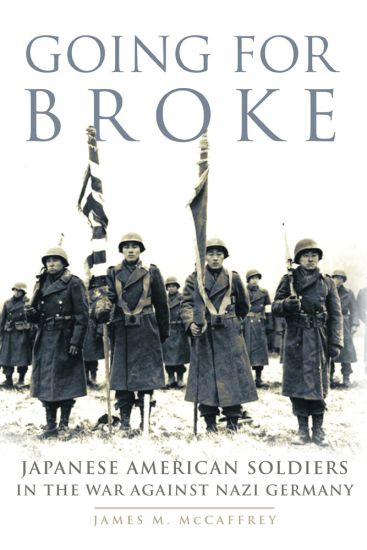
When Japanese forces attacked Pearl Harbor on December 7, 1941, Americans reacted with revulsion and horror. In the patriotic war fever that followed, thousands of volunteers - including Japanese Americans - rushed to military recruitment centers. Except for those in the Hawaii National Guard, who made up the 100th Infantry Battalion, the U.S. Army initially turned Japanese American prospects away. Then, as a result of anti-Japanese fearmongering on the West Coast, more than 100,000 Americans of Japanese descent were sent to confinement in inland ""relocation centers."" Most were natural-born citizens, their only ""crime"" their ethnicity.After the army eventually decided it would admit the second-generation Japanese American (Nisei) volunteers, it complemented the 100th Infantry Battalion by creating the 442nd Regimental Combat Team. This mostly Japanese American unit consisted of soldiers drafted before Pearl Harbor, volunteers from Hawaii, and even recruits from the relocation centers. In Going for Broke, historian James M. McCaffrey traces these men's experiences in World War II, from training to some of the deadliest combat in Europe.Weaving together the voices of numerous soldiers, McCaffrey tells of the men's frustrations and achievements on the U.S. mainland and abroad. Training in Mississippi, the recruits from Hawaii and the mainland have their first encounter with southern-style black-white segregation. Once in action, they helped push the Germans out of Italy and France. The 442nd would go on to become one of the most highly decorated units in the U.S. Army.McCaffrey's account makes clear that like other American soldiers in World War II, the Nisei relied on their personal determination, social values, and training to ""go for broke"" - to bet everything, even their lives. Ultimately, their bravery and patriotism in the face of prejudice advanced racial harmony and opportunities for Japanese Americans after the war.
In The Soldier's Two Bodies, James M. Greene investigates an overlooked genre of early American literature- the Revolutionary War veteran narrative- showing that it by turns both promotes and critiques a notion of military heroism as the source of U.S. sovereignty. Personal narratives by veterans of the American Revolution indicate that soldiers in the United States have been represented in two contrasting ways from the nation's first days: as heroic symbols of the body politic and as human beings whose sufferings are neglected by their country. Published from 1779 through the late 1850s, narrative accounts of Revolutionary War veterans' past service called for recognition from contemporary audiences, inviting readers to understand the war as a moment of violence central to the founding of the nation. Yet, as Greene reveals, these calls for recognition at the same time underscored how many veterans felt overlooked and excluded from the sovereign power they fought to establish. Although such narratives stem from a discourse that supports centralized, continental nationalism, they disrupt stable notions of a unified American people by highlighting those left behind. Greene discusses several well-known examples of the genre, including narratives from Ethan Allen, Joseph Plumb Martin, and Deborah Sampson, along with Herman Melville's fictional adaptation of the life of Israel Potter. Additional chapters focus on accounts of postwar frontier actions, including narratives collected by Hugh Henry Brackenridge that voice concerns over populist violence, along with stranger narratives like those of Isaac Hubbell and James Roberts, which register as fantastic imitations of the genre commenting on antebellum racial politics. With attention to questions of historical context and political ideology, Greene charts the process by which veteran narratives promote exception, violence, and autonomy, while also encouraging restraint, sacrifice, and collectivity. Revolutionary War veteran narratives offer no easy solutions to the appropriation of veterans' lives within military nationalism and sovereign violence. But by bringing forward the paradox inherent in the figure of the U.S. soldier, the genre invites considerations of how to reimagine those representations. Drawing attention to paradoxes presented by the memory of the American Revolution, The Soldier's Two Bodies locates the origins of a complicated history surrounding the representation of veterans in U.S. politics and culture.
Studies of public finance, as traditionally developed, have analyzed the effects of fiscal institutions on the market-choice behavior of individuals and firms, but this book takes a different approach. It analyzes the effects of fiscal institutions on the political-choice behavior of individuals as they participate variously in the decision-making processes of democracies. What effect will the form of a new tax have on individuals' attitudes toward more or less public spending? To what extent does the private sector--public sector mix depend on the way in which tax payments are made? How do the various taxes affect the fiscal consciousness of individual citizens? These are questions that have been ignored for the most part. They are, nonetheless, important and worthy of examination. This book is an attempt to provide some provisional answers. By the use of simplified models of existing tax institutions, Buchanan predicts the effects that these exert on individual behavior in the area of political choice. The relative effects of direct and indirect taxes, the ""old tax--new tax"" distinction, the effects of fiscal earmarking, the effects of unbalanced budgets -- these are a few of the topics examined. Before these questions can be fully answered, research must be conducted to find out just how much individuals know about the taxes they pay and the benefits they receive. Comparatively little research of this kind has been completed, but the author devotes a chapter to a careful review of the present state of this sort of research. Individuals' choice among alternative fiscal institutions is examined in the second part of the book. If given the opportunity, how would the individual choose to pay his or her taxes? Progressive income taxes, excise taxes, and public debt are analyzed in terms of this question. Because of its interdisciplinary approach, this imaginative study will be of interest to both economists and political scientists. |Although much has been written about the ways in which Confederate politics affected the course of the Civil War, George Rable is the first historian to investigate Confederate political culture in its own right. Focusing on the assumptions, values, and b
The new 4th edition, including some 1500 entries, brings coverage up through the 1984-85 theatrical season and includes not only those new plays considered best by traditional authorities, but also commercial successes, plays most popular with amateur theater groups, and plays produced most often by 3000 International Thespian Society_affiliated high schools. Salem has added almost 100 modern British and American plays that rightfully belong in the 'Best' category.
This Dictionary contains more than 600 dictionary entries on utopian thought and experimentation that span the centuries from ancient times to the present. The text not only covers utopian communities worldwide, but also its ideas from the well known such as those expounded in Thomas More's Utopia, and the ideas of philosophers and reformers from ancient times, the Middle Ages, the Renaissance, the Enlightenment, and from notable 20th-century figures. Included are the descriptions of utopian experiments attempted in the United Sates such as those of the Shakers, Oneida, Robert Owen, and the Fourierists, and elsewhere throughout the world from Europe to Australia, Latin America, and the Far East. Major utopian literary works and their literary counterparts and dystopian novels are also profiled because these have fueled the fires of time-honored arguments about the feasibility of creating a perfect society. From the early theoreticians and thinkers who proposed republican, democratic, and authoritarian innovations; to those who sought equality of classes, races, and genders; to those who insisted on hierarchy under a supreme leader, or god; and to those who had more practical economic, social, and ethical plans, this reference enables the reader to explore the Western mind's desire to improve the world and the lives of the people within it as utopianism has persisted over the centuries. Includes: Persons, plans, and attempts associated with utopianism, An introductory essay, Chronology, An extensive bibliography, An appendix listing the names and locations of utopian communities worldwide.
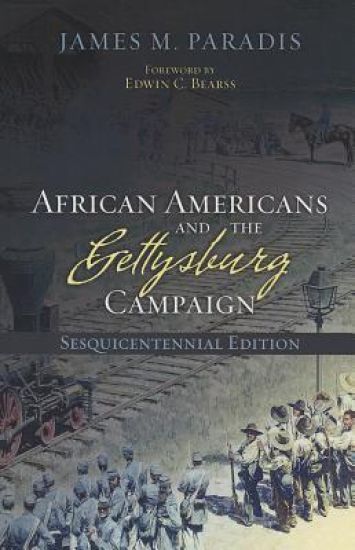
The role that African Americans played in the Gettysburg Campaign has now been largely forgotten. This work seeks to rectify this oversight by bringing to light the many ways that Black Americans took part in the crucial battle at Gettysburg, how they were able to influence the military outcome, and the impact the Civil War had on their lives. Author, James M. Paradis, a former licensed battlefield guide at Gettysburg National Military Park, examines the active prewar role played by Gettysburg citizens, both black and white, in dramatic rescues of the Underground Railroad. Readers are introduced to an impressive ensemble of characters from the black community in Gettysburg including farmers, blacksmiths, teachers, veterinarians, preachers, servants, and laborers. He also dispels the myth that no black men fought or were killed defending Gettysburg from the Confederate invasion. By filling in the missing pieces, this book will help African Americans take back their own history in this dramatic struggle for freedom. African Americans and the Gettysburg Campaign will appeal to scholars and general readers alike. Civil War buffs and potential Gettysburg visitors will find the tour for today and points of interest sections valuable tools for enhancing their experience of this sacred ground. Maps, photographs, and illustrations appear throughout.
This reference contains more than 600 cross-referenced dictionary entries on utopian thought and experimentation that span the centuries from ancient times to the present. The text not only covers utopian communities worldwide, but also its ideas from the well known such as those expounded in Thomas More's Utopia and the ideas of philosophers and reformers from ancient times, the Middle Ages, the Renaissance, the Enlightenment, and from notable 20th-century figures. Included are the descriptions of utopian experiments attempted in the United Sates, like those of the Shakers, Oneida, Robert Owen, and the Fourierists, and elsewhere throughout the world from Europe to Australia, Latin America, and the Far East. Major utopian literary works and their literary counterparts and dystopian novels are also profiled because these have fueled the fires of time-honored arguments about the feasibility of creating a perfect society. From the early theoreticians and thinkers who proposed republican, democratic, and authoritarian innovations; to those who sought equality of classes, races, and genders; to those who insisted on hierarchy under a supreme leader, or god; and to those who had more practical economic, social, and ethical plans, this reference enables the reader to explore the Western mind's desire to improve the world and the lives of the people within it as utopianism has persisted over the centuries.
The United States Navy has evolved in the last century and a half from humble and often frustrating beginnings during and after the Revolutionary War to become the strongest navy in the world with responsibilities that span the globe. The story of the Navy from its birth through the Civil War and other 19th century conflicts through its victories of World War I and World War II and down to the current efforts in the Middle East to maintain the peace not only for the United States but also for other nations as the world's primary peace-keeper has been one of responding to the call of duty, as captured by its unofficial motto Non sibi sed patriae ("Not self but country"). No other nation's navy past or present can match its successes and history. The second edition of Historical Dictionary of the United States Navy covers U.S. Naval developments, personnel, and engagements from the colonial times to the present day. This is done through a chronology, an introductory essay, an extensive bibliography, and over 600 cross-referenced dictionary entries on people, places, events and other terminology of the Navy. This book is an excellent access point for students, researchers, and anyone wanting to know more about the United States Navy.
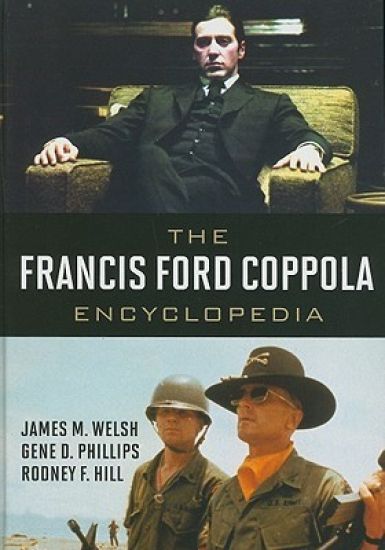
Francis Ford Coppola's career has spanned five decades, from low budget films he produced in the early 1960s to more personal films of recent years. Because of the tremendous popular success of The Godfather and the tremendous critical success of its sequel, Coppola is considered to be one of the best directors of all time. The entries in this encyclopedia focus on all aspects of Coppola's work—from his early days with producer Roger Corman to his films as the director of the 1970s. This extensive reference contains material on all of the films Coppola has played a role in, from screenwriter to producer to director, including such classics as Patton, The Godfather, The Conversation, The Godfather Part II, and Apocalypse Now. Each entry is followed by a bibliography of published sources, both in print and online, making The Francis Ford Coppola Encyclopedia the most comprehensive reference on this director's body of work.
The Sesquicentennial edition of African Americans and the Gettysburg Campaign, expands the range of research beyond its original 2006 edition. With a foreword from chief historian emeritus of the National Park Service, Edwin C. Bearss, Paradis sets the stage by introducing readers to the important and colorful members of the black community in and around the town of Gettysburg, including descriptions of Underground Railroad activity in the area. With the outbreak of the Civil War, black volunteers for the Union army were initially rejected. But that did not stop them from assuming non-combatant roles, such as their role as teamsters. Paradis also includes overviews of the African American contribution to the Confederate army and finally the authorization of black troops in the North, with their early action in combat before and during the Gettysburg Campaign. Paradis searingly describes, among other matters, the Invasion of Pennsylvania by the Confederate Army in July, 1863, which would turn into a massive slave hunt with the abduction of free Pennsylvania blacks, precipitating a boom in black resident volunteers in defense of the state. From there, Paradis dives into the fighting in Gettysburg and other Pennsylvania towns, with a focus on black contributions and casualties. Paradis’ work then turns its attention to the aftermath of the battle, including the labor of African Americans in the disinterring of bodies for the National Cemetery. This new edition of African Americans and the Gettysburg Campaign includes appendices on such matters as black residents and points of interest in the town of Gettysburg, an updated tour of Gettysburg highlighting the roles of African Americans, and finally a list of black veterans who attended the 75th Anniversary reunion in Gettysburg. This work includes over 40 images and several maps. This title is ideal for students, teachers, and scholars of the American Civil War and African American history. Visitors to national parks and anyone who loves American history will find this work a rewarding study of this critical moment in American history and the African American contribution to it.
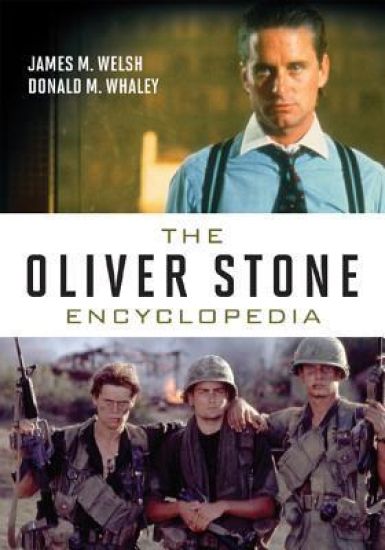
Oliver Stone has written and directed many memorable films while also developing a reputation for tackling controversial subjects, such as the Turkish prison system (Midnight Express), the Vietnam war (Platoon and Born on the Fourth of July), insider trading (Wall Street), presidential assassination (JFK), and a voyeuristic media (Natural Born Killers). Along the way, Stone has been nominated for more than 10 Academy Awards and three times received Oscars for his work. In The Oliver Stone Encyclopedia, James M. Welsh and Donald M. Whaley provide an overarching evaluation of Stone's work as screenwriter, producer, and director. While the entries in this volume address all of the usual aspects of Stone’s career, they also explore new avenues of critical evaluation, especially influences such as Friedrich Nietzsche and Buddhism, which Stone converted to in the 1990s. In addition, this volume traces Stone’s obsession with Latin American politics, evident in his film Salvador (1986), his screenplay for Alan Parker’s Evita (1996), and the documentaries Commandante (2003), Looking for Fidel (2004), and South of the Border (2010). Each entry is followed by a bibliography of published sources, both in print and online. A comprehensive and engaging examination of the director, The Oliver Stone Encyclopedia will appeal to scholars and fans alike as the most comprehensive reference on this director's body of work.
James M. Powell here offers a new interpretation of the Fifth Crusade's historical and social impact, and a richly rewarding view of life in the thirteenth century. Powell addresses such questions as the degree of popular interest in the crusades, the religious climate of the period, the social structure of the membership of the crusade, and the effects of the recruitment effort on the outcome.
The period from 1850 to 1876 was the most transformative era in American history. During the course of this tumultuous quarter century Americans fought a bloody civil war, tried to settle the issue of state versus central government power, recognized the dominance of the new industrial economy over the older agricultural one, and ended slavery, long the shame of the nation. At the same time, a major political realignment occurred with the collapse of the "second American party system" and the emergence of a new party, the Republicans. But the defeat of slavery-the chief catalyst for the birth of the Republican party-was at best a limited success. The Constitution had been rewritten to abolish slavery and guarantee equal protection under the law, but social equality for African Americans and expanding freedom for others remained elusive throughout the nation. For these triumphs and enduring tragedy, the Republican party, which became in time and memory the party of Abraham Lincoln, bore primary responsibility. This collection of six original essays by some of America's most distinguished historians of the Civil War era examines the origins and evolution of the Republican party over the course of its first generation. The essays consider the party in terms of its identity, interests, ideology, images, and individuals, always with an eye to the ways the Republican party influenced midnineteenth-century concerns over national character, political power, race, and civil rights. The authors collectively extend their inquiries from the 1850s through the 1870s to understand the processes whereby the second American party system broke down, a new party and politics emerged, the Civil War came, and a new political and social order developed. They especially consider how ideas about freedom in the 1850s coalesced during war and Reconstruction to produce both an expanded call for political and civil rights for the ex-slaves and a concern over expanded federal involvement in the protection of those rights. By observing the transformation of a sectional party born in the 1850s into the "Grand Old Party" by the 1870s, the authors demonstrate that no modern political party, even the one that claims descent from Lincoln, has surpassed the accomplishments of the first generation of Republicans. Contributors- Jean H. Baker, Professor of History at Goucher College, Maryland, is author of Mary Todd Lincoln: A Biography. Eric Foner, DeWitt Clinton Professor of History at Columbia University, is author of Reconstruction: America's Unfinished Revolution, 1863-1877, winner of the Bancroft Prize. Michael F. Holt, Langbourne M. Williams Professor of American History at the University of Virginia, is author of The Rise and Fall of the American Whig Party: Jacksonian Politics and the Onset of the Civil War. James M. McPherson, Professor of History at Princeton University, is author of Battle Cry of Freedom: The Civil War Era, winner of the Pulitzer Prize in history. Mark E. Neely, Jr., McCabe-Greer Professor in the American Civil War Era at Pennsylvania State University, is author of The Fate of Liberty: Abraham Lincoln and Civil Liberties, winner of the Pulitzer Prize in history. Phillip Shaw Paludan, Naomi Lynn Professor of Lincoln Studies at the University of Illinois at Springfield, is author of The Presidency of Abraham Lincoln, winner of the Lincoln Prize. Brooks D. Simpson, Professor of History at Arizona State University, is author of Ulysses S. Grant: Triumph over Adversity, 1822-1865.
Americans preach egalitarianism, but democracy makes it hard for minorities to win. Changing Minds, If Not Hearts explores political strategies that counteract the impulse of racial majorities to think about racial issues as a zero-sum game, in which a win for one group means a loss for another. James M. Glaser and Timothy J. Ryan argue that, although political processes often inflame racial tensions, the tools of politics also can alleviate conflict. Through randomized experiments conducted in South Carolina, California, Michigan, Mississippi, Oklahoma, and New Jersey, Glaser and Ryan uncover the racial underpinnings of disputes over affirmative action, public school funding initiatives, Confederate flag displays on government buildings, reparations, and racial profiling. The authors examine whether communities rife with conflict endorse different outcomes when issues are cast in different terms-for example, by calling attention to double standards, evoking alternate conceptions of fairness and justice, or restructuring electoral choices to offer voters greater control. Their studies identify a host of tools that can help overcome opposition to minority interests that are due to racial hostility. Even in communities averse to accommodation, even where antipathy and prejudice linger, minorities can win. With clearly presented data and compelling prose, Changing Minds, If Not Hearts provides a vivid and practical illustration of how academic theory can help resolve conflicts on the ground.